Car sharing began in 1948 and now spans station-based clubs, free-floating fleets and peer-to-peer rental. How each model works and what the trade-offs are.
Car sharing lets people book a car by the hour through an app, either from a company fleet (station-based or free-floating) or from private owners on a peer-to-peer platform. Zipcar built the commercial model from 2000 and Turo built the peer-to-peer one from 2010.
The first car-sharing scheme was a cooperative in Zurich in 1948, set up so that people who could not afford a car could share one between them. Nearly eight decades later, the idea runs through apps, telematics boxes and a market valued in the billions.
How does car sharing work?
Car sharing, called car clubs in the UK, is a form of rental in which people borrow a car for a short period, often by the hour. Collecting and returning the vehicle is usually self-service through a mobile app, with no office or counter. It differs from traditional hire in the length of hire and in how the cost is structured.
Two ownership structures sit underneath. In business-to-consumer schemes a company owns the fleet and offers it to members. In peer-to-peer schemes the cars belong to private individuals, grouped as a cooperative or loose circle, or who list their vehicles through a separate facilitator. Both belong to the wider trend of shared mobility.
The three models compared
| Model | Who owns the cars | Pick-up and return | Typical charge |
|---|---|---|---|
| Station-based (round trip) | The provider | A designated station, usually a reserved parking space; the car goes back there | By the hour and by distance driven |
| Free-floating (one way) | The provider | Start and end in different places within a defined zone | By the minute or hour, usually with fuel and insurance included |
| Peer-to-peer | Private owners | Arranged through a platform that brings owner and renter together | The platform takes a share of the income |
The phone is the key: the app tells a server, the server tells the box in the car, and the doors unlock.
Where did car sharing begin?
With a cooperative. The Selbstfahrergemeinschaft, known as Sefage, was founded in Zurich in 1948 for economic reasons, and it was an early form of round-trip service: a small group of users reserved one vehicle and returned it to its original place. The 1970s produced ambitious experiments, among them the Procotip scheme in Montpellier, France, which took coins, from 1971 to 1973, and the electric Witkar in Amsterdam, which ran from 1974 to 1988.
Most early programmes struggled with small scale and poor planning, which showed that convenience and high vehicle use were what the model needed to succeed. Green Cars in the UK, Bilpoolen in Lund and Bilkooperativ in Gothenburg all faded. Growth returned in the 1980s and 1990s with membership-based schemes such as StattAuto in Germany. In North America, Communauto was founded in Quebec City in 1994, followed in 1998 by the first official US operator, CarSharing Portland in Oregon, which began with one vehicle and a few neighbours.
The early 2000s turned a niche into an industry. Better communication and reservation technology, urbanisation and environmental concerns all pushed it along, and venture-backed companies arrived. Around 2008 and 2009 smartphones and GPS made free-floating one-way hire possible, pioneered by Car2go. The peer-to-peer model arrived alongside it, led by Turo and Getaround, which widened the fleet by letting private owners rent out their own cars. From 2008 several rental firms launched services of their own, among them Avis on Location, Hertz on Demand, U-Haul Car Share and WeCar by Enterprise.
How did Zipcar shape the idea?
Zipcar proved the commercial station-based model. Antje Danielson and Robin Chase founded it in January 2000, drawing on German and Swiss precedents, and the first cars hit the road around Boston in June of that year. By 2010 it accounted for 80% of the US car-sharing market and about half of all car-sharers globally.
Members book by the hour or day, in increments as short as 30 minutes, and may pay a monthly or annual fee on top of the reservation charge. The price covers fuel, servicing, insurance options and a reserved parking space. Each car has a home space to which it must be returned. In the US a reservation carries 290 km (180 miles) per 24 hours, after which $0.45 per mile is charged, or $0.55 for premium vehicles and cargo vans. Canadian members get 200 km per reservation, then $0.30 per kilometre.
Doors are opened with a membership card held to the windscreen, or by phone, and the keys stay inside the car. For privacy, positions are not followed while a car is out on a booking, but cars can be located and carry a kill function that stops them starting in the event of theft.
The corporate story moved quickly. Zipcar merged with Flexcar in 2007, floated in April 2011 and was bought by Avis Budget Group on 14 March 2013 for approximately $500 million. In September 2016 it reported 1 million members in 500 cities across nine countries, with nearly 10,000 vehicles. By 2019 the fleet was above 12,000 vehicles in more than 50 makes and models.
Success brought scrutiny. Customers sued in 2009 and 2011 alleging hidden fees, and a judge found in 2010 that the only charge that failed was the one for inactive users. In August 2016 Zipcar settled a New York case over damage fees, agreeing to refund disputed charges and pay $35,000 to the Attorney General. The pandemic hit too: demand fell in March 2020 and surged in May, and some customers arrived to find no car in the space. In December 2025 the company told members it was proposing to withdraw from Britain, with the service suspended from the beginning of January 2026 while a redundancy consultation was held.
Companies use the same idea for their own staff. Instead of assigning one car to each employee, they share vehicles among several users who book one when they need it, for a meeting, a site visit or a short business trip. Zipcar launched a business programme in early 2004 and says it has signed 10,000 companies, and it has partnered with more than 600 colleges and universities across North America.
The idea travelled quickly. By the mid-2010s car sharing had spread to Brazil, Mexico, Turkey, China and India, and Zarcar, set up in Rio de Janeiro in 2009, was South America's first scheme. Moscow's authority counted an average of 30,000 car-sharing journeys a day from January to September 2018.
How does peer-to-peer car rental work?
Private owners list their cars on a platform, and renters book them. The third-party business screens both sides, supplies the website and app, manages bookings and collects payment. It keeps a share of the income, which covers renter insurance, operating costs and roadside assistance, and it vets renters with DMV checks.
Turo is the best-known example. It does not own or maintain any cars. Owners set availability, pricing and delivery options, while Turo handles the booking, takes the payments, offers insurance choices and answers customer queries, and retains a percentage of rental revenue that varies with the insurance cover the owner selects. The company claims its rental costs are lower than traditional services. Its markets are the US, Canada, Britain, Australia and France, and as of March 2024 it listed 360,000 active vehicles.
How did Turo grow?
It began as RelayRides in Boston in June 2010, inspired by online marketplaces such as Airbnb and eBay, and moved to San Francisco later that year. At first a renter had to install an in-car device giving GPS tracking, remote unlocking and card-based entry, in the manner of Zipcar. In 2013 the company dropped the device and a General Motors OnStar tie-up in favour of in-person key exchange.
Regulators intervened in New York. In May 2013 the state's financial services regulator warned that RelayRides had misrepresented the effect on insurance for people renting out their cars, and the company suspended operations. The regulator fined it $200,000 in March 2014 citing misleading advertising, insurance activity without a licence and other breaches. A partial reopening in New York State came in January 2021 and a full return in 2022, after the state passed a 2021 law, SB 6715, covering peer-to-peer car sharing.
RelayRides became Turo in November 2015, reflecting a move from short-term sharing to longer rentals. It launched in three Canadian provinces in 2016 and 2017 and in the United Kingdom in 2016. Germany followed in early 2018 after Turo acquired Daimler's Croove platform, but when travel collapsed in the COVID-19 pandemic it announced on 9 April 2020 that it would end private peer-to-peer listings there and keep only commercial hosts. In 2019 it introduced Turo Go Digital for keyless entry without in-car devices, and IAC invested $250 million, valuing the company at more than $1 billion. It bought France's OuiCar in 2022, entered Australia later that year, and in October 2025 added multi-month bookings.
How does the technology unlock a shared car?
Each shared vehicle carries a hardware unit, often a telematic control unit, containing a satellite positioning receiver and a cellular modem. It reports the car's location continuously to a central server, which is how an app can show the nearest available car. Early systems depended on manual logbooks and key boxes; modern ones are almost entirely automated.
The phone is the key. A reservation authorises the user's phone to communicate with the vehicle, and when the user taps unlock, the server relays the command to the unit, which operates the door locks. The same device records distance and duration and sends them back for billing, completing the self-service loop.
What are the trade-offs against owning a car?
Studies suggest car sharing lowers car ownership and use, and can reduce congestion, cut greenhouse gas emissions and improve air quality. Fewer cars are needed to meet demand, which lowers production emissions, and people who give up their own car use other forms of transport more, keeping the shared car for occasional trips.
The costs are different in kind. Business-to-consumer cars are cleaned and maintained on a schedule rather than between every trip. Insurance meets the legal minimum, but cover differs widely between services, and critics say liability limits are lower than the more comprehensive protection offered by established rental companies. The main drivers of growth were congestion, changing attitudes to ownership among younger generations, and the rising cost of owning a car.
Before membership starts, there is a one-time approval including background driving checks and payment verification. After it, rates typically include fuel and insurance. Vehicles are spread through urban areas, often near public transport, to link the final stretch of a journey.
Where this goes next
Estimates of the 2024 global market range from US$4.7 billion to 8.9 billion, with projections for 2033 between US$14.3 billion and 24.4 billion. Europe led in 2024 with a 38% share and is expected to reach 4 to 5 billion euros by 2030. One report predicts 138.3 million members by the end of 2029 and a fleet of about 755,000 cars, with the corporate car-sharing market reaching about 270,000 vehicles that year.
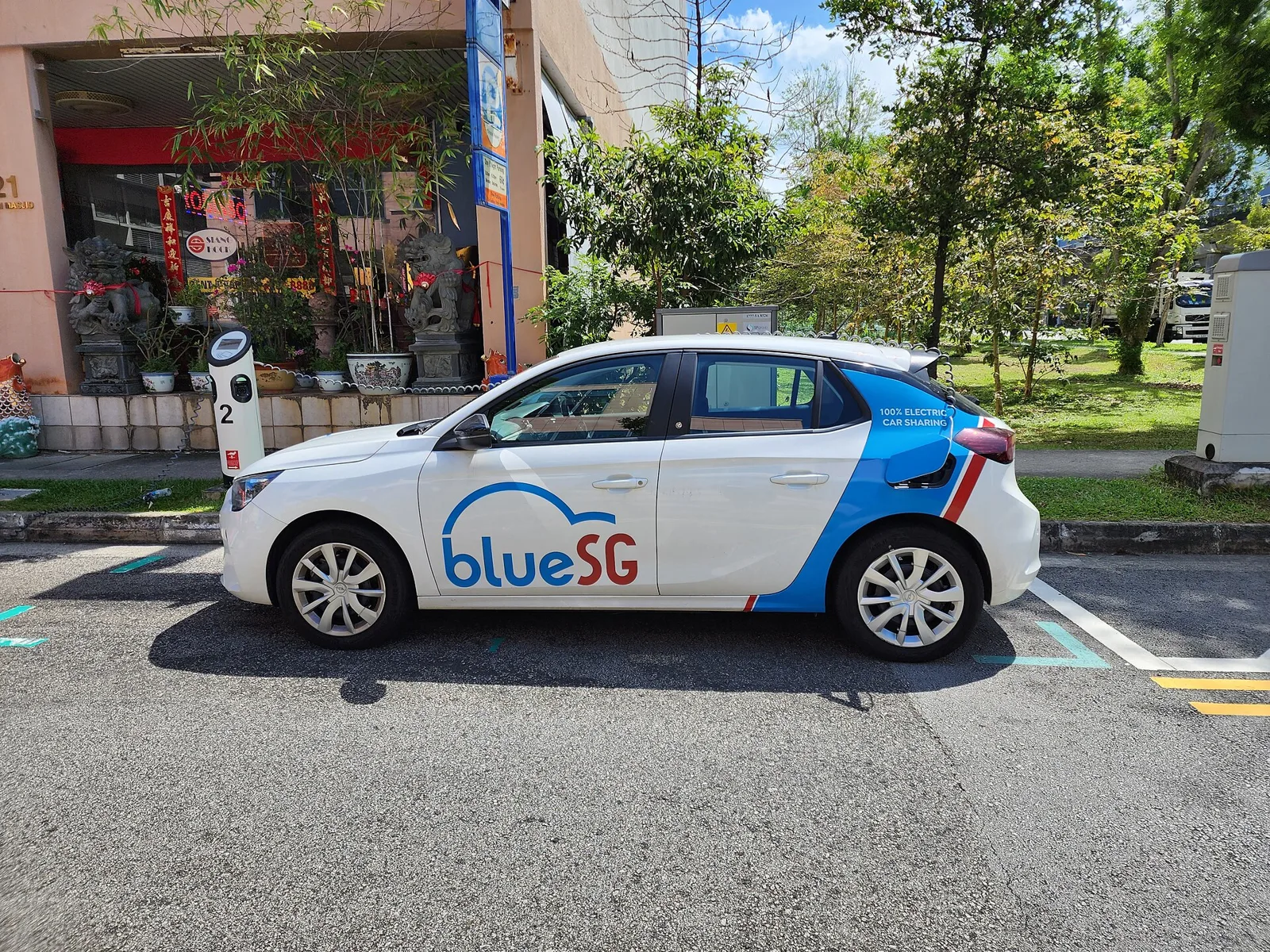
Asia-Pacific is projected to grow fastest, at 15.8% from 2025 to 2033, led by China, Japan and South Korea. Emerging markets include Brazil, Mexico, Uruguay, the Middle East and Africa. Free-floating services had 5.6 million users in 55 cities in 2017, and were expected to reach 14.3 million users and over 100,000 vehicles by the end of 2022, though some cities have reached a point where more cars add nothing. All commercial models now coexist, increasingly with artificial intelligence managing fleets, and a major trend is the adoption of electric vehicles, backed by governments and consumers.