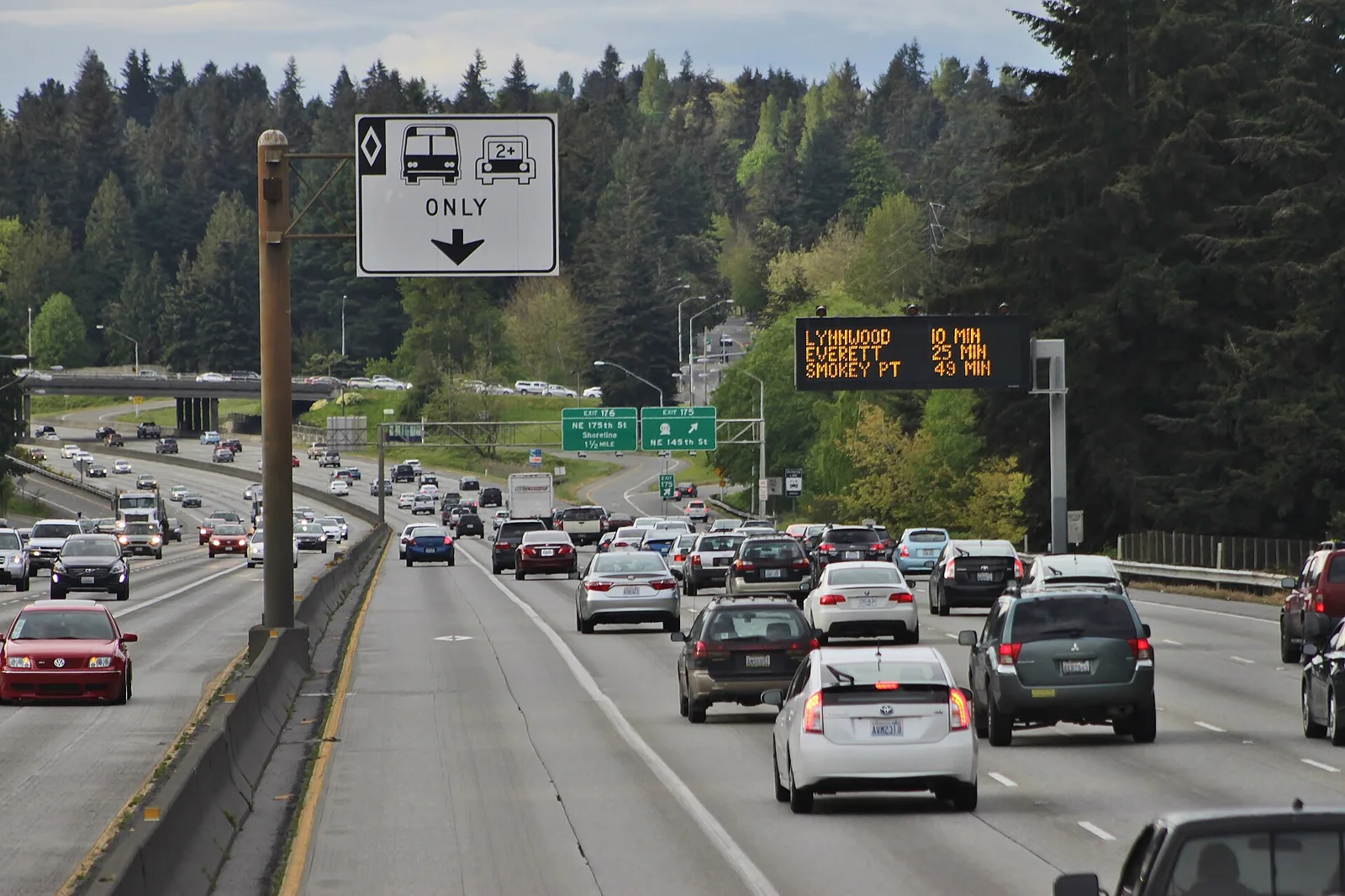
From Virginia's 29-minute carpool run against 64 minutes beside it, to Queensland announcing the end of its transit lanes, the evidence on shared commutes is mixed.
A high-occupancy vehicle lane is reserved for vehicles with a driver and at least one passenger, usually two or three occupants. Measured results vary: a Virginia facility cut a morning trip to 29 minutes against 64 in general lanes, while Queensland announced the end of its Transit Lanes in 2012, citing congestion.
On a stretch of Northern Virginia motorway in 2005, two carpool lanes carried more people through the morning peak than the three or four general lanes beside them, and the people in them got to work in less than half the time. The average trip took 29 minutes in the carpool lanes and 64 in the ordinary traffic.
That result explains why governments keep painting diamonds on tarmac, and why the idea has an unusually mixed record. HOV lane rules differ from one city to the next, the benefit is real in some places and doubtful in others, and the sums behind a shared commute are not quite what they seem.
What is an HOV lane?
A high-occupancy vehicle lane, also called an HOV, carpool, diamond, 2+ or transit lane (T2 or T3 in Australia and New Zealand), is reserved for vehicles carrying a driver and at least one passenger. Carpools, vanpools and transit buses qualify. The restriction may apply only at peak times, or at all hours.
The usual minimum is two or three occupants. Many jurisdictions let some others in too: motorcycles and charter buses, police and emergency vehicles, cleaner or green cars, and in places a lone driver who pays a toll. The purpose is to raise average vehicle occupancy and move more people, cutting congestion and air pollution.
The lanes come in several forms. They can be temporary or permanent, with concrete barriers. They can run both ways or reverse direction with the tide of traffic. They can be exclusive, concurrent with the flow, or contraflow, working only during peak periods.
Two lanes carried more people than three or four, in less than half the time.
Which HOV lane rules apply where?
| Place | Minimum occupancy | Details |
|---|---|---|
| Northern Virginia, I-95/I-395 | 3 or more | Two reversible barrier-separated lanes, 30 mi (48 km); weekday rush hours |
| Michigan, I-75 Oakland County | HOV at peak times | One lane each way, 6 a.m. to 9 a.m. and 3 p.m. to 6 p.m. Monday to Friday; open to all at other times |
| Jakarta, Three in One | 3 or more | Weekdays, 7:00 am to 10:00 am and 4:30 pm to 7:00 pm; replaced by odd-even plate rationing from 30 August 2016 |
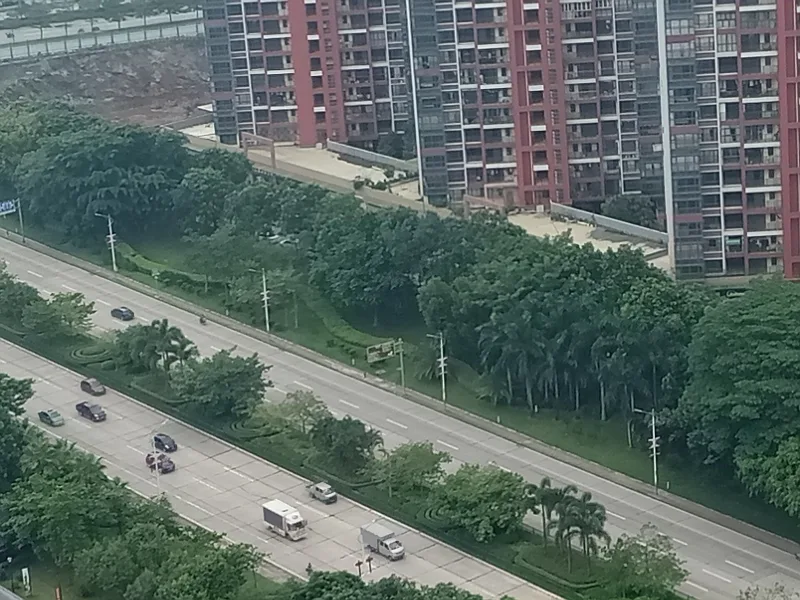
| Shenzhen, Binhai Avenue | 2 or more | Since 25 April 2016; 7:30 am to 9:30 am and 5:30 pm to 9:30 pm |
| Chengdu, Kehua Road and Tianfu Avenue | 2 or more | From 23 January 2017; 7:00 am to 9:00 am and 5:00 pm to 7:00 pm |
| Auckland, motorway priority lanes | 2 or more | Left-side on-ramp lanes that bypass the ramp meter; usable at any time |
| Leeds, A647 | 2 or more | Opened 1998, 1.5 km (0.93 mi); a full-time bus lane by 2022 |
| Linz, Austria | 3 or more | 2.8 km (1.7 mi), opened 1999 |
Times matter as much as headcounts. Michigan's lanes are restricted only in the morning and afternoon peaks; outside those windows every driver may use them regardless of occupancy. Auckland's priority lanes sit on the left of motorway on-ramps, letting vehicles with two or more people skip the ramp meter signal, and trucks, buses and motorcycles can use them too. Jakarta's rule began with 7:00 am to 10:00 am only, and widened after bus rapid transit arrived in December 2003.
Do carpool lanes get you there faster?
Where lanes are well used, yes, according to the figures from the places that measured them. The Virginia facility in 2005 moved 31,700 people in 8,600 vehicles during the three-hour morning peak, an average of 3.7 per vehicle. The general lanes moved 23,500 people in 21,300 vehicles, or 1.1 per vehicle.
Toronto produced similar numbers. The Ontario Ministry of Transportation estimated in 2006 that commuters on Highways 403 and 404 were saving 14 to 17 minutes a trip compared with before the HOV lanes opened. Rush-hour speeds on the 403 lanes averaged 100 km/h (62 mph), against 60 km/h (37 mph) in general traffic. The ministry also estimated that almost 40% of eastbound morning commuters on the 403 were carpooling, up from 14% in 2003, and 37% of westbound afternoon commuters, up from 22%.
In California, HOV lanes in 2006 were operating at two-thirds of capacity and carried an average of 2,518 persons an hour at peak, substantially more than the congested general lanes. The US Federal Highway Administration (FHWA) says the contraflow bus lane on the approach to New Jersey's Lincoln Tunnel handles the most peak-hour persons of any HOV facility with utilisation data, with 23,500 in the morning peak hour and 62,000 across the four-hour morning peak.
The case against
Not everyone is convinced. Though most governments sanction carpool lanes, some doubts remain about their overall efficacy. The worry is that many lanes restricted to carpools at peak times are seldom occupied by carpools in the traditional sense and are often empty. If freeway capacity is effectively reduced, solo drivers crawl in the remaining lanes, and the result can be a net rise in fuel use.
Queensland acted on that argument. In 2012 its government announced it would end its Transit Lanes, claiming they created congestion and delays, and the RACQ motoring group backed the move.
Europe took a different route from the start. As of 2012 there were only a few HOV lanes in operation, in part because European cities generally have better public transport and fewer big multi-lane city motorways than the US and Canada. Average car occupancy in most European cities sits around 1.3 persons per vehicle, which is low, and the emphasis has been on bus lanes and bus priority measures.
The first European attempt was in the Netherlands, a 7 km (4.3 mi) HOV 3+ lane on the A1 near Amsterdam that ran from October 1993 to August 1994. It failed to attract enough users to outweigh public criticism, and it was turned into a reversible lane that general traffic could use, after a judge in a test case ruled that Dutch traffic law had no concept of a car pool, so the principle of equality was violated.
How did HOV lanes get started in the United States?
America's earliest freeway HOV lane opened in 1969 on Northern Virginia's Henry G. Shirley Memorial Highway, reserved for buses alone. In December 1973 it admitted carpools of four or more, the first time buses and carpools shared an HOV lane over a long distance. The second, in 1970, was the contraflow bus lane at the Lincoln Tunnel approach in Hudson County, New Jersey.
California's first permanent facility, in April 1970, let qualifying traffic bypass the toll plaza of the San Francisco-Oakland Bay Bridge. The El Monte Busway in Los Angeles began as buses only in 1973. A strike by bus operators let three-person carpools use it for three months in 1974, and from 1976 the 3+ rule became permanent. In 2013 the lane was converted to a high-occupancy toll operation, so low-occupancy vehicles could bid for spare capacity.
Oil and air quality pushed the idea along. The 1973 Arab Oil Embargo lifted interest in ridesharing, and states started to experiment. The 1974 Emergency Highway Energy Conservation Act set a 55 mph (89 km/h) limit and, for the first time, federal funding for ridesharing; a 1978 act made that funding permanent. Los Angeles issued a plan in 1973 to convert 184 mi (296 km) of lanes to bus and carpool use, yet the first project in the county was built in 1985, and by 1993 there were only 58 mi (93 km).
The policy turned in October 1990, when an FHWA administrator's memorandum said the agency strongly supported HOV facilities. The 1991 Intermodal Surface Transportation Efficiency Act (ISTEA) made HOV lanes eligible for air quality funds, gave HOV projects a 90% federal matching ratio and let states define an HOV as two occupants.
Where the lanes are today
By 2009, California had the most HOV facilities, with 88, followed by Minnesota with 83, Washington with 41, Texas with 35 and Virginia with 21. The longest continuous facility, as of October 2016, is on I-15 in Utah: Layton to Spanish Fork covers about 72 mi (116 km), and a lane in each direction brings the total to 144 mi (232 km). The I-495 Capital Beltway around Washington is shorter at 56 mi (90 km), but with two HOV lanes each way it totals 224 mi (360 km).
Canada followed in the early 1990s with facilities in Greater Vancouver and Toronto, then Ottawa, Gatineau, Montreal and Calgary. As of 2010, highway HOV lanes totalled about 150 km (93 mi) at 11 sites in British Columbia, Ontario and Quebec. Arterial roads added over 130 km (81 mi) at 24 sites. Temporary lanes were added to Greater Toronto Area highways for the 2015 Pan American Games.
What about Australia and New Zealand?
The first HOV lane in Australia, a Transit Lane marked T2 or T3, opened in February 1992 on the inbound Eastern Freeway in Melbourne. T2 lanes followed on Hoddle Street in May 2005, and by 2012 Canberra, Sydney and Brisbane had T2 and T3 facilities too. Auckland has several short HOV 2+ and 3+ lanes known as T2 and T3, including a T2 lane on Tamaki Drive. A one-year trial starting in September 2017 opened eleven of its lanes to electric vehicles.
Does carpooling itself still happen?
Carpooling is the practice of sharing journeys, putting several people into one car. Sharing cuts each person's fuel, toll and stress costs and reduces air pollution, emissions, congestion and the need for parking. In 2009 carpooling represented 43.5% of all US trips and 10% of commute trips. By 2025, about 8.5% of US workers carpooled to work while 68.8% drove alone, and over 60% of carpool commutes were "fam-pools" of family members.
The long slide is part of the story. Commute carpooling peaked in the US in 1970 at a 20.4% share and fell to 9.7% by 2011. Much of the decline is attributed to gas prices falling 45% in the 1980s. The share had recovered slightly to 10.7% by 2005, as the internet made matching easier, before the 9.7% of 2011. The practice first became prominent as a rationing measure in the Second World War, when the Office of Civilian Defense urged neighbourhood councils to get four workers into each car, saving rubber, and it came back after the oil crisis of 1973 and the energy crisis of 1979.
Who carpools matters for lane design. Commuters are likelier to share where more jobs are nearby and residential density is higher, and when fuel prices and commutes are higher. People who work long hours, older people and homeowners are less likely to.
What it costs to share
Shared costs are usually split equally and cover fuel and any tolls. The driver is not trying to make money, only to spread a trip they would make anyway. Add in depreciation, maintenance, insurance and taxes and the figure rises to around $1 per mile. Long trips often use partial rides, with passengers paying by the distance they travel.
The obstacles
One survey found flexibility the most common reason people did not carpool, since a shared ride struggles to cope with stops on the way or changing work patterns. Some schemes offer "sweeper" services with later departures or a guaranteed ride home through a local taxi firm. Reliability is a second issue: without a critical mass of participants, matches are hard to find, and agreed rides sometimes fall through, a problem some online marketplaces tackle by billing passengers who do not turn up.
Riding with strangers worries some people, though the risk of crime is small. Reputation systems flag problem users and let responsible ones build trust. In Hungary, carrying a paying passenger without a taxi licence, invoice and tax is a tax crime, and in a 2011 crackdown undercover tax officers posing as passengers fined several people.
Where this goes next
The recent record shows a patchwork rather than a single direction. Michigan opened its first HOV lanes on 24 October 2023. Leeds converted its pioneering lane into a full-time bus lane by 2022. Jakarta swapped Three in One, which had spawned paid car jockeys riding along to beat the rule, for odd-even plate numbers in 2016.
On the other side of the lane, structured carpooling networks have been developed in France and Switzerland as a complement to public transport. They run on fixed routes with set stops, much like bus lines, to cut solo driving and widen travel choices on the fringes of cities and in rural districts where public transport is thin.