A Northamptonshire estate team that beat Ferrari, a CanAm outfit that changed nationality, a champion's own team and a pay-driver constructor.
Hesketh, Ensign, Shadow and Embassy Hill were independent teams that entered Formula One in 1973. Hesketh and Shadow each won one Grand Prix, Ensign scored 19 points and no podiums, and Embassy Hill ended with Graham Hill's death in a plane crash in 1975.
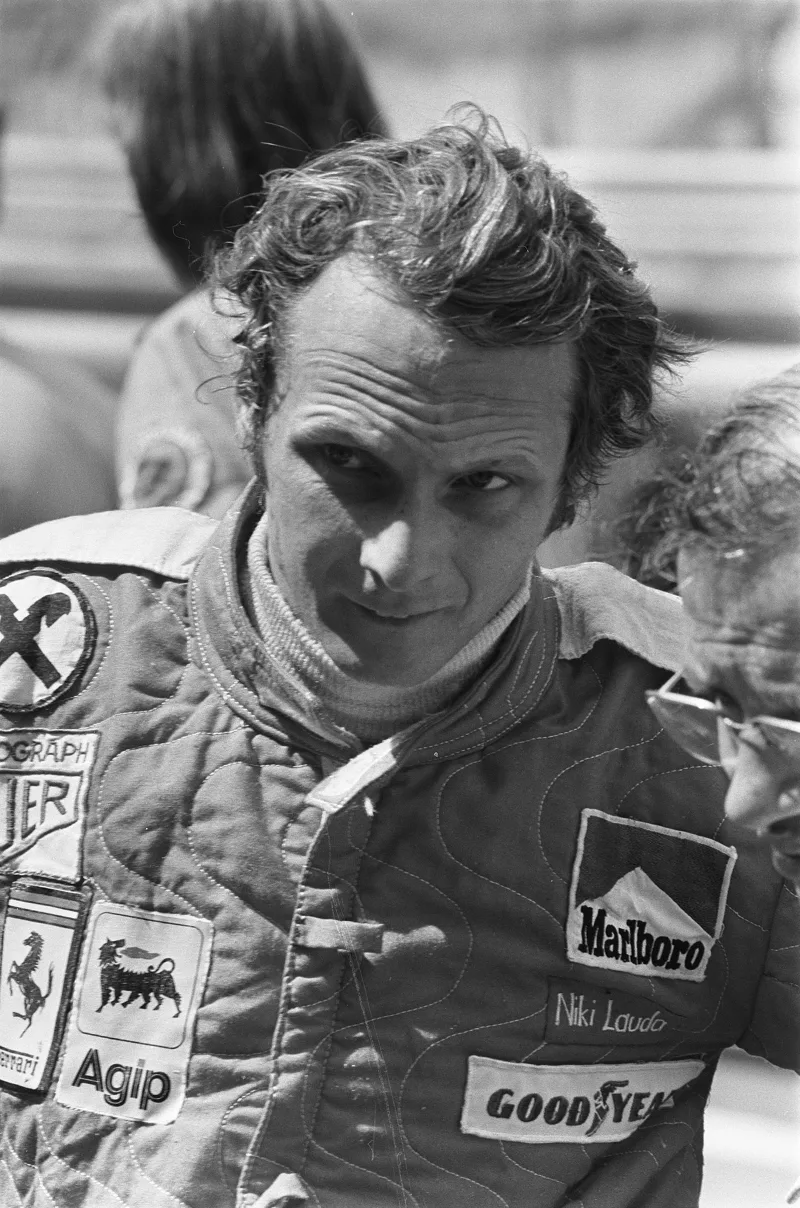
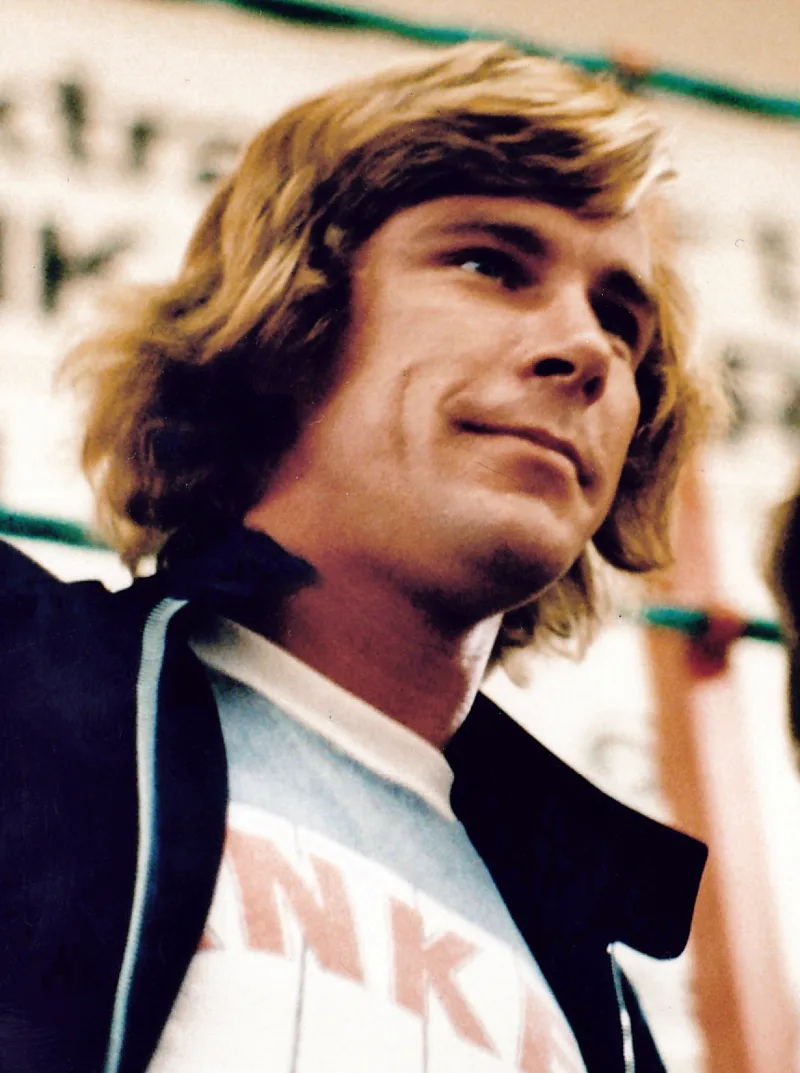
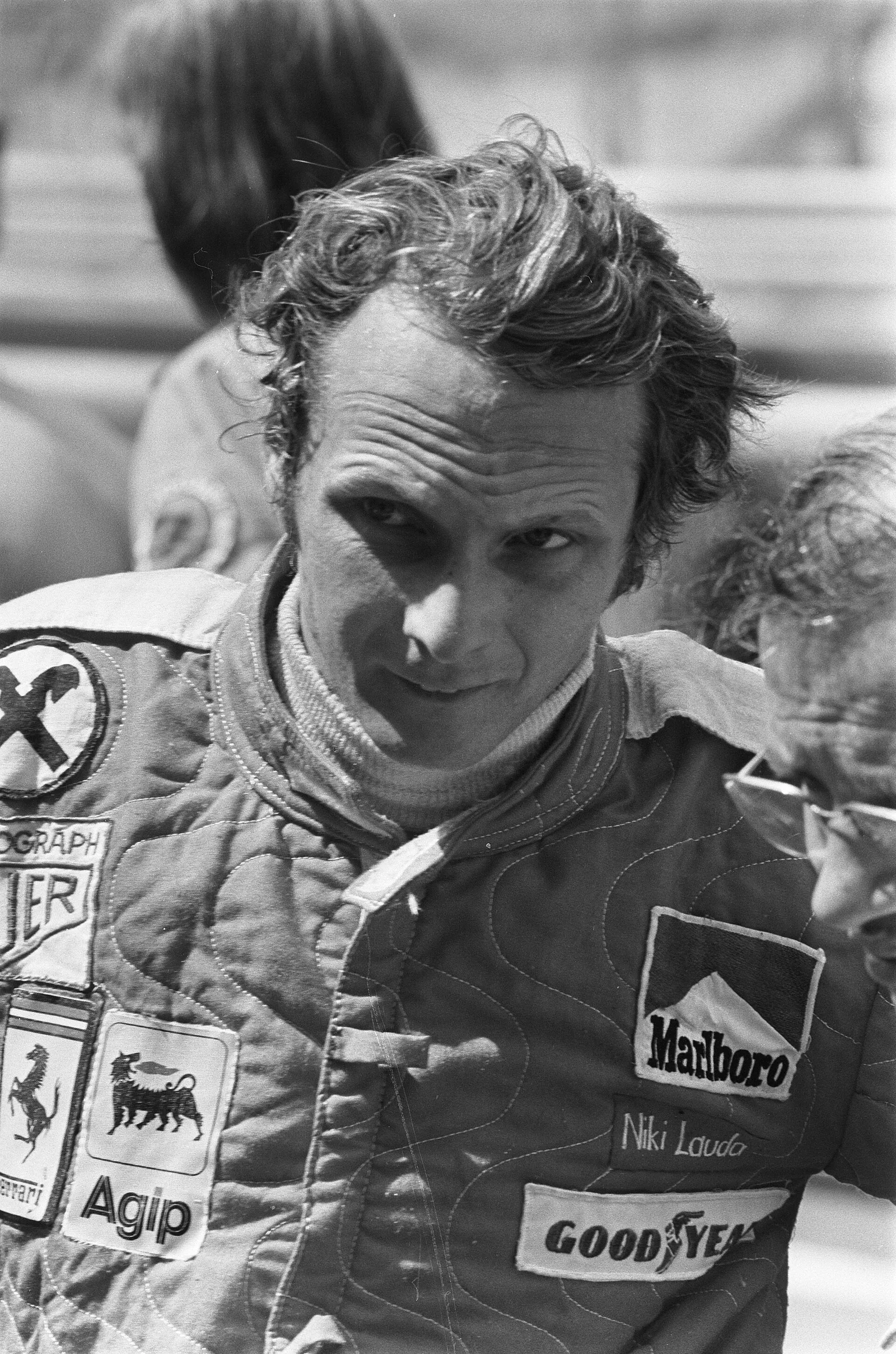
In 1975 a team run from the stables of a country estate in Northamptonshire beat Ferrari in the wet-dry Dutch Grand Prix. James Hunt held off Niki Lauda's dominant car, and Hesketh Racing had its only victory in 52 World Championship races. Within months, its owner announced he could no longer afford to produce the next British world champion. Hesketh, Ensign, Shadow and Embassy Hill each fought through the 1970s as independents, two Grand Prix wins between the four of them, and the stories end in a merger, a closure and a plane crash.
Which independent teams raced in Formula One in the 1970s?
Four British-based names stand out: Hesketh, Ensign, Shadow and Embassy Hill. All four entered in 1973. Hesketh was a wealthy amateur's project, Shadow came out of American sports car racing, Embassy Hill was a former world champion's own team, and Ensign was a constructor launched on the backing of a pay driver.
| Team | In Formula One | Standout result | How it ended |
|---|---|---|---|
| Hesketh Racing | 1973 to 1978, 52 Grands Prix | One win, 1975 Dutch Grand Prix; fourth in the 1975 constructors' championship | Folded in 1978 after a run of failures to qualify |
| Shadow Racing Cars | Founded 1973 as a Formula One team | One win, 1977 Austrian Grand Prix | Wound up by Teddy Yip in 1980 after the seventh of 14 races |
| Embassy Hill | Debut 1973, own chassis from 1975 | Fifth for Alan Jones in the 1975 German Grand Prix; a point in Sweden in 1974 | Ended by the crash that killed Graham Hill and five others on 29 November 1975 |
| Ensign Racing | From 1973, 133 Grands Prix | Fourth in the 1981 Brazilian Grand Prix, with 19 points in total | Merged into Theodore after 1982; that team shut down in late 1983 |
A team run from a country estate's stables beat Ferrari in 1975, then could no longer afford to carry on.
How did Hesketh Racing start?
Lord Hesketh entered Formula Three events around Europe in 1972 with a driver named Anthony 'Bubbles' Horsley, with the stated aim of enjoying themselves. The team ran from the stables of his Easton Neston family estate. It then employed James Hunt, who was unemployed at the time, with a reputation for being very fast and for crashing a lot.
The Hesketh team gained a name for playboy style: it turned up at races in Rolls-Royce cars, drank champagne whatever the result and booked everybody into five-star hotels. Between them, Hunt and Horsley wrecked both Formula Three cars before the year was half over, and Horsley moved from the cockpit to management. A rented Formula Two March filled out 1972; for 1973 Hesketh bought Hunt a Surtees Formula Two car, which he wrecked at Pau. Lord Hesketh then worked out that top-flight racing cost hardly more than Formula Two, and moved up to Formula One.
How did Hesketh win a Grand Prix?
With speed first, then a purpose-built car. Hesketh hired a Surtees TS9 for the Race of Champions, a non-title event at Brands Hatch, and Hunt came third. That led to a March 731, modified at the Easton Neston estate by a junior March Engineering designer, Harvey Postlethwaite. Hunt was running sixth at Monaco in 1973 when the engine let go. Next time out, in France, he picked up a point, then took fourth in Britain, third in the Netherlands and second in the United States at the end of the season.
For 1974 Postlethwaite drew an all-new car, the Hesketh 308, in time for the Silverstone International Trophy, where Hunt took the win. Its championship debut came in South Africa. Hunt took third in Sweden, Austria and the United States. For 1975 several 308s were sold on. Harry Stiller Racing gave Alan Jones his Grand Prix debut in one, and Polar Caravans bought a chassis. Meanwhile, Horsley was developing into an efficient team manager.
The win came in the Netherlands in 1975. Hunt kept Lauda's Ferrari behind him in changeable conditions, and also led at the British and Austrian Grands Prix on the way to fourth overall in the championship.
What happened to Hesketh after James Hunt left?
Lord Hesketh had run the team without sponsorship, and in late 1975 he announced that he could no longer afford the effort. McLaren offered Hunt its lead seat in place of Emerson Fittipaldi. Postlethwaite carried his upgraded 308C design to Wolf-Williams Racing, while Horsley upgraded the 308 into the 308D and carried on as Hesketh Racing. Harald Ertl drove it, with Penthouse Magazine and Rizla coming in as sponsors. Ertl's seventh in the British Grand Prix was as good as it got that year, and the future Williams engineer Patrick Head noted significant aerodynamic problems at the rear of the car.
Frank Dernie designed the 308E for 1977, driven by Rupert Keegan alongside Ertl, later joined by Hector Rebaque as Horsley tried to bring money in. Keegan's seventh in Austria was the best result. In 1978 the team slimmed to one car, with backing from Olympus Cameras, but the car was barely upgraded. Divina Galica missed the cut in the first two races, and Eddie Cheever then got into the South African Grand Prix, only to retire with a fractured oil line. Derek Daly was next. At the rain-hit International Trophy at Silverstone, in his first outing, he ran with Hunt's McLaren for the lead until a stone cracked his visor. The next three championship races all ended in non-qualification, and the team folded.
One more car came out of the Hesketh workshops: the Ibec-Hesketh 308LM, a one-off sports prototype built in 1978. Postlethwaite designed it around many components of the 308, with a detuned 3.0-litre Cosworth DFV engine, for the insurance broker Ian Bracey, who wanted to win the Le Mans 24 Hours outright. Production moved to Lyncar in Slough, which completed it in a little over five weeks. The total cost was less than 100,000 pounds. Guy Edwards qualified it 13th at an average speed of 133 mph, but the engine failed in the 19th hour.
What was Embassy Hill?
Embassy Racing With Graham Hill was started by the two-time World Champion Graham Hill, who left Brabham unhappy with the atmosphere there and announced his own team in late 1972, as owner and driver. He set up in a warehouse on a Hanworth industrial estate in west London, and put together about 20 engineers and mechanics. Embassy, Imperial Tobacco's cigarette brand, provided the sponsorship, and the first cars were bought from Shadow.
That first year went poorly. The best finish was ninth at Zolder, last of the 9 cars still running, after the former champion had started 23rd of 23. For 1974 the team bought Lola chassis, called the Lola T370. Hill drove all season, and his sole point of 1974 came in Sweden. Guy Edwards, Peter Gethin and Rolf Stommelen took turns in the second car.
A new car arrived in 1975. Designed as the Lola T371, it was renamed the Hill GH1 when its designer, Andy Smallman, quit Lola to join Hill's team full-time. The second race of the GH1, the Spanish Grand Prix, was marred when the rear wing mounting on Stommelen's car collapsed. His car pitched into the crowd and four people were killed; Stommelen, who had been leading comfortably, was injured and missed much of the season.
After failing to qualify at Monaco, a circuit where he had been victorious five times, Hill stopped driving. Tony Brise, considered a rising star, took over, finishing sixth in the Swedish Grand Prix. Alan Jones filled in for Stommelen for the bulk of his absence and finished fifth in Germany.
What happened to Embassy Hill in November 1975?
Smallman's next design, the GH2, was the first Formula One car he drew from a blank sheet for Hill's team, intended for 1976 and built around the Cosworth DFV. It looked like the Brabham BT44 and McLaren M23 in miniature. Brise tested it at Silverstone in late summer 1975 and again at Paul Ricard in November, where it was much faster than the GH1.
Graham Hill was at the controls of the team's Piper Aztec on the evening of 29 November 1975, flying back from Paul Ricard to London. His passengers were team manager Ray Brimble, Brise, Smallman and two mechanics, Terry Richards and Tony Alcock. Shortly before 10pm, in thick fog, the aircraft struck trees next to a golf course at Arkley, short of its planned landing at Elstree Airfield. Everyone on board was killed. Only deputy team manager Allan Turner and two mechanics were left, so it was impossible to carry on. Walter Wolf bought most of the assets and combined them with Hesketh and Williams equipment to build his new team. A GH2 had been built, and one now survives in a British automobile museum.
How did Shadow go from CanAm to Formula One?
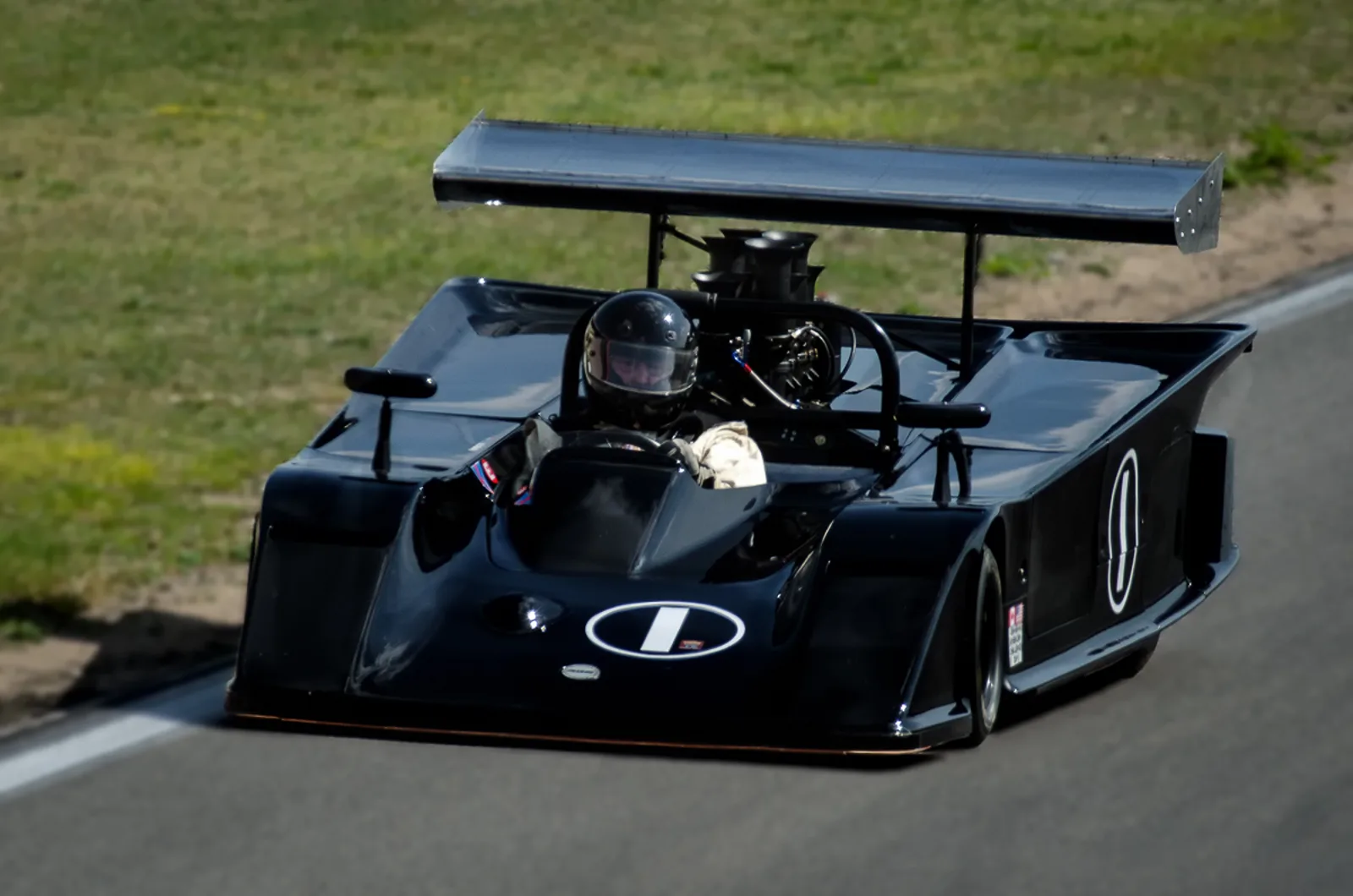
Don Nichols founded Shadow in California in 1968, as Advanced Vehicle Systems, to race in the CanAm series. The first cars, the Mk.I, used very small wheels for low drag; they were quick but not reliable. Backing from Universal Oil Products helped, and the shortened 1974 series belonged to Shadow's DN4, though by then it was mostly beating privateers, as the works McLaren and Porsche teams had left.
Late in 1972 Nichols announced a Formula One entry for 1973, with cars sponsored by UOP and designed by Tony Southgate. The DN1 first appeared at the South African Grand Prix, with Jackie Oliver and George Follmer driving; one car also went to Graham Hill's team. For 1974 Shadow hired Peter Revson and Jean-Pierre Jarier. Revson was killed in practice for the South African Grand Prix when the suspension failed on his DN3, and Tom Pryce replaced him.
Shadow reached its peak from 1975 to 1977. The new DN5 gave Jarier pole position in the first two Grands Prix of 1975, though it suffered mechanical failure in both races. Most Shadows used Ford Cosworth DFV engines, producing around 490 bhp. Later that year a DN7 appeared with a Matra V12 of about 550 bhp, but budget problems made it a one-off. Pryce took the 1975 Race of Champions, a non-championship event. He died at the 1977 South African Grand Prix, in an accident that also involved a marshal running across the track to deal with a small fire on the other Shadow. Alan Jones replaced him and gave Shadow its only Grand Prix win, in Austria that same year.
The win also carried a footnote. Shadow raced on an American licence for 1973 to 1975, then a British one until 1980, so it became the first Formula One team to officially change nationality, and the Austrian victory came under the British flag.
Why did Shadow decline?
After 1977 the team slid. Jones left for Williams. A majority of the staff, along with the sponsor Franco Ambrosio, left to form Arrows, taking the young Riccardo Patrese. Villiger tobacco sponsorship and the experienced Clay Regazzoni and Hans-Joachim Stuck brought only three fifth places in 1978. In 1979 the drivers were Jan Lammers and Elio de Angelis; de Angelis' fourth place in the United States Grand Prix was the only points finish of the year, after which he left for Lotus.
In 1980 the team was absorbed into Theodore Racing. Its first ground effect chassis was largely uncompetitive and qualified only once in seven races, with Geoff Lees, David Kennedy and Stefan Johansson driving. With the sponsors gone, Teddy Yip closed the team after race seven of the year's 14.
Is the Shadow name still racing?
In 2020, 40 years after its last Formula One race, the Italian entrepreneur and driver Bernardo Manfre revived the Shadow Racing Cars name as an Italian tuning and luxury brand. It has announced plans for a hypercar and a modified Dodge Challenger, and competes in the NASCAR Whelen Euro Series as MK1 Racing Italia, with the No. 16 and No. 17 Shadow DNM8.
What was Ensign Racing?
Morris Nunn founded Ensign and drew its first cars himself over two seasons. It entered Formula One in 1973 backed by Rikky von Opel, a pay driver who had won the 1972 British Formula Three Championship with the team. Von Opel finished only two races that year, and the best result was 13th in the British Grand Prix. He left after the first race of 1974 for a works Brabham drive.
Points arrived in 1975 with sponsorship from the Dutch company HB Bewaking, which led the team to sign Dutch drivers. Gijs van Lennep took sixth place in Germany for Ensign's first points. In 1976 Chris Amon started third in Sweden and sixth in Britain, yet his only points came in Spain, where he was fifth. In 1977 Regazzoni scored five points, with fifth in Italy and the United States. Nelson Piquet made his Formula One debut in an Ensign at the 1978 German Grand Prix.
In 1980 Regazzoni's brake pedal broke at Long Beach and he crashed at the Queen's Hairpin into the parked car of Ricardo Zunino, an accident that left him paralysed. The 1981 season brought the team's best result. Marc Surer finished fourth in the rain in Brazil, with fastest lap, and also sixth at Monaco, while Eliseo Salazar took sixth in the Netherlands. That year the team also left Chasetown for a new base in Lichfield.
How did Ensign end?
In 1982 Roberto Guerrero drove for Ensign and finished only two races, though its cars also took part in the last year of the British Formula One Championship, which Jim Crawford won in an AMCO Ensign. After the season the team merged into Theodore, which it already had ties to through the financier Teddy Yip. The combined team ran under the Theodore name. Guerrero and the main car designer carried on, but the Theodore team shut down late in 1983.
In total Ensign entered 133 Grands Prix with 155 cars and scored 19 points, without a podium. Nunn went on to become a prominent chief engineer in the American Champ Car series, taking titles with Alex Zanardi and Juan Pablo Montoya at the end of the 1990s.
What links the four teams?
People and parts. Embassy Hill began with cars bought from Shadow and ran alongside the Shadow works team. Alan Jones made his debut in a Hesketh run by Harry Stiller Racing, drove for Embassy Hill, and won for Shadow. Guy Edwards drove for Embassy Hill and Hesketh and shared the Ibec-Hesketh Le Mans car. Vern Schuppan drove for both Ensign and Embassy Hill. Walter Wolf used assets from Hill and Hesketh for his own team, and Teddy Yip was there at the end of both Shadow and Ensign.
Where can you still see these cars?
Ensigns still run, and win, in historic racing: at the Historic Grand Prix of Monaco and in the FIA Historic F1 Championship. The one finished Hill GH2 is in a British automobile museum. The Shadow name is back in racing through the NASCAR Whelen Euro Series.