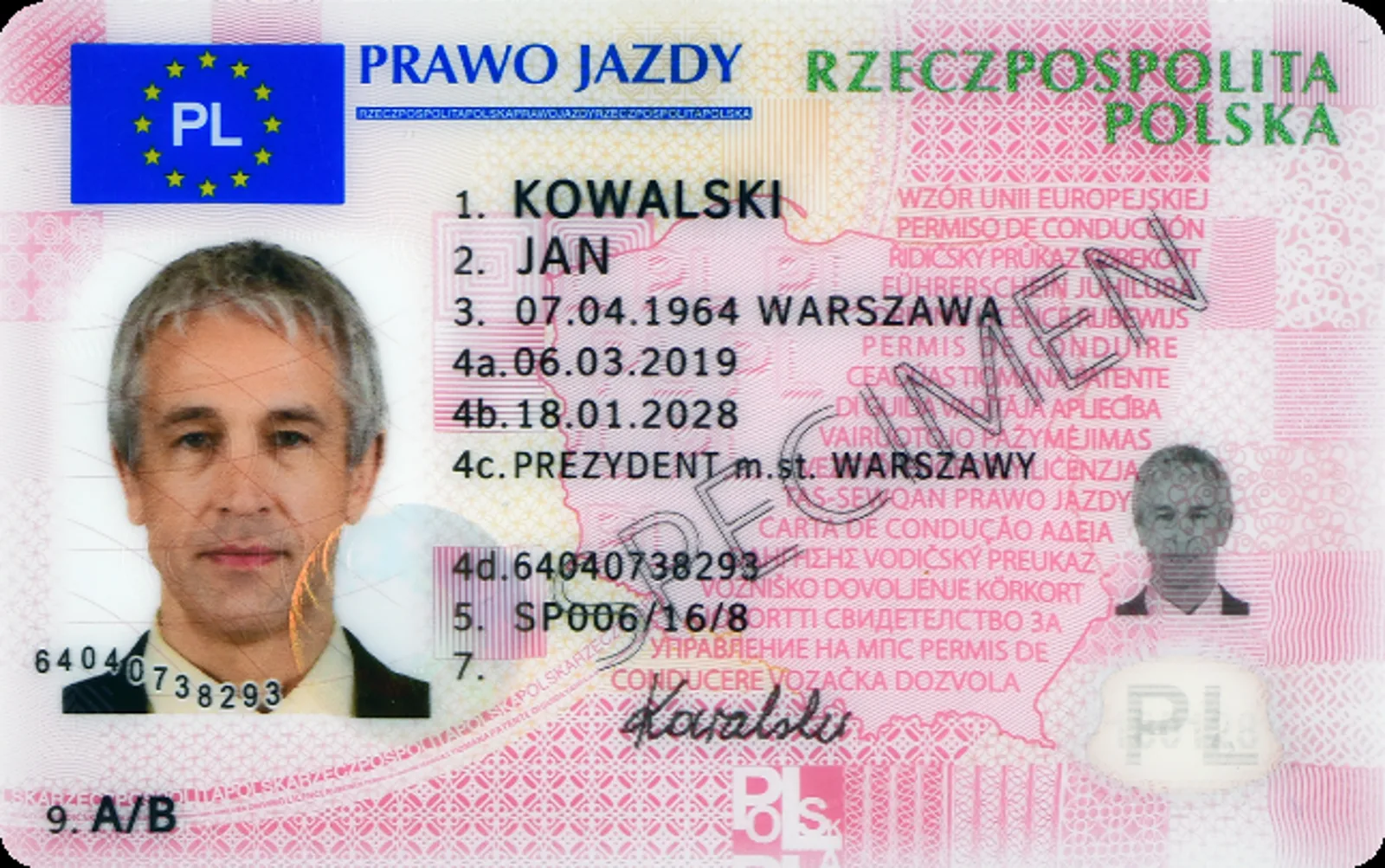
Graduated driver licensing began in New South Wales in 1966 and now shapes learner, provisional and full licences from Britain to Hong Kong. What each stage asks of a new driver.
Graduated driver licensing gives new drivers experience in stages: a learner permit with supervision, a provisional or probationary licence with restrictions such as passenger limits or night curfews, and finally a full licence. The aim is to cut the risk of serious injury or death.
Graduated licensing was born in New South Wales in 1966, when the state developed the first systems with a learner stage, an intermediate or provisional stage and then a full licence. The model has since spread, with local twists, across the world.
What is graduated driver licensing?
Graduated driver licensing, or GDL, is a system that gives new drivers experience and skills gradually, so that the risk of serious injury or death falls. Traditionally new drivers move through three stages: a learner's permit, a probationary or provisional licence, and a full driver's licence.
GDL systems often restrict night driving, expressway use and unsupervised driving. Those limits are typically lifted over time and with further testing until the driver holds a full licence. The restriction is the point: it is a way of letting someone gain miles without exposing them to every hazard at once.
The first graduated licensing systems were developed in New South Wales in 1966.
What are the learner licence requirements?
A learner's permit usually requires a minimum age and passes in vision and written knowledge tests. The tests examine the rules of the road, hypothetical situations such as junctions, speed limits and signs, and awareness of hazards. Applicants below a set age may need permission from a parent or guardian.
Once issued, the permit comes with conditions. Holders normally need a qualified, licensed driver beside them, must stay free of alcohol and drugs, and may face speed and road limits or caps on passengers. A learner may have to go a minimum period without moving violations and at-fault crashes before graduating. In many places the car must carry signs showing that supervised training is under way, and the learner may have to complete a logbook of driving experience, countersigned by the supervisor or trainer.
Moving from learner to provisional status typically needs a minimum age and a pass in an on-road driving test. Some jurisdictions offer another route made up of continuous, competency-based training and assessment under an accredited trainer.
What are the rules for a provisional licence and P plates?
Holders of an intermediate, provisional or probationary licence can drive without supervision, but restrictions remain. Night hours, typically from midnight until about sunrise, and the carrying of passengers can bring a requirement for a fully licensed supervisor in the car.
Drivers usually have to stay clear of moving violations and at-fault crashes for a set period. In some places the blood must be clear of alcohol and other drugs, speeds are capped, and mobile phones are off limits. Some jurisdictions also want a P sign displayed outside the vehicle, which tells other road users and police what licence the driver holds, and so which restrictions may apply.
A full licence generally requires a specific minimum age, a minimum period of driving experience, and possibly a final road test or a hazard perception test.
How does a provisional licence work in the UK?
Applications open at 15 years and 9 months in Great Britain and at 16 years and 10 months in Northern Ireland, and no theory test is needed first. Actually learning on the road starts at 17 for a car and 16 for a moped or light quad bike. The car age drops to 16 for anyone on, or applying for, the upper or enhanced tier of the mobility element of PIP or DLA. The DVLA runs the system in England, Scotland and Wales and the DVA in Northern Ireland.
The conditions are plain. L plates, or D plates in Wales, go on the front and rear. The supervisor must be at least 21 and must have held a full licence for the same category and gearbox type for three years or more. Learners may not tow a trailer, motorcycle learners may not carry a pillion passenger, and car learners may use motorways in Great Britain only with an Approved Driving Instructor in a dual-control car. In Northern Ireland learners are limited to 45 mph (72 km/h) and cannot use motorways at all.
To get a full licence the learner passes three sections: a multiple-choice theory paper on the Highway Code, a video Hazard Perception Test and a practical drive. There is no minimum number of hours and no minimum time to hold the provisional licence. After passing, a driver can drive unaccompanied. Within two years the provisional licence can be handed in for a full one.
After the test in Britain
England, Wales and Scotland place no restrictions on a newly qualified driver, and Great Britain has no probationary period, although the subject is under debate. There is one sharp edge: a newly qualified driver who gets six penalty points within two years of passing has the licence automatically revoked and must pass the full test again. That applies in Northern Ireland too.
Some new drivers in Britain choose to display green P plates. These are optional and can stay up as long as the driver likes. Northern Ireland has used orange R plates for one year after the test, with a 45 mph (72 km/h) limit; failing to display them brings two penalty points and a fine. The Isle of Man uses red R plates for a year, with a limit of 50 mph (80 km/h). An optional Pass Plus course, with no final test, is open to drivers in Great Britain, and completing it can lead to lower insurance premiums.
How do other countries run the stages?
| Place | Starting point | What applies along the way |
|---|---|---|
| Great Britain | Provisional licence from 15 years 9 months | L plates (D in Wales), a supervisor over 21 with three years on a full licence, and six points in two years after passing revokes the licence |
| Northern Ireland | Provisional licence from 16 years 10 months | 45 mph (72 km/h) for learners, and orange R plates with the same cap for a year after the test |
| Germany | Accompanied driving at 17 | Normal licence at 18; zero alcohol for two years, with probation stretching to four after some violations |
| France | Accompanied driving from 15, after the theory test | Supervised driving under the Conduite Accompagnee programme |
| Sweden | Provisional licence from 16 | Medical report, optical exam and a lecture at a licensed driving school |
| Hong Kong | Probationary licence on first licensing | White plate with a red P, 70 km/h (43 mph) cap, no overtaking lane on highways, 12 months minimum |
| South Africa | Learner's licence at 16, 17 or 18 | Two years to obtain the full licence |
Germany, France and Sweden
Germany's scheme has two elements. At 17 a new driver may drive accompanied by an experienced person, such as a parent, who is named on the preliminary licence. The scheme is called Begleitetes Fahren. At 18 the normal licence is sent without extra tests. Throughout the first two years of holding a licence there is a zero alcohol limit and stricter punishment for rule violations, and some violations extend the probation to four years.
France has Conduite Accompagnee, accompanied driving from age 15 once the general theory test, nicknamed the code, has been passed. Swedish applicants start at 16, supplying a medical status report and an optical exam and sitting through a lecture at a licensed driving school; a theory test is not part of that first step.
Hong Kong and South Africa
Hong Kong uses a graduated system whatever the driver's age. New licences for private cars, minivans and motorcycles begin as probationary licences with a minimum restricted period of 12 months. The driver must show a white plate with a red P at front and rear, keep to 70 km/h (43 mph) or the road's limit if lower, and stay out of the overtaking lane on highways. Probation is extended by six months for mild violations and the licence is voided for severe violations, or for two mild ones.
South Africa uses a time-based approach. A learner's licence is available from 16 for a motorcycle, 17 for a light motor vehicle and 18 for a heavy-duty vehicle, and the holder then has two years to get the full licence. The learner licences are split into code 1 for motorcycles, code 2 for vehicles of 3,500 kg (7,700 lb) or less, and code 3 for heavier vehicles.
How do the regions differ in what they emphasise?
North America concentrates on restrictions, and Europe on training. North American systems emerged in the late 1980s and 1990s, heavily influenced by a revamped system in New Zealand that drew on the writings of Professor Patricia Waller, who had advocated GDL since the 1970s. They are now in almost all US and Canadian jurisdictions and put particular weight on passenger restrictions and night-time curfews for young drivers.
European systems put much greater weight on the training of learners before solo driving and less on restrictions in the provisional phase. Young drivers there are typically older because minimum licensing ages are higher, and most learner practice comes from professional instructors rather than ad hoc supervision.
Australia draws on both. It combines restrictions with intensive training, then adds heavy enforcement: zero tolerance for speeding, for driving impaired by alcohol or other drugs, and for young drivers using mobile phones. Penalties include licence suspension, impounding of vehicles and traffic offender intervention programs. Cars driven by learners and provisional drivers carry L and P plates front and back, and the drivers must have their licence with them, which helps police identify young drivers and their vehicles. As in Europe, minimum ages are higher than in North America, and learners receive both professional lessons and informal supervised practice.
Does graduated licensing change insurance premiums?
The motor insurance industry generally supports graduated licensing. Some youth rights advocates, though, have accused insurers of charging new and young drivers in GDL jurisdictions premiums not much lower than in places without GDL, even though the system is supposed to reduce crashes. The complaint is mainly confined to jurisdictions with private motor insurance. Most state-run schemes do not discriminate on age or driving experience.
In Great Britain the Pass Plus scheme links to premiums more directly: it is optional, it ends without a final test, and completing it can lead to reduced insurance costs for new drivers.
How did driver licensing begin?
In 1888 Carl Benz obtained a written permit from the Grand Ducal authorities, after neighbours objected to the noise and smell of his Motorwagen. Mandatory licensing came to the United Kingdom on 1 January 1904 under the Motor Car Act 1903, with a minimum age of 17 and a speed limit of 20 mph (32 km/h); compulsory testing followed in 1934. Prussia introduced compulsory licensing on 29 September 1903, and in 1910 the German imperial government made licensing national.
North America's first licensing law took effect in New York on 1 August 1910, though it applied only to professional chauffeurs. New Jersey became the first state to require every driver to pass an exam in July 1913. Belgium was the last European country to bring in a test: until 1977 a permit could be bought and held without one. The Vienna Convention on Road Traffic of 1968 allows contracting parties to refuse permits for people under eighteen, and its rules on recognising foreign permits do not apply to learner-driver permits.
Where is this heading?
Northern Ireland changed course in 2026 by introducing graduated driver licensing. The period during which plates must be displayed after a successful practical test rose from 12 months to 24 months. Drivers under 24 face a restriction on carrying passengers at night for six months, with immediate family exempt. There is now also a mandatory minimum learning period of six months after the theory test before a practical test can be taken, and a training programme completed through a logbook.
In Great Britain a probationary period is still a matter of debate. The AA made two suggestions in October 2024: that drivers under 21 who have just passed should not carry passengers of a similar age during their first six months, and that going without a seat belt in that period should cost them six penalty points.