A Honda resort with an oval being demolished, a former Formula One host, a 500 million dollar upland circuit and Yamaha's Sugo complex.
Motegi is Honda's resort with a 4.801 km road course, Okayama hosted the Pacific Grand Prix in 1994 and 1995, Autopolis is an upland circuit opened in 1990, and Sportsland Sugo is a Yamaha-owned complex that opened in 1975. Super GT races at all four.
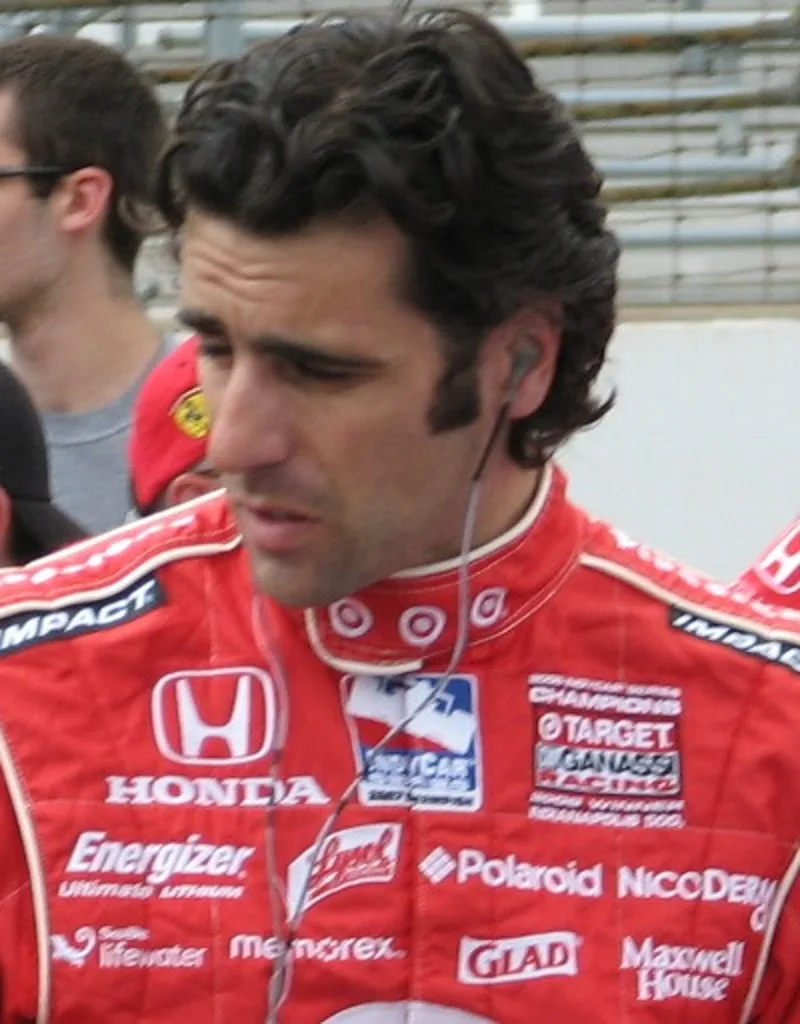
The only oval in Japan ever used for competitive racing is being torn down. Demolition of the oval at Mobility Resort Motegi began on 13 May 2026, and the space will become spectator seating and camping areas for future events. It was on this oval that Danica Patrick, in 2008, became the first woman to take an IndyCar victory.
Motegi is one of four circuits that carry Japanese racing outside the famous names of Suzuka and Fuji. The others are Okayama International Circuit, Autopolis and Sportsland Sugo. Each has its own owner, its own backstory and its own place on the Super GT and Super Formula calendars.
Motegi circuit: Honda's twin-track resort
Mobility Resort Motegi sits in Motegi, in Tochigi Prefecture. It was built in 1997 by Honda and originally called Twin Ring Motegi, after its two tracks: a 2.493 km (1.549 mi) oval and a 4.801 km (2.983 mi) road course. Honda built it as part of an effort to bring the CART series to Japan and learn more about American open-wheel racing. The name changed on 1 March 2022, the facility's 25th anniversary.
The oval
The oval was low-banked and egg-shaped, with turns three and four much tighter than one and two. CART ran the inaugural Indy Japan 300 there on 28 March 1998, won by the Mexican driver Adrian Fernandez, and continued until 2002. In 2003, when Honda entered the Indy Racing League, the race joined the IRL schedule. A NASCAR exhibition race in 1998, the Coca-Cola 500, was won by Mike Skinner and marked the first time Dale Earnhardt and his son raced against each other. The NASCAR Winston West Series held its 1999 finale there, won by Kevin Richards.
Honda had built the oval to develop its oval racing programme, but it did not win there in the first six years. Dan Wheldon took the first Honda victory in 2004. Patrick's win in 2008 came ahead of Helio Castroneves and remains her only IndyCar victory. The 2011 season was the last for IndyCar at Motegi, as organisers wanted to maximise viewing audiences. That year the road course was used instead because the 2011 Tohoku earthquake had damaged the oval.
The oval has since been used for extra parking during MotoGP weekends, and for Honda's annual Thanks Day, when Takuma Sato lapped it in the 2017 Indianapolis 500-winning car seven years after the last IndyCar race. The series measured its length differently: NASCAR and CART used 1.549 mi, while the IRL measured 1.520 mi (2.446 km) in 2003 and used that figure to 2010.
The road course
The 4.801 km road course shares garages and grandstands with the oval but is otherwise separate. Races cannot run on both at once, because teams have to cross the road-course pit lane and front straight to reach the oval. The road course runs clockwise, the oval counter-clockwise.
It is a stop-start layout of straights and hairpins, and by Japanese standards exceptionally flat. It is far busier than the oval ever was: Super Formula visits twice a year, Super GT and Super Taikyu once each, and local events fill most weekends. It can also be split into two short courses, mainly used for junior formula categories like F4 and FJ1600.
The road course is a favourite for motorcycles. It was the Pacific motorcycle Grand Prix venue between 2000 and 2003, and the Japanese round has been held there since 2004. In 2011, Casey Stoner and Jorge Lorenzo proposed boycotting the race over fears about radiation from the Fukushima Daiichi plant, even though independent experts said it was safe to live 80 km (50 mi) or more from the plant and Motegi is more than 120 km (75 mi) away. In the end every team turned up.
Facilities and difficulties
Motegi has more than racing. A North Short Course serves karting and Formula 4, and there is a 0.250 mi (0.402 km) dirt track and a trials course. Honda also runs a Collection Hall of historic racing and road vehicles and a Fan Fun Lab showing robotics and fuel-cell vehicles.
The design brings drawbacks. Putting a road course largely inside an oval pushes the grandstands far back, so sightlines for road racing can be poor and big screens are needed. Access is limited to two entry and exit points on a two-lane road, accommodation is scarce apart from the on-site hotel, and the main regional train lines do not serve the area. The stated capacity of about 65,000 is therefore set by traffic flow, not by seating, which is estimated at nearly 100,000 for road-course events and 80,000 for the oval.
The unofficial track record of 1:29.757 was set by Tomoki Nojiri in qualifying for the 2021 Super Formula round.
The only oval in Japan ever used for competitive racing is being torn down.
Okayama International Circuit
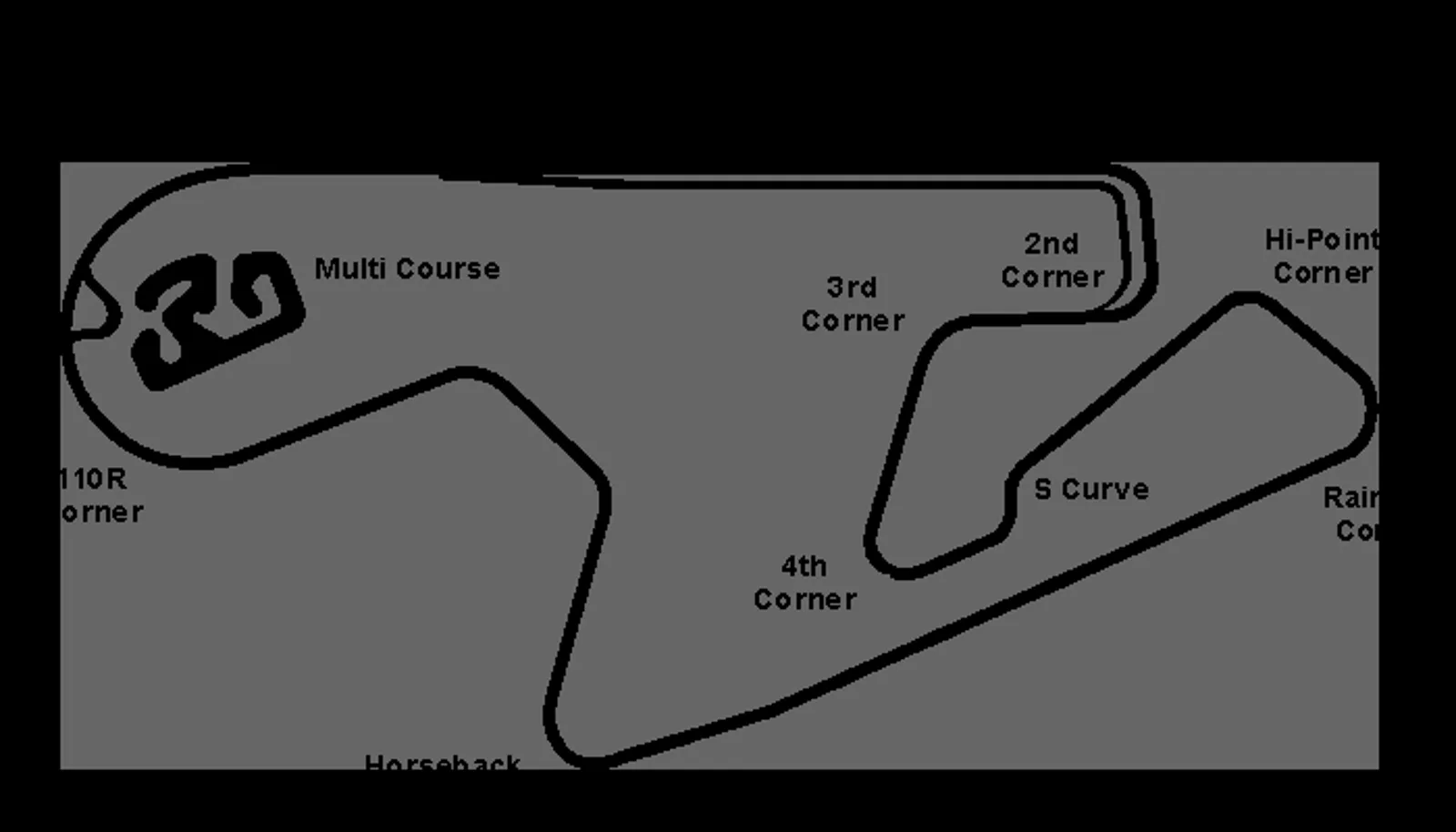
Okayama International Circuit is a 3.703 km (2.301 mi) private track in Mimasaka, Okayama Prefecture. Until 2005 it was called TI Circuit Aida; TI stood for Tanaka International, after the golf club owner Hajime Tanaka. It opened in 1990 as a private track for the wealthy, and its first race was staged by veteran British drivers.
The Pacific Grand Prix
In 1994 and 1995 the circuit hosted the Formula One Pacific Grand Prix, and Michael Schumacher won both. Japan thus joined a group of just nine countries that have staged two F1 races in one season. Autopolis had been planned to host a second race in 1993, but it never happened. The race was discontinued mainly because of the remote location, and a planned 1996 International Touring Car Championship round was moved to Suzuka in November.
Ayrton Senna's 1:10.218 in a Williams FW16, set in qualifying for the 1994 race, remains the unofficial all-time track record.
Rescue and new owners
In March 2003, Tanaka International, the parent of the owning company, applied for civil rehabilitation, and Unimat Holding stepped in to support the circuit. The company took the name Okayama International Circuit Co. on 1 May 2004, and the circuit changed its name on 1 January 2005. On 26 October 2008 it hosted a round of Formula V6 Asia and the FIA World Touring Car Championship, the first FIA world championship race there since 1995, though in June 2010 it was announced that Suzuka would host the Japan round of the 2011 WTCC. Aska Corporation, an auto parts maker, bought the circuit from Unimat in 2012.
Okayama's calendar today includes Super GT and Ferrari Challenge Japan in April, Porsche Carrera Cup Japan in May, Super Formula Lights and the F4 Japanese Championship in June, GT World Challenge Asia and the SRO Japan Cup in August, MFJ Superbikes in September and Super Taikyu in October. Past visitors include Super Formula in 2007 and 2008 and again from 2015 to 2020, and a 1000 km of Okayama in 2009. The circuit also rents bikes and go-karts.
Autopolis: the upland circuit
Autopolis is a 4.673 km (2.904 mi) circuit near Kamitsue village in Oita Prefecture, 30 km (19 mi) from Kumamoto, inside Aso Kuju National Park. It opened in 1990 and is known for a high standard of facilities. Financial problems have meant it has changed hands several times, but it is still running.
A 500 million dollar dream
The real-estate developer and investment banker Tomonori Tsurumaki built it at a cost of 500 million dollars. In 1989 he made headlines by bidding 51.3 million dollars for a Picasso, Les Noces de Pierrette, at an auction in Paris, from his hotel room in Tokyo, and said it would hang in the resort's gallery. The designer was Yoshitoshi Sakurai, who had led Honda's Formula One project in the 1960s.
For the grand opening in November 1990, Tsurumaki ordered 30 Buick-powered American single-seaters called Sabre Cars. Invited CART drivers, among them Stan Fox, Johnny Rutherford, Dick Simon and Gary and Tony Bettenhausen, raced Japanese drivers. A series called Formula Crane 45 followed, but only a handful of cars took part in a few races.
The only major international race was the final round of the 1991 World Sportscar Championship, the 430 km of Autopolis, which Schumacher and Karl Wendlinger won for Sauber in a Mercedes-Benz C291. To promote its hopes of a Formula One race, the circuit sponsored the Benetton team in 1990 and 1991. Visitors to the sportscar race criticised the remoteness, saying the track was too far from the hotels, which meant a bus ride of several hours, and unsuitable for Formula One.
After the bankruptcy
Tsurumaki's company, Nippon Tri-Trust, collapsed in 1993, the year Autopolis had been due to hold its F1 race, and the circuit passed to the builder, Hazama. The 11 April 1993 slot went to Donington Park. By 1995 the site was offered for sale at 10 percent of its build cost, including three hotels, pools and an artificial ski run. Kawasaki Motors bought the circuit in 2005.
Autopolis held its first Super GT race in 1999 as a season-ending exhibition, with Tom Coronel and Hidetoshi Mitsusada winning in a Nakajima Racing Honda NSX-GT. It has been a regular since 2003, and Super Formula has called since 2006.
The track itself
Autopolis is in an upland area, so the air is thin and atmospheric pressure low, similar to Mexico City. The start/finish straight is at 820 m (2,690 ft), and the first part of the lap runs generally downhill and the second part uphill, with over 50 m (160 ft) of elevation change. It appeared in Gran Turismo Sport in March 2019 and in Gran Turismo 7.
Its events are Super Formula and Super Formula Lights in April, MFJ Superbikes in May, Super Taikyu in July and Super GT, the F4 Japanese Championship and the D1 Grand Prix in October.
Sportsland Sugo
Sportsland Sugo is in Murata, in Miyagi Prefecture, and opened in 1975. At 2.1 million square metres, it ranks among Japan's biggest motorsports facilities, and Yamaha Motor Company owns it. Four courses share the site: a road racing circuit, plus motocross, trials and go-kart courses.
The road course is 3.704 km (2.302 mi) long, with a longest straight of 704.5 m (2,311 ft), a width of 10 to 12.5 m (33 to 41 ft) and a total elevation change of 69.83 m (229.1 ft) a lap. From the Tohoku Expressway it is about 10 minutes from Murata, or about 20 minutes from Sendai Minami.
Super GT, Super Formula, Super Taikyu and the MFJ Superbikes All Japan Road Race Championship are the annual fixtures. The calendar runs from April to September: MFJ Superbikes in April, the Japan Cup Series in May, Super Taikyu in July, Super Formula, Super Formula Lights, Porsche Carrera Cup Japan and the Formula Regional Japanese Championship in August, and Super GT and F4 in September. Sugo staged a round of the Superbike World Championship between 1988 and 2003, as well as a D1 Grand Prix event, and it hosted the Japanese Touring Car Championship from 1985 to 1998 and the Motocross World Championship from 2005 to 2007.
Japan race tracks compared
| Circuit | Prefecture | Length | Opened | Known for |
|---|---|---|---|---|
| Mobility Resort Motegi | Tochigi | 4.801 km (2.983 mi) road course | 1997 | Honda-built; Japanese motorcycle Grand Prix; former IndyCar oval |
| Okayama International Circuit | Okayama | 3.703 km (2.301 mi) | 1990, as TI Circuit Aida | Formula One Pacific Grand Prix in 1994 and 1995 |
| Autopolis | Oita | 4.673 km (2.904 mi) | 1990 | Upland track at 820 m; 1991 World Sportscar finale |
| Sportsland Sugo | Miyagi | 3.704 km (2.302 mi) | 1975 | Owned by Yamaha; Super GT and Super Formula |
What happens to the Motegi oval and the 2027 calendars?
The Motegi oval is the one with a clear future: demolition began on 13 May 2026, and the site will be repurposed for seating and camping. The Japan Cup Series is listed at Motegi for 2027, and Ferrari Challenge Japan is listed at Autopolis for 2027.