Drivers over 85 face far higher fatal crash odds, yet the gap vanishes once frailty is counted, and the licensing rules reflect the puzzle.
Older drivers face higher fatal crash odds, but when frailty is accounted for the over-representation disappears. The United States has no age cutoff, though some states test or ask for medical certificates at renewal. The EU agreed 15-year licences in 2025, with countries free to shorten validity for drivers over 65.
By the figures usually quoted, drivers over 85 are 3 times as likely to be in a fatal crash as drivers under 20, and 20 times as likely as drivers under 60. Yet once frailty is factored in, and older drivers are set against younger people who cover the same mileage, the over-representation of older drivers disappears. That tension shapes every argument over when to test, restrict or retire a driver.
Ageing changes eyes, ears, muscles and memory at very different speeds from one person to the next. Licensing systems have to cope with that spread, and the countries that have tried have landed in different places.
How does ageing affect driving?
Strength, mental sharpness and motor control all start to slip as people age, though how fast, and how far, differs widely between individuals. Vision, hearing, movement and cognition each matter for driving, and each can be affected by conditions that are common later in life.
In the eye, the lens loses transparency and becomes cloudy, a condition known as cataracts. The result is more light scattering, disability glare and a higher risk of a crash. Glaucoma leads to loss of peripheral vision and, in advanced disease, blindness, and macular degeneration is another common condition affecting driving performance.
Age-related hearing loss, presbycusis, is common over 65. Research links hearing loss in older drivers to more crashes and more traffic violations, and to poorer driving when distractions are present.
Both gross and fine motor skills, and reflexes, weaken as muscle mass, elasticity, bone mass and nerve fibres decline, which partly explains why an older motorist may drive more slowly. Cognition falls too, and Parkinson's disease, Alzheimer's disease and dementia, all more common in later life, can impair the ability to drive. Traffic psychologists add the ordinary human factors that hit every age: perception-reaction time, attention, fatigue and the response to the unexpected.
Age is also only one ingredient in a mix that includes personality, temperament, stress and expertise. Traffic psychology notes that drivers generally apply some degree of risk compensation when making decisions, and that research on behaviour looks at overconfidence and differences in age and skill alongside habits and attention. Someone in their seventies with decades of experience is a different case from another of the same age with failing eyesight.
Account for frailty and the extra risk of older drivers disappears.
What do the crash figures say about older drivers?
The number of older drivers is large and growing. The United States counted over 45 million licensed drivers aged above 65 in 2018, a rise of 60% on 2000. In 2019, drivers of 65 and older accounted for 8,760 traffic deaths and 205,691 non-fatal accidents.
Raw totals mislead, because older bodies break more easily. Frail bodies suffer worse: an older driver is likelier to be hurt in a collision and likelier to die of those injuries. The Insurance Institute for Highway Safety says an older driver is more likely than a younger one to be at fault in a crash they are involved in, the commonest violations being ignoring signals, turning or overtaking unsafely and not giving way. Studies show the highest crash rates among drivers under 20 and over 65.
| Figure | What it shows |
|---|---|
| 3 times | Fatal crash risk for drivers over 85 against drivers under 20 |
| 20 times | Fatal crash risk for drivers over 85 against drivers under 60 |
| 89% | Americans favouring increased testing for over-65s (Gallup, 2003) |
| Under 10% | Backing for a cut-off age below 70 (Gallup, 2003) |
| 64% | Respondents wanting no age limits whatever (Gallup, 2003) |
| 4 to 6 times | Higher likelihood of death among former drivers compared with drivers |
Teenagers draw more worry than the very old. In Gallup's findings, more Americans saw teenagers as a bigger danger at the wheel than people past 75.
How do countries test or review older drivers?
The United States has no age cutoff that stops an older adult from driving. Most states let older people keep driving if they satisfy the rules that apply to everyone else. A few ask people beyond a given age to clear extra checks when renewing, which can extend to a road test, or to supply a doctor's certificate of medical fitness. Some drivers are allowed on the road with added limits on how much they drive, the hours they drive, or how far they travel from home. These can come from the law or from an insurer, and they vary by state.
Beyond the legal minimum there are voluntary steps. The US Centers for Disease Control and Prevention suggests sensible precautions: stick to daylight and fair weather, work out the route in advance and get eyes checked every year.
Europe
Europe frames the question differently. The view there is that a test procedure that takes away a licence from someone who could still drive safely is undesirable, partly because older cyclists and pedestrians die at rates many times those of older drivers, so a car is the safer place for them. The European Parliament took up the issue in 2024, amid concern about how an ageing population affects road safety. A drivers' association, 40 Millions d'Automobilistes, rejected the idea in strong terms.
In 2025, negotiators from the EU institutions agreed that new licences for cars and motorcycles should be valid for 15 years, with national reductions to 10 years possible in some cases, while licences for heavy truck and bus drivers would be renewed every five years. EU countries may shorten the validity of licences held by drivers aged 65 and over. For car drivers and motorcycle riders, some could replace the medical check with alternatives such as self-assessment forms.
Should there be an age limit for driving?
That is where views split. One camp holds that older people are about the safest drivers around: they tend not to speed, they avoid taking chances, and they wear seatbelts more often. Another wants tougher testing to confirm that older drivers can cope. The AARP opposes testing based on age, calling it age discrimination, and says each person should decide for themselves when to stop.
The 2003 Gallup poll shows how public opinion stacked up: 89% of Americans favoured increased testing for people over 65, yet less than 10% backed an age restriction set below 70, while 64% thought no age limits should exist. Because the age at which ability declines varies so much between people, any age-based rule sits uncomfortably, which is the root of the controversy.
What are the signs that driving is no longer safe?
Admitting that driving is no longer safe can be hard for the person concerned, and raising it can be awkward, yet putting across the safety message is essential. Family members often end up with the job of persuading a relative to stop, and few older people give up the freedom willingly. The warning signs are getting confused on the way to a destination, a cluster of two or more minor collisions in a short period, feeling that speed limits are set too high, and passengers who would rather not ride along.
A set of questions can help a family judge. Do parked cars or pedestrians catch the driver by surprise? Do other drivers honk for reasons the driver does not understand? Is neck rotation limited? Are reflexes slower, and is reaction time longer, than it used to be? Has the driver felt momentarily confused, nervous or uncomfortable at the wheel, or has a family member suggested stopping? Contrast sensitivity matters as well: difficulty picking out a grey car at dusk, a black one at night or a white one against snow is a warning, as is visual acuity on the 20/20 scale below the minimum required by the state.
Staying on the road safely
Some conditions can be helped. Physiotherapy can build strength and flexibility for those who struggle to turn their heads. Optometrists can prescribe glasses or lenses, and older drivers who struggle to see in the dark should avoid driving at night.
Formal assessment is the other route. A driver rehabilitation specialist, who may come from physical therapy, psychology or driver education, evaluates a client in a process that can last from one to four hours. The clinical part covers medical and driving history and tests of vision, perception, range of motion, strength, coordination, sensation, reaction time and cognition. Those who clear minimum state standards for health and eyesight, and hold a valid licence or permit, then take an on-road assessment in a vehicle fitted with dual brakes, extra mirrors for the specialist and any adaptive equipment. The aim is to help the person understand their condition and, where possible, return to a driving environment where they pose no threat to others.
What happens when someone stops driving?
For many people the car is essential to independence, and losing it can force major lifestyle changes. Former drivers show reduced physical mobility, a higher risk of depression and faster cognitive decline, and the reported risk of dying is 4 to 6 times that of people who still drive. Socially, the risks include isolation, less engagement and contact, and more admissions to long-term care.
The burden also moves to family. The National Aging and Disability Transportation Center puts caregivers' time at roughly 5 hours a day organising or providing rides for older relatives, which can clash with work and other demands.
Alternatives
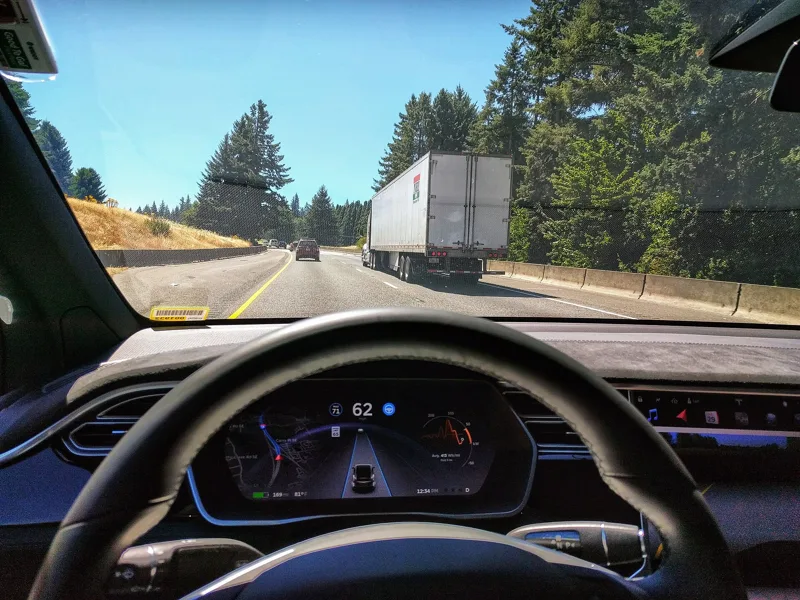
Where available, public transport or paratransit can fill the gap for hospital visits and personal errands, though these options may be more limiting than a private car. The National Center on Senior Transportation says 83% of older Americans agree public transit gives easy access to what they need. Self-driving cars have been proposed too, although studies show they have not won acceptance among some older adults.
The Beverly Foundation set out five requirements for senior-friendly transport, the five As. The service must be available, which means getting riders to a stop or kerb is not enough; acceptable, meeting standards of comfort set by people used to their own cars; accessible, with help before, during and after the journey; adaptable, covering walkers and service animals and avoiding rigid multi-stop rides; and affordable. Owning and operating a car can cost between $5000 and $7500 a year, yet when older people stop driving they rarely convert those savings into funds for other transport.
Where this goes next
The older driver population is set to climb. According to an AARP spokeswoman, over 78 million baby boomers will be 65 or older by 2030, and research suggests men will outlast their driving ability by six years and women by 10. Future generations are expected to use vehicles more and drive longer distances.
In Europe, the 2025 agreement on 15-year licences leaves each country room to shorten validity for drivers aged 65 and over, or to swap the medical check for self-assessment. The United States, with no age cutoff, continues to leave the details to individual states.