Nitromethane needs 1.7 kg of air per kilogram where petrol needs 14.7 kg, while methanol made Indy racing safer after the 1964 crash.
Dragsters burn nitromethane because it carries its own oxygen, needing only 1.7 kg of air per kilogram of fuel against petrol's 14.7 kg. Indy cars used methanol after a fiery crash at the 1964 Indianapolis 500, because methanol fires burn invisibly, make little smoke and can be put out with water.
Burning a kilogram of petrol takes 14.7 kg of air. Burning a kilogram of nitromethane takes just 1.7 kg. That gap is the reason Top Fuel dragsters run on nitromethane. Indy cars went a different way. After a fiery crash at the 1964 Indianapolis 500, they moved to methanol, chosen less for power than because a methanol fire is easier to survive.
What is nitromethane, and why do drag racers burn it?
Nitromethane, often shortened to nitro, is an organic compound with the formula CH3NO2. Most of it goes into industry as a solvent and a chemical building block. A minor share goes into motorsport as a fuel or fuel additive, and it is the principal ingredient of the fuel used in the Top Fuel class of drag racing. Model aircraft, boats, cars and helicopters use it too.
The key is oxygen. A nitromethane molecule carries oxygen with it, so the fuel can burn with far less atmospheric oxygen than a hydrocarbon such as petrol needs. For a drag engine, that matters more than anything. A cylinder can only hold so much air on each intake stroke, so air is the limit on how much fuel can be burned. Because nitromethane needs so little of it, 8.6 times as much nitromethane as petrol can be burned in a single stroke.
A kilogram of petrol needs 14.7 kg of air to burn; a kilogram of nitromethane needs 1.7 kg.
How much more power does nitromethane make than petrol?
About 2.3 times as much, for a given amount of oxygen. The fuel itself is poor on energy by weight: petrol gives about 42 to 44 MJ/kg, nitromethane only 11.3 MJ/kg. It wins because the engine can burn so much more of it in every stroke.
An everyday comparison helps. Picture a lunchbox with limited room. Petrol needs most of that space for the air it burns in, leaving little for fuel. Nitromethane brings its own oxygen, needs far less air, and so far more fuel fits in the box.
What is the difference between nitromethane and methanol?
Nitromethane (CH3NO2) is the more potent of the two, needing only 1.7 kg of air per kilogram against methanol's air-to-fuel ratio of 6.4:1 and petrol's 14.7 kg. Methanol (CH3OH) is the fuel behind the Indy car safety switch of 1965 and much of dirt-track racing. The two are not rivals so much as partners: nitromethane is blended with methanol in some racing cars, boats and model engines.
How do the fuels compare?
| Property | Petrol | Methanol | Nitromethane |
|---|---|---|---|
| Air needed to burn 1 kg of fuel | 14.7 kg | Air-to-fuel ratio of 6.4:1 | 1.7 kg |
| Specific energy | About 42 to 44 MJ/kg (34 MJ/kg in some comparisons) | Around 17 MJ/kg | 11.3 MJ/kg |
| Typical racing use | Formula One | Indy cars until 2006, dirt track, Top Alcohol | Top Fuel drag racing, mixed with methanol in some uses |
What does burning nitromethane look like?
Spectacular, because the mixtures are very rich. Nitromethane produces power even without atmospheric oxygen, so engines are run with far more fuel than can burn inside the cylinder. Hydrogen and carbon monoxide are among the combustion products, and these often ignite as the still-burning mixture leaves the exhaust ports. The rich mixtures are needed to cool the hot parts of the combustion chamber and to control pre-ignition and the detonation that follows.
The fuel has other useful traits. Its flame temperature is somewhat higher than petrol, at about 2,400 degrees C (4,350 degrees F), and it burns a little faster, which suits high-speed engines. It also takes a lot of heat to vaporise, so the heavy flow of fuel into the engine cools the incoming charge, about twice as much as methanol does.
There is a cost. Burning nitromethane produces nitric oxide, a pollutant linked to air pollution, acid rain and damage to the ozone layer. Nitromethane is also regulated as a hazardous chemical in the United States, and a US government report describes it as reasonably anticipated to be a human carcinogen. Acute toxicity is modest.
Why does methanol suit racing engines?
Methanol has a high octane rating of 114. In an engine built for it, that allows higher thermal efficiency and power output than petrol. It is also tolerant of exhaust gas recirculation.
It has other virtues. Methanol is an anti-freeze agent, it keeps dirt and grime from building up inside an engine, and it has a higher ignition temperature than petrol. It can withstand compression equal to that of super high-octane petrol. Because it is a simple, pure fuel, a small share of another fuel or certain additives may be added to prevent vapour lock.
The downsides are real. It is less volatile and burns cooler than petrol, which makes starting and warming up harder in cold weather. Its specific energy is around 17 MJ/kg against about 34 MJ/kg for petrol, and its air-to-fuel ratio is 6.4:1, so fuel consumption is higher. Burning it makes more water vapour and some acidic byproducts, which can wear engine parts faster. Methanol is a weak acid, and it attacks the oxide layer that protects aluminium. The salts that form dissolve in the fuel, leaving clean metal that oxidises again, and methanol can itself act as an oxidiser, so the process feeds on itself until the metal is eaten away or the methanol runs out. Engines therefore need methanol-compatible materials and corrosion-inhibiting additives. And it absorbs water from the air, so containers must be kept tightly sealed.
Petrol's specific energy is quoted at 42 to 44 MJ/kg in some comparisons and 34 MJ/kg in others. Nitromethane's 11.3 MJ/kg falls well below either figure.
Why did Indy cars switch to methanol?
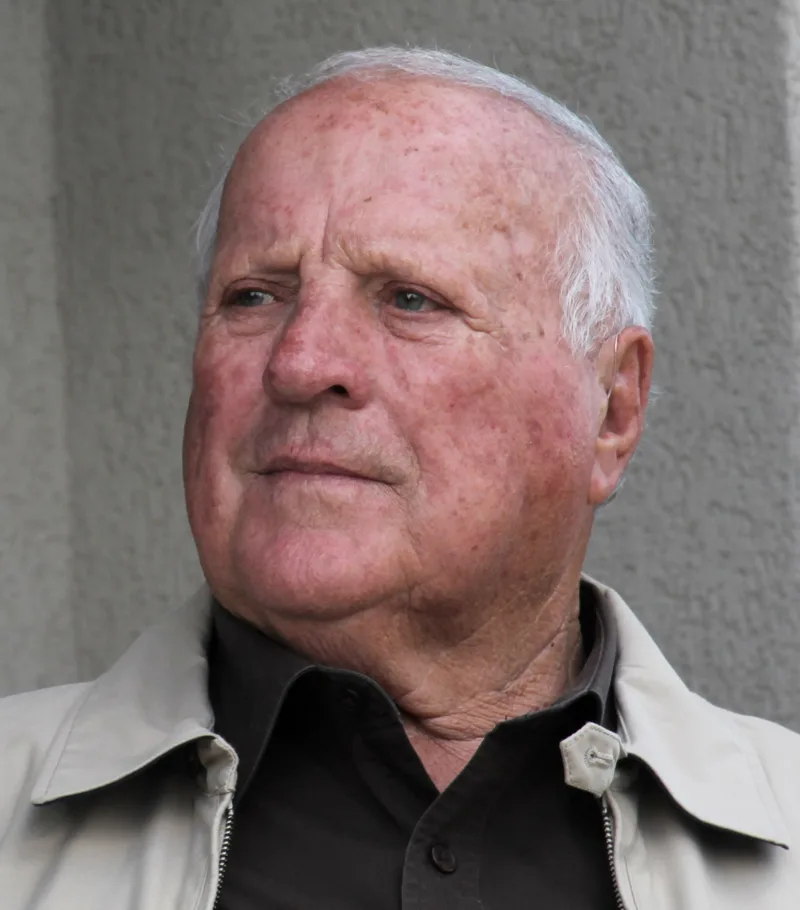
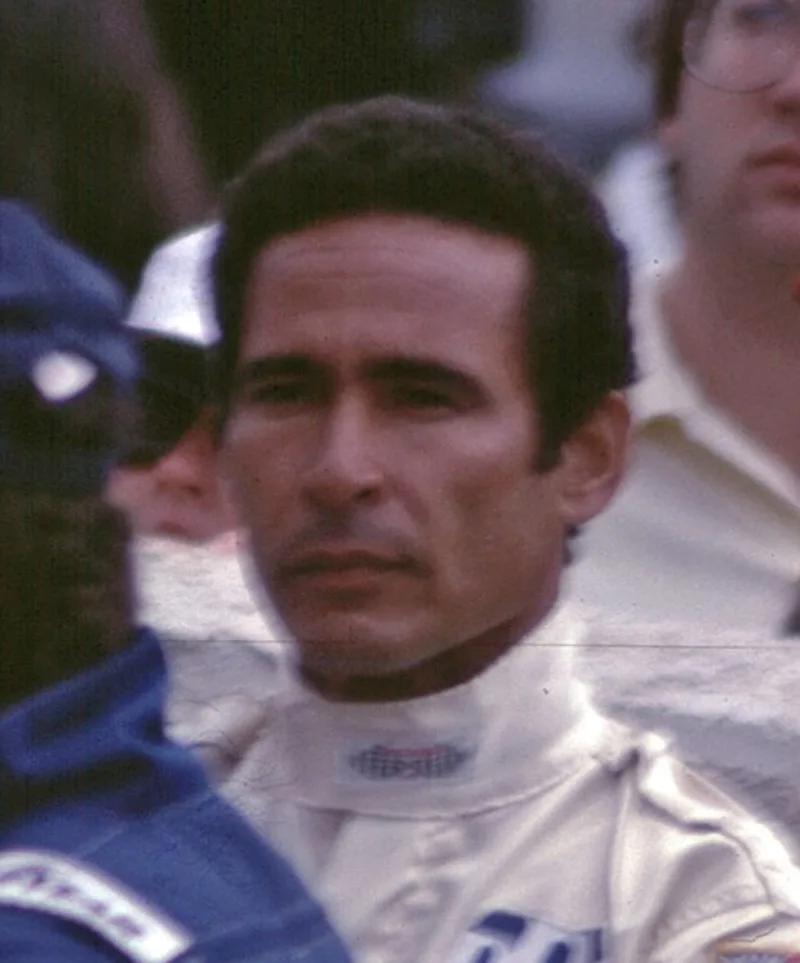
Safety. On lap two of the 1964 Indianapolis 500, seven cars crashed together. Eddie Sachs and Dave MacDonald died when their gasoline-fuelled cars exploded, and the blaze threw up a dense black cloud that hid the track from the cars still coming. Johnny Rutherford, who was caught up in the crash, was driving a methanol car. It leaked fuel too, and caught fire from the first fireball, but it made a far smaller blaze than the petrol cars and one that burned unseen. Rutherford's account, together with a campaign by the Indianapolis Star writer George Moore, brought the move to alcohol fuel in 1965.
The USAC, the governing body, first encouraged methanol after the crash and then made it mandatory. Pure methanol was used widely in its Indy car competition from 1965, including the Indianapolis 500.
Methanol has two safety properties. Unlike a petrol fire, a methanol fire can be put out with plain water. And a methanol fire burns with no visible flame and no smoke, so fast-approaching drivers can still see the track. The flip side is that the fire may be harder to spot, which can delay the call for suppression.
How long did Indy racing run on methanol?
Until 2006. The CART series used methanol for its whole existence, from 1979 to 2007. The Indy Racing League used pure methanol from 1996, and every vehicle in the Indianapolis 500 had to run on methanol until the end of the 2006 season. In 2006 the League moved to a mix of 10% ethanol and 90% methanol, worked out with the ethanol industry. From 2007 the IRL moved to pure ethanol, E100.
Who else races on methanol?
Many categories do. The rules demand pure methanol in Monster Trucks, USAC sprint cars, midgets and modifieds, as well as on dirt tracks such as the World of Outlaws and High Limit Racing and in motorcycle speedway, chiefly because it does not throw up an opaque cloud of smoke in a crash. Drag racers, mud racers and heavily modified tractor pullers rely on it too. Mud racers who mix methanol with petrol and nitrous oxide get more power than from petrol and nitrous oxide alone. Top Alcohol dragsters must use methanol with a supercharged engine. In Top Fuel, between 10% and 20% methanol may be used alongside the nitromethane.
Methanol is an old racing fuel. High-octane methanol blends were used extensively in European Grand Prix racing in the 1930s. The most successful of them was 86% methanol with acetone, nitrobenzene and ether additives, which the Standard Oil Company of New Jersey sold commercially. Formula One today still uses petrol.
What do model engines use?
Methanol, since the late 1940s. Before the end of World War II, free-flight model aircraft used spark-ignition two-strokes running on a 3:1 mix of white gas and heavy motor oil. By 1948 glow-plug engines were taking over the market. A glow plug lights methanol vapour through a catalytic reaction with a platinum filament, and because it needs no battery, coil, points or capacitor, models were lighter and flew better. Glow fuel typically has methanol as the main ingredient, 10% to 20% lubricants such as castor oil or synthetic oil, and sometimes nitromethane (from none up to 65%, but rarely over 30%). Even moderate amounts of nitromethane tend to raise power, because air intake is often the limit, and they make the engine easier to tune, meaning it is simpler to find the right air-to-fuel ratio. Engine sizes range from 0.8 cm3 (0.049 cu.in.) to 25 to 32 cm3 (1.5 to 2.0 cu.in), and much larger for twin-cylinder and radial designs.
Rules differ by region. Certain international events under the FAI's Class F ban nitromethane as a glow fuel ingredient. Makers in North America build engines that often run best with a share of it, as little as 5% to 10% of the fuel by volume and as much as 25% to 30%.
Can ordinary cars run on methanol?
Low levels of methanol can run in existing road cars if cosolvents and corrosion inhibitors are added. Methanol can come from fossil fuels such as natural gas and coal, or from renewable biomass. The vast majority of the world's methanol is currently made from gas and coal. China made around 60% of the world's methanol in 2014, primarily from coal. During the 1973 oil crisis, coal-based methanol was suggested as a petrol replacement.
Where is methanol fuel heading beyond racing?
Methanol's wider future looks to be at sea. In 2020 the International Maritime Organization adopted rules for methanol as a ship fuel. By 2023 roughly 100 methanol-burning ships had been ordered, by firms including Maersk, COSCO Shipping and CMA CGM, and most can also burn bunker fuel. In 2023 the Laura Maersk became the first container ship to run on methanol. Maersk has signed agreements with private green-methanol producers to supply the one million tons needed to run its 19 ordered ships.
Green methanol, made by combining carbon dioxide and hydrogen under pressure and heat with catalysts, is the route. Supply is limited at present, and the price is nearly twice that of bunker fuel. Biomethanol, mostly made from biomass, was a market worth around 120 million USD worldwide in 2022. A 'methanol economy', with energy stored in synthetic methanol, was proposed in 2005 by George A. Olah. Methanol is also used in fuel cells, and as a cooking fuel in China, where it needs no regulators or pipes, with use growing in India.