From the Road Fund Churchill raided to CO2 bands, the end of reduced rates for electric cars and fuel taxes around the world.
UK road tax is vehicle excise duty, set by registration date: engine size before March 2001, CO2 bands after, with a first-year rate and a supplement on expensive cars. Fuel duty is a separate tax per litre, 0.5295 pounds on road fuels since March 2022. Electric cars lost their reduced rates in April 2025.
Britain once earmarked motor tax for roads, then raided the fund. In 1926 Winston Churchill, as Chancellor of the Exchequer, reportedly wrote in a memo that it was an outrage on common sense for motorists to enjoy a tax reserved for roads for all time, and the earmark ended in 1937.
That argument has never gone away. Road tax and fuel duty work very differently today: bands that reward and penalise, a per-litre tax that varies around the world, and rules for electric cars that changed in April 2025.
What is road tax, and how much of it is really a tax on the road?
Road tax is the popular name for vehicle excise duty (VED), an annual tax paid in the United Kingdom on most powered vehicles used or parked on public roads. It is also called vehicle tax or car tax, and was formerly the tax disc. In 2016 it raised approximately 6 billion pounds for the Exchequer.
Despite the name, the money does not go to roads by law. Britain's first tax on vehicles dates from 1888. In his budget of 1909 David Lloyd George announced that the road system would pay for itself, and from 1910 the proceeds were dedicated to building and maintaining roads, although most of the cost still came from general and local taxation because the tax was too low for upkeep. The Finance Act 1920 created a hypothecated Road Fund, and excise duties specifically for motor vehicles, with a tax disc to display, arrived in 1921.
The fund never worked as planned. The accumulated fund was never fully spent on roads, and most of what was spent went on resurfacing, not new construction. The fund gained a bad name as a source of cash for other government purposes, a habit started by Churchill when he was Chancellor. The 1936 Finance Act ended the earmark in 1937 and sent the proceeds straight to the Exchequer. The Road Fund itself, by then financed by government grants, was not abolished until 1955. Since then, the road network has been funded from general taxation, of which VED is one part.
Despite the name, road tax has not paid for roads by law since 1937: it is one more line in general taxation.
How are vehicle excise duty bands set?
There are three payment schedules for cars, depending on registration date. Cars registered before 1 March 2001 are taxed by engine size. Cars registered from 1 March 2001 to 31 March 2017 are taxed on theoretical CO2 emissions per kilometre. Cars registered after 1 April 2017 follow a newer structure with a standard annual rate after the first year.
The pre-2001 rule was crude: above or below 1549cc. Before that, in June 1999, a reduced band arrived for engines up to 1100cc, costing 100 pounds for 12 months against 155 pounds for larger engines. The change in 2001 was a political answer to a long argument. In the 1990s some wanted VED abolished and replaced by higher fuel duty, as an incentive to buy cleaner cars, but that was politically unappealing because it would raise costs for businesses and rural dwellers. Tony Blair's Labour government kept VED and linked it explicitly to carbon emissions instead.
The bands have been reshaped several times. In April 2009 the CO2 bands were reclassified, with the highest set at 455 pounds a year and the lowest at 0, and were backdated to cover vehicles registered since 1 March 2001. From 2010, and in a revised form from 1 April 2013, a separate first-year rate applied in the year of registration. The government says it was designed to send a stronger signal to buyers about the environmental implications of their purchase, while the standard rate stayed as it was.
April 2017 brought the biggest changes. Hybrid vehicles were no longer rated at 0 pounds, and cars with a list price over 40,000 pounds began paying an expensive car supplement at the first five annual renewals, in years 2 to 6 of the vehicle's life. The supplement is 425 pounds from April 2025. Heavy goods vehicles pay by weight and axle configuration, with 12-month rates from 80 to 850 pounds from 1 August 2023 and a separate HGV levy of 150 to 749 pounds.
Which cars pay no road tax?
Many categories are exempt, among them trams, police vehicles, fire engines, ambulances, vehicles for disabled people, road gritters, snow ploughs and vehicles undergoing statutory tests. The best-known exemption covers historic vehicles: each 1 April, any vehicle made over four decades earlier qualifies for a free licence, the assumption being that old cars cover few miles.
The rule has moved. It began as a rolling exemption for vehicles over 25 years old, but in 1997 the cutoff was frozen at 1 January 1973. Classic motoring circles disliked the pre-1973 cutoff, and several clubs campaigned to restore the old arrangement. In 2006 there were 307,407 vehicles in the category. On 1 April 2014 vehicles made before 1 January 1974 became exempt, and the 2014 Budget introduced the forty-year rolling exemption, so cars built before 1 January 1975 qualified on 1 April 2015.
How does road tax treat electric cars?
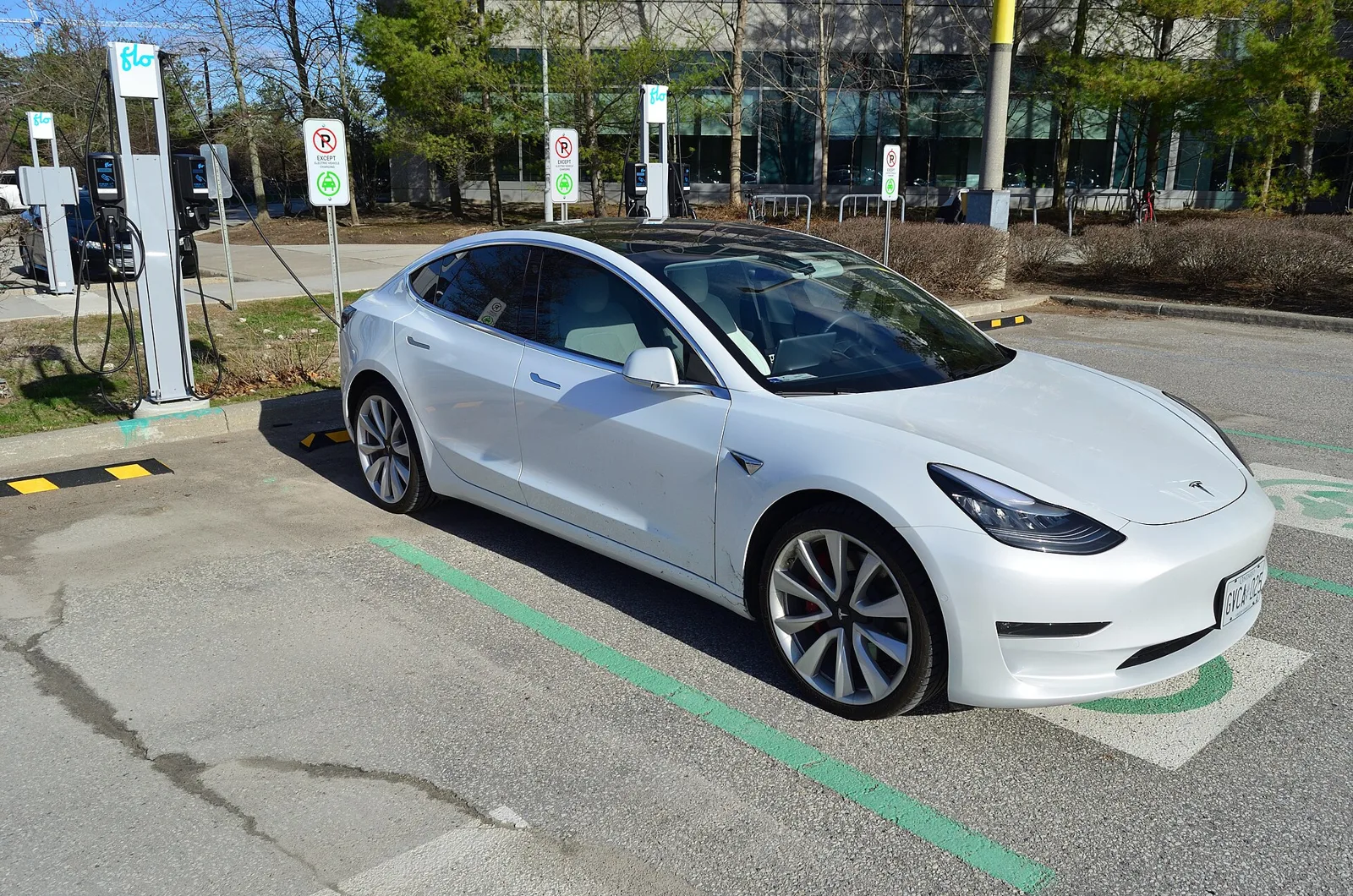
Electric vehicles were exempt until 1995, when the most common ones were milk floats. From then on they paid like other cars, although most were assessed at zero until April 2025. The government announced in November 2022 that zero-emission cars would lose their reduced rates from 1 April 2025, matching the charges on combustion-engined cars.
The change affects new and existing cars. A zero-emission car registered from 1 April 2017 onwards pays the 1 to 50 g/km rate for the first year, then the standard yearly rate. A 10 pound reduction for alternative fuel and hybrid vehicles was removed, bringing them onto the standard rate. Zero-emission cars had also escaped the expensive car supplement under a 2020 Budget measure effective from 1 April 2020, and that relief ended in April 2025.
What happens if you do not pay?
The DVLA collects and enforces VED across the UK. The registered keeper of a liable vehicle must pay the amount due, which can be zero. A car that is not used or stored on a public road must instead be declared off the road, and a failure to make that declaration is punished in the same way as failing to pay. The 2013 Budget announced that the declaration would last for good and need not be renewed each year.
Enforcement has tightened. In 2002 to 2003, evasion was estimated to cost the Exchequer 206 million pounds, so from 2004 an automatic 80 pound penalty, halved if paid within 28 days, was issued for failing to pay within a month of expiry. The maximum fine is 1,000 pounds though real fines are normally much lower. A 2008 report said DVLA gaps let more than a million late-paying drivers a year escape, losing 214 million pounds in 2006, and 6.7% of motorcycles were untaxed in 2007. Better systems cut the estimated loss to 33.9 million pounds in 2009 to 2010. Automatic number plate recognition now flags untaxed, uninsured and stolen cars.
The tax disc is gone. Since 1 October 2014 the paper circles have not been issued, because records sit in a central database accessible through the registration plate. VED can be taken automatically from a bank account by direct debit.
What is fuel duty?
A fuel tax, also called a gas tax or fuel duty, is an excise tax on the sale of fuel, most often fuel for transport. Revenue is sometimes earmarked for transport projects, which makes the tax a user fee, and sometimes it feeds general revenue. Occasionally it is used as an ecotax to encourage sustainability.
Different fuels attract different treatment. Agricultural fuel and home heating oil are usually taxed at a lower rate, and may be dyed to stop their use on the road. Aviation fuel is charged separately, and airlines flying commercially pay no fuel tax in the United States or the European Union. Where a sales tax or value added tax exists, it may be levied on top of fuel tax.
Governments and critics see it differently. Agencies such as the Internal Revenue Service often consider fuel taxes regressive. Proponents want higher taxes to cut pollution, address global warming and conserve energy, and they argue that motorists should pay for the roads they use. Climate and economic bodies including the IPCC, the IEA, the IMF and the World Bank have urged governments to raise gasoline taxes, and fuel taxes can work as an implicit carbon price. The cost, as the other side notes, is inflation as transport costs rise.
How much is fuel tax per litre around the world?
| Country | Fuel tax per litre |
|---|---|
| United Kingdom | 0.5295 pounds for road fuels from 23 March 2022, plus 20% VAT; red diesel 0.1133 pounds |
| Germany | EUR 0.6545 petrol and EUR 0.4704 ultra-low sulphur diesel, plus 19% VAT |
| France (2017) | EUR 0.651 petrol and EUR 0.531 diesel, plus 20% VAT |
| Norway | Petrol: NOK 4.62 road use tax plus NOK 0.88 CO2 tax |
| Sweden (2018) | 8.425 kr petrol and 7.425 kr diesel, including VAT |
| Singapore | S$0.79 for 98 octane and above; S$0.66 for 92 to 95 octane |
| Australia (February 2026) | $0.526 for petrol and diesel; LPG $0.172 |
| United States (federal) | 4.9 cents petrol (18.4 cents per US gallon); 6.4 cents diesel (24.4 cents per US gallon) |
What reaches the pump is a larger share than those figures suggest. In France, taxes made up 63.9% of the petrol price and 59.3% of diesel in 2017, and in the Netherlands 68.84% of petrol and 56.55% of diesel in 2015. In India roughly 50% to 60% of pump cost goes to the government; in Delhi on 18 February 2021, 52.30 of a price of 89.54 rupees, around 58%, was tax. In Israel tax is 78% of the pump price, and in Canada about one-third.
The UK adds a twist: VED applies regardless of how much fuel the car actually burns. International flights buy jet fuel free of both duty and VAT.
Why do fuel taxes cause so much argument?
Because they are visible and they bite. France planned to raise petrol and diesel taxes until both reached EUR 0.78 per litre in 2022, but a 23% rise in the diesel tax caused serious protests in major cities. In China, the State Council's attempts to bring in a fuel tax paying for the National Trunk Highway System were resisted by the National People's Congress, chiefly because of what it would mean for farmers, a rare instance of the legislature using its authority.
Of the twenty countries emitting the most CO2, China raised its gasoline taxes by the largest margin between 2003 and 2015. A Nature study found that while gasoline taxes rose in more countries than they fell in over that period, the global mean fell, because consumption grew fastest in the low-tax countries.
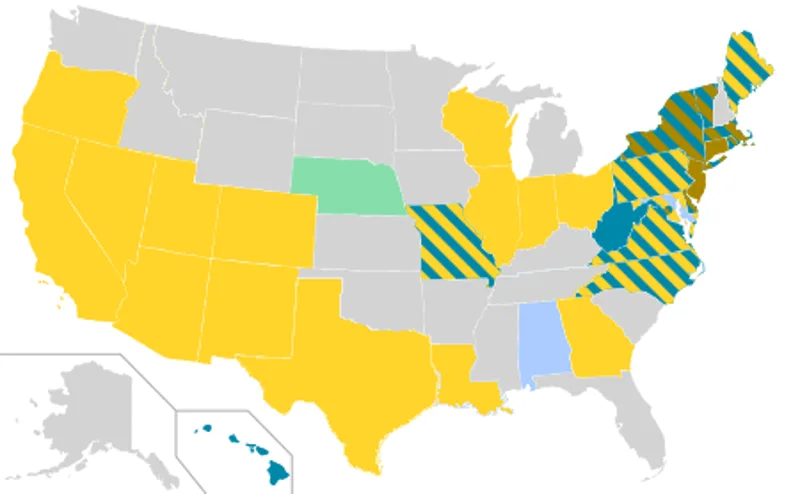
In the United States, Oregon enacted the first state gas tax in 1919, and by 1929 all 48 states had one. Nineteen states and the District of Columbia now use variable-rate taxes, while the other thirty-one change the rate only by legislation. By July 2016, twenty-one states had left their per-gallon rate untouched for a decade or longer. The average of state and local plus federal tax stood at 12.73 cents per litre for petrol and 14.32 cents for diesel.
Where this goes next
Australia gives the clearest recent example of rates being moved for policy reasons. In February 2026 the fuel tax was $0.526 per litre for petrol and diesel and $0.172 for LPG. From April through to the end of June the rates were cut to $0.206 and $0.067, part of measures to lower the cost of living. Twice a year, rates are adjusted by inflation.
In New Zealand, all fuel excise collected has been hypothecated to the National Land Transport Programme since 1 July 2008, while diesel vehicles pay Road User Charge instead of tax at the pump. In the UK, the changes to electric car rates that began on 1 April 2025 bring zero-emission vehicles onto the standard schedule.