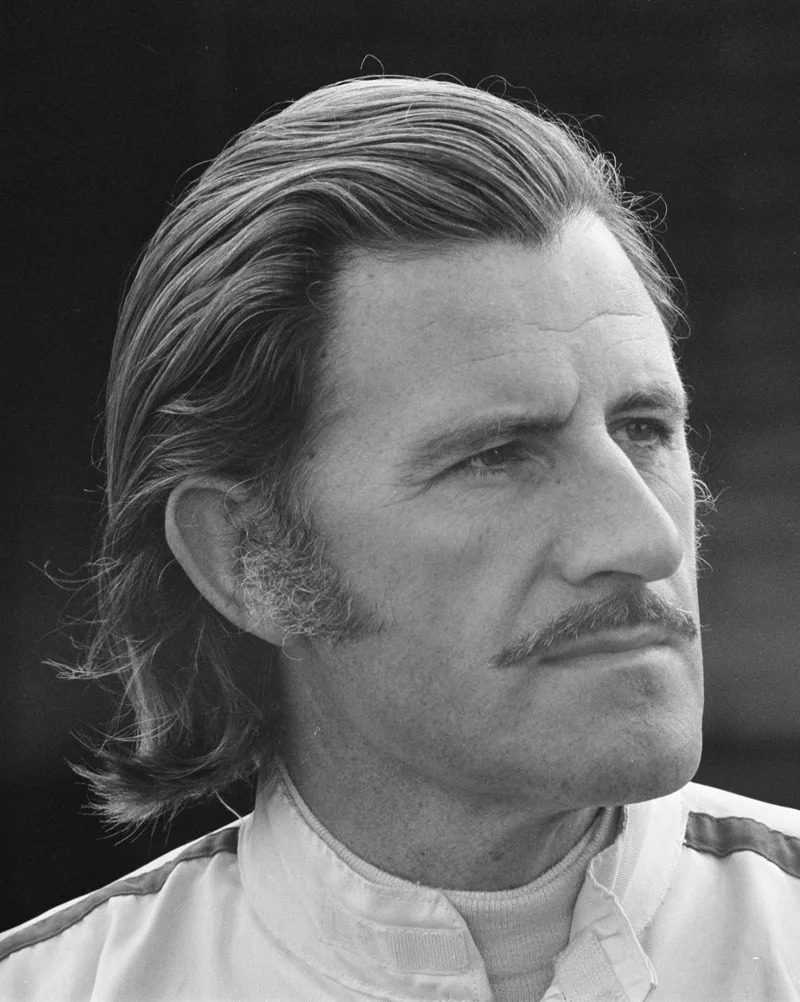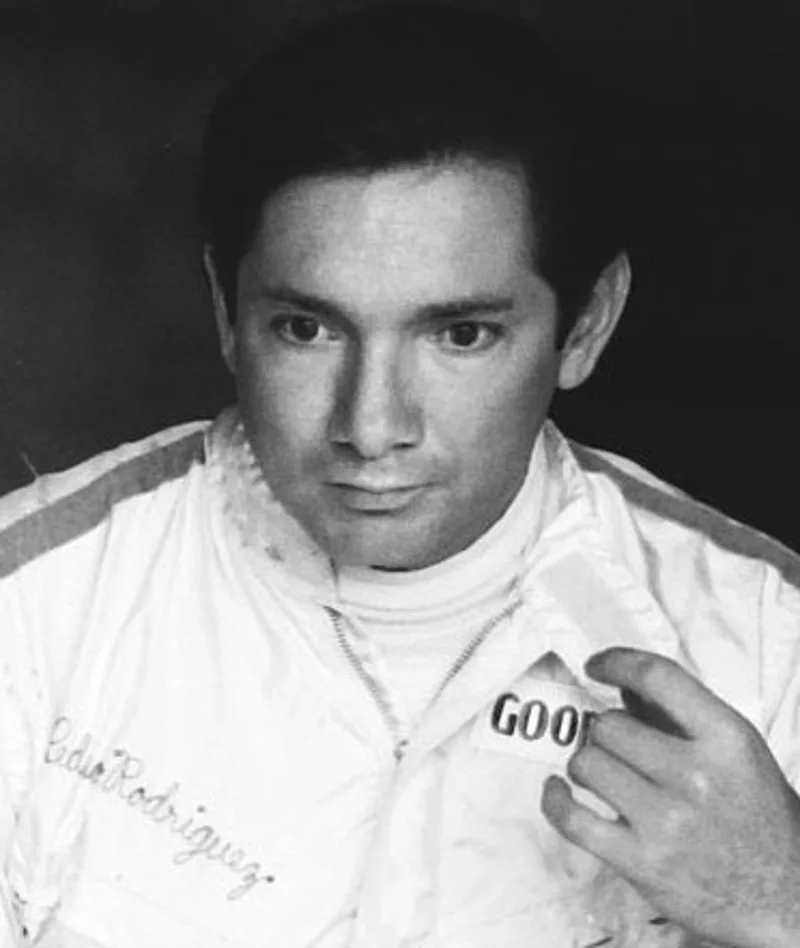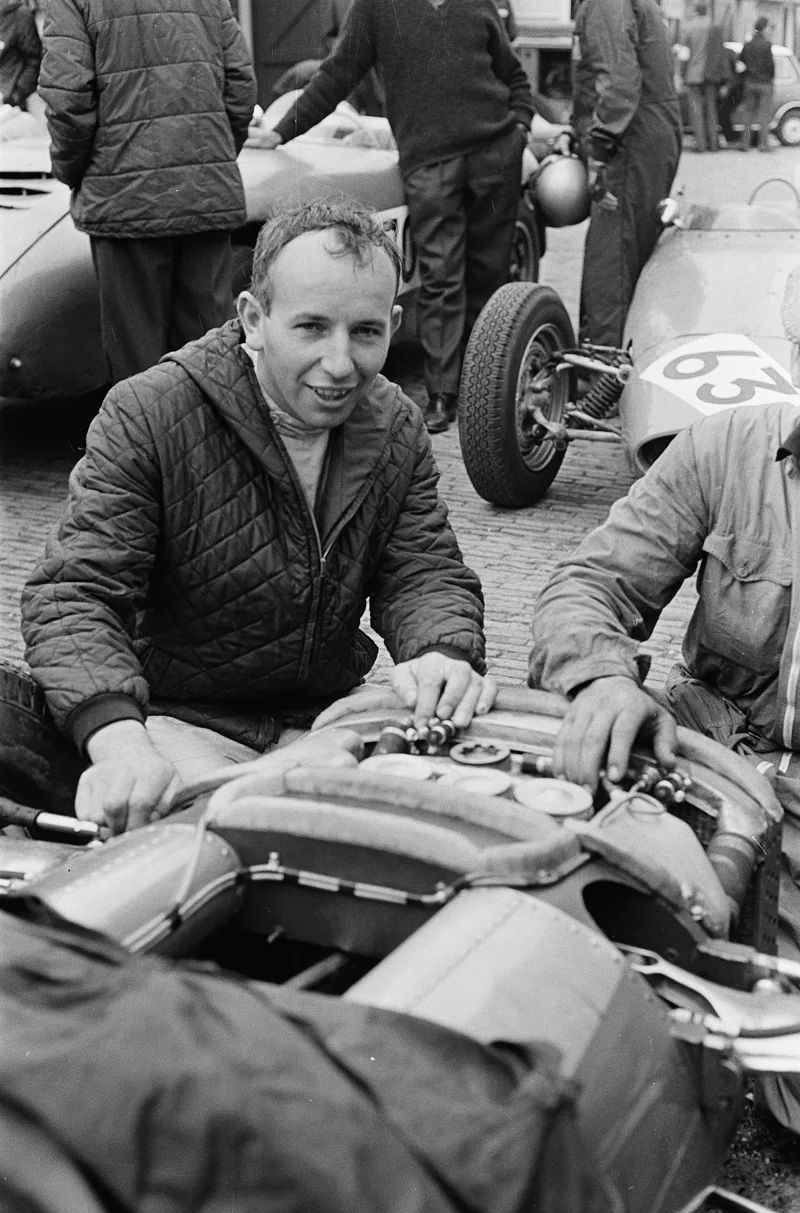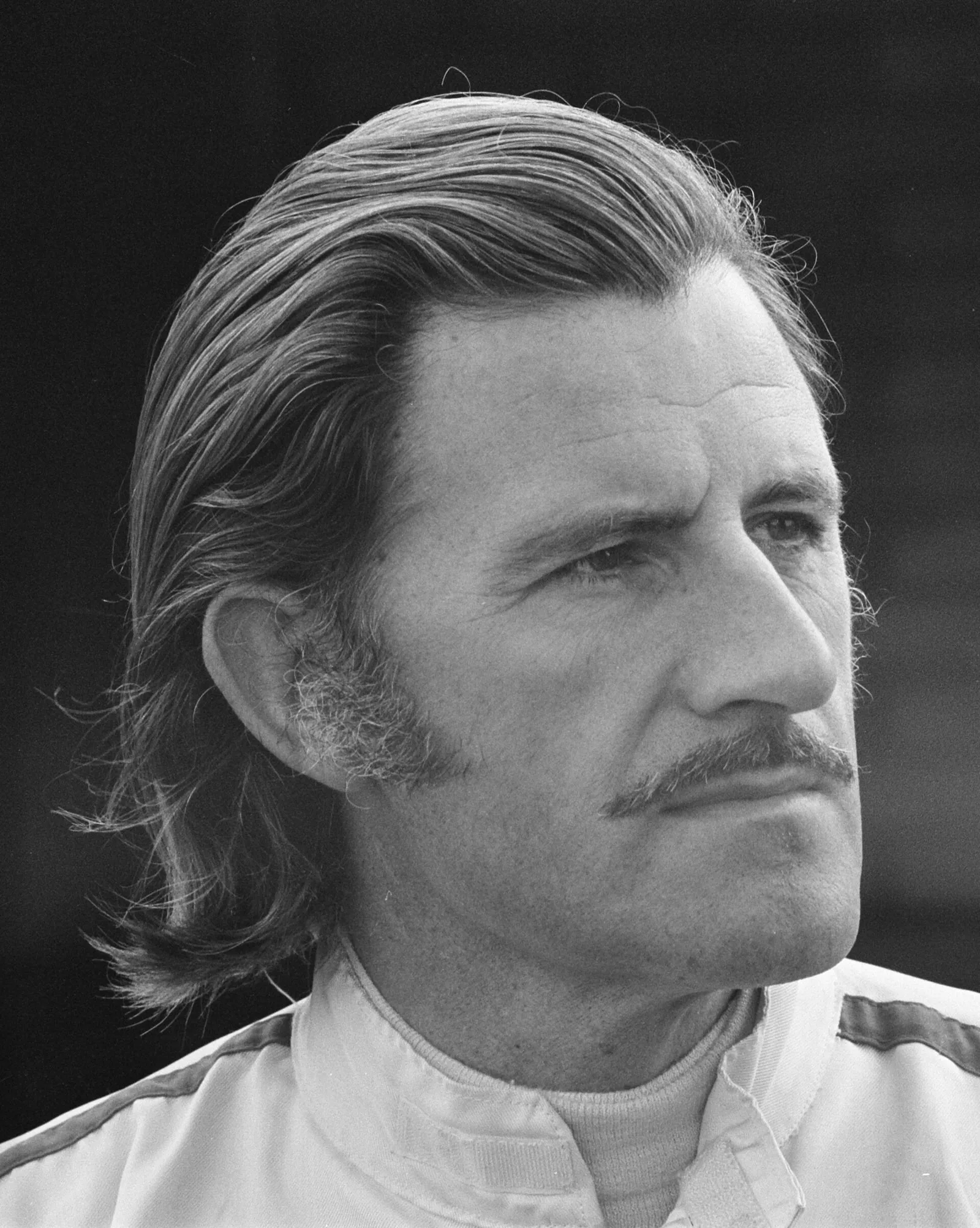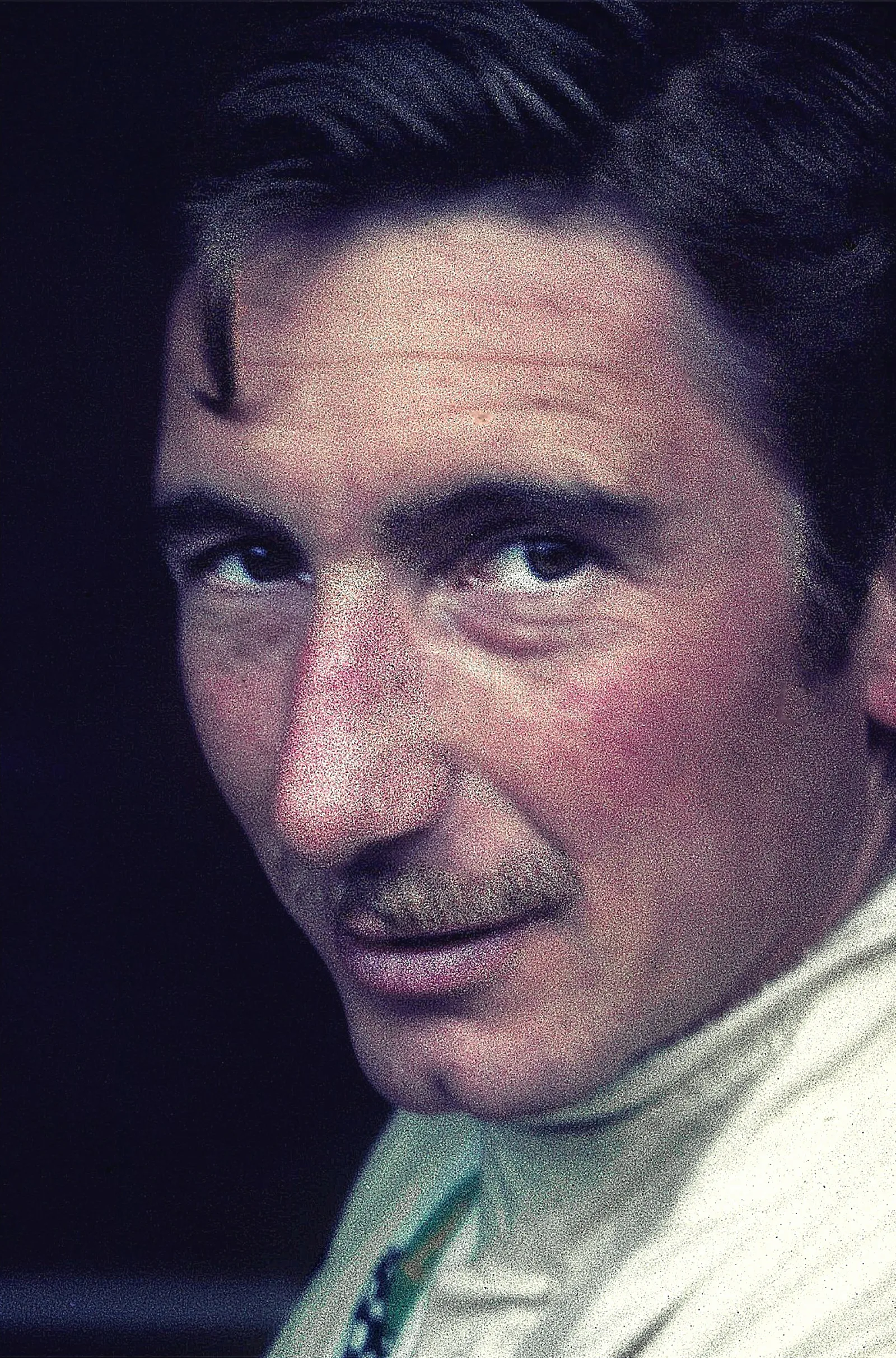
A Swiss Porsche star, a Swedish privateer who won at Zandvoort and a 19-year-old Mexican on the front row at Monza.
Siffert, from Switzerland, won two Grands Prix and, in 1968, Daytona and Sebring for Porsche. Bonnier, from Sweden, won the 1959 Dutch Grand Prix and the Targa Florio twice. Mexico's Ricardo Rodriguez qualified on the front row in Formula One aged 19 and won the 1962 Targa Florio.
When Ricardo Rodriguez qualified second for the 1961 Italian Grand Prix, he was 19 years and 208 days old. Nobody younger had ever started a Formula One race from the front row, and nobody would until Max Verstappen at the 2016 Belgian Grand Prix. It was a guest drive for Ferrari, and he traded the lead with Phil Hill and Richie Ginther. Rodriguez is one of three drivers, with the Swiss Jo Siffert and the Swede Jo Bonnier, whose careers ran through Formula One and sports car racing, and each of them died racing.
Who were Jo Siffert, Jo Bonnier and Ricardo Rodriguez?
Jo Siffert, Jo Bonnier and Ricardo Rodriguez were Formula One drivers who also raced sports cars. Siffert, from Switzerland, drove in F1 from 1962 to 1971 and won two Grands Prix. Bonnier, from Sweden, raced from 1956 to 1971 and won the 1959 Dutch Grand Prix. Rodriguez, from Mexico, drove in 1961 and 1962.
Siffert was a Porsche factory driver, Bonnier took wins in cars from Porsche, Ferrari and Chaparral, and Rodriguez raced for Ferrari. They also met on track and at the same teams, which makes their stories overlap more than their nationalities suggest.
Nobody younger had ever started a Formula One race from the front row.
Who was Jo Siffert?
Joseph Siffert, called Jo and known to family and friends as Seppi, was born on 7 July 1936 in Fribourg, 35 km (22 mi) from Bern, to a poor family; his father owned a dairy. At 12 he went with his father to Bern to watch the 1948 Swiss Grand Prix at Bremgarten and decided on his future. His first fame came on two wheels, as Swiss 350 cc motorcycle champion in 1959, and he then moved to four wheels in a Formula Junior Stanguellini.
He reached Formula One as a privateer in 1962, in a four-cylinder Lotus-Climax. Later he drove for the Swiss team Scuderia Filipinetti, and in 1964 he signed with Rob Walker's private British outfit. Early success came in the non-championship Mediterranean Grands Prix in 1964 and 1965, both of which he won by beating Jim Clark by a hair. He took two World Championship races, one for Rob Walker and one for BRM.
How did Siffert win the 1968 British Grand Prix?
At Brands Hatch in 1968, in the Rob Walker Racing Team's Lotus 49B, Siffert fought Chris Amon's Ferrari for the whole race and finished ahead of it. It is regarded as the last Grand Prix victory by a genuine privateer. His second win came in 1971 as a BRM team driver, at the Austrian Grand Prix at the Osterreichring.
How did Siffert become a Porsche star?
His fame grew faster in sports cars than in Formula One, as a leading driver for the factory Porsche effort in the World Sportscar Championship. Porsche's first major outright wins, apart from a few on twisty tracks, came in 1968, when Siffert and Hans Herrmann took the Daytona 24 Hours and the Sebring 12 Hours in a 907.
The Porsche 917 then brought him several major wins in Europe. Porsche picked him to help launch its CanAm development programme in 1969, and he finished fourth in the championship in a 917PA spyder despite entering only a few races. In 1970 he and Brian Redman won the Targa Florio in a Porsche 908/3. That year Porsche also paid for his seat in the works March Formula One team, because it did not want to lose one of its prize drivers to Ferrari. The March association was a disaster, and he was pleased to join the Porsche rival Pedro Rodriguez at BRM the next season.
- 1968: Daytona 24 Hours, Sebring 12 Hours, Nurburgring 1000 km, Zeltweg 1000 km, Brands Hatch 1000 km and Coppa Citta di Enna
- 1969: Nurburgring 1000 km, Spa 1000 km, Zeltweg 1000 km, Monza 1000 km and Watkins Glen 6 Hours
- 1970: Targa Florio, Spa 1000 km and Zeltweg 1000 km
- 1971: Buenos Aires 1000 km
How did Siffert die, and what changed?
Siffert was killed on 24 October 1971, in the World Championship Victory Race, a non-championship event at Brands Hatch, the scene of his first win. The suspension of his BRM had been damaged in a first-lap incident with Ronnie Peterson, and it broke later. The car crashed and immediately caught fire. BRM did not admit the suspension damage until much later, when a former mechanic disclosed it by accident.
A Royal Automobile Club investigation found that Siffert had suffered only a leg fracture in the crash itself. Because three fire extinguishers did not work properly, rescuers needed five minutes to get to him, and smoke inhalation killed him. A fire marshal said that working extinguishers would have got them there within 20 seconds.
The accident led to a rapid overhaul of safety in the car and on the circuit. On-board fire extinguishers using BCF became mandatory, and so did piped air supplied directly into the drivers' helmets. His funeral in Switzerland drew 50,000 people, with a Team John Wyer Gulf-Porsche 917 leading the procession through Fribourg. He was survived by his second wife Simone and their children, Veronique and Philippe. At Brands Hatch in 2007-08, the A1 Team Switzerland car carried a message marking the 40th anniversary of his 1968 win.
Who was Jo Bonnier?
Joakim Bonnier was born in Stockholm on 31 January 1930 into the wealthy Bonnier family, which controls the Bonnier Group. His father Gert was a professor of genetics, and many relatives worked in publishing. Bonnier spoke six languages. His parents hoped for a doctor, and for a time he wanted to join the family publishing business, studying languages at Oxford for a year and then going to Paris to learn publishing.
He began racing in Sweden at 17 on an old Harley-Davidson motorcycle, and after returning from Paris in 1951 he took part in rallies in a Simca. He entered Formula One in 1956 in a Maserati. That September at Imola, a car pulled across his path at a fast corner, his Maserati hit a large rock and was thrown into the air, and he suffered concussion, cracked ribs and a broken vertebra.
How did Bonnier win the 1959 Dutch Grand Prix?
Bonnier's greatest Formula One achievement was winning the 1959 Dutch Grand Prix at Zandvoort for BRM, on a day the notoriously unreliable car worked well. Dan Gurney and Hans Herrmann both crashed heavily after their brakes failed. It made him the first Swedish winner of a Formula One Grand Prix, and he finished eighth in that year's World Drivers' Championship. He also won the 1960 German Grand Prix with a Porsche 718 in a race held for Formula Two cars in preparation for the rule change of 1961.
Despite the BRM win, Bonnier seldom drove for works teams, with only one-offs as a replacement for Lotus, Brabham and Honda. After his Maserati debut he ran his own team and drove for Mimmo Dei's Scuderia Centro Sud in the late 1950s, then found a place at BRM and Porsche. When Porsche left Grand Prix racing at the end of 1962 he joined Rob Walker Racing Team, driving Coopers and Brabhams and scoring few points. In 1966 he reformed his own team as Anglo-Suisse Racing Team, later renamed Ecurie Bonnier, but his interest in Formula One faded. His last full season was 1968, when he swapped an old Cooper T86 for an old McLaren, and he raced occasionally until 1971. He was a leading figure in the Grand Prix Drivers' Association and chaired it until his death.
In 1966 he was a racing adviser to the film Grand Prix with James Garner, along with Phil Hill, Richie Ginther and Carroll Shelby, and drove in the racing scenes. During filming of the Belgian Grand Prix at Spa-Francorchamps, more than half the field crashed out on the first lap, Bonnier among them. According to Phil Hill, Bonnier went through an upstairs window of a house beside the track and could not take part in later filming on the circuit.
What did Bonnier win in sports cars?
Bonnier raced sports cars as well, and lined up at Le Mans 13 times between 1957 and 1972. In 1964 he co-drove a Ferrari 330P with Graham Hill, entered by Maranello Concessionaires, and finished second at Le Mans, then won at Montlhery. A 12-hour race at Reims that year gave him another win in a 250LM, which made 1964 his best sports car season.
He won the 1960 Targa Florio with Hans Herrmann in a works Porsche 718 and the 1963 edition with Carlo Mario Abate in another. In 1962 he took a Ferrari 250 TRI, entered by Count Giovanni Volpi, to victory in the 12 Hours of Sebring, sharing it with Lucien Bianchi. His last major sports car win was the 1966 Nurburgring 1000 km, in a Chaparral with Phil Hill. Smaller wins followed: the Barcelona 1000 km at Montjuic in 1971 alongside Ronnie Peterson, and the 1972 4 Hours of Le Mans with Hughes de Fierlant.
In 1968 he bought a McLaren M6B for Can-Am. In the first race at Karlskoga in Sweden he had pole but went off on the first lap and finished second to David Piper's Ferrari 330P3/4. He ran five of the six races, with an eighth at Las Vegas his best, and finished third at Mount Fuji. In 1970 he drove a Lola T210 to the European 2-Litre Sports Car Championship with 48 points. By the early 1970s he was managing his team in the World Sportscar Championship, driving less, and leading on track safety.
How did Bonnier die?
Bonnier was killed in the 1972 24 Hours of Le Mans, on 11 June. Between Mulsanne Corner and Indianapolis, his open Lola T280-Cosworth struck a Ferrari Daytona driven by a Swiss amateur, Florian Vetsch. The Lola was thrown over the Armco barriers and into the trees beside the track and Bonnier died instantly. Vic Elford, driving a factory Alfa Romeo Tipo 33, stopped to help Vetsch escape from his burning Ferrari.
Who was Ricardo Rodriguez?
Ricardo Valentin Rodriguez de la Vega was born in Mexico City on 14 February 1942, and was the first Mexican to take part in a Formula One Grand Prix. A child cycling champion, he switched to motorcycles at 11 and won several national titles, then raced a Fiat Topolino saloon. He was the third son of Pedro Natalio Rodriguez and Concepcion de la Vega, with three brothers and a sister. His elder brother Pedro also achieved much in sports cars and Formula One, including a season with Ferrari in 1969, and was killed in a sports car race at the Norisring in 1971.
In 1957 Ricardo made his international debut at Riverside, beating everyone in the under 1.5 litre class in a Porsche RS, and then won his class in a Porsche Spyder at the Nassau Tourist Trophy. He frequently drove for the North American Racing Team alongside Pedro, and sometimes entered cars under his own banner, Scuderia Rodriguez.
How did Rodriguez become the youngest driver on the Le Mans podium?
The Automobile Club de l'Ouest refused his entry at Le Mans in 1958, because at 16 years and 106 days he was too young, and Jose Behra took his place. He returned in 1959 in an OSCA in the smallest class. In 1960 he partnered Andre Pilette to second place. At 18 years and 133 days he is the youngest driver ever to stand on the Le Mans podium.
Why was Rodriguez's Formula One career so short?
Ferrari gave him a guest drive for the 1961 Italian Grand Prix. He qualified a surprise second, then traded the lead repeatedly with Phil Hill and Richie Ginther until a failed fuel pump ended his race. His age at that race, 19 years and 208 days, made him the youngest to race for Ferrari until Oliver Bearman at the 2024 Saudi Arabian Grand Prix, at 18 years and 305 days. He was also the youngest starter in any Formula One race until the 1980 Canadian Grand Prix.
In 1962 he had a full works Ferrari drive, though the team used him sparingly given his age and rough edges. Whenever he drove he shone. He was second at Pau, fourth in Belgium, which made him the youngest points scorer until the 2000 Brazilian Grand Prix, and sixth in Germany, in a hard year for Ferrari. He also won the 1962 Targa Florio with Olivier Gendebien and Willy Mairesse in a Ferrari 246 SP. He was considered a potential future champion.
Ferrari then decided against entering the 1962 Mexican Grand Prix, a non-championship race at the Magdalena Mixiuhca circuit in Mexico City, so he signed for Rob Walker's Lotus 24. On the first day of unofficial practice the right rear suspension broke at the daunting Peraltada corner and the car hit the barriers. He died almost instantly. He was 20 years old, the youngest Formula One driver to die, and the death provoked national mourning in Mexico. He had married Sara Cardoso in July 1961. The Scuderia Rodriguez A.C., run by friends and family, preserves the memory of both brothers. Its Secretary General, Carlos Jalife, wrote their biography, published in 2006 with a second edition in 2015.
How do the three drivers compare?
| Driver | Nationality | Years in Formula One | Grand Prix victories | Biggest sports car wins |
|---|---|---|---|---|
| Jo Siffert | Swiss | 1962 to 1971 | Two World Championship wins (1968 British, 1971 Austrian) | Daytona 24 Hours and Sebring 12 Hours 1968; Targa Florio 1970 |
| Jo Bonnier | Swedish | 1956 to 1971 | 1959 Dutch; 1960 German, a Formula Two race | Targa Florio 1960 and 1963; Sebring 12 Hours 1962 |
| Ricardo Rodriguez | Mexican | 1961 to 1962 | None in the championship | Targa Florio 1962 |
How did their careers overlap?
Siffert and Bonnier both drove for Rob Walker, whose team Bonnier joined after Porsche left Grand Prix racing and Siffert in 1964. It was also Rob Walker's Lotus 24 that Rodriguez was due to drive in Mexico. Bonnier won Sebring in 1962 with Lucien Bianchi, and in the same year Rodriguez won the Targa Florio with Olivier Gendebien, a race Siffert won in 1970 and Bonnier in 1960 and 1963. Siffert's 1971 move to BRM put him in the same team as Pedro Rodriguez, Ricardo's brother.
Siffert's death at Brands Hatch led to rapid safety improvements, and Bonnier, a leading voice in the fight for track safety, was the chairman of the Grand Prix Drivers' Association until his death at Le Mans.