A banked oval south of Paris, a 12.5 km circle in Apulia and Ferrari's private figure-of-eight, and what each was built to do.
Montlhery, the Nardo Ring and Fiorano are three European circuits used for testing and records. Montlhery opened near Paris in 1924, Fiorano is Ferrari's private track opened in 1972, and the Nardo Ring in Apulia is a 12.5 km banked circle owned by Porsche Engineering since 2012.
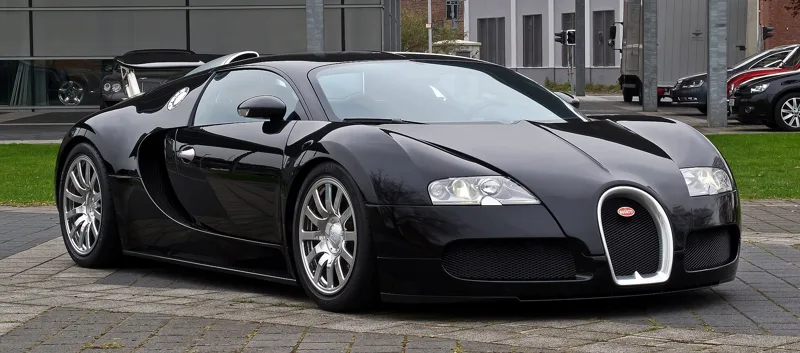
During one of the first secret speed tests of a Bugatti Veyron prototype, a wheel exploded at 398 km/h (247 mph), taking the front fender with it. The bonnet lifted, collapsed and smashed the windscreen, the brakes failed, and driver Loris Bicocchi slowed the car by scraping it along the guardrail. He walked away with minor injuries. Afterwards he was handed an invoice for 1,800 metres (5,900 ft) of damaged barrier. The place was the Nardo Ring in southern Italy, one of three circuits, with Montlhery near Paris and Fiorano near Maranello, built with records and testing in mind.
What are Montlhery, Nardo and Fiorano?
Montlhery, the Nardo Ring and the Fiorano Circuit are three Western European tracks that became known for testing and record-setting rather than for hosting championships. Montlhery opened in 1924 outside Paris, the Nardo Ring was built in 1975 as Fiat's test track in Apulia, and Ferrari opened Fiorano in 1972 near Maranello.
Their histories differ. Montlhery staged French Grands Prix and motorcycle endurance races. Nardo has been a test centre owned by Porsche Engineering since 2012. Fiorano has always been Ferrari's private ground. What they share is that vehicles go there to be pushed hard and measured.
A rumour that became legend says Fiorano was built so the Old Man could hear his cars.
How did the Montlhery circuit start in 1924?
Autodrome de Linas-Montlhery was established on 4 October 1924 and is owned today by Utac. It sits southwest of the small town of Montlhery, about 30 km (19 mi) south of Paris. The industrialist Alexandre Lamblin hired Rene Jamin to design a 2.548 km (1.583 mi) oval, initially called the Autodrome Parisien, with especially high banking, and a road circuit followed in 1925.
The 1925 French Grand Prix was the first race there, organised by the Automobile Club of France on 26 July. Robert Benoist won in a Delage, but Antonio Ascari died in a crash in his Alfa Romeo P2. The Grand Prix returned in 1927 and every year from 1931 to 1937.
In 1939 the track was sold to the government, which left it without maintenance during the war. In December 1946 it was sold again, this time to Union technique de l'automobile et du cycle, known as Utac. It earned its last certification for racing in 2001.
What happened at Montlhery between the wars?
In July 1926 Violette Cordery led a team that averaged 113.8 km/h (70.7 mph) over 8,047 km (5,000 miles) in an Invicta, and she became the first woman to receive the Royal Automobile Club's Dewar Trophy. In 1929 Helle Nice won the all-female Grand Prix at the third Journee Feminine in an Omega-Six. Later, a Coupe du Salon, a Grand Prix de l'Age d'Or and a 1000 km race were held irregularly, since the track has had several high-speed problems.
The track was also a motorcycle venue. The Grand Prix de France was run there in 1925, 1931, 1935 and 1937 with leading riders, and a second Grand Prix de France ran from 1924 to 1937 for French and British riders. The Bol d'or, the French 24-hour motorcycle endurance race, was held at Montlhery before the Second World War from 1937 to 1939 and after it in 1949, 1950, 1952 to 1960, 1969 and 1970.
British bikes, such as Velocette, Norton and Triumph, usually won from 1931 to 1959. Gustave Lefevre remains the record holder with seven victories on a Norton Manx, riding alone for 24 hours; in 1953 his average was 107 km/h (66 mph), and from the following year two riders were allowed. A Honda Four won for the first time as a Japanese bike in 1969, and a Triumph Trident was the last British winner in 1970. Other events included the Cote Lapize hill climb around Saint-Eutrope, where new engines prepared in secret over winter were shown off, and in the early 1950s Pierre Monneret rode the official Italian Gilera Four, a 500 cc machine, there. Fatal accidents in 1956 and 1964 are also part of the circuit's history.
What else has Montlhery hosted?
Cyclists came in 1933, when the circuit hosted the UCI Road World Championships. In 1961 the British maker Veloce fielded eight riders, among them managing director Bertie Goodman and the Motorcycling writer Bruce Main-Smith, on a near-standard Velocette Venom Clubman to cover more than 100 mph (100.06) for 24 hours in the 500 cc class. That record still stands. In 2010 Ken Block shot his Gymkhana Three video there, promoting his own business.
What is the Nardo Ring?
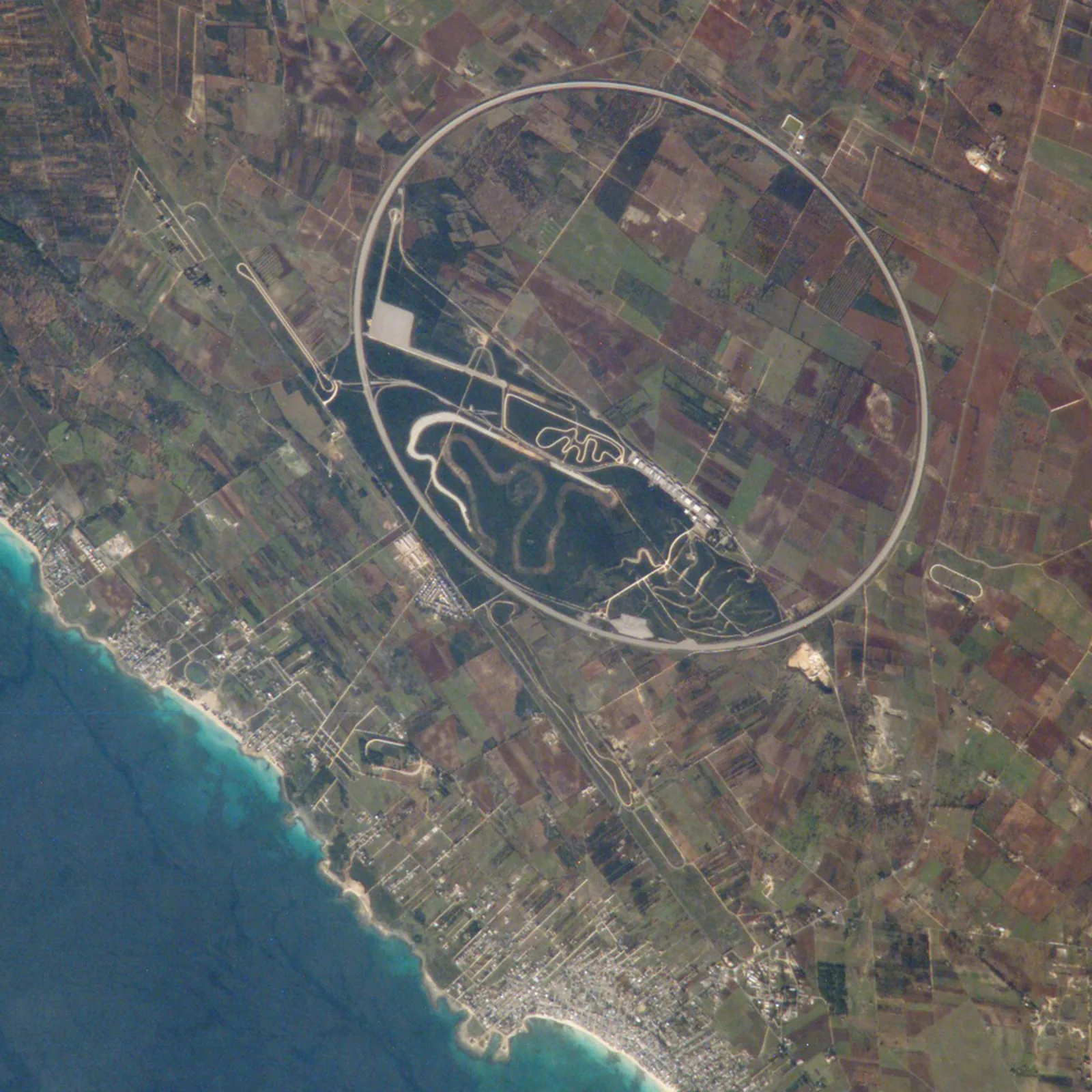
The Nardo Ring is a high-speed test track in Apulia, in the Province of Lecce, in southern Italy. When it was built in 1975 it was known as the Pista di prova di Nardo della Fiat, Fiat's Nardo test track. Prototipo SpA owned it until Porsche Engineering acquired it in 2012, and Porsche now calls it the Nardo Technical Center.
It is 12.5 km (7.8 mi) long and perfectly round. Four lanes for cars and motorcycles, totalling 16 m (52 ft) in width, circle the outside, with a separate inner ring for trucks that is 9 m (30 ft) wide. Inside both sits a 6.222 km (3.866 mi) handling circuit with a long straight and sixteen curves of different radius and lateral slope, useful for durability, reliability, vehicle dynamics and tyre tests on cars and motorbikes.
How does the banking at Nardo work?
The lanes are banked so steeply that a driver in the outermost lane does not need to turn the wheel at speeds up to 240 km/h (149 mph). At what is called the neutral speed, which is different in each lane, one can drive as though on a straight road, because the reaction force from the ground is angled away from vertical and supplies the inward push that a circle needs.
For the four lanes, counting from the inside, the figures run 100 km/h (62 mph), 140 km/h (87 mph), 190 km/h (118 mph) and 240 km/h (149 mph).
The truck ring has neutral speeds from 80 km/h (50 mph) to 140 km/h (87 mph), highest in the outermost part. During ordinary working weeks the maximum on the circular track is 240 km/h (149 mph), and higher speeds are allowed only when a client has the track to itself.
Very fast cars must still steer when they exceed the neutral speed. The Koenigsegg CCR record run was made with the wheel turned 30 degrees. Fighting the turn costs top speed, so a fast car will go quicker in a straight line than it can on the ring, which is why the Veyron later beat the CCR's mark at Volkswagen's private straight-line track at Ehra-Lessien in Germany, and why the CCR holds the record only for Nardo.
What records have been set on the Nardo Ring?
A board near the entrance lists some of the world records set on the ring. The list is long and varied.
- 5 May 1979: a Mercedes-Benz C111-IV reached 403.978 km/h (251.020 mph), the first car above 400 km/h, and completed a lap in 1 minute 57 seconds.
- 1982: a Porsche 928 S covered 6,033 km in 24 hours, an average of 251.4 km/h (156.2 mph).
- August 1983: three Mercedes-Benz 190E 2.3-16 cars set endurance records, including 50,000 km in 201 hours, 39 minutes and 43 seconds, at 247.94 km/h (154.06 mph).
- 4 April 1988: an Audi 200 quattro averaged 324.509 km/h (201.641 mph) over 500 miles and 326.403 km/h (202.817 mph) over 1,000 km.
- 1993: a Porsche 928 GTS covered 6,377.25 km (3,962.64 mi) in 24 hours, at 265.72 km/h (165.11 mph).
- 2 July 1994: a Bugatti EB110GT set a record for a methane-powered road car at 344.7 km/h (214.2 mph).
- 23 February 2002: the Volkswagen W12, also called the Volkswagen Nardo, covered 7,740.576 km (4,809.771 mi) in 24 hours at an average 322.891 km/h (200.635 mph).
- 28 February 2005: Loris Bicocchi drove a Koenigsegg CCR to 388 km/h (241 mph), a production car record.
Alternative power has had its turns. In 1994 Max Biaggi rode the Violent Violet electric motorcycle to five electric motorcycle records, and the Bertone Z.E.R. averaged 303.977 km/h (188.883 mph) for a kilometre. In 2004 the Eliica electric concept, with eight-wheel drive, reached 370 km/h (230 mph). A Volkswagen ARVW set a diesel record in 1980 at 362.07 km/h (224.98 mph), while in 2008 a Mercedes-Benz Actros BlueTec III showed an efficiency record for a 40-tonne truck, averaging 19.44 litres per 100 kilometres over 12,728 km (7,909 mi). Motorcycles have set many marks too, among them a Honda NR 750cc ridden by Loris Capirossi in 1993 at 304.032 km/h (188.917 mph).
The Top Gear television programme has visited twice. In 1992 the cameras followed Martin Brundle in a Jaguar XJ220 on a top-speed run. The series 18 opener of the rebooted show sent its three presenters round in different cars, Jeremy Clarkson in a Lamborghini Aventador, Richard Hammond in a Noble M600 and James May in a McLaren MP4-12C, to find out who could reach the highest speed. The rough surface figured in that episode, and the track was resurfaced in 2018.
What is the Fiorano Circuit?
The Fiorano Circuit is Ferrari's own private track, used for development and testing, in Fiorano Modenese near Maranello. Work started in 1971 and the circuit was officially opened on 8 April 1972, 8.4 m (28 ft) wide and 3.000 km (1.864 mi) in length.
Its corners range in diameter from 370 m to 13.71 m (1,213.9 and 45.0 ft), so Ferrari can mimic the corner types of other Grand Prix circuits. Like Suzuka, it is a figure-of-eight course. It has telemetry sensors, a large skidpad for tyre testing and, since 2001, an irrigation system fed by rain collected in eight cisterns to simulate wet-track conditions.
How has Fiorano changed since 1972?
A chicane was added in 1992, making the lap 3.021 km (1.877 mi). In 1996 a fast bend took the place of a sharp corner where the pit straight ends, shaving the lap to 2.997 km (1.862 mi) with the chicane in place and 2.976 km (1.849 mi) without it.
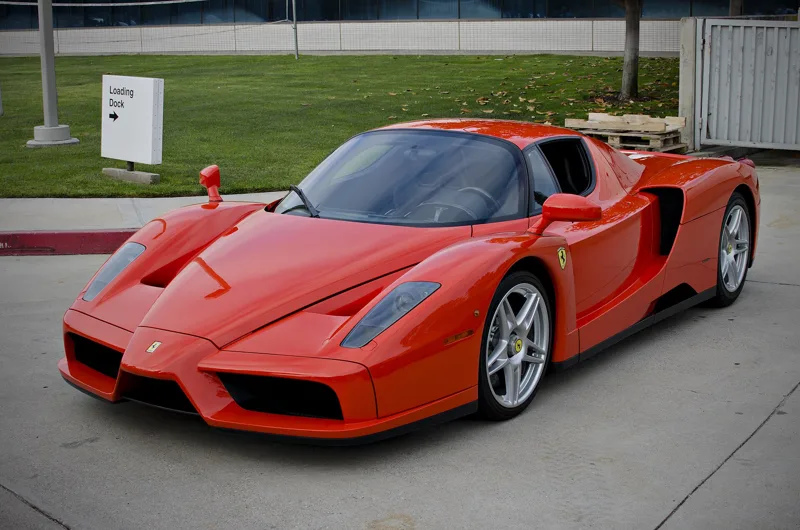
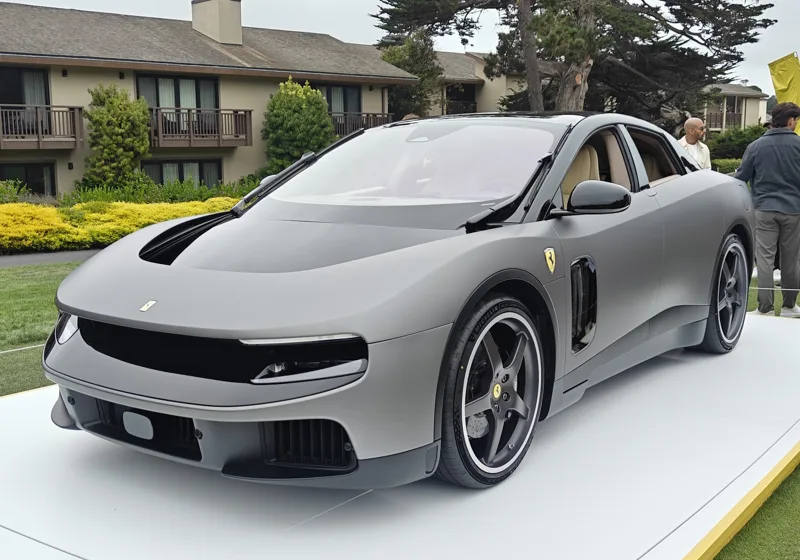
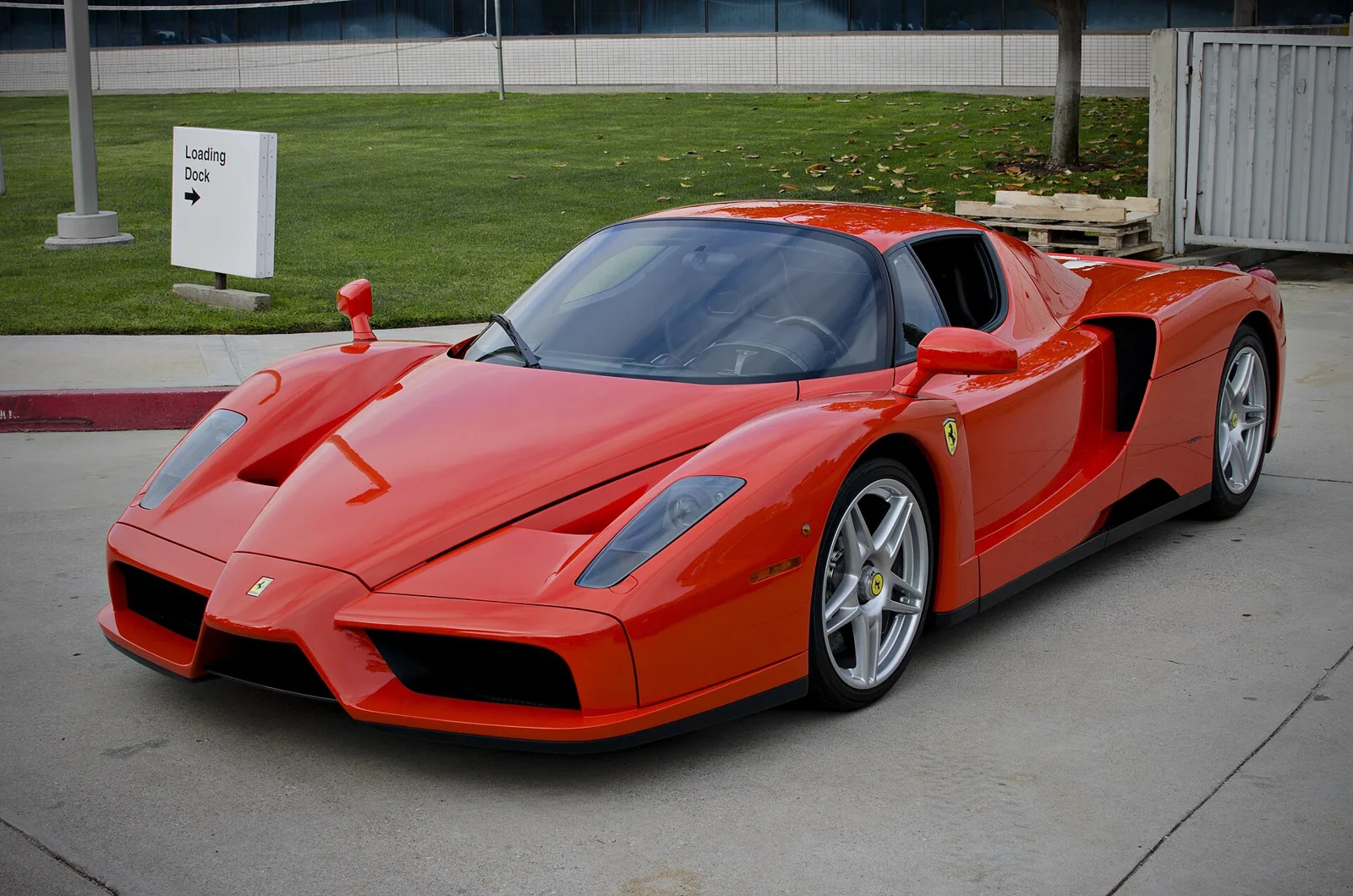
Ferrari customers may test drive new cars at the circuit, and its name has been given to road cars: the Ferrari 599 GTB Fiorano, and the Assetto Fiorano track package of the SF90 Stradale and the 296 GTB. When Scuderia Ferrari tests a Formula One car there, tifosi gather at the roadside, the nearest spot from which the public can see the circuit.
Did Enzo Ferrari build Fiorano to hear his cars?
Over the 16 years between the circuit's opening and his death in 1988, Enzo Ferrari either sat in his house beside the track and listened, or watched his Formula One cars test from the trackside. A rumour that became legend holds that this was the real reason the Old Man had it built, so he could hear his cars at full cry without other engines drowning them out. In truth he had judged that the Aerautodromo di Modena could no longer serve as a test track, and decided on a dedicated one.
How do the three circuits compare?
| Circuit | Opened | Owner | Layout | Known for |
|---|---|---|---|---|
| Montlhery | 1924 | Utac | 2.548 km (1.583 mi) banked oval plus road circuit | 1925 French Grand Prix, Bol d'or, endurance records |
| Nardo Ring | 1975 | Porsche Engineering since 2012 | 12.5 km (7.8 mi) banked circle with a 6.222 km (3.866 mi) handling circuit | Top speed and 24-hour records |
| Fiorano | 1972 | Ferrari | Figure-of-eight, 3.000 km (1.864 mi) at opening | Formula One and road car testing |
What have the circuits done most recently?
Nardo remains the busiest for records. On 18 August 2019 a pre-series electric Porsche Taycan covered 3,425 km (2,128 mi) in 24 hours, and on 7 April 2024 a pre-series electric Mercedes-Benz CLA covered 3,717 km (2,310 mi) in the same time. In August 2025 two battery-electric Mercedes Concept AMG GT XX cars set 25 world records after covering 24,901 miles (40,074 km) in under eight days. On 9 June 2023 Ivan Cervantes took a Triumph Tiger Explorer 1200 GT 4,012.53 km (2,493.27 mi) in 24 hours for a motorcycle distance record.
Montlhery's last certification for racing dates from 2001, while Fiorano carries on as Ferrari's test ground, where customers can try new cars.
What does it mean for someone who drives?
Ferrari names models after Fiorano and lets its customers test drive new cars there, so the track has a direct line to the showroom. At Nardo, a client can book the circular track for exclusive use, the only time speeds above 240 km/h (149 mph) are allowed. Montlhery's endurance runs, such as Cordery's Invicta team in 1926, show that the idea of proving a car by running it flat out for hours is much older than either.