A Pennsylvania dairy shop that outsells the big oil brands at the pump, a gas company that became Sunoco, a Cities Service brand whose Venezuelan-owned parent was sold at auction and a Texas spinoff named for the Alamo.
Sunoco, Citgo, Valero and Sheetz are American fuel brands built in different ways. Sunoco grew from Sun Oil and is now a fuel distributor, Citgo came from Cities Service, Valero was spun off in 1980, and Sheetz began as a dairy store in 1952 and now leads Pennsylvania fuel sales.
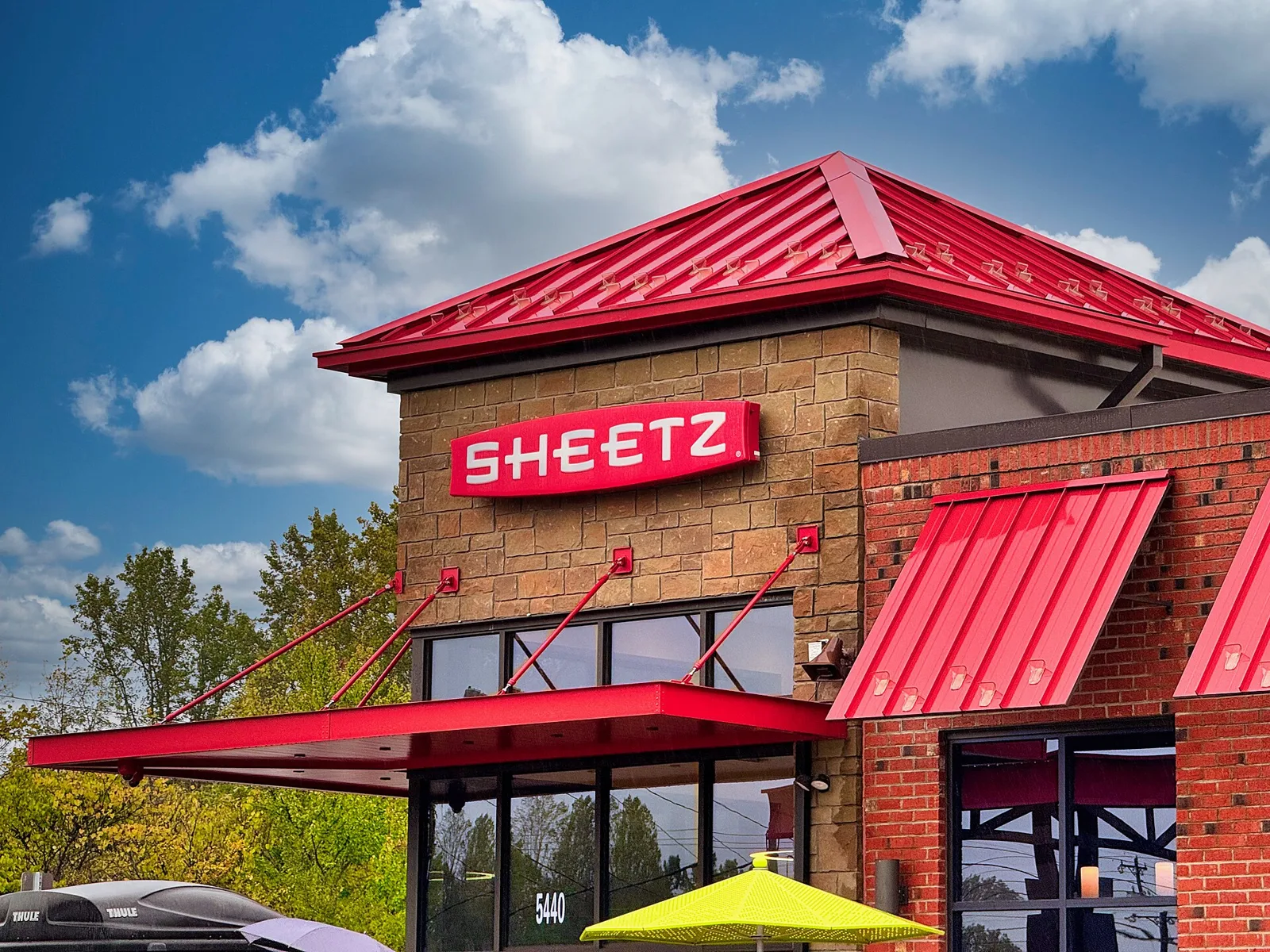
In Pennsylvania, Sunoco has more than 800 gas stations, over three times as many as second-place ExxonMobil, and still sells less fuel than a convenience store chain that began as a dairy shop in Altoona. That chain is Sheetz. Alongside Citgo and Valero, it shows four quite different ways to build an American fuel brand.
Sunoco gas: from Sun Oil to a fuel distributor
Sunoco is short for Sun Oil Company, and its story starts in 1886. Edward O. Emerson, Philip Pisano and Joseph Newton Pew were partners in a Pittsburgh business, the Peoples Natural Gas Company, and that year they bought into the new oil finds in Ohio and Pennsylvania. By 1890 the venture was Sun Oil Company of Ohio, and by 1901 it had become Sun Company, Inc., incorporated in New Jersey.
Texas pulled it further. In 1902 the Sun Oil Refining Company received a Texas charter to go after the Spindletop field, and Pew's nephew, J. Edgar Pew, picked up the storage and transport assets of Lone Star and Crescent Oil when they were sold off in receivership. Spindletop crude then travelled to the company's refinery at Marcus Hook, Pennsylvania. The first Sun service station, at Ardmore in Pennsylvania, opened in 1920, and a 1925 share offering took the company public on the New York Stock Exchange.
The brand's best-known idea came in 1956. Custom-Blended pumps let a customer choose among several octane levels from a single nozzle. Sunoco stations could offer as many as eight grades, from subregular Sunoco 190 up to Sunoco 260, a super-premium fuel of 102 octane advertised as the highest octane you could buy and popular with owners of 1960s V8 muscle cars. In 1983 it followed with Sunoco ULTRA 94, then the highest octane unleaded fuel available.
Growth came through deals. A 1968 merger with Tulsa's Sunray DX brought the DX brand and several refineries, and Sunoco later converted DX stations in the Midwest while retreating from the southeast and from the area west of the Mississippi. A 1988 restructuring pointed the company at refining and marketing, which led to its purchase of Atlantic Refining and Marketing and, with it, the A-Plus convenience store chain. The company became Sunoco, Inc. in 1998, and in 2004 it took the title of NASCAR's Official Fuel from ConocoPhillips' 76 brand.
Then it shrank back to the essentials. In 2011 Sunoco announced it would leave refining, and a joint venture with the Carlyle Group kept the Philadelphia refinery running until a damaging fire in June 2019 led to its closure. In 2012 Energy Transfer Partners bought the company, and in 2014 it took over Susser Holdings, owner of the Stripes convenience stores. The listed partnership that results is called Sunoco LP and has been based in Dallas since 2016.
The biggest change came in 2018, when Sunoco sold 1,030 retail stores to 7-Eleven for $3.2 billion and agreed to supply those stores with 2.2 billion gallons of fuel a year for 15 years. As of 2024 it runs just 76 retail sites itself, all in New Jersey and Hawaii, the Hawaii sites branded Aloha Petroleum. Its main business is distribution: it moves over 8 billion US gallons (30 billion litres) of fuel a year across more than 40 states and territories, through about 14,000 miles (23,000 km) of pipeline and over 100 terminals. In Canada the Sunoco gasoline trademarks belong to Suncor, whose Ontario stations were converted to Petro-Canada, with the exception of one in North Bay.
In Pennsylvania, a convenience store chain that began as a dairy shop sells more fuel than Sunoco.
Citgo gas stations: a Cities Service brand with contested ownership
Citgo Petroleum Corporation was formed in 1983 from the retail, marketing and transport side of Cities Service, a company Occidental Petroleum had acquired the year before. It is based in the Energy Corridor of Houston. Majority ownership sits with PDVSA, Venezuela's state oil company, although US sanctions imposed in 2019 mean PDVSA no longer benefits economically from it.
The Cities Service line goes back to Henry Latham Doherty, who in 1910 set up a company to provide small public utilities with gas and power. In 1931 it built the Natural Gas Pipeline Company of America, a 24-inch high-pressure line that ran 1,000 miles from Amarillo to Chicago. Oil discoveries followed in Kansas, at Augusta in 1914 and at El Dorado a year later, and a subsidiary found the Oklahoma City field in 1928, one of the world's largest. The company paid for the Cities Service Concerts on NBC radio from 1925 to 1956. A 1935 law forced it to pick between utilities and petroleum, and it chose petroleum. Its green circle logo was widely recognised across the country.
The Citgo name arrived in 1965, as a trademark for refining, marketing and retail only. It stayed a trademark until 1983. In 1982 T. Boone Pickens of Mesa Petroleum bid for Cities Service, and the company hit back with an offer for Mesa, the first use of the tactic later called the Pac-Man defence. A rescue merger with Gulf Oil fell apart, Occidental bought Cities Service that autumn, and the refining and retail business was moved into a new subsidiary, Citgo Petroleum Corporation. In 1983 Occidental sold it, with the Citgo and Cities Service brands, to Southland Corporation, original owner of the 7-Eleven chain.
Venezuela came next. PDVSA bought half of Citgo in 1986 and the rest in 1990, and at its peak, with full ownership, it controlled 10 percent of the US domestic oil market. In 2010 the Venezuelan president at the time, Hugo Chavez, said he wanted to sell it, setting a minimum price of 10 billion US dollars, but no buyer came forward, and in January 2015 it was confirmed that it would stay. In 2016 Venezuela put up 49.9 percent of Citgo as security for a $1.5 billion loan from the Russian firm Rosneft.
The 2019 sanctions made things messier. After the United States recognised Juan Guaido as Venezuela's president in January 2019, he appointed a new board for Citgo, and a Delaware Chancery Court ruling in August 2019 upheld his control. In 2020 Citgo borrowed through a bond secured on 50.1 percent of its equity. In November 2025 an affiliate of Elliott Investment Management, Amber Energy, bought Citgo's parent company, PDV Holdings, for $5.9 billion at a court-ordered auction. Venezuela's vice president, Delcy Rodriguez, called the sale fraudulent.
One footnote concerns the stations themselves. Chevron secured exclusive US rights to the Texaco name in June 2006, and Texaco then sold some Citgo stations in the southeast.
Valero gas stations: from a lawsuit to a refiner with a retail arm
Valero was set up on 1 January 1980 as a spinoff of LoVaca Gathering Company, a subsidiary of Coastal States Gas Corporation. Coastal had been sued because a gas shortage left it unable to meet supply contracts to Texas utilities, and after six years it agreed to a $1.6 billion settlement that created Valero as a new company. Valero is named for Mission San Antonio de Valero, the first name of the Alamo mission.
The company moved into refining in 1985 and, in 1997, split its refining assets from its natural gas business to form Valero Energy Corporation. A string of purchases followed. In 1998 it bought Mobil's Paulsboro refinery in New Jersey, which made it the country's number two independent refiner. In 2000 it bought the Benicia refinery in California, together with an interest in 350 Exxon-branded stations, and started selling gasoline under its own name. Ultramar Diamond Shamrock came in 2001, Premcor for $8 billion in 2005, and 72 Albertsons gas stations in 2008. In June 2005 it began a two-year programme of rebranding Diamond Shamrock sites as Valero.
Europe arrived in 2011, when Valero bought Chevron's Pembroke Refinery in Wales with its marketing and logistics assets in the United Kingdom and Ireland for $730 million, excluding working capital. The package included about 1,000 retail outlets and a network of Texaco-branded wholesale sites, and Valero kept the Texaco brand in those markets.
Retail has never been the main business. In 2013 Valero spun its retail operations out as CST Brands, but under long-term supply agreements it still feeds over 7,000 retail sites, many of them using brand names that Valero owns. Its labels are Total (under licence from TotalEnergies), Beacon, Diamond Shamrock, Shamrock and Valero itself. Beacon and Shamrock are positioned as low-cost alternatives to the premium Valero name, reflecting a shift from discount to premium, and in April 2018 a new look called Vanguard, using blues, white and yellow, was announced for the stores. Its chief executive Bill Greehey once called retail only a minor part of the business, even though it was the part the public saw most.
Today Valero is based in San Antonio, with refineries across the US, Canada and Britain handling roughly 3.2 million barrels a day. It also has two renewable diesel plants making about 1.2 billion gallons a year, built with Darling Ingredients under the Diamond Green Diesel venture, and 12 ethanol plants with a combined capacity of 1.6 billion gallons. A sustainable aviation fuel project at Port Arthur, Texas, was completed in October 2024 with a capacity of 235 million gallons a year.
California has been the difficult market. Valero announced in April 2025 that it would shut the Benicia refinery after booking $1.1 billion of impairment charges tied to its California operations, and at the start of 2026 it said the plant would be idled, with Northern California supplied through imports and existing inventories. A blast and fire hit the Port Arthur refinery on 23 March 2026.
Sheetz gas: a convenience store chain that sells the most fuel
Sheetz began in 1952, when G. Robert "Bob" Sheetz bought a dairy store, one of five his father owned, in Altoona, Pennsylvania. A second store opened in 1963 under the name Sheetz Kwik Shopper. In 1972 the chain grew from seven to 14 stores, and a year later it started selling gasoline, putting in the first self-serve pumps in central Pennsylvania. A Maryland store in 1976 was its first outside the state. By 1983 there were 100 stores and the Kwik Shopper tag had gone.
Food is what drives the pumps. In 1986 Earl Springer, who managed a Sheetz in Williamsport, Maryland, set up a made-to-order sub counter in an effort to lift lagging sales. Customers ticked their choices on a slip of paper. From 1996 the paper gave way to a touchscreen, and Sheetz was the first company to use that system. By 1999 the chain was selling 10,000 made-to-order items a day. Its stores are open 24 hours a day, year-round, and the strong inside sales are what mainly drive its fuel sales.
The results show at the pump. Sheetz leads Pennsylvania in fuel sales with over 21 percent of the market, ahead of every other convenience chain and of major oil names including Exxon, Sunoco and BP. Its gasoline comes in 87, 89 and 93 octane, and diesel is sold at most stores. A growing number also carry E85 and E15, and some stock ethanol-free petrol. In 2006 it became the second retail chain in Pennsylvania to sell E85.
Today the family-owned business employs over 21,000 people and, as of 2025, more than 800 company-owned stores spread over Pennsylvania, Ohio, Maryland, Virginia, West Virginia, North Carolina and Michigan. It opened its 600th store in December 2019, and sales in the 2018 to 2019 fiscal year totalled $7.5 billion. It is less visible around Philadelphia, where Wawa dominates, and Pennsylvanians treat the two chains as fierce rivals even though the companies themselves are on friendly terms. On 12 February 2026 Sheetz opened its first store in the Philadelphia area, at Limerick Township.
Its alcohol sales came from a political fight. Until 8 June 2016 Pennsylvania law kept alcohol out of convenience stores. Sheetz led the campaign to change it, and Act 39 became law on that date, allowing sales in convenience and grocery stores.
| Brand | Roots | Business today | Scale quoted |
|---|---|---|---|
| Sunoco | Peoples Natural Gas, 1886; Sun Oil Company | Fuel distributor and pipeline operator | Over 8 billion US gallons a year; over 800 stations in Pennsylvania |
| Citgo | Cities Service brand of 1965; company formed 1983 | Downstream refining and retail | Sold with its parent for $5.9 billion at auction in 2025 |
| Valero | Spinoff from Coastal States, 1980 | Refiner with retail brands | About 3.2 million barrels a day; supplies over 7,000 retail sites |
| Sheetz | Dairy store in Altoona, 1952 | Convenience store chain | More than 800 company-owned stores; over 21 percent of Pennsylvania fuel sales |
What these brands mean for drivers
The signs on the forecourt do not always say who runs the site. The 1,030 stores Sunoco sold to 7-Eleven are supplied by Sunoco under a long-term agreement, and many Valero-branded sites are owned by someone else and supplied under long-term contracts. Sheetz is the opposite case: it owns its stores and its fuel sales follow its food.
For fuel choices, Sunoco UltraTech, introduced at all its stations in April 2017, is a high-detergent blend that meets Top Tier standards and matches the detergent level of Sunoco's NASCAR fuel. At Sheetz you will find 87, 89 and 93 octane. In Valero's range, Beacon and Shamrock are the lower-cost labels beneath the premium Valero name.
Where these brands are heading
Sheetz has the clearest growth plans. In 2019 it said it would move into Greater Columbus from 2021, with 60 locations by 2025. It opened its first Michigan store, at Romulus, on 27 August 2024, and in April 2026 it announced a move into Indiana, with the first stores in the Indianapolis area in 2027 and 100 more across the state within 10 years.
Valero's Benicia refinery in California is due to be idled, while its sustainable aviation fuel is used by JetBlue at John F. Kennedy airport and, under a two-year agreement from October 2024, by Southwest Airlines at Chicago Midway.