A gauge can lie when coolant boils away. How a radiator sheds engine heat, why coolant is pressurised, and what happens when the system fails.
An engine overheats when its coolant loop stops carrying heat away, for example when the coolant level drops and the liquid vaporises. The radiator, pump, thermostat and fan normally shed combustion heat to the air, and failure can blow gaskets and crack cylinder heads.
An overheating engine can give no warning at all. When the coolant boils away, the temperature sensor ends up sitting in vapour instead of liquid, and the gauge may show a harmfully false reading while the metal around it climbs towards failure.
That oddity makes the cooling system worth understanding: what a radiator does, how coolant carries heat out of an engine, what the thermostat, fan and pressure cap contribute, and what follows when the gauge starts to rise.
What does a radiator do?
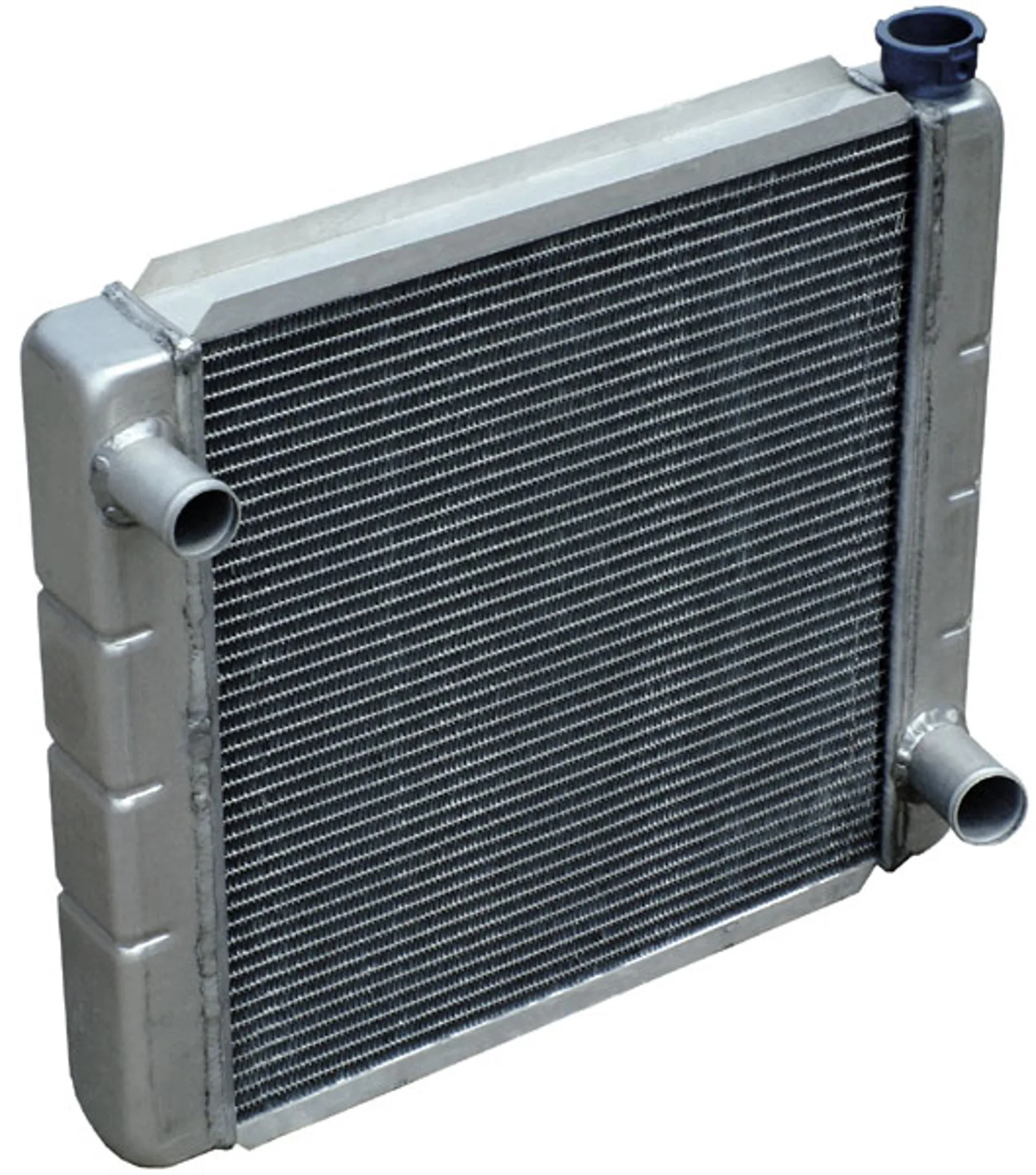
A radiator is a heat exchanger. Liquid coolant is pumped round passages in the block and head, soaking up heat as it goes. It then flows through the radiator, which passes the heat to the air, and returns to the engine to start again. Radiators appear mainly in cars, but also in motorcycles, piston-engined aircraft, locomotives and stationary generating plants. A water pump forces the coolant round and a fan pulls air through the fins.
Without that loop, combustion would cook the engine. The process produces a large amount of heat, and if it were left to build up, the result would be detonation, and parts outside the engine would give up from the sheer temperature. The coolant absorbs heat in the engine and the radiator hands it to the air flowing past.
The same hardware does other jobs. Radiators are used to cool automatic transmission fluid, air conditioner refrigerant and intake air, and sometimes engine oil or power steering fluid. Electric cars still use coolant, pumps and radiators, in their case to cool the battery and the motors.
The coolant absorbs heat in the engine and the radiator hands it to the air, and if that loop stalls the engine cooks itself.
How does engine cooling work?
Five parts do the work in a typical automotive system. Each has a plain job, and when the gauge climbs it is usually one of them that has stopped doing it. The list reads as follows:
- Passages cast into the block and head, wrapped around the combustion chambers, through which liquid carries heat off.
- A radiator made of many small tubes with a honeycomb of fins to shed heat quickly.
- A water pump, usually centrifugal, to drive the coolant round the circuit.
- A thermostat that varies how much coolant goes to the radiator.
- A fan that draws cool air through the radiator.
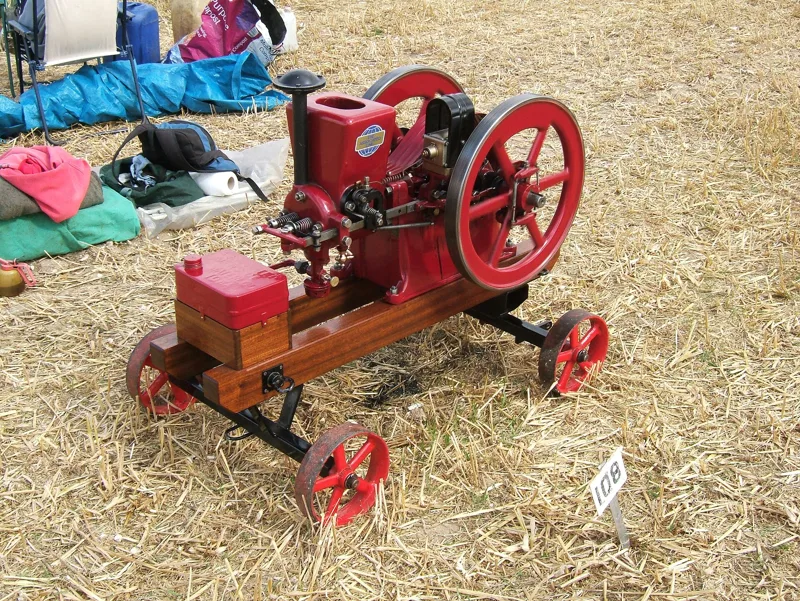
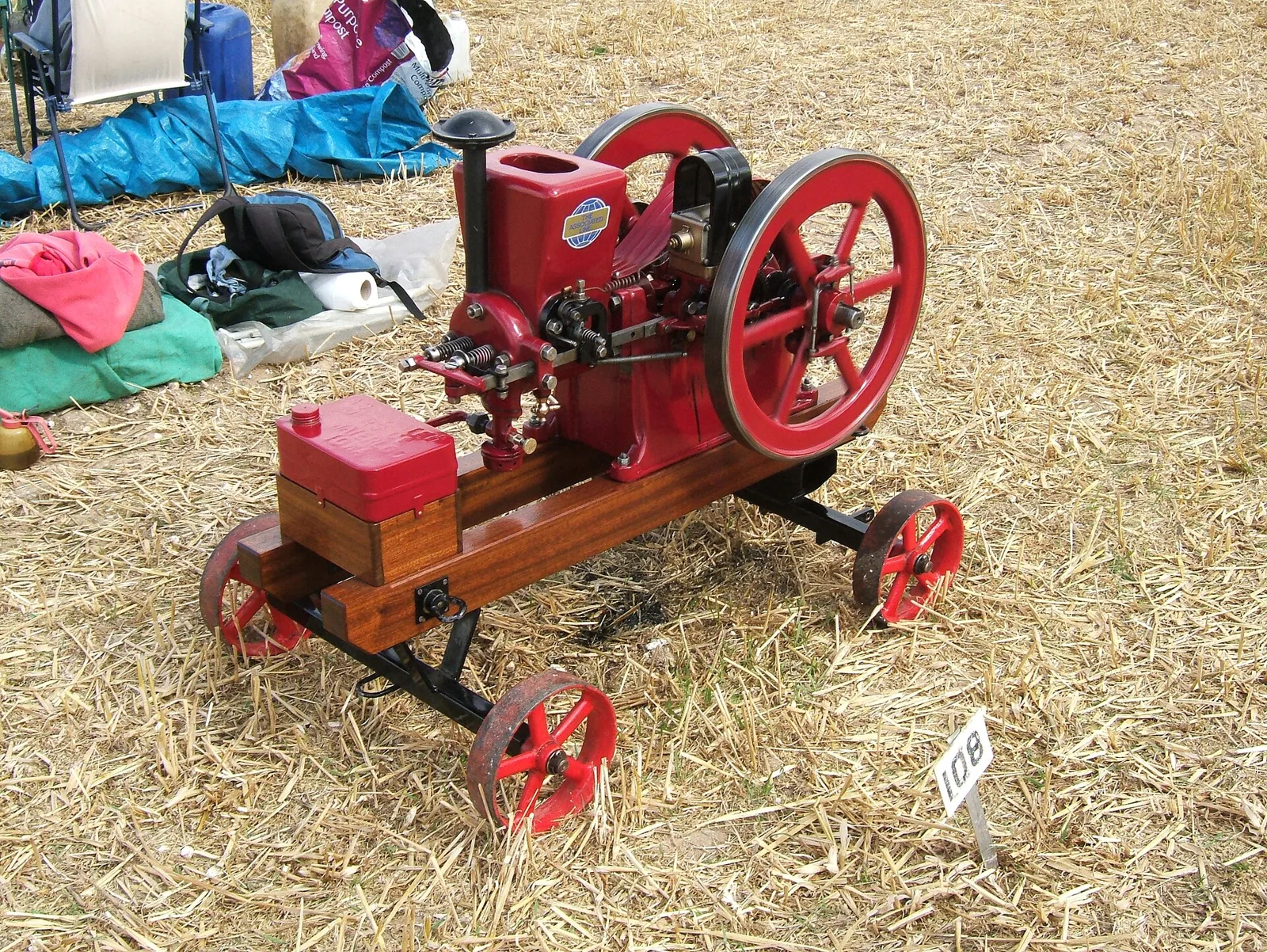
The earliest systems had no pump. They relied on a thermosyphon effect: coolant warmed by the engine thins out and rises, then cools in the radiator, grows denser and sinks. That is enough for a low-power stationary engine and not for much else, and cars have used centrifugal pumps for many years because natural circulation moves coolant slowly.
Placement matters too. A radiator usually sits behind the front grille so the car's forward movement pushes air through it. Even mid- and rear-engined cars often keep the radiator at the front, at the cost of long coolant pipes. On a bus or other long vehicle, side intakes are the norm for engine and transmission cooling, while the roof serves the air conditioning.
What is the difference between coolant and antifreeze?
Coolant is the whole liquid that carries heat. Antifreeze is an additive inside it. Water is the most common coolant because it has high heat capacity and costs little, but it freezes and corrodes, so engines use a mix of water and antifreeze in proportions suited to the climate.
Antifreeze is normally based on ethylene glycol or propylene glycol, plus a dash of corrosion inhibitor. It is used whenever the coolant must survive temperatures below 0 degrees Celsius, or when the boiling point has to rise. The textbook ideal coolant soaks up plenty of heat, flows easily, costs little, is non-toxic and chemically inert, and does nothing to encourage corrosion.
The balance between those jobs has shifted. Before World War II, engine coolant was typically plain water, and antifreeze was added only in cold weather because ice expanding in the block can wreck an engine. Demand from high-performance aircraft engines for higher boiling points led to glycol mixtures. Since aluminium and mixed-metal engines arrived, protecting against corrosion now matters more than frost protection, in all regions and seasons.
| Coolant | What it offers | Where it fits |
|---|---|---|
| Water | High heat capacity and low cost | The most common coolant, used with corrosion inhibitors and antifreeze |
| Water with glycol antifreeze | Survives temperatures below 0 degrees Celsius and raises the boiling point | Ordinary car engines, mixed to suit the climate |
| Waterless coolant | Boils at around 370F, resists boil over and prevents corrosion | Offered as a substitute for ordinary water-glycol coolant |
| Oil | Boiling point above 100 degrees Celsius without high pressure | Applications where water is unsuitable |
Why does the thermostat matter so much?
It decides how quickly an engine warms up and how hot it runs afterwards. Modern cars use a wax-pellet valve that stays closed on a cold engine and opens once the engine reaches its ideal temperature. A small bypass flow keeps it sensing the coolant's warmth throughout.
While the engine is cold, coolant is steered straight back into the engine and bypasses the radiator. That lets the engine heat up as fast as possible without localised hot spots. Once the coolant reaches the activation temperature the valve opens and water flows through the radiator to stop the temperature climbing further.
The valve then works continuously. On a slow climb up a steep hill with a heavy load on a hot day, the engine produces near-maximum power while little air crosses the radiator, so the thermostat approaches fully open. Coasting quickly down a hill on a cold night with the throttle barely open, the engine makes little heat and the radiator could shed far more, so the thermostat sits nearly closed.
Over-cooling is a real problem. Too much flow to the radiator makes the engine run below its ideal temperature, which reduces fuel efficiency and raises exhaust emissions, and durability can suffer where parts such as crankshaft bearings are designed around thermal expansion. The cabin heater also performs worse, though it still blows warm air.
Vintage cars may carry a bellows thermostat, which contains a volatile liquid, alcohol or acetone for instance. It does not work well in cooling systems above about 7 psi, and modern vehicles typically run at around 15 psi, which rules it out.
How do the fan and airflow keep the engine cool?
Airflow through the radiator has a major effect on how much heat it sheds. Vehicle speed raises it in rough proportion to engine effort, a crude self-regulating feedback. Radiator size is chosen so the engine holds its design temperature in the worst conditions it is likely to meet, such as climbing a mountain fully loaded on a hot day.
Fans fill the gaps. Engine-driven fans are often run through a fan clutch that slips when the engine is cold, which saves fuel by not driving the fan unnecessarily. Modern vehicles add variable-speed or cycling fans, and electric fans are switched on by a thermostatic switch or by the car's engine computer. Electric fans have the advantage of moving good air at low engine revs or when stationary, as in slow traffic.
Older designs had simple fixed fans that pulled air across the radiator whether it was needed or not. Vehicles with large radiators, such as tractors and commercial vehicles, tended to run cool in cold weather as a result, and the cure was a radiator blind: a roll of canvas or rubber that unfurled to cover part of the core. Some First World War fighters had shutters adjustable from the pilot's seat, and some modern cars use shutters that the engine computer opens and closes to balance cooling against aerodynamics.
Why is the cooling system pressurised?
Because hotter engines are more efficient, and pressure raises the coolant's boiling point so it can run hotter without turning to steam. A calibrated relief valve in the fill cap lets excess pressure escape, with typical settings from 30 to 200 kPa (4 to 30 psi) depending on the model.
When the pressure rises with temperature, the valve vents until the temperature stops climbing. If the radiator or header tank is over-filled, a little liquid escapes onto the ground or into a vented container. After the engine is switched off and cools, the level drops, and in some designs fluid in the bottle is drawn back into the circuit, though not in all.
That pressure is also why a hot radiator is dangerous. Opening the cap drops the pressure suddenly, which can make the coolant boil and spray dangerously hot liquid and steam. Caps therefore often contain a mechanism to relieve pressure before they can be fully opened.
What happens when the temperature gauge goes up?
If the overflow tank runs dry, the coolant can vaporise, causing localised or general overheating. Running over temperature can do severe damage, including failed head gaskets and distorted or cracked cylinder heads or blocks. Because the sensor behind the gauge may be exposed to vapour rather than liquid, it can mislead, sometimes leaving no warning before the damage is done.
Technicians offer one piece of practical advice if an engine runs hot: turn the heater on and set it high. The heater core is a small radiator in the cabin, fed by the same coolant, and it pulls heat from the engine just as the main radiator does, so it helps the larger unit.
The radiator itself can be the weak link. Older brass and copper cores gave way to aluminium cores, often with plastic header tanks and gaskets, which save money and weight. The trade-off is that such radiators fail more readily and are harder to mend than the old brass-and-copper kind. When a car's original radiator cannot be enlarged, makers add a second one in series, as happened when the Audi 100 was turbocharged to create the 200. A separate small radiator may also cool the engine oil.
Who invented the car radiator?
Karl Benz is credited with inventing the automobile water radiator. The first honeycomb radiator came from Wilhelm Maybach, for the Mercedes 35hp. In that early design, round tubes were shaped into hexagons at their ends, stacked and soldered, so they touched only at the ends and formed in effect a solid tank of water threaded with air tubes. Some vintage cars used coiled-tube cores, simpler though less efficient.
Where this goes next
Electric cars have kept the radiator, pump and coolant, now cooling batteries and motors. Researchers are also working on nanofluids, a new class of coolant in which tiny particles are dispersed in a carrier liquid such as water. The theoretical improvement in heat transfer is as high as 350%, but experiments have not shown anything like it. The reported results are still large: silver nanorods at 0.5% by volume raised the thermal conductivity of water by 68% and of an ethylene glycol coolant by 98%, and alumina nanoparticles at 0.1% can raise water's critical heat flux by as much as 70%.