From a 1987 experiment to a 100 km/h dynasty of Dutch, Japanese and Belgian teams, the solar car race that taught engineers what a roof can power.
The World Solar Challenge is a race for solar-powered cars over more than 3,022 km from Darwin to Adelaide, created in 1987. Teams must use only sunlight and a battery of about 5 kWh. Delft's Nuna cars have won eight of twelve races since 2001.
In 2005 a Dutch car crossed the Australian outback on sunlight alone at an average of 102.75 km/h (63.85 mph), so quickly that the race had to be rewritten around it. The World Solar Challenge began in 1987 as a test of whether a car could cross a continent without a drop of fuel. Within two decades the answer was so convincing that organisers had to slow the field down.
What is the World Solar Challenge?
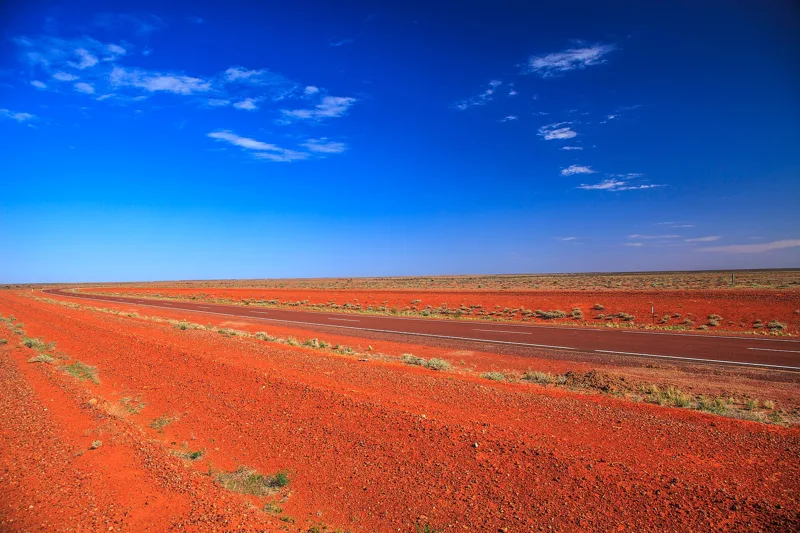
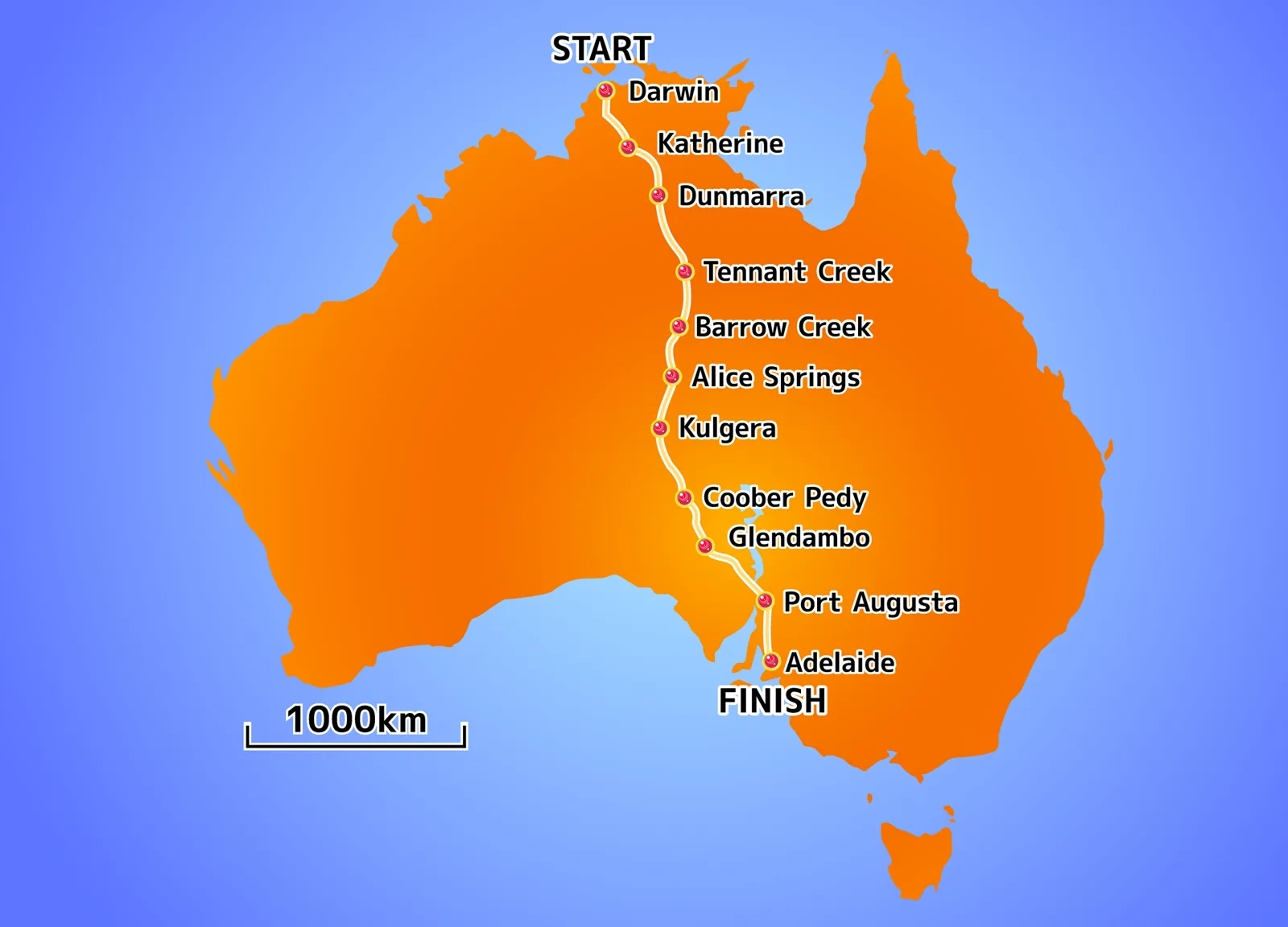
The World Solar Challenge is an international race for solar-powered cars across the Australian outback. Starting in Darwin, in the Northern Territory, the course covers more than 3,022 km (1,878 miles) before it ends in Adelaide, South Australia. Since 2013 the event has carried the Bridgestone name.
The aim from the start in 1987 was to push solar vehicles forward, and the race has been run fifteen times across a 32-year history. Early on the race came round every three years; the gap shrank to two years at the turn of the century. The 2021 edition was cancelled because of the COVID-19 pandemic, which left four years between the 2019 and 2023 events.
Entrants range from universities and corporations to high schools, and they arrive from all over the globe. At its core it is a design competition, and any team that reaches the finish line is counted a success. In 2015 alone, 43 teams from 23 countries took part.
The challenge of building a solar vehicle capable of crossing Australia at road speeds had been met and exceeded.
Who invented the Darwin to Adelaide solar race?
The idea came from Hans Tholstrup, a Danish-born adventurer who earlier became the first to go right around the continent by sea, in a 16-foot (4.9 m) boat with no cabin. By the 1980s he had become convinced that sustainable energy would have to replace limited fossil fuels.
With sponsorship from BP, he designed what is described as the world's first solar car, The Quiet Achiever, and drove it 4,052 km (2,518 miles) between Sydney and Perth in 20 days. That journey was the forerunner of the race. The car now sits in the National Museum of Australia in Canberra. When the fourth event was over, Tholstrup handed the rights over to South Australia's government, and Chris Selwood took over running the race.
Solar cars themselves go back further. In 1955 a General Motors employee, William G. Cobb, showed a 15-inch toy called the Sunmobile at a Chicago convention, with 12 selenium cells feeding a small electric motor. Seven years later, in 1962, the International Rectifier Company fitted a panel to a 1912 Baker Electric to make the first solar car with room for passengers.
How does a solar car race work?
The rules are built around one idea: the car may only use the sun. Each car is allowed a battery equal to roughly 5 kWh at most, and the battery may start the race full. After that, the energy has to come from the roof.
The clock stops at the edge of Adelaide, 2998 km from Darwin. For that time to count, though, the team must then reach the official finish line in the city centre using solar power alone. Because the cars use public roads, they follow ordinary traffic law.
The daily rhythm
Between two and four drivers have to be registered for each car. Any driver who weighs less than 80 kg (180 lb) with clothes on triggers ballast to make up the difference. Driving takes place between 8:00 and 17:00, with up to 10 minutes of extra driving allowed to find a suitable overnight stop alongside the highway, a delay that is repaid with a late start the next morning.
Along the route, every car has to stop for 30 minutes at checkpoints. Only limited maintenance is permitted at these halts, and repairs are not allowed. Batteries may not be swapped unless there is a breakdown, in which case a time penalty applies. Beyond the maximum outer dimensions, the rules place no further limits on design, though the dual braking system must achieve deceleration of at least 3.8 m/s2.
How do you win with a car that runs on sunshine?
You win by managing energy like a long-distance runner manages breath. At any given moment the best speed depends on the weather forecast and on how much charge remains in the battery. Team members in escort cars continuously pull data from the solar car over a remote link and feed it into computer programs written beforehand to work out the best driving strategy.
Charging matters just as much when the car is parked. The panels are normally angled so they face the incoming sunlight squarely, and sometimes the entire array is tilted for the purpose. A little like a sunbather turning to follow the afternoon light, the car gets the most from a lie-down in the right direction.
Each car travels inside a convoy. A lead car goes ahead to spot problems or obstacles, and behind the solar car comes a mission control vehicle that sets the race pace, with steered using car data plus information about weather and terrain. Further back there may be vehicles carrying replacement drivers, maintenance equipment, supplies and camping gear for the whole team.
How does a solar car actually work?
A solar car is an electric vehicle with a built-in power station on its roof. The array is made of photovoltaic cells: when sunlight strikes the semiconductor, particles of light excite electrons and set them flowing as an electric current. Crystalline silicon is the most common material, with an efficiency of 15 to 25 per cent. Some cars use gallium arsenide cells that reach about thirty per cent, against about twenty per cent for silicon.
The array is built up from hundreds of cells grouped into modules, and larger arrays can produce more than 2 kilowatts (2.6 hp). That is not much power. Solar car motors typically deliver only about 2 or 3 horsepower, but light experimental cars can still match a normal family car at 100 mph (160 km/h). The secret is that everything is designed around saving energy: aerodynamic drag, weight, rolling resistance and electrical efficiency matter more than anything else.
The best motors exceed 98 per cent efficiency. A battery pack typical of a solar race car holds enough charge to cover 250 miles (400 km) without sun while travelling constantly at 60 mph (97 km/h). A maximum power tracker keeps the array at the voltage that gives the most power in the prevailing conditions, a battery manager protects the pack from overcharging, and a motor controller handles the power sent to the wheels. Many controllers allow regenerative braking, which feeds energy back into the battery as the car slows.
A modern winner usually looks like a curved wing wrapped in cells with a tiny cockpit canopy in the middle, riding on three wheels. In earlier years a cockroach-style body with a smooth nose that flowed into the panel was more successful.
Who has won the World Solar Challenge?
| Year | Winner | Team |
|---|---|---|
| 1987 | Sunraycer | General Motors |
| 1990 | Spirit of Biel | Biel School of Engineering and Architecture |
| 1993 and 1996 | Honda Dream | Honda |
| 1999 | Aurora 101 | Aurora (Australia) |
| 2001 | Nuna | Delft University of Technology |
| 2003 | Nuna 2 | Delft, average 97 km/h |
| 2005 | Nuna 3 | Nuon, average 102.75 km/h |
| 2007 | Nuna 4 | Nuon Solar Team, Challenge Class, average 90.07 km/h |
| 2009 | Tokai Challenger | Tokai University, average 100.54 km/h |
| 2011 | Tokai Challenger (updated) | Tokai University, average 91.54 km/h |
| 2013 | Nuna 7 | Delft, Challenger Class, average 90.71 km/h |
| 2019 and 2023 | Innoptus Solar Team | KU Leuven, Belgium |
The pattern is one of dynasties. Delft University of Technology in the Netherlands, whose cars carry the name Nuna, has won eight of twelve races since 2001, according to the event's record. The Honda Dream took two titles in the 1990s, and Japan's Tokai University took 2009 and 2011. The Belgian Innoptus Solar Team, formerly Agoria Solar Team, won in 2019 and again in 2023.
Not every race went to plan. In 2011 Tokai finished about an hour ahead of Delft's Nuna 6, and wildfires caused delays across the event. In 2013 the roles flipped: Tokai had a narrow lead, but bad weather drained their battery on the final stint, and they finished about three hours behind. The 1999 race saw the first home victory, when the Australian Aurora 101 beat Queen's University in what was the closest race to date.
How fast have solar cars become?
The winning average climbed from 66.9 km/h (41.6 mph) in 1987 to 88.5 km/h (55.0 mph) by 1996, and past 100 km/h (62 mph) in 2005. The winner of the first race, General Motors' single-seat Sunraycer, was a highly experimental machine. Honda's Dream first topped 88.5 km/h in 1996, and in 2005 Nuna 3 beat 100 km/h.
That speed created a problem. By 2005 the South Australian limit of 110 km/h (68 mph) was holding several teams back, and support crews struggled to keep up with solar vehicles travelling at 130 km/h (81 mph). Everyone agreed that the original challenge, building a solar car able to cross Australia at road speeds, had been met and exceeded. Organisers wanted a new test: a new generation of solar car that, with little modification, might form the basis for practical sustainable transport.
How have the rules changed?
The response came in stages. In 2007 entrants picked either the Challenge class or the Adventure class, which kept the old rules. Challenge cars were limited to 6 square metres of silicon solar collectors, a cut of 25 per cent, and later to 3 square metres for gallium arsenide cells. Drivers had to be able to get in and out unaided, seating had to be upright, steering had to be by wheel, and many safety rules were added. A speed limit of 130 km/h (81 mph) applied on the Northern Territory section of the Stuart Highway.
For 2009 the Challenge class introduced profiled tyres, and battery limits were tied to cell chemistry so competitors would have comparable energy storage. The permitted mass for lithium-ion and lithium-polymer packs became 20 kg, down from 25 and 21 kg.
The Cruiser Class
In 2013 organisers added a Cruiser Class to encourage practical, ideally road-legal, multi-seat solar vehicles. A German team from Bochum University of Applied Sciences had raced a four-wheeled multi-seater, the BoCruiser, in 2009, and its example helped inspire the idea. The route was run in four stages, and scoring combined time at 56.6 per cent, passengers carried at 5.7 per cent, battery energy taken from the grid between stages at 18.9 per cent, and a subjective assessment of practicality at 18.9 per cent.
The format has been edited since. In 2015 elapsed time counted for 70 per cent, passengers 5 per cent, grid energy 15 per cent and practicality 10 per cent. In 2017 the arrays were made smaller and the Cruiser Class became a Regularity Trial, scored on energy efficiency and practicality. For 2025 the event moved two months later, to the end of August, with the stated aim of calming the pace and proving solar cars work in winter. The collector area went up to 6 m2, and the battery pack was limited to 11 MJ.
Solar Team Eindhoven of the Netherlands dominated the class. Its four- and five-seat Stella cars won the Cruiser Class every time in its early years, starting with Stella in 2013 at an average of 74.52 km/h (46.30 mph) and continuing with Stella Lux in 2015 at 76.73 km/h (47.68 mph). In 2013 Australia's Sunswift team from the University of New South Wales was the fastest to finish the route but placed third once points for practicality and passengers were added. The 2017 winner, the five-seat Stella Vie, carried an average of 3.4 occupants at 69 km/h (43 mph) and, like its two predecessors, was registered for ordinary road use.
What records do solar cars hold?
The Guinness land speed record for a vehicle powered only by solar panels is a flying 500-metre run, averaged over two passes in opposite directions. The University of New South Wales and its Sunswift IV set 88.8 km/h (55.2 mph) at the HMAS Albatross naval air base in Nowra on 7 January 2011, beating the General Motors Sunraycer's 78.3 km/h (48.7 mph). For the run the 25-kilogram (55 lb) battery was removed so the car ran on its panels alone. The Sky Ace TIGA from Ashiya University set 91.332 km/h (56.75 mph) on 20 August 2014 at Shimojishima Airport in Okinawa, with Sunswift IV as its predecessor.
The FIA recognises its own record, set by Solar Team Twente's SolUTra at 37.757 km/h in 2005 over a flying 1000 m. In July 2014 the UNSW Sunswift team broke a separate record overseen for the FIA: fastest electric car under 500 kilograms (1,100 lb) able to cover 500 kilometres (310 mi) on one charge. They averaged 107 km/h (66 mph) with the panels disconnected, so the mark belongs to any electric car and not solely to solar ones.
What does the race mean for anyone who buys or drives a car?
Very few solar cars have reached customers. As of December 2022 just one had reached production, the Lightyear 0, building a single car each week. In January 2023 the company stopped making and selling the car, and the production company behind it, Atlas Technologies B.V., sought bankruptcy protection. The car had been reported to cost 149,000 euros.
The Aptera is the next candidate. Production was expected to begin in 2025, though the company says it has slipped, and by June 2026 just 5 Validation Vehicles had been built. Chinese panel maker Hanergy has said it plans to build and sell solar cars, and says five to six hours of sunlight should give 8 to 10 kWh a day, enough for about 80 km (50 mi) on solar alone.
Where does the solar car race go next?
The sport has several siblings. The American Solar Challenge, formerly the North American Solar Challenge, runs timed intervals across the United States and Canada, and the University of Michigan won the last six editions of it up to 2016. The Sasol Solar Challenge crossed South Africa, and the Carrera Solar Atacama covered 2,600 km (1,600 mi) from Santiago to Arica in Chile, although its organiser cancelled a planned 2020 edition and later declared bankruptcy.