Ettore Bugatti's 1909 marque, its 1998 Volkswagen revival, the Veyron and Chiron era, and the Rimac partnership that followed.
Bugatti is a French luxury sports car maker founded by Ettore Bugatti in 1909 at Molsheim. Volkswagen revived the brand as a subsidiary in 1998, and it has since built the Veyron, Chiron and Tourbillon hypercars through Bugatti Rimac.
From Molsheim in Alsace, the marque has traded under its name since 1909. After a long gap the brand was revived in 1998 as a Volkswagen subsidiary, and since 2021 it has operated as Bugatti Rimac, a partnership with Rimac Group and Porsche. The company still builds a small number of two-seat cars and track-only machines.
Who founded Bugatti, and when?
Ettore Bugatti set up the original marque in 1909 at Molsheim, where it built sports cars, racing cars and luxury models. Those early machines gave the name its reputation long before the modern company existed. The name became a byword for fast, handsome machines.
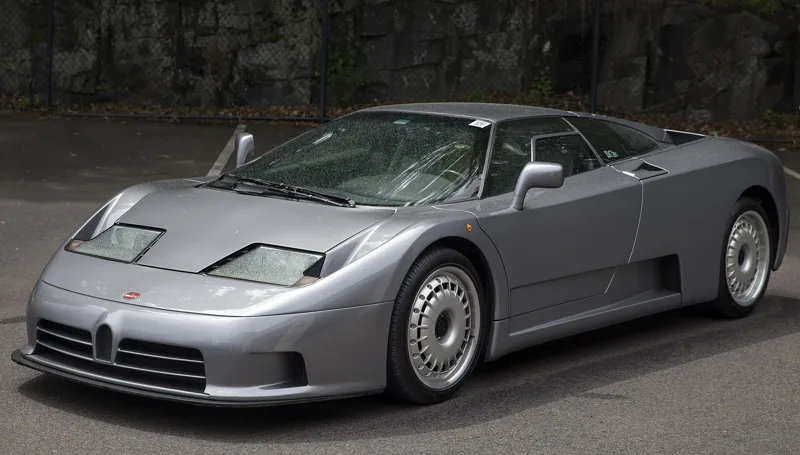
The current company began on 22 December 1998, when Volkswagen created a French subsidiary, Bugatti Automobiles S.A.S. On the same day Volkswagen took over the design and naming rights from Romano Artioli, whose Italian firm had built the EB 110 and EB 112 between 1987 and 1998.
A French brand that began in 1909, was revived by Volkswagen and now builds hypercars with a Croatian partner.
How did Volkswagen rebuild the brand after 1998?
Volkswagen formally incorporated the French company on 22 December 2000, with Karl-Heinz Neumann as its first president. The firm acquired the 1856 Chateau Saint-Jean, once the guest house of Ettore Bugatti, and used it as a headquarters base. Those steps paved the way for the Veyron era that followed.
A new atelier was announced at Pebble Beach in August 2000 and inaugurated on 3 September 2005. It was built beside the chateau, giving the brand a modern production base beside the chateau.
What were the early Bugatti concepts?
Volkswagen commissioned Giorgetto Giugiaro of Italdesign to produce a series of concepts. The EB 118 coupe appeared at the Paris Motor Show in 1998, the four-door EB 218 touring sedan followed at Geneva in 1999, and the 18/3 Chiron made its debut at Frankfurt's IAA that same year.
Volkswagen also drew the last concept, produced by Volkswagen's own designers, the EB 18/4 GT, and Bugatti presented it at the 1999 Tokyo Motor Show. The early concepts all used an 18-cylinder W engine made of three blocks of six cylinders, rated at 555 PS (408 kW; 547 hp).
What was the Veyron?
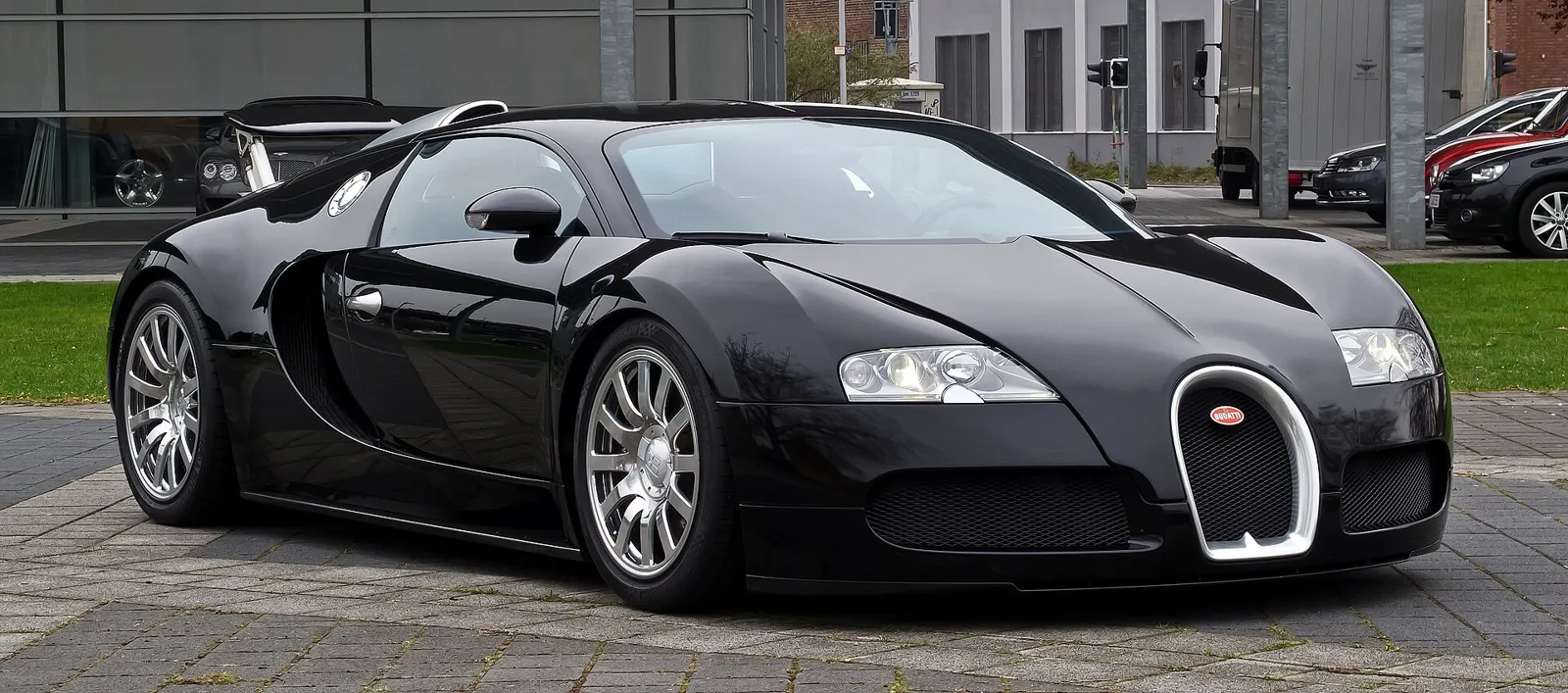
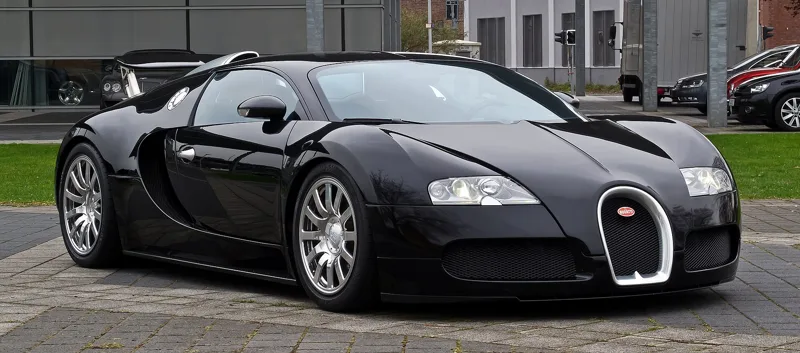
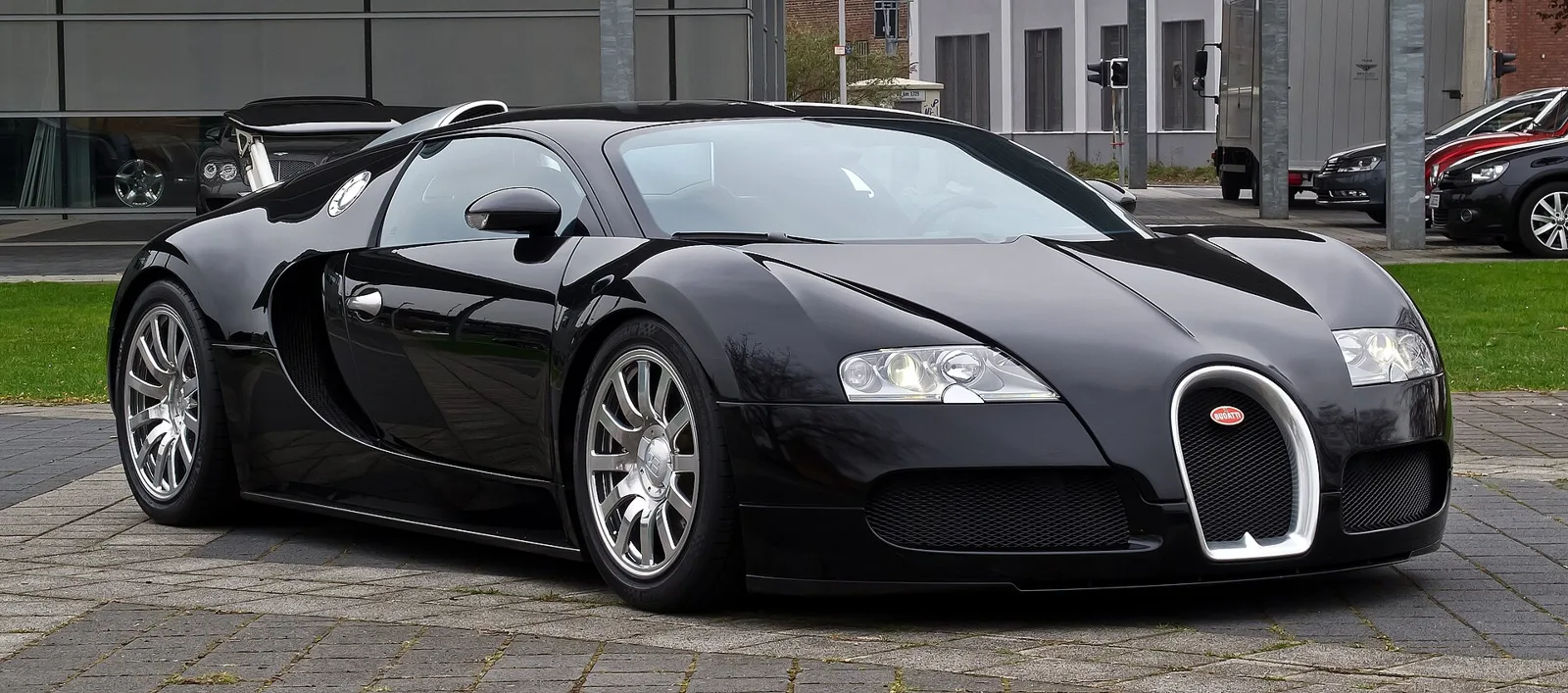
The Veyron began as the EB 16/4 concept, which Bugatti showed at the Paris, Geneva and Detroit shows. The car used an 8.0-litre 16-cylinder engine with four turbochargers, producing 1,001 PS (736 kW; 987 hp) through all four wheels. It was the car that set the modern benchmark for the brand.
Production began in September 2005 at 70 cars a year, a pace set by long waiting lists. Roughly 700 Bugattis had found owners by 2020, and the Veyron set the pattern for the modern range.
How fast was the Veyron?
The Veyron's maximum was 253 mph, or 407 km/h, which made it the fastest supercar of its time. Its acceleration was equally striking, with 100 km/h arriving in 2.5 seconds, 200 km/h in 7.3 seconds and 300 km/h in 16.8 seconds.
The Super Sport version set a road-legal production record of 431.072 km/h, or 267.86 mph. The Grand Sport Vitesse later reached 408.84 km/h, or 254.04 mph, the fastest speed recorded for a roadster.
What made the Chiron different?
The Chiron succeeded the Veyron and honours Louis Chiron, a Monegasque driver who started out on a Type 35 and later collected several Grand Prix wins. It kept the 8.0-litre engine and its quartet of turbochargers, but output rose to 1,103 kW (1,500 PS).
Torque reached 1,600 Nm, and the maximum speed was rated at 261 mph, or 420 km/h. Production in Molsheim was limited to 500 vehicles, and the base price was 2.4 million euros net.
How quick is the Chiron from a standstill?
Acceleration figures are 2.4 seconds to 100 km/h, 6.1 seconds to 200 km/h and 13.1 seconds to 300 km/h. Those figures put it among the quickest production cars ever built. In a record run it covered 0 to 400 km/h and back to a standstill in just 42 seconds.
The Chiron Sport was designed for lateral grip rather than straight-line speed. It trimmed 5 seconds from the Nardo handling lap, saved 18 kilograms and added Dynamic Torque Vectoring, while its engine output stayed unchanged.
Did a Bugatti pass 300 mph?
In September 2019 a modified Chiron touched 490.485 km/h (304.773 mph) on Volkswagen's Ehra-Lessien test track, making it the first series production car above 300 mph. The record stood as proof of the Chiron's engineering depth, and it was set on a closed test circuit.
The run was notable because the car was a production model rather than a one-off.
What special Chirons were built?
The Chiron Pur Sport arrived in March 2020 as a lateral-dynamics model limited to 60 vehicles. Its electronic limiter sits at 350 km/h (217 mph), and 100 km/h takes 2.3 seconds. Chassis, engine, transmission and aero were all revised for the lateral-dynamics brief.
The Chiron Super Sport 300+ was built for Bugatti's 110th anniversary and reached 1,600 hp, with a limit of 30 units. A special 110 ans edition also marked the same anniversary, and the brand built its 200th Chiron in July 2019.
What were the one-off and track-only models?
The Divo was a track-focused Chiron derivative, with 40 units priced at 5 million euros net. The Divo was built in very small numbers, which kept it exclusive. The cars sold within days of the announcement, and the Divo introduced modern coachbuilding to the brand.
The Centodieci reinterpreted the EB 110 on a Chiron base, and its 1,578 hp arrived at 7,000 rpm. Bugatti limited it to ten cars at eight million euros each. The La Voiture Noire, a one-off Chiron, sold for US$13.4 million, ranking third among first-hand car sales.
What is the Bolide?
The Bolide is a track-only machine and the first of its kind since Volkswagen took over. Its name suggests a fast, stripped-back machine. Engineers stripped its bodywork back as far as possible, and it keeps the 8.0-litre W16 at its core. Its digital reveal came in October 2020.
Production cars are rated at 1,600 PS, or 1,578 hp, at 7,050 rpm, and the expected top speed is over 500 km/h. Forty production-spec examples were planned, priced from about 4 million euros.
What is the Tourbillon?
On 20 June 2024 Bugatti named the Chiron's successor, the Tourbillon. Hybrid power is new for the marque, and this is the first production car since the EB 110 to forgo a W16. It succeeds the Chiron as the marque's flagship.
A naturally aspirated V16 developed with Cosworth works alongside three electric motors. Combined output reaches 1,800 PS, and the V16 spins up to 9,000 rpm, a choice Bugatti presents as more emotional. The name refers to the tourbillon, a watchmaking mechanism, and the car's design takes its cues from mechanical watches.
How did Bugatti Rimac come about?
In 2021 Bugatti merged with the sports car arm of Rimac Automobili, creating Bugatti Rimac. Rimac Group holds 55% of the venture, while Porsche AG holds 45%. The venture shares its ownership between two larger groups. The partnership brought together two companies with complementary strengths.
The new company was formed in the fourth quarter of 2021. Mate Rimac has led the business as chief executive since November 2021.
What did the Mistral add, and what else is new?
The Mistral arrived on 19 August 2022, and Bugatti calls it the quickest roadster around. It is the last Bugatti with a W16 engine, which makes it a historic model. It rides on Chiron underpinnings yet is a bespoke open car rather than a Chiron convertible, and it closes out the W16 story.
Bugatti also produced a titanium brake caliper, its biggest titanium part made through additive manufacturing, which showed how the brand used additive manufacturing.
What were Bugatti's sales and profits?
Bugatti delivered 77 vehicles in 2020. Volume remained small compared with mainstream carmakers. In January 2021 the company announced that its operating profit had risen for a third year in a row, which it described as the most successful year in its history.
The Chiron's production target shows how the brand kept output tightly controlled. By February 2020, 250 Chirons had been built, half the planned total.
How did Bugatti's racing roots show in its cars?
Bugatti's racing heritage shows most clearly in its track machines. The Divo was a track-focused derivative of the Chiron, and the Bolide became the first track-only sports car built under Volkswagen ownership, with its engine and chassis pushed to the limit.
The Vision Gran Turismo concept used a colour scheme that recalls the brand's Le Mans victories. Racing success was never the only measure for the brand, though. The Veyron, Chiron and Tourbillon each took a different route to speed, from quad turbochargers to a hybrid V16. The name Chiron itself keeps the brand's racing story alive, because the driver it honours began on a Type 35 and collected Grand Prix wins.
How long did the W16 engine last?
The W16 powered the cars from the Veyron through the Chiron, Centodieci, Bolide and Mistral, and the Mistral in 2022 was the last vehicle to carry it. Each of those cars used the same basic 8.0-litre layout. It was a long run for one engine family.
The Tourbillon marked the end of that era, since its naturally aspirated V16 replaced the quad-turbo W16 for the first time since the EB 110. The change was framed as a move toward a more emotional driving experience.
What awards did Bugatti win?
BBC Top Gear named the Chiron hypercar of the year in November 2017, and Evo magazine gave it the same honour a month later. In 2019 the Super Sport 300+ won the Top Gear Physics Lesson of the Year award.
The Auto Bild Sportscars Award named the Super Sport 300+ the best sports car of the year.
Bugatti models at a glance
The table below lists the main figures for the Veyron, Chiron, Bolide and Tourbillon. Each row names one model, so the values should not be read as applying to the whole range.
| Model | Key figure |
|---|---|
| Veyron | 407 km/h (253 mph) top speed, production from September 2005 |
| Veyron Super Sport | 431.072 km/h (267.86 mph) road-legal record |
| Chiron | Output 1,103 kW (1,500 PS; 1,479 hp), 420 km/h (261 mph) top speed |
| Chiron Pur Sport | Limited to 60 vehicles, with a 350 km/h (217 mph) limiter |
| Divo | 40 units at 5 million euros net |
| Bolide | 1,600 PS, or 1,578 hp, at 7,050 rpm |
| Tourbillon | 1,800 PS, or 1,775 hp (1,324 kW), redline 9,000 rpm |
Frequently asked questions
What is Bugatti Rimac?
Bugatti Rimac came from combining Bugatti with the sports car side of Rimac Automobili. Rimac Group holds the larger share and Porsche AG the rest.
Which Bugatti was the first hybrid?
The Tourbillon is the first Bugatti with hybrid power. Its naturally aspirated V16 works with three electric motors, a clear break from the W16 layout used since the Veyron.
How many Chirons were limited?
Production in Molsheim was limited to 500 Chirons. By February 2020 the brand had built 250 of them.
What was the Mistral?
The Mistral arrived in August 2022 as an open car built on Chiron underpinnings. Bugatti describes it as the quickest roadster around, and it was the last model to carry the W16 engine.
,_5._April_2012,_D%C3%BCsseldorf.jpg)