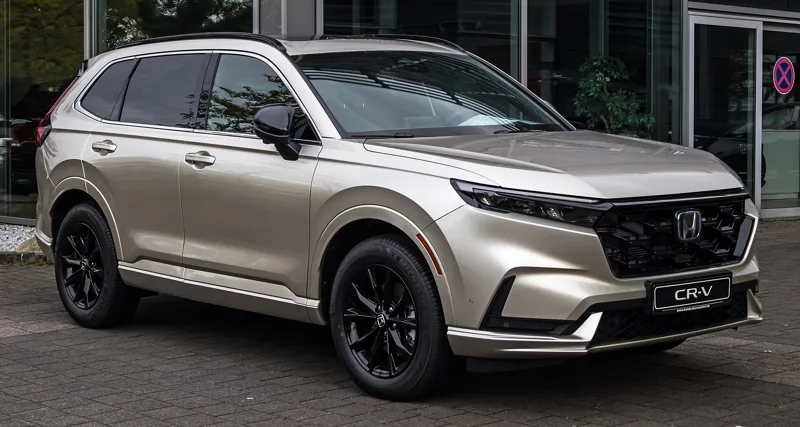
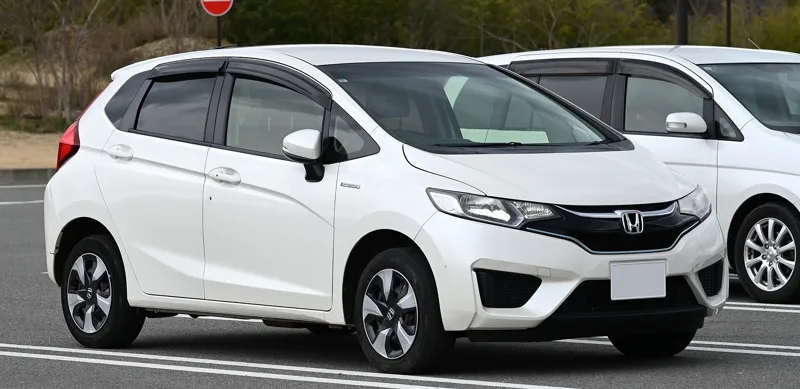
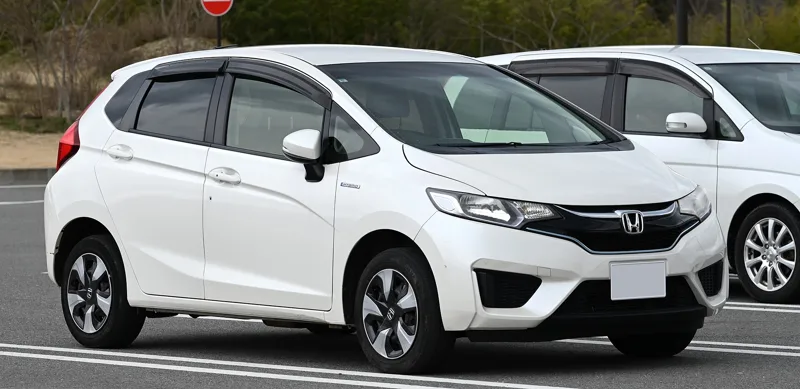
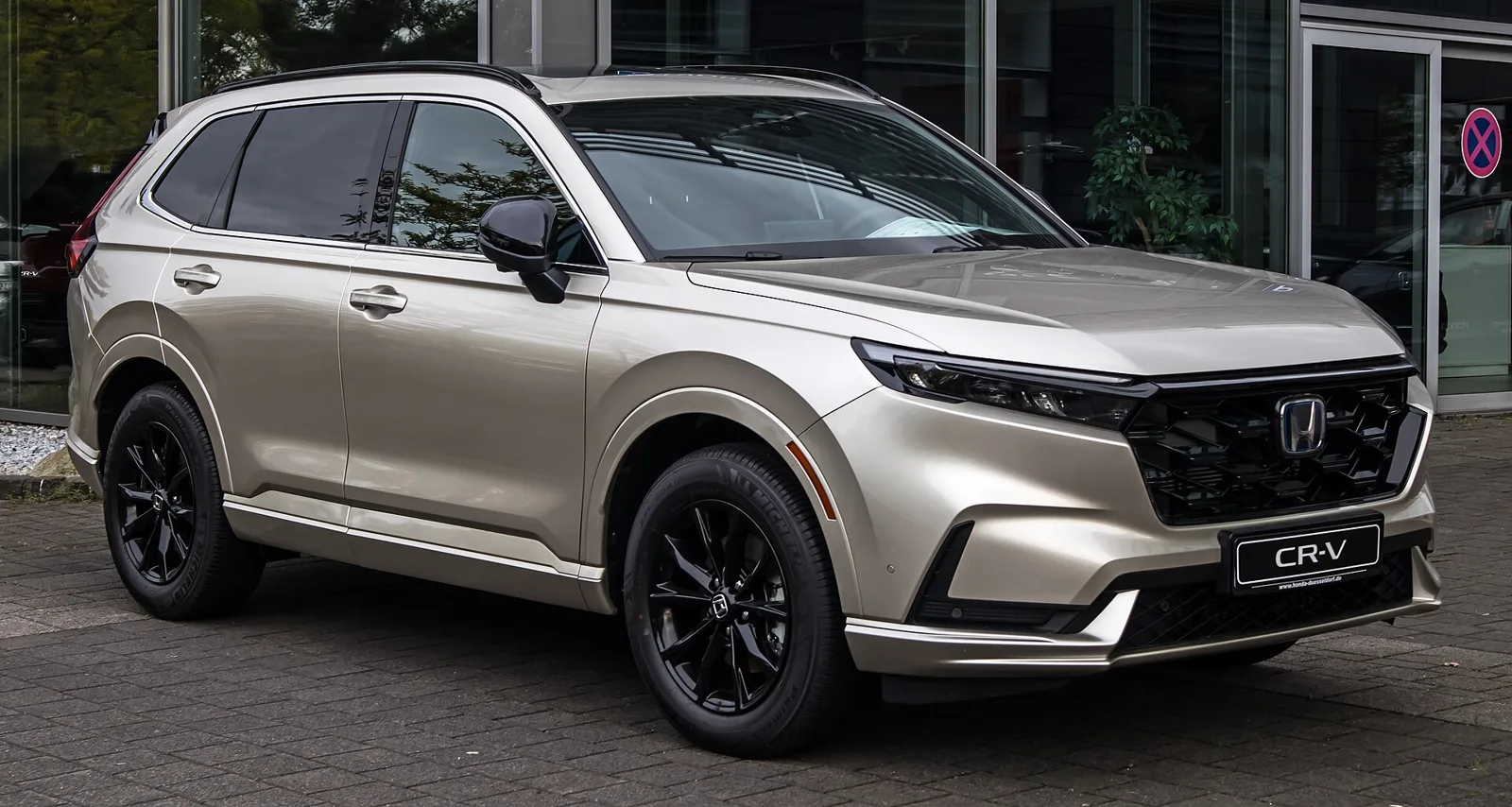
From a 1999 three-door with four-wheel drive to a hybrid family sold under several names, the HR-V shows how one nameplate can change shape across markets.
Honda's HR-V is a B-segment crossover built over three generations. It began in 1999 as a three- and five-door model, returned in 2013 as the Vezel and HR-V, and reappeared in 2021 as a third generation with a hybrid option available in several markets.
The Honda HR-V is a small crossover that has been sold in three generations since 1999, although the nameplate went quiet for seven years between the first and second cars. Each generation sat on a different platform and reached different markets under different names. This guide follows the car from its concept stage to the current third generation, covering space, engines, the hybrid and the recalls.
What is the Honda HR-V?
The HR-V is a small B-segment crossover that Honda has built over three generations. Honda says the name is short for Hi-rider Revolutionary Vehicle, while the Japanese Vezel name draws on a term for the angled facets of a cut gem. The car has been sold in Europe, Japan, North America, Asia and South America.
The naming is one reason the car is hard to follow. The same basic vehicle has been sold as the Vezel in Japan and China, as the XR-V through a second Chinese joint venture, and as the ZR-V in some later markets. Because each generation changed platform, a car from 1999 and one from 2021 share a name and little else.
A small crossover with three generations, several names and a cargo area that changed with every market.
Where did the first generation HR-V come from?
The first HR-V was based on the Honda Logo and went on sale in Japan in 1999 before reaching Europe and other markets. Honda had first shown the design as the J-WJ concept at the 1997 Tokyo Motor Show. The early cars used a 1.6-litre engine, and a five-door body arrived later.
The three-door GH2 and five-door GH4 were not identical in length. The five-door body measured 110 mm more in overall length, and its wheelbase measured 2,460 mm. Both bodies were built on the Logo-derived structure, so the two versions shared their basic layout.
Underneath, the first generation used MacPherson strut front suspension with a five-link De Dion-type rear. Honda's Real Time 4WD, which it shared with the CR-V, engaged hydraulically when the front wheels lost traction. A dual hydraulic pump sat in the rear differential to make that happen. The car also carried ABS with EBD and dual SRS airbags.
Because the Verno dealership network was the route to market at launch, the first HR-V reached Japanese showrooms before anywhere else. Its early years therefore belong to a domestic audience, and the export markets came later with different engines and trims.
How did the second generation change the HR-V?
The second generation, shown in 2013 as the Urban SUV Concept and launched as the Vezel in Japan, was based on the third-generation Honda Fit. It brought a coupe-inspired roofline, hidden rear door handles and the Magic Seats system from the Fit. Its arrival ended a seven-year gap in the nameplate.
The design brief combined a coupe-like silhouette with the everyday usefulness of a small hatchback. The Magic Seats system from the Fit gave the rear bench a flexible role, and the body structure leaned on high-strength steel to meet the demands of the new platform. Each of those choices shows Honda trying to keep the car compact without sacrificing space.
Around 27% of the second-generation body was ultra-high-strength steel. The grades had yield strengths of 780, 980 or 1,500 MPa, so the steel could be used where crash protection mattered most. Japanese buyers also saw a facelift on 25 January 2018, which updated the front and rear styling.
How much cargo space does the HR-V offer?
Cargo space depends on the market and the seat position. In Europe, the second-generation car has a boot of 453 L (16.0 cu ft) with the seats up, rising to 1,026 L (36.2 cu ft) when they are folded. North American cars provide 690 L (24.3 cu ft) with the seats up and 1,670 L (58.8 cu ft) folded.
The first generation was smaller by comparison. Its cargo area offered 285 litres, and the five-door body was the longer of the two shapes. Anyone comparing the generations should look at the seats-up and seats-down figures together, since the gap between them is where the real practicality lies.
What engines and hybrid system does the HR-V use?
The first generation used a 1.6-litre SOHC engine with 105 PS (77 kW; 104 hp), with a VTEC option producing 125 PS (92 kW; 123 hp). Later cars used a 1.5-litre direct-injection i-VTEC engine in Japan and a 1.8-litre SOHC unit in North America, and a hybrid joined the range.
The hybrid used Honda's i-DCD system. It combined a 1.5-litre engine producing 96 kW (131 PS) and 156 N m of torque with a 22 kW (30 PS) electric motor rated at 160 N m. Real Time AWD and a Reactive Force Pedal completed the package.
Fuel use is quoted on the JC08 cycle. The hybrid returned 27.0 km/L, or 3.7 L/100 km, while the petrol Vezel managed 20.6 km/L, or 4.9 L/100 km. Honda expected the hybrid to account for 90 percent of Japanese sales, which shows how strongly that market leaned toward the electrified version.
Where is the HR-V built and sold?
The HR-V has been assembled in Japan, Brazil, Mexico, China and Indonesia, and sold in many more countries. Brazil became the only South American producer after the Argentinian plant closed. In North America, the car is made at Celaya in Mexico alongside the Fit.
- Japan: the Vezel went on sale on 20 December 2013, with petrol and hybrid versions. Its width exceeds the 1,700 mm government limit, so buyers pay extra yearly taxes.
- Brazil: assembled in the state of Sao Paulo and also imported from Argentina.
- North America: US sales began in May 2015 as a 2016 model.
- Indonesia: went on sale on 24 January 2015 as a model built locally.
- Malaysia: launched in February 2015, and the only market outside Japan to sell the hybrid officially.
- Taiwan: introduced in October 2016 with the 1.8-litre engine only.
- Pakistan: launched in 2015 and later discontinued after poor sales.
Why was the HR-V not sold in India?
The second generation never went on sale in India, even though the company had significant operations there. The reasons given included uncompetitive pricing and the cost of localising components. An electric parking brake, fitted as standard, added to the cost, so Honda offered the BR-V and WR-V instead.
India was not the only market left out. The company's wider Asian and European plans followed their own commercial logic, and the HR-V appeared where local pricing and local assembly made the numbers work. That pattern explains why the same car can be a strong seller in one country and absent from its neighbour.
What electric and Chinese versions were built?
The HR-V family took several forms in China, where two joint ventures sold their own versions from late 2014. Guangqi Honda sold the Vezel from October 2014, and Dongfeng Honda followed with the XR-V in November 2014. Both later offered battery electric variants.
Guangqi Honda's first electric Vezel was marketed as the Everus VE-1, and the production model debuted in November 2019. Dongfeng Honda's electric XR-V was the Ciimo X-NV, with production starting in October 2019. The Ciimo M-NV arrived in November 2020 with a 12.3-inch TFT dial display.
The third-generation electric car appeared in China in October 2021 under the names Honda e:NS1 and e:NP1. Outside China, the electric model was sold as the e:Ny1 in Europe and the e:N1 for Asian and New Zealand buyers.
For buyers comparing versions, the market matters more than the name. A Chinese XR-V, a Japanese Vezel and a European HR-V can look close on paper, yet each was shaped by different national rules, from width limits and taxes to local assembly and import costs. Reading a specification sheet without that context can make the cars seem more alike than they are.
What is the third-generation HR-V?
The third-generation HR-V went on sale in Japan on 22 April 2021 and rides on the Honda Global Small Car platform. A facelift followed on 14 March 2024, the latest change to the global car. Outside Japan the model appears under the HR-V name or the ZR-V name, depending on the region.
The separate North American model, unveiled on 4 April 2022 and on sale from 7 June 2022, uses the Honda Architecture platform. The Chinese ZR-V was built by Guangqi Honda until 2026.
The HR-V has no recorded motorsport programme, so its story is one of markets, engineering and product changes rather than competition results. Its significance lies in the way one body style was adapted across Japan, Europe, the Americas and Asia.
Were there recalls on the HR-V?
Yes, Honda recalled Vezel and Fit vehicles in Japan. One recall covered 160,000 cars of Fit and Vezel type, built in Japan between August 2013 and February 2016. A separate action affected Vezel hybrids built from July 2013 through February 2014.
Recalls of this kind usually target a defined production window rather than the whole model run. Owners can check their own car against the build dates in the recall notice. The recall described for the 160,000 cars was limited to Japanese production, so cars sold in other markets sat outside that action.
HR-V specifications at a glance
The table below lists the core figures for the first and second generations, along with the hybrid and boot values. Where a figure belongs to one market or one variant, the table names it, so the hybrid and petrol economy figures do not blend together.
| Specification | Detail |
|---|---|
| Class | B-segment subcompact crossover SUV |
| Generations | Three: 1999, 2013 to 2015 and 2021 |
| First generation engine | 1.6-litre SOHC, 105 PS (77 kW; 104 hp) |
| First generation VTEC option | 125 PS (92 kW; 123 hp) |
| Hybrid output | 96 kW (131 PS) engine plus 22 kW (30 PS) motor |
| Hybrid economy | 27.0 km/L, or 3.7 L/100 km, on JC08 |
| Petrol economy | 20.6 km/L, or 4.9 L/100 km, on JC08 |
| Europe boot | 453 L (16.0 cu ft) seats up; 1,026 L (36.2 cu ft) seats down |
| North America boot | 690 L (24.3 cu ft) seats up; 1,670 L (58.8 cu ft) folded |
| Body steel | 27% ultra-high-strength steel |
Frequently asked questions
How efficient is the hybrid HR-V?
The hybrid is the efficient option in this family. Honda rates it at 3.7 L/100 km, or 27.0 km/L, on the JC08 cycle, while the petrol car needs 4.9 L/100 km, or 20.6 km/L. The electrified version pairs its petrol engine with a motor, which is why the figures sit so far apart.
Is the Vezel the same car as the HR-V?
In the second generation the two names describe the same basic car, both built on the third-generation Honda Fit. The name changes by market, and China uses Vezel for the Guangqi Honda version while the Dongfeng Honda version carries the XR-V name.
Which country outside Japan sold the hybrid?
Malaysia was the only market outside Japan to officially sell the hybrid Vezel and HR-V. The Malaysian launch took place in February 2015 with S, E and V trims.
When did the Argentinian HR-V plant close?
The Argentinian plant closed on 21 May 2020, when its last HR-V rolled off the line. After that date, Brazil became the only South American country producing the HR-V, which concentrated regional output in the Sao Paulo state factory.