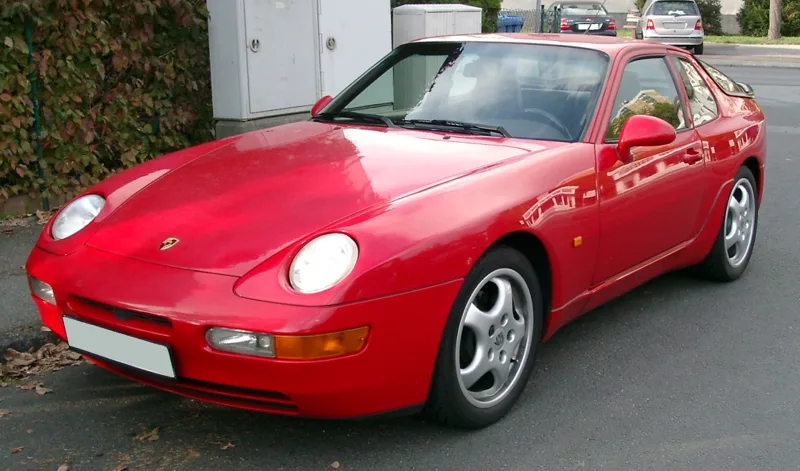
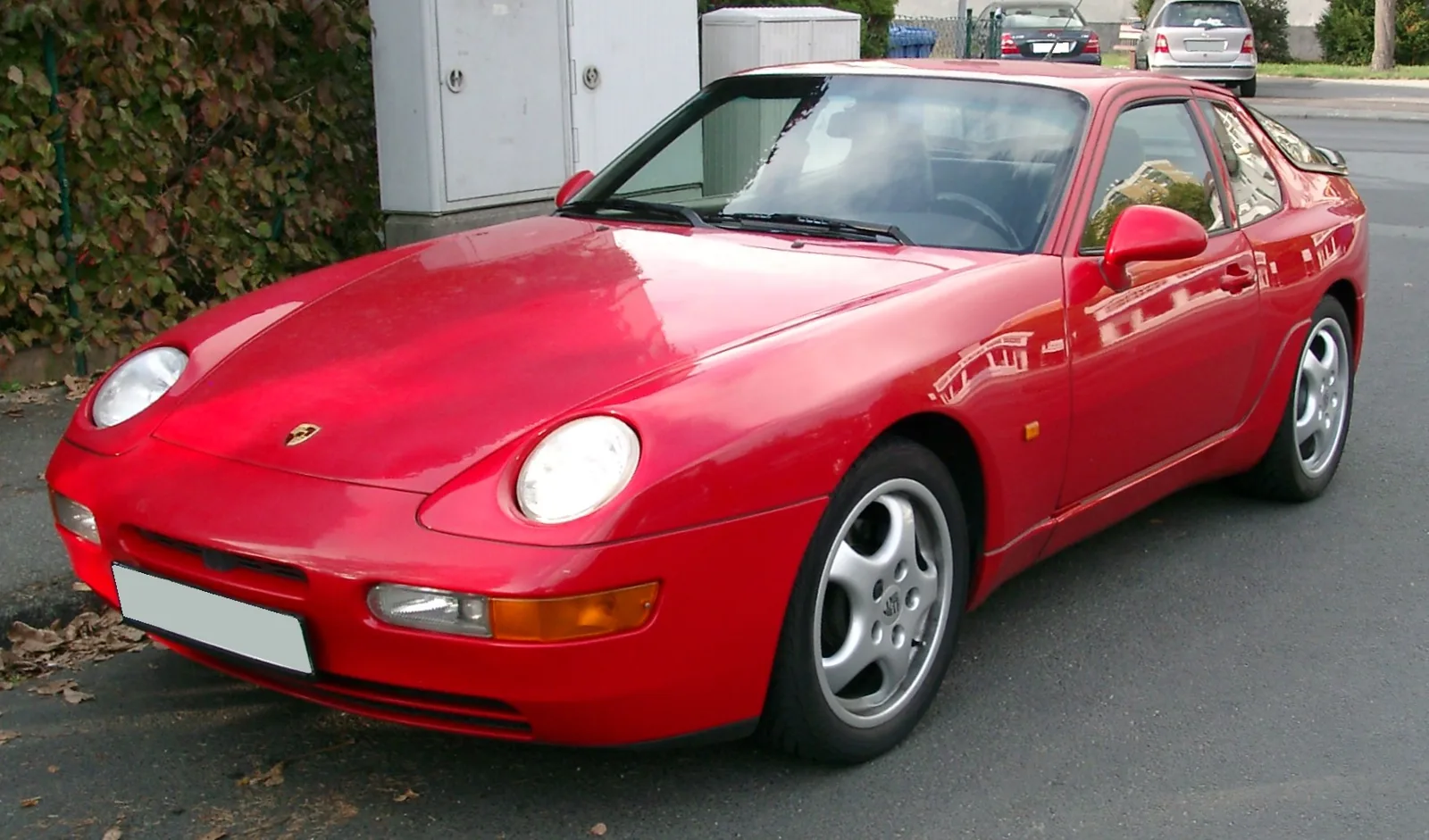
Built on the 924 platform, the 944 sold 163,192 cars, spawned Turbo, S2 and Cabriolet variants and kept a racing presence until the 968 replaced it.
The Porsche 944 was a front-engined, rear-wheel drive sports car built from 1982 to 1991 on the 924 platform. It was offered as a coupe or cabriolet with naturally aspirated or turbocharged engines. Porsche built 163,192 of them, making it the company's most successful sports car until the Boxster and 997 Carrera.
Porsche's 944 was a two-door sports car that shared its underpinnings with the 924 and first appeared in 1982. Porsche positioned it as a mid-level model, between the 924 and the 928. It came with naturally aspirated and turbocharged four-cylinder engines, ranging from the everyday coupe to the Turbo S.
Where did the 944 come from?
The 944 started life as a Porsche and Volkswagen project. Volkswagen cancelled its replacement for the 914 in 1974 after sales fell and development costs rose, and the unfinished car went to Audi. Porsche bought the design and a development mule, then built the 924 from it, and the 944 later grew from that car.
The 924 received positive reviews, although its Audi-sourced 2.0 L engine drew criticism. Porsche introduced a turbocharged 924 in 1979, but its price was high. Rather than drop the model, Porsche decided to develop the 944 as a mid-level car, just as it had done with generations of the 911.
A four-cylinder Porsche built on a cancelled Volkswagen project became the company's most successful sports car until the Boxster.
How did the 944 first appear in motorsport?
The 944 prototype debuted at Le Mans in 1981 as the 924 GTP, an unusual move for Porsche at the time. The race car finished seventh overall behind the race-winning 936 and took a class win in the GTP+ 3.0 category. On fuel economy it was a clear step forward, needing only 21 stops in 24 hours.
Porsche then debuted the road-legal 944 in 1982. It carried over the balance shafts and engine management ideas from the race car, but its power was toned down for safety reasons. The production car kept the race car's engineering while giving up some of its edge.
What made the 944 engine unusual?
The 944 used a 2,479 cc all-alloy inline-four with a 100 mm bore, roughly half the displacement of the later 928's 5.0-litre V8. Porsche added two counter-rotating balance shafts to smooth out the vibration typical of inline fours, and it paid licence fees to Mitsubishi rather than design around the patent.
The four-cylinder was chosen for fuel efficiency and size, and the engine had to be fitted from below on the production line. Balance shafts were invented in 1904 by Frederick Lanchester, and Mitsubishi developed and patented them in 1975. Porsche's licence fees were about US$7 to US$8 per car, a cost that passed to buyers at about US$100 each.
How did the 944 handle and perform?
The 944 had a near-even weight split of 50.7% front and 49.3% rear, thanks to its rear transaxle balancing the front engine. Porsche claimed a 0-97 km/h (60 mph) time of under 9 seconds, although a third-party guide quoted 8.3 seconds. The car was better equipped, handled better and stopped better than the 924.
North American cars had larger bumpers, with a bigger rubber section that replaced the auxiliary lights required by local law. The body gained wider wheel arches similar to those of the 924 Carrera GT, along with a fresh interior and upgraded brakes and suspension.
What changed on the 944 during production?
The first big update came in mid-1985, with a new dashboard, a larger fuel tank, a 115 amp alternator and a flush-mounted windscreen. For the 1987 model year, ABS and driver and passenger airbags arrived, and the Turbo became a pioneer by offering airbags as standard equipment.
What made the 944 Turbo special?
The Turbo, known internally as the 951, arrived for the 1986 model year with an intercooled turbocharged engine producing 220 PS (162 kW). It had a ceramic port liner, an integrated front bumper, standard external oil coolers and 16-inch wheels, and its front brakes came from the 911.
Car and Driver recorded 0-97 km/h (0-60 mph) in 5.9 seconds for the Turbo in 1987. The engine needed more than thirty revisions to cope with the extra loads and heat, and its wide turn signals were said to be the widest fitted to any production car.
The Turbo S arrived in 1988 with the M44/52 engine rated 250 PS (184 kW), a larger KKK K26-8 turbocharger and revised mapping. Car and Driver measured 5.5 seconds to 0-97 km/h and a quarter mile in 13.9 seconds. Porsche rated its top speed at 261 km/h (162 mph), and the Turbo S was called the fastest production four-cylinder car of its time.
What did Callaway add to the 944?
Callaway Cars, an American tuner, worked with Porsche from 1983 to build a turbocharged 944 for the American market. The package lowered the compression ratio to 8.0:1 and delivered 284 hp (212 kW), which made it one of the most powerful 944s available.
Forced induction was not a simple job for the standard four-cylinder, which was not suited to a turbocharger at its original compression ratio. Callaway reworked the combustion chambers and retuned the Motronic system, and it fitted a free-flow exhaust and an internal wastegate to keep the engine reliable.
The result was one of the rarest 944s built, but the conversion was expensive because the engine had to be disassembled to carry out the work. Callaway's work shows how an aftermarket partner could extend a factory range without a full Porsche programme.
What were the 944 S and S2 models?
The 944 S arrived for 1987 with a 190 PS (140 kW; 187 hp) naturally aspirated DOHC 16-valve engine, the first four-valve-per-cylinder head in the 944 line. The 944 S2 followed in 1989 with a 3.0-litre engine producing 211 PS (155 kW; 208 hp), which made it the biggest four-cylinder production engine of its era.
The S reached 0-100 km/h in 6.5 seconds from a 1,296 kg (2,857 lb) kerb weight, with a top speed of 232 km/h (144 mph). The S2 covered 0-97 km/h in 6.0 seconds and reached 240 km/h (149 mph) with a manual gearbox.
The S and S2 kept the rear transaxle and near-even weight distribution of the original car, so their handling built on the same foundation. The S gave the range a clear step up in output, and the S2's larger 3.0-litre engine extended that gain.
How did the 944 Cabriolet reach production?
A Cabriolet prototype was shown at the Frankfurt show in 1985, but the production contract went to American Sunroof Corporation in 1987. ASC built the open body at its Heilbronn plant, starting from coupe bodies sent over from Neckarsulm. US deliveries of the S2 Cabriolet began in 1989.
Only 16 Cabriolets were sold in the US in 1989. US sales rose to 1,824 in 1990 before falling to 562 in 1991, the model's final year. A total of 2,402 S2 Cabriolets reached American buyers between 1989 and 1991, and the 968 took the car's place for 1992.
The 944 Turbo Cabriolet followed in February 1991, combining the Turbo S's 250 PS (184 kW) engine with the ASC body. Porsche first announced 600 cars but built 625, and 100 were right-hand drive for the UK, Japan, Australia and South Africa.
How many 944s were built?
Porsche built 163,192 cars across the 944 family between 1982 and 1991. Of those, 113,070 were base 944s, 25,245 were Turbos, about 14,071 were S2s and 12,936 were S models. A large share of the total went to the United States. The base car sent 56,921 cars there, the Turbo sent 13,982, the S sent 8,815 and the S2 sent 3,650.
The 1991 model year was the last, with over 4,000 cars built and sold. Porsche had begun work on an S3 evolution in early 1990, but the changes grew so large that the team created a new car, the 968, which debuted for the 1992 model year.
Porsche 944 specifications at a glance
The table lists the core figures for the base car and its main variants. Where a figure belongs to one version, the table names that version so the numbers stay separate.
| Specification | Detail |
|---|---|
| Layout | Two-door, front-engined, rear-wheel drive, rear transaxle |
| Production | 1982 to 1991, 163,192 cars |
| Base engine | 2,479 cc inline-four, 150 hp (112 kW; 152 PS) in US configuration |
| Turbo (1986) | 220 PS (162 kW); 217 hp (162 kW) in the US |
| S (1987) | 190 PS (140 kW; 187 hp), 16-valve DOHC |
| Turbo S (1988) | 250 PS (184 kW), M44/52 engine |
| S2 (1989) | 3.0-litre, 211 PS (155 kW; 208 hp) |
| Weight distribution | 50.7% front, 49.3% rear |
| Turbo 0-97 km/h | 5.9 seconds (1987 test) |
| Turbo Cup race car | 5.3 seconds 0-97 km/h; 192 built |
How did the 944 perform in motorsport?
The 944 raced in several series. Rick Hurst Racing's 944 won all four inaugural SCCA endurance races in 1984, and Carlsen Racing took the SCCA Escort Endurance Series title in 1986. David Finch's 944S later claimed the SCCA GT2 titles in 1988 and 1989.
Porsche's Turbo Cup series ran five championships across five countries, including France, West Germany, South Africa, Canada and the United States. The 192 Turbo Cup cars were split between 99 for Canada and 93 for the rest of the world, and they ran 0-97 km/h in 5.3 seconds.
A Turbo Cup car was approximately 272 kg (600 lb) lighter than a road Turbo, thanks to lighter components and the removal of comfort features such as air conditioning, power seats and leather upholstery.
The 944 Challenge, a one-make series for lightly modified cars, was founded in Victoria, Australia, in 1999 and was in its 25th season as of 2024. Because 944s are abundant and less sought after by collectors, racing them stays affordable.
How did critics rate the 944?
Car and Driver placed the 944 on its Ten Best list from 1983 to 1985, and the Turbo made the list in 1986. The magazine also named the 944 the Best Handling Production Car in America in 1984. Those honours helped build the model's reputation among enthusiasts.
Porsche's engineering explains much of that praise. The near-even weight split, the rear transaxle and the balance shafts gave the car a refinement that its four-cylinder layout did not suggest on paper.
Frequently asked questions
What replaced the 944 in the Porsche range?
The 968 took over in the 1992 model year. It was based on an evolution of the same front-engined, transaxle platform, and it was sold alongside the 928 until 1995.
Why did the 944 use a four-cylinder engine?
Porsche chose a four-cylinder for its efficiency and compact size, then used balance shafts to smooth the vibration typical of inline fours. The result was a sports car that could be built economically on the production line.
How much power did the Turbo S make?
The Turbo S was rated at 250 PS (184 kW) in M44/52 form. Its factory top speed was 261 km/h (162 mph), and Car and Driver recorded the 0-97 km/h sprint in 5.5 seconds.
How many S2 Cabriolets reached the US?
A total of 2,402 S2 Cabriolets were imported between 1989 and 1991, with 1,824 arriving in 1990 alone.