The R35 GT-R rewrote what a usable supercar could be. Here is how to buy one without inheriting somebody else's expensive mistakes.
The R35 GT-R is a genuinely durable performance car, but it punishes neglect. Target a 2013 or later car with full service history, budget for tyres, brakes and fluids, and walk away from anything with unexplained transmission noises, crash repairs or a gap in its records.
The Nissan GT-R R35 is one of the most usable high-performance cars you can buy secondhand, provided you choose carefully and budget for proper maintenance. Target a 2013 or later example with a complete service history, and treat any car with transmission noises or patchy records as a project rather than a purchase.
What is the Nissan GT-R R35?
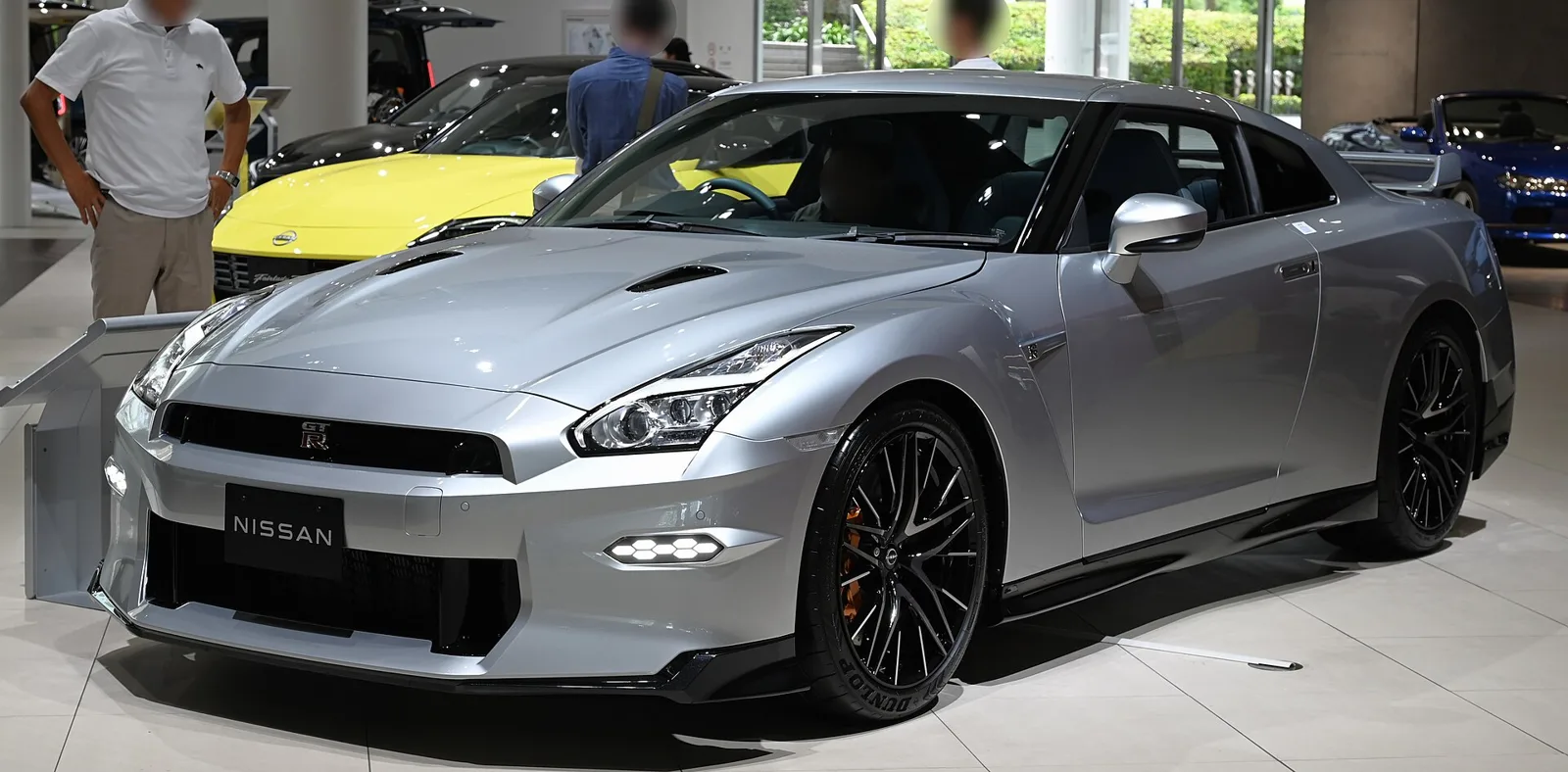
The R35 is the sixth-generation GT-R, built from 2007 to 2025 and the first to drop the Skyline name. It uses a twin-turbo V6, all-wheel drive and a dual-clutch transaxle, and it was sold worldwide rather than in selected markets.
That global reach matters enormously to a used buyer. Nissan built roughly 48,000 examples over 18 years, which means a deep pool of cars, a well-documented set of common faults and a specialist network in most major markets. It also means values spread widely: an early CBA-R35 and a late 4BA-R35 share a silhouette but very little else underneath. The car was conceived under the Nissan Revival Plan at the request of CEO Carlos Ghosn, who wanted a halo model that could trouble Porsche, Lamborghini and Ferrari for far less money. Development began in 2000 and ran through two concept cars, in 2001 and 2005, before the production version appeared at the 2007 Tokyo Motor Show.
A cheap R35 is usually cheap for a reason that will cost more than the discount.
How did the R35 change across its life?
Nissan updated the car relentlessly instead of replacing it. The 2009 update for the 2010 model year brought reprogrammed launch control, a revised wheel finish and additional airbags. The 2010 facelift for 2011, coded DBA-R35, lifted output to 390 kW (530 PS; 523 hp) at 6,400 rpm and 607 Nm, cut unsprung weight by 12 kg (26.5 lb), reduced overall weight by 5 kg (11 lb), added a carbon composite front strut bar and larger front rotors, and revised the Dunlop tyres, springs, dampers and anti-roll bars. Drag fell to Cd=0.26 with 10 per cent more downforce.
For the 2013 model year, a 2012 revision raised power to 550 PS (405 kW; 542 hp) at 6,400 rpm, alongside 628 Nm of torque. That package also brought sodium-filled exhaust valves, reworked intake manifolds, a fresh flywheel housing, retuned suspension and altered weight distribution. Another round of changes arrived for 2015, and special editions cropped up along the way. From a used-car standpoint, the choice comes down to this: earlier examples cost less but are more delicate, while newer ones are tougher yet pricier.
Which R35 GT-R should you buy?
Buyers generally find the 2013 model year revision the most desirable, since it delivered the largest gain in power alongside an upgraded engine specification. Later cars, from 2015 onwards, bring additional polish, whereas the earliest CBA-R35 cars are better suited to enthusiasts as projects.
There is a real case for the 2011 facelift too. It is the point where Nissan fixed much of the early car's nervousness, and the aerodynamic and chassis work made it a calmer, faster machine without the later car's price premium. If your budget stretches, a late 4BA-R35 is the most complete version ever sold, benefiting from every lesson Nissan learned over nearly two decades. What you should avoid is a neglected early car bought purely on price. These are complex machines, and a cheap R35 is usually cheap for a reason that will cost more than the discount.
What specification should you look for?
| Version | Model code | Power | Torque |
|---|---|---|---|
| 2010 update | CBA-R35 | 485 PS (357 kW; 478 hp) at 6,400 rpm | - |
| 2011 facelift | DBA-R35 | 390 kW (530 PS; 523 hp) at 6,400 rpm | 607 Nm |
| 2013 update | DBA-R35 | 550 PS (405 kW; 542 hp) at 6,400 rpm | 628 Nm |
Two mechanical details are worth understanding before you view anything. The R35 uses a rear-mounted independent transaxle with all-wheel drive, the first production car configured that way, and its ATTESA E-TS Pro system and active suspension are central to how it drives. Chief engineer Kazutoshi Mizuno, known inside Nissan as Mr. GT-R, chose a V6 over a straight-six for weight distribution and insisted on Brembo brakes and Bilstein suspension. The engine, the VR38DETT, was developed by Naoki Nakada as an evolution of the VQ family. Nissan also left out HICAS four-wheel steering because it did not work with the all-wheel-drive layout.
What should you check on a used R35 GT-R before buying?
Start with the transmission, the brakes and the tyres, then verify the service history and inspect for accident damage. The dual-clutch gearbox and its fluids are the single most expensive area, so any hesitation, clunk or warning light deserves a specialist inspection.
Beyond the obvious, work through the car methodically. Check for uneven tyre wear, which points to alignment or suspension problems. Listen for whines from the transaxle on a long test drive, and make sure the car shifts cleanly both gently and under load. Examine the brake discs for scoring and measure pad depth, because replacements are costly. Look underneath for kerb damage, undertray scrapes and evidence of track use. Then verify the paperwork: a complete service record with fluid changes at the correct intervals is worth more than a low odometer reading. The R35 was one of the first production cars with launch control and a dual-clutch transmission, and repeated hard launches take a toll that a short test drive will not reveal.
What are the red flags on a used Nissan GT-R?
Walk away from any car with unexplained transmission noises, a warning light that has been cleared, mismatched paint, or a service book with long gaps. Modified cars without documentation of who did the work are equally risky.
Specific things to treat with suspicion include a seller who refuses an independent inspection, a car that has been off the road for years, and any example with a history of accident repair that has not been declared. Modified suspension, exhaust or engine management can transform the car's behaviour and its reliability, and reversing poor work costs far more than the parts themselves. Also be wary of a car whose tyres are a mix of brands or ages, since that suggests a owner who economised everywhere. Finally, check that the car's market status suits your plans: European and UK sales were suspended over noise regulations, Australian sales ended in 2021 because of side impact rules, and North American sales stopped in 2024, which affects parts and specialist support in those regions.
What does it cost to run a Nissan GT-R?
Running costs are the reason many R35s change hands cheaply and then sit unused. Tyres, brakes, fluids and the dual-clutch transmission service dominate the bill, and the car's appetite for all four is relentless.
Nissan built dedicated GT-R performance centres for servicing, and using a specialist who understands the platform is not optional. The car's complexity, with its active suspension and all-wheel-drive hardware, means general workshops often do more harm than good. Budget for consumables as a fixed annual cost rather than a surprise, and remember that the 2011 facelift's larger front rotors and revised Dunlop tyres were not cheap items when new. Fuel consumption is heavy, insurance is significant in most markets, and the 20-inch tyre sizes are expensive. The compensation is that the R35 is genuinely practical for a car of its pace, with a 2+2 cabin and a real boot.
How fast is the Nissan GT-R R35?
It is very fast by any measure. The R35 set a Nurburgring lap of 7:38.54 in damp conditions, which Nissan claimed as the fastest for a mass-produced car, beating the Porsche 911 Turbo benchmark of 7:40 minutes.
It also set a record as the fastest accelerating four-seater production car and appeared on lists of the fastest production cars in the world. Top Gear called it one of the most incredible cars ever built, and it won World Performance Car of The Year along with other accolades. The engineering targets were set high from the start: a conversation possible at 300 km/h, a power-to-weight ratio under 4 kg/hp and a Nurburgring lap under eight minutes. Mizuno's team tested at the Nurburgring and Sendai Hi-Land Raceway, and refined chassis rigidity and suspension geometry with help from Lotus Engineering.
Which versions and special editions matter?
The 2001 GT-R Concept established the aggressive, muscular, wide and low look, while the 2005 GT-R Proto was 80 to 90 per cent of the production car. Several special editions followed during the car's life, and they hold value better than standard cars.
Design work was led by chief designer Hiroshi Hasegawa, who spent over four years on it, with design director Shiro Nakamura overseeing 50 designs. Exterior designers Hirohisa Ono and Masato Taguchi refined the details, and aerodynamics were handled by Yoshitaka Suzuka, a Le Mans prototype developer. More than 80 sketches came from studios in Atsugi, London and La Jolla, narrowed to 12 sketches and three quarter-scale wind tunnel models. The initial drag coefficient of Cd=0.32 was improved to Cd=0.27 after more than 2,000 wind tunnel runs. Active aerodynamics were rejected to keep the price down, and the chassis frame rails were lowered to streamline underbody airflow. Ghosn personally insisted on the four round taillights as the car's signature.
How reliable is a high-mileage R35?
A properly maintained R35 can cover big distances, but the engine and gearbox reward regular fluid changes over short-interval servicing. High mileage is less important than documented maintenance.
The VR38DETT is a strong unit, and the 2013 update's sodium-filled exhaust valves and revised intake manifolds improved it further. The bigger risk is a car that has been driven hard without corresponding maintenance. Look for evidence that the transaxle fluid has been changed, that the brakes have been serviced properly and that the active suspension has no faults. A specialist pre-purchase inspection is the best money you will spend on any R35. Production ended in late August 2025 after 18 years, so the newest cars are now out of warranty in most markets and the aftermarket is your support network.
Where do R35 values sit?
Values track condition and generation more than age alone. Early CBA-R35 cars sit at the bottom of the market, the 2011 facelift commands a premium, and 2013-onwards cars with the higher output hold their money best.
Low-mileage examples that have not been modified, along with special editions, command the highest sums, while a complete service record from Nissan or a marque specialist makes a car far simpler to move on. Demand is sustained by the R35's competition pedigree, which includes championship wins in Super GT, various GT3 categories, the GT World Challenge and the FIA GT1 World Championship, keeping the model visible to the public. Wheels magazine first gave the Godzilla nickname to the R32 back in 1989, yet it also became attached to the R35. Nissan marketed the car as a supercar for anyone, anywhere, anytime, and that claim explains why second-hand examples stay so sought after. Judge a car on its condition and its documentation rather than the badge by itself.