A motorcycle stunt, a brand-new highway and a vulture through a windscreen: the stories behind Mexico's great desert race and its deadliest road rally.
The Baja 1000 is an annual off-road race on Mexico's Baja California Peninsula, founded by Ed Pearlman in 1967 and sanctioned by SCORE International. The Carrera Panamericana was a deadly open-road race on Mexico's Pan-American Highway that ran from 1950 to 1954 and has since returned as a classic rally.
Travelling at almost 200 km/h (120 mph) in the opening stage of the 1952 Carrera Panamericana, Karl Kling did not see the vultures at the roadside. They scattered at the roar of his Mercedes-Benz 300 SL, and one came through the windscreen on the passenger side, knocking his co-driver Hans Klenk out for a moment. Bleeding from the face, Klenk told Kling to keep the speed up. They went on to win.
That is the sort of race Mexico produced twice over, in very different ways. The Baja 1000 grew out of a publicity stunt for a motorcycle, while the Carrera Panamericana turned a brand-new highway into what contemporaries called the most dangerous race in the world.
What is the Baja 1000?
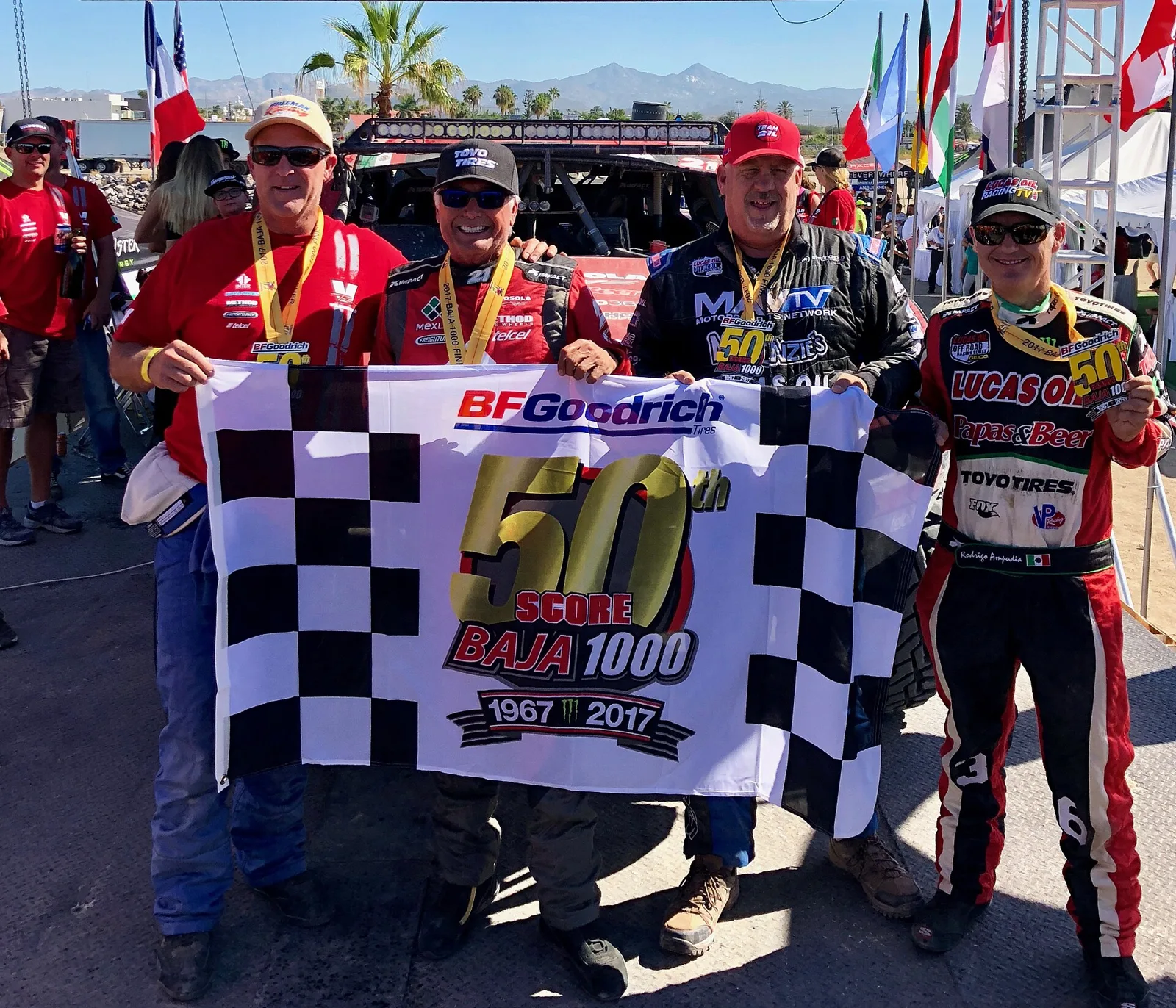
Each year the Baja 1000 sends off-road machines down Mexico's Baja California Peninsula, over a course that can stretch to 850 miles or more. Few off-road events carry more prestige, and entrants have come from six continents. Ed Pearlman founded it in 1967, SCORE International sanctions it, and the 2017 edition marked its 50th anniversary.
It closes a four-race yearly series that also takes in the San Felipe 250, plus the Baja 400 and 500. Every class shares the one course at the same time, from trophy trucks and dirt bikes to truggys, side-by-sides and buggies, Baja Bugs included.
Loop or point to point
The name is slightly misleading, because the mileage depends on the format. About every other year the race is a loop, starting and finishing in Ensenada, over 600 to 850 miles depending on the route. In the other years it is a point-to-point race, often called the 900, which traditionally starts in Ensenada (though Tijuana and Mexicali have both hosted the start) and ends in La Paz. Point-to-point courses are often longer than 1,000 miles (1,600 km). The race held in the year 2000 was officially named the Baja 2000 and covered 1726 miles.
Competitors face an unusual list of hazards: sudden drops in the terrain, cliffs, boulders, mud, dunes, dust, fog, mirages, traffic on unlit roads, spectators, cattle and local wildlife. The starting order is generally a random draw, unless top finishers from the previous race earn preferential starts or qualifying is held. For Trophy Trucks and Class 1 cars, qualifying now takes place during SEMA at Las Vegas Motor Speedway.
Buggy Beats Bike in Baja turned a publicity run into a race.
How did the Baja 1000 begin?
The origin is a sales pitch. In 1962 two executives at Honda's American arm, Jack McCormack and Walt Fulton, wanted a long-distance run to prove the new CL72 Scrambler motorcycle was reliable. They asked the off-road racer and dealer Bud Ekins for ideas, and he named Tijuana to La Paz along Federal Highway 1: 950 miles (1,530 km) with hardly any pavement and a route of boulders, mountain passes, cattle crossings, dry lake beds and sand washes.
Ekins declined to ride it himself because of his link to Triumph, so his brother Dave Ekins and Billy Robertson Jr. took the job. After an aerial pre-run in Fulton's Cessna 180, they set off just after midnight on 22 March 1962. Two journalists followed in an aeroplane, and telegraph offices at the border and in La Paz kept the clock. Dave Ekins posted the first official time: 39 hours 56 minutes over 952.7 miles (1,533.2 km). Globe, Argosy and Cycle World covered it, though Ekins later called the brush-with-death details in two of those accounts colourful additions.
Buggy beats bike
Bruce Meyers wanted that record, partly to help sell the Meyers Manx. In April 1967 he and Ted Mangels took his prototype buggy, Old Red, from La Paz back to Tijuana, setting off at 10:00 pm on 19 April with a Road & Track journalist following. Their official time of 34:45 beat Ekins by more than five hours. The journalist sent out press kits under the headline Buggy Beats Bike in Baja, and the Meyers Manx became an overnight sensation.
The contest between two wheels and four was on. A multiple-vehicle run organised by Pearlman set a four-wheel record that fell short of Meyers' overall time, and on 4 July 1967 a Rambler American sedan from American Motors left Tijuana at 9:00 am and bettered Meyers' mark with 31 hours.
From timed runs to a proper race
Timed runs reported by telegraph had become popular enough to demand an organised event. Pearlman persuaded several people, including Dick Cepek and the journalist John Lawlor, to make the run in June 1967, and they hit mechanical trouble almost at once. The experience inspired him to set up the National Off-Road Racing Association, NORRA, funded with the help of Pete Condos. The first official race, the NORRA Mexican 1000 Rally, left Tijuana on 31 October 1967. It was 849 miles (1,366 km) to La Paz, and Vic Wilson and Ted Mangels won in a Meyers Manx buggy in 27 hours 38 minutes.
From 1967 to 1972 NORRA ran the race, and its fame grew. ABC sent Jim McKay to cover the 1968 event for Wide World of Sports. Mickey Thompson, the Indy 500 winner Parnelli Jones and the actor James Garner took part, as did Mary McGee, the first woman to compete. By 1971 Olympia Brewing and Minolta were backing Jones in his Bronco, nicknamed Big Oly.
How the oil crisis created SCORE
In October 1973, the price of a barrel of crude oil jumped 70% overnight when OPEC began the Arab oil embargo. NORRA feared competitors would stay at home, called off the 1974 Baja race, though the state oil company Pemex promised fuel prices would hold, and announced an Arizona event instead.
The governor of Baja California, Milton Castellanos, handed the sanctioning to a non-profit body, the Baja Sports Committee. It renamed the event the Baja Mil, or Baja 1000, and ran it from Ensenada to La Paz on the original dates while NORRA held its rival event in the United States. Promotion proved harder than the committee expected, so the Mexican government asked SCORE International for help. After negotiating with Thompson, it gave SCORE exclusive rights to hold Baja races. SCORE hired Sal Fish as president and took control of the Baja 1000, which it ran from 1975.
The 1979 race produced a first: Walker Evans won overall in a Dodge, the first truck ever to take the outright title. In 2012 Roger Norman bought the organisation, and he runs it as president.
Baja 1000 vehicles, classes and winners
The range of machinery is extraordinary. Factory-backed teams build custom vehicles and follow them with helicopters, while much smaller sportsman teams enter all-stock cars with no chase support at all. Modified stock Volkswagen Beetles, the Baja Bugs, have been regulars from the start, but the factory-supported spaceframe Trophy Trucks catch the eye most.
Not every success has come from specialist hardware. Erik Carlsson took third in 1969 and fifth in 1970 in a near-standard Saab 96 V4 with front-wheel drive.
The record books are dominated by a few names. Rob MacCachren has the most overall car wins with seven, followed by Andy McMillin with six, then Mark McMillin and Larry Ragland with five each. On two wheels, Johnny Campbell leads with 11 overall wins, ahead of Larry Roeseler with ten, and Steve Hengeveld and Kendall Norman with eight apiece.
The race has also made its way onto screens. It features in the film Timerider (1982), in a 1984 episode of The Fall Guy, in the documentary Dust to Glory (2005), which follows the 2003 race, in the 2008 video game Baja: Edge of Control, and in the 2025 film F1, where Brad Pitt's character Sonny Hayes competes after retiring from Formula One.
What was the Carrera Panamericana?
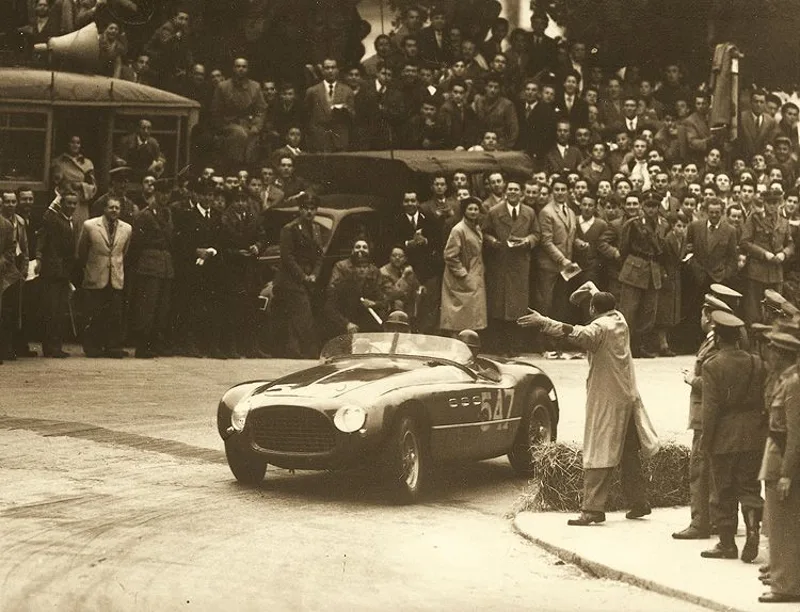
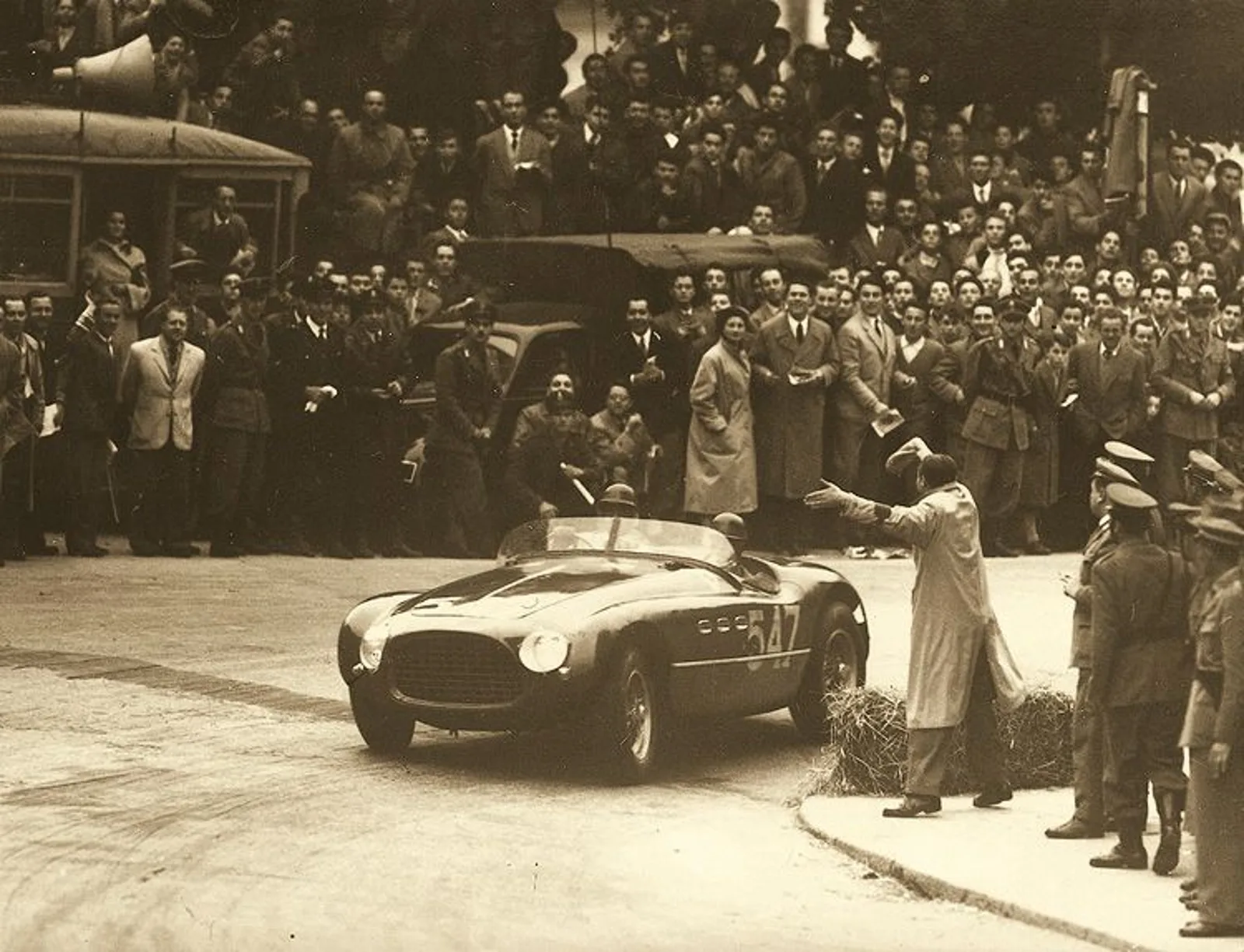
The Carrera Panamericana sent stock, touring and sports cars from one Mexican border to the other on open roads, in the manner of Italy's Mille Miglia and Targa Florio. It ran for five consecutive years from 1950 to 1954, and people at the time widely rated it the deadliest race of any kind. Part of the original course now hosts a revival as a classic speed rally.
The trigger was a road. In 1950 Mexico completed the 2,178 mile (3,507 km) north-south section of the Pan-American Highway, and the government organised a race of nine stages over five days to celebrate and to attract foreign business. The first race began on 5 May 1950 at the Texas border in Ciudad Juarez and finished at Ciudad Cuauhtemoc in Chiapas on the Guatemalan border. It was open only to stock five-seat sedans, yet it drew entrants from nearly every branch of the sport, from Formula One and rallying to endurance racing, hill climbing and drag racing. Bill France Sr., founder of NASCAR, was there.
The 132 competitors included nine women and many ordinary, unsponsored citizens, alongside the Italian F1 drivers Piero Taruffi and Felice Bonetto in a pair of specially built Alfa Romeo coupes. Altitude was a challenge in itself: the route climbed from 328 feet (100 m) to 10,482 feet (3,195 m), and carburettors had to be rejetted for the thin air. Most of the race ran between 5,000 and 8,000 feet (1,500 to 2,400 m).
The Carrera Panamericana winners, year by year
The 1950 winner was Hershel McGriff, whose Oldsmobile 88 averaged 142 km/h (88 mph). His car cost him and his partners only $1,900, against a winner's purse of 150,000 pesos, around $17,200. It was less powerful than the big Lincolns and Cadillacs but much lighter, so it pulled away on the steep, twisting course and was gentler on brakes: McGriff finished on his original brake shoes while the heavier cars replaced theirs every night. A manual gearbox helped on the final day's gravel in Chiapas, and he reached the finish without any oil in the engine, smoking and rattling. American cars took the first four places. Four people died in that first race, three competitors and one spectator.
For 1951 the direction reversed, running south to north from Tuxtla Gutierrez to Ciudad Juarez, partly because El Ocotal and the jungle lacked accommodation, and partly so US drivers could finish at their own border. The race also moved from early May to late November, avoiding the hot, rainy season and giving European teams a chance during their off-season. Ferrari entered the first European factory team, though its cars did not strictly meet the touring-car rules, and the Italians were allowed to start anyway. Works Ferrari 212 Inters, with Piero Taruffi and Alberto Ascari at the wheel, took first and second. The race claimed four lives, and Mexico City's El Universal newspaper called it a crime, while a government official called it an imitation of North American customs unsuited to Mexican characteristics.
The 1952 organisers split the field into Sports Car and Stock Car classes, so heavy American sedans no longer competed directly with nimble European sports cars. Mercedes-Benz arrived with a highly organised team and the 300 SL, and Kling and Klenk finished first with Hermann Lang second. A 1-2-3 might have followed, but John Fitch was disqualified after a mechanic touched his car late in the race. Klenk read pre-prepared pacenotes to Kling, a system Mercedes also used at the 1955 Mille Miglia and one that is used today in every motor sport with a navigator. Chuck Stevenson won the touring class in a Lincoln Capri. After the vulture strike, the replacement windscreen got eight vertical steel bars. One person died in that year's race.
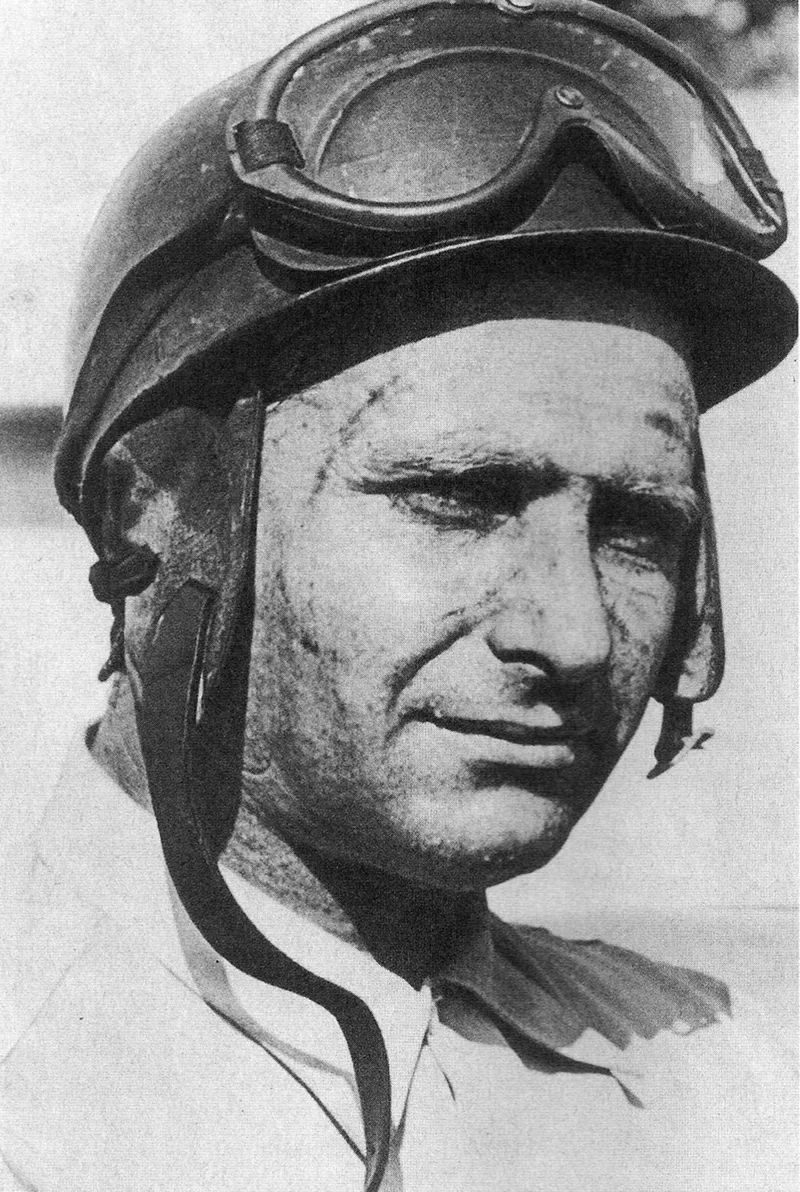
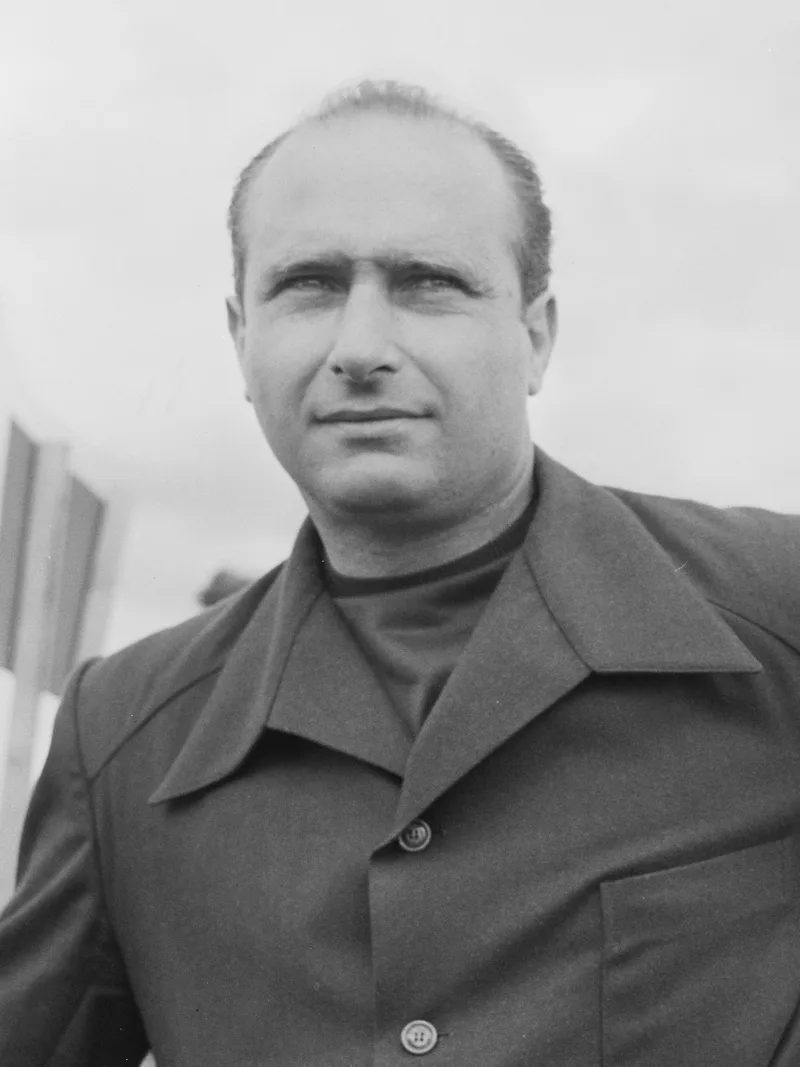
In 1953 each class split again by engine size: sports cars under or over 1600 cc, stock cars under or over 3500 cc. Lincoln and Lancia each swept the first three places in their categories, and Mercedes stayed away to concentrate on Formula One. Juan Manuel Fangio won the large sports class in a Lancia, Jose Herrarte took the small sports class in a Porsche, Stevenson won large stock in a Lincoln, and C.D. Evans won small stock in a six-cylinder Chevrolet. Stevenson is the only person to win twice in the same category of the original race.
It was also the bloodiest year. Bonetto, driving an open Lancia D24 single-seater with no co-driver, was leading under pressure from Taruffi when he missed warning signs he had painted on the road himself, met a dip in the village of Silao at excessive speed and was killed. Eight other people died in unrelated accidents, among them six spectators struck by a flipping car. The episode vindicated the co-driver and pacenote system that Mercedes had championed.
Baja 1000 versus Carrera Panamericana
| Feature | Baja 1000 | Carrera Panamericana |
|---|---|---|
| First run | 31 October 1967 as the NORRA Mexican 1000 Rally | 5 May 1950 |
| Original years | Annual to the present | 1950 to 1954, five consecutive years |
| Terrain | Baja California Peninsula; dunes, cliffs, mud, fog | The Pan-American Highway, rising to 10,482 feet (3,195 m) |
| Distance | 600 to 850 miles for a loop; often over 1,000 miles (1,600 km) point to point | 2,178 miles (3,507 km) of highway in nine stages |
| Vehicles | Trophy trucks, buggies, Baja Bugs, side-by-sides, motorcycles | Stock sedans, then sports cars and Stock Car classes |
| Organiser | SCORE International | The Mexican government with US motor sport groups |
| Today | Final round of the four-race SCORE series | Revived as a classic speed rally on part of the original course |
Where this goes next
The Baja 1000 continues as the closing round of the SCORE series, with qualifying for Trophy Trucks and Class 1 cars held during SEMA at Las Vegas Motor Speedway. The Carrera Panamericana survives in a very different form. The original races ended after 1954, and the modern event is a classic speed rally.
What this means if you want to race or watch
For a driver, the Baja 1000 offers the wider menu. Its classes run from dirt bikes and ATVs to side-by-sides, buggies and custom race vehicles, with classes for motorcyclists over 30, 40, 50 and 65, and sportsman categories for teams running all-stock machines without a chase vehicle. Class lists include Trophy Truck Spec for stock-engine trucks, Class 11 for stock Volkswagen sedans, Class 5 for Baja Bugs and Class 17, Jeepspeed.