One was born when the Dakar left Africa and finishes at Dakar. The other started in Kazan, rolled out of Red Square and now struggles for funding.
The Africa Eco Race is a French-organised rally raid through Morocco, Western Sahara, Mauritania and Senegal, created after the Dakar left Africa in 2008. The Silk Way Rally, first run in 2009 across Russia and neighbours, was cancelled for 2026 due to a lack of funding.
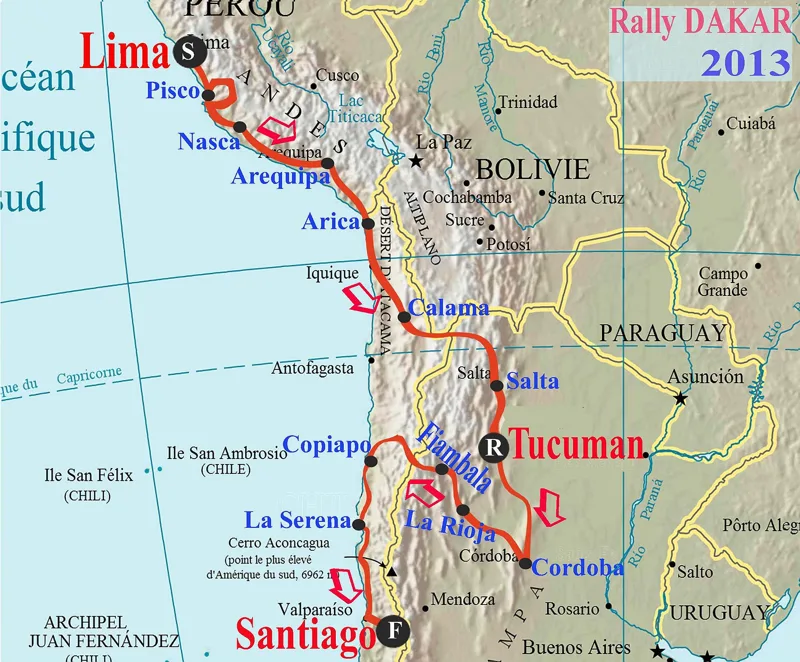
When the 2008 Dakar Rally was cancelled and the event moved to South America, the road to Dakar did not close. Within a year a new rally was sailing out of Marseille, bound for the same Senegalese finish. The Africa Eco Race has been running to that finish ever since, while the Silk Way Rally took a very different path: across Russia, Kazakhstan, China and Mongolia, then through sanctions, a political storm and, for 2026, a cancellation for lack of funding.
These two events show what rally raid looks like away from the Dakar name, and each is shaped by the places it crosses and the people paying for it.
What is a rally raid?
A rally raid is a long-distance cross-country event run in stages, and the Silk Way Rally rules show how it works. Crews are normally a driver and a navigator, with a mechanic added in trucks and a lone rider on bikes. They have to finish the timed Special Stages, which the rules also call Selective Sections, by following the Road Book, and they must reach every compulsory waypoint on the way. Lowest combined time across the specials takes the win.
Think of it as a series of timed sprints joined by commutes. The sprints go through desert and tracks. The commutes, called road sections or liaisons, use ordinary public roads and highways, and crews must cover them within a target time while obeying the Road Traffic Code. A late arrival earns a penalty marked on the control card, which is added to the final results.
When the Dakar left Africa, a new rally took the road to Lac Rose.
How the Africa Eco Race began
Organised from France, the Africa Eco Race runs every year through North and West Africa. It was launched after the 2008 Dakar Rally was cancelled and the Dakar then moved to South America. It is open to amateurs and professionals alike. The route covers more than 6500 km over 11 stages, crossing Morocco, Western Sahara, Mauritania and Senegal.
The first edition sailed from Marseille on 26 December 2008, with the prologue on 28 December and arrival at Nador in Morocco on 30 December. The second left from Portimao in Portugal. By the third edition, which ran from 27 December 2010 to 9 January 2011, the pattern was set: a start in Europe, a ferry crossing, and a finish in Dakar. In later years the finish was on the shores of Lac Rose.
Schlesser's streak and what followed
Jean-Louis Schlesser dominated the early years, winning the car class at each of the first six editions. His sixth consecutive win, in 2014, came in a buggy he built himself, with Thierry Magnaldi as co-driver. In bikes, Willy Jobard took the third edition on a hybrid Zongshen, Oscar Polli won the fourth on a KTM, Martin Fontyn the fifth, and Michael Pisano the sixth on a Honda 450cc. In trucks, Czech driver Tomas Tomecek won on a Tatra in the third, fourth and sixth editions, and in 2012 his Tatra was second overall. In 2013 Anton Shibalov's Kamaz won the class and finished second overall, ahead of Tomecek.
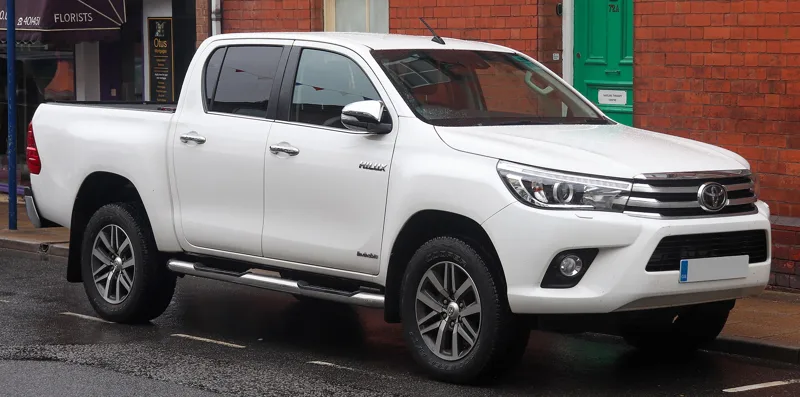
The seventh edition, in 2015, was the first without Schlesser and saw the official Kamaz team return, with a hybrid truck among its entries. Jean Antoine Sabatier won the cars in a Bugga One. Pal Anders Ullevalseter, a former Dakar rider, took the bikes, and Shibalov won the trucks in a conventional Kamaz. From 2016 the start moved to Monaco. Kanat Shagirov won cars in a Toyota Hilux Overdrive that year, and Ullevalseter and Shibalov dominated bikes and trucks. In 2017 Russian Mini driver Vladimir Vasilyev won the cars and Andrey Karginov the trucks, while 17-year-old Gev Sella of Israel took the bike title ahead of Ullevalseter. In 2018 the cars went to Mathieu Serradori and Fabian Lurquin, their first win in the event.
The 13th edition in 2021 was cancelled because of COVID-19 health risks. The 2022 event started later in the year, left Monaco, travelled to Nador and crossed Morocco, Mauritania and Senegal before finishing at Dakar. It also introduced the Raid category, a non-competitive class for motorcycles over 650cc.
Four ways to take part
There are now four ways in: the full race, a classic race, and two non-race raid events for bikes and cars. Motorcycles and quads follow the French Motorcycle Federation codes, while cars, side-by-sides (SSVs) and trucks follow the FIA International Sporting Code and the French federation's regulations. As of the 2025 event the categorisation changed its numbering scheme.
The Classic category began for the 15th edition in 2024. It runs on a regularity scoring system rather than outright speed. Each competitor picks an average speed category at the start, low, intermediate or high, to cover the Regularity Zones. The High average is the reference base set by the organisers, and the choice can be reviewed from the rest day.
The Bike Raid carries no competition. It is for lone riders on trail or maxi-trail bikes of 450cc and up, and each machine needs a range of at least 300 km. The Car Raid is also non-competitive. It takes production or specially prepared cars, SSVs and trucks, with a crew of two or more and a range of at least 400 km.
The ecological claims
The organisers say the event gives special attention to security and sustainable development, and that it wants participants to think about eco-responsibility. Bivouacs are placed far from cities and airport tarmac. Participants receive reusable flatware kits, and some organisation vehicles carry solar panels. The organisers also set up two photovoltaic projects in Mauritania, powering a school in Nouakchott and a library in Chinguetti, and in 2011 funded the planting of 3000 eucalyptus trees in Nouakchott. A separate category exists for experimental vehicles using renewable energy, to test their reliability, power, strength and endurance under extreme conditions.
The organisation has not been without critics on access. The organisers have declined to talk to the Polisario about the rally entering Western Sahara.
The Silk Way Rally from Kazan to Irkutsk
The Silk Way Rally is a yearly rally raid in Russia and the countries around it. Its first running in 2009 went from Kazan in Tatarstan to Ashgabat in Turkmenistan, a nine-day event with 3,900 km of special stages. Carlos Sainz won it, his first international rally raid, and the following January he won the Dakar in his fourth attempt. In trucks Kamaz took the honours, led home by Firdaus Kabirov, a two-time Dakar winner, in what proved his last major international victory. Of 62 cars and 20 trucks that started, 34 cars and 16 trucks finished.
The organiser is the Silk Way Rally Association, and it counts towards the Russian Rally-Raid Championship. From 2009 to 2011 it sat on the Dakar organiser ASO's Dakar Series, and it then became a round of the FIA World Cup for Cross-Country Rallies. The motorcycle class arrived in 2019, alongside cars and trucks.
How the Silk Way routes compare
| Year | Route | Length |
|---|---|---|
| 2009 | Kazan to Ashgabat | 4628 km |
| 2011 | Moscow start, seven days of racing | 3,940 km |
| 2012 | Red Square to Sochi, halted at Gelendzhik | 3,550 km |
| 2016 | 17 days with 14 bivouacs | 10735 km |
| 2018 | Russian part only, 3127 km of special stages | 5169 km |
| 2025 | Irkutsk, Ulaanbaatar, Gorno-Altaysk | 4,811 km |
In 2011 the rally left Moscow for the first time, to a ceremonial start on Red Square watched by thousands of Muscovites. Krzysztof Holowczyc of Poland took the biggest win of his career ahead of Stephane Peterhansel. In 2012 the start was again at Red Square, with a new 4,000 km route to Sochi, but storms battered southern Russia and the race ended early at Gelendzhik. Boris Gadasin was the first Russian to win the car category, and Ayrat Mardeev, who would win the 2015 Dakar, won the trucks for Kamaz.
The 2016 edition was the largest. It covered 10735 km in 17 days with 14 bivouacs, 41 countries represented, and 1,100 participants and team members. Its bivouac hosted up to 2,200 people daily and the organisers used 16 aircraft and 14 auto transporters. The 125 sporting crews included 102 SUVs and 23 trucks, and up to 15,000 people visited the spectator areas each day. Reports were broadcast to 196 countries. The 2017 rally again ran through Russia, Kazakhstan and China, and was commended by Russian President Vladimir Putin.
Sanctions, cancellations and the 2025 revival
From 2020 the story is mostly one of interruption. The 2020 race was cancelled because of the COVID-19 pandemic. In 2021 it ran but without the Mongolian leg, which was cancelled because of COVID-19 and outbreaks of bubonic plague there. The 2022 race ran solely in Russia in July and attracted few overseas entrants because of sanctions relating to the invasion of Ukraine. Sports director Luc Alphand, appointed in 2021, left his post after the invasion. In 2023 foreign entries were limited to nearby friendly states, including Belarus, China and Turkmenistan.
Mongolia returned in 2024, making it a multinational event again. China was originally planned as the final stretch, ending in Khorgos, but was dropped because the region wanted to wait for pre-COVID economic activity to return. In March the association partnered with Turkmenistan's sport committee for a rally raid there, and a Turkmenistan Rally-Raid Championship launched later in 2024.
The 15th edition took place on 10 to 23 July 2025 and visited Irkutsk, Ulaanbaatar and Gorno-Altaysk. It covered 4,811 km across Russia and Mongolia, with 101 entered crews and 905 people in the caravan from 15 nations. Anton Shibalov claimed the first truck victory on alternative fuel, in a gas-diesel Kamaz, after Sergey Vyazovich's rollover and Eduard Nikolaev's speeding penalty. In the side-by-side class Dmitry Cherkesov won ahead of his brother Aleksey by 1:36, with Roman Rusinov third, 1:48 back after a wheel change on the last stage. Murun Purevdorj became the first Mongolian rider to win on motorcycles. Ilya Shcheglov fell and needed evacuation but still finished second.
The political shadow
Western investigative journalists have called the rally a cover for Russia's GRU military intelligence service. A joint 2023 investigation by Bellingcat, Der Spiegel, Le Monde and The Insider reported internal association papers about using the event to extend Russian soft power across Eurasia, including a proposed 2022 route from Doha to Damascus. It also identified association director Bulat Yanborisov as a GRU agent. Yanborisov denied the link, though he accepted that the rally carries diplomatic weight.
In June 2024 the US Treasury imposed sanctions on the association, on Yanborisov and on his son Amir. Treasury characterised the association as a Russian intelligence procurement network that used the logistics of the race to buy military equipment for use in Ukraine.
What it means for a driver
For someone who wants to drive a rally raid, the Africa Eco Race is the more accessible path. It accepts amateurs and professionals, offers non-competitive Bike Raid and Car Raid entries and, in the Classic category, rewards steady regularity rather than speed. The vehicles on its roll of honour range from Schlesser's self-built buggies to a Bugga One, a Toyota Hilux, a Mini and Kamaz and Tatra trucks. The Silk Way Rally has recently drawn side-by-side machines in its T3 class, and in 2025 a gas-diesel truck won the truck class, the first alternative-fuel truck victory.
What is next for the two rallies?
The 2026 Silk Way Rally was cancelled due to a lack of funding. A 17th edition of the Africa Eco Race is listed for 2026. The Turkmenistan Rally-Raid Championship, which debuted in 2024 after the Silk Way Rally Association partnered with the country's sport committee, is the newest sign of the association's reach.