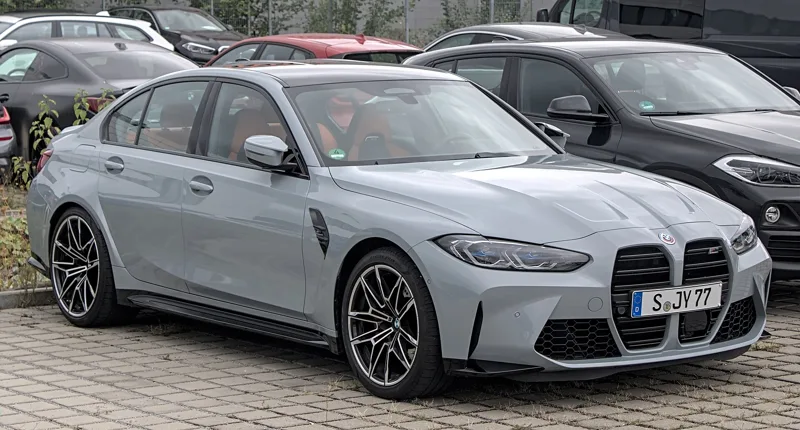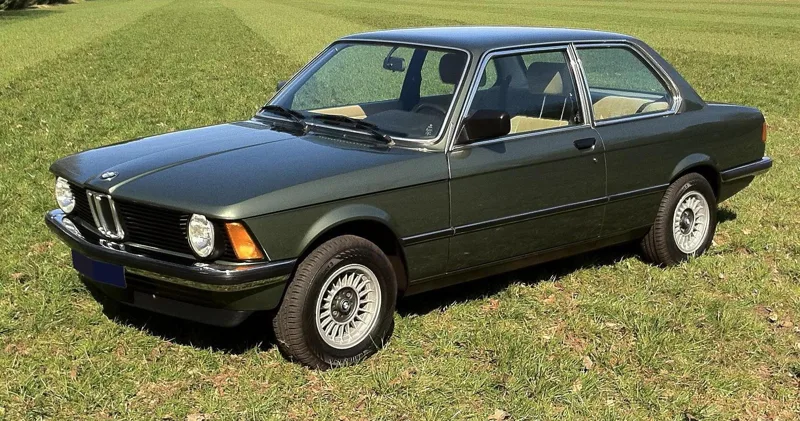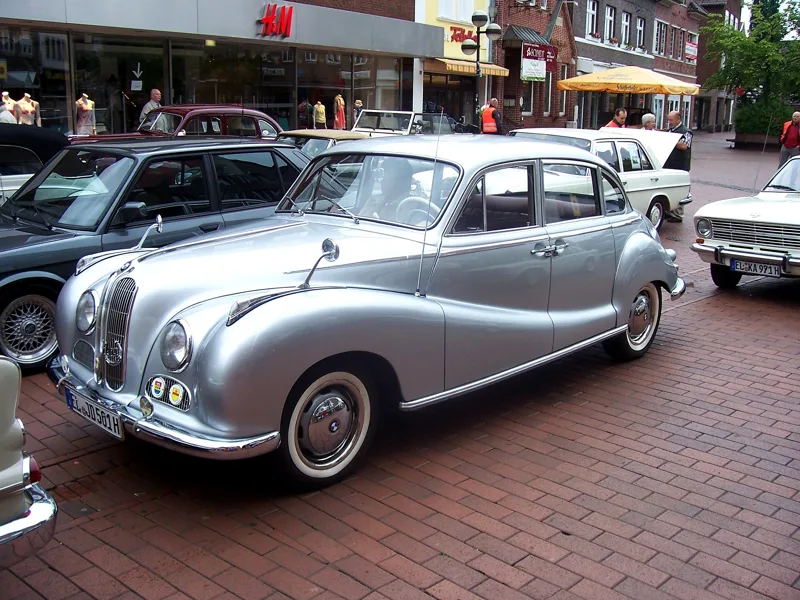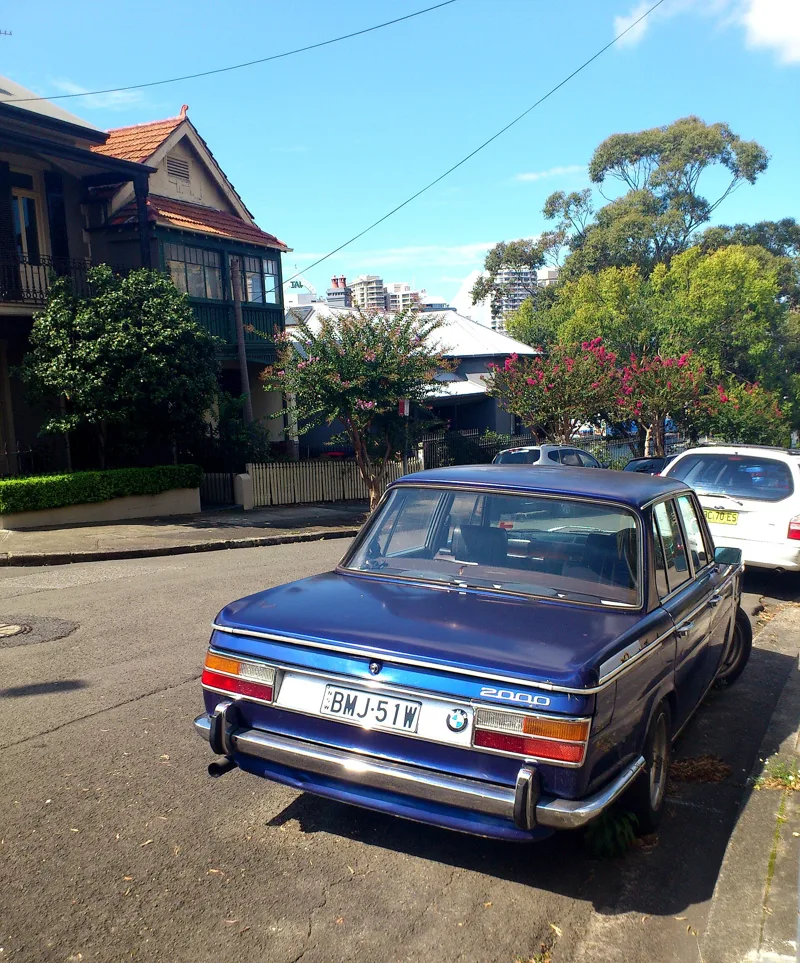
A first six-cylinder engine and kidney grille, a small monocoque car that sold when BMW was close to ruin, a lightweight racing coupe and a roadster with plastic panels.
The BMW 303 (1933) brought the first six-cylinder engine and kidney grille, the 700 (1959) sold well while BMW was close to ruin, the E9 (1968) built a racing reputation with the 3.0 CSL, and the Z1 (1989) introduced plastic panels and drop-down doors.
In December 1959 BMW's shareholders blocked a plan to sell the company to Daimler-Benz. Months earlier a small rear-engined car with a 697 cc flat-twin engine had just reached 25,000 orders. The BMW 700's success is credited in part with the heavy investment Herbert Quandt made in BMW soon afterwards.
The 700 is one of four BMW models that mark turning points in the story. The 303 of 1933 gave the company its first six-cylinder engine and its kidney grille. The E9 coupes of 1968 to 1975 brought it a string of touring-car racing successes. The Z1 of 1989 put plastic body panels and doors that slide into the sills on a road car. Each of them changed what a BMW could be.
What was the BMW 303?
The 303 was a small family saloon sold for just two years, 1933 and 1934. It brought a six-cylinder engine and the kidney grille to the BMW range for the first time, and the grille is still treated as a defining mark of the company's cars.
The 303 was the largest BMW built up to that point, with a 2,400 mm (94.5 in) wheelbase, 300 mm longer than that of the 3/20 it succeeded. It had a ladder frame of tubular side members rather than the 3/20's backbone chassis, independent front suspension with a transverse leaf spring, and a live rear axle on leaf springs. That rear end was simpler than the troublesome swing axles of the 3/20. BMW also fitted automatic one-shot chassis lubrication, which made it the first German car of its size and price to have it.
The engine, the M78 of 1182 cc, grew out of the 3/20's four-cylinder unit with the same bore and stroke but wider bore spacing, leaving room for later enlargement. Daimler-Benz's coachworks in Sindelfingen built the first two-door saloon and cabriolet bodies, with Ambi-Budd in Berlin taking over later. It was the cheapest six-cylinder car in Germany at the time, but it was judged underpowered at 90 km/h (56 mph) flat out, and the combination of soft front springs and hard rear ones produced understeer, body roll and a restless pitching motion. Only 2300 were built before the 315 replaced it in 1934.
The platform carried on. The 309 was a four-cylinder 303 of 845 cc and 16.5 kW, of which 6,000 were made in 1934 to 1936. The 315 had a larger engine, and 9,765 were built; the 319 used a 1,911 cc engine with 34 kW, with 6,646 built, and the 329 of 1937 put the 326's front end on the 319. Two sporting offshoots, the 315/1 and 319/1 roadsters, produced 30 kW and 41 kW respectively and were built in just 242 and 102 examples before the BMW 328 replaced them in 1936.
BMW changed direction four times in these cars: a first six, a small car that sold in a crisis, a racing coupe and a plastic roadster.
How did the BMW 700 help BMW through its financial crisis?
The BMW 700 was a small rear-engined car sold from August 1959 to November 1965, the first BMW with a monocoque body. With more than 188,000 sold when BMW was close to financial ruin, it brought in income, and its success has been credited in part with attracting a major investment.
Its origins were outside the factory. Wolfgang Denzel, BMW's distributor in Austria, commissioned Giovanni Michelotti to sketch a body on a lengthened chassis from the BMW 600, and won a development contract in January 1958. His prototype, a coupe with a slanted roof, was well received by BMW management in July 1958 but raised concerns about passenger space, so BMW decided to make two bodies, the coupe and a taller, longer-roofed two-door saloon. Willy Black, who designed the 600, handled chassis and suspension, giving the 700 a rear-mounted flat-twin, Dubonnet leading arms at the front and semi-trailing arms behind.
The 697 cc engine, an enlarged version of the one in the R67 motorcycle and the 600, had a single carburettor and 7.5:1 compression and made 30 PS (22 kW). After the show at Frankfurt in 1959, BMW received 25,000 orders. By April 1960 production reached 155 cars a day, and over five years 188,211 were built. A 700 Sport followed in August 1960 with twin carburettors and 40 PS (29 kW), and was renamed the 700 CS in 1963. Karosserie Baur of Stuttgart built 2,592 cabriolets, a Saxomat semi-automatic gearbox became an option, the Luxus replaced the base saloon in 1962, and a long-wheelbase LS added 16 cm. The last development was the 700 LS Coupe of 1964, with 1,730 built.
The 700 also won races. Hans Stuck took the 1960 German Hillclimb Championship in one, and Walter Schneider won the 1961 German saloon car title. A 700 won its class at Monza in 1961, beating Abarth on its home ground, and drivers such as Jacky Ickx and Burkard Bovensiepen raced them. The 700 RS special had a tubular frame and a twin-cam engine tuned to 70 PS.
Production ended in November 1965. By then the New Class cars were selling well, and their fatter profit margins persuaded BMW to give up economy models. The company did not return to that market until the Mini in 2002.
What was the BMW E9 and why does the 3.0 CSL matter?
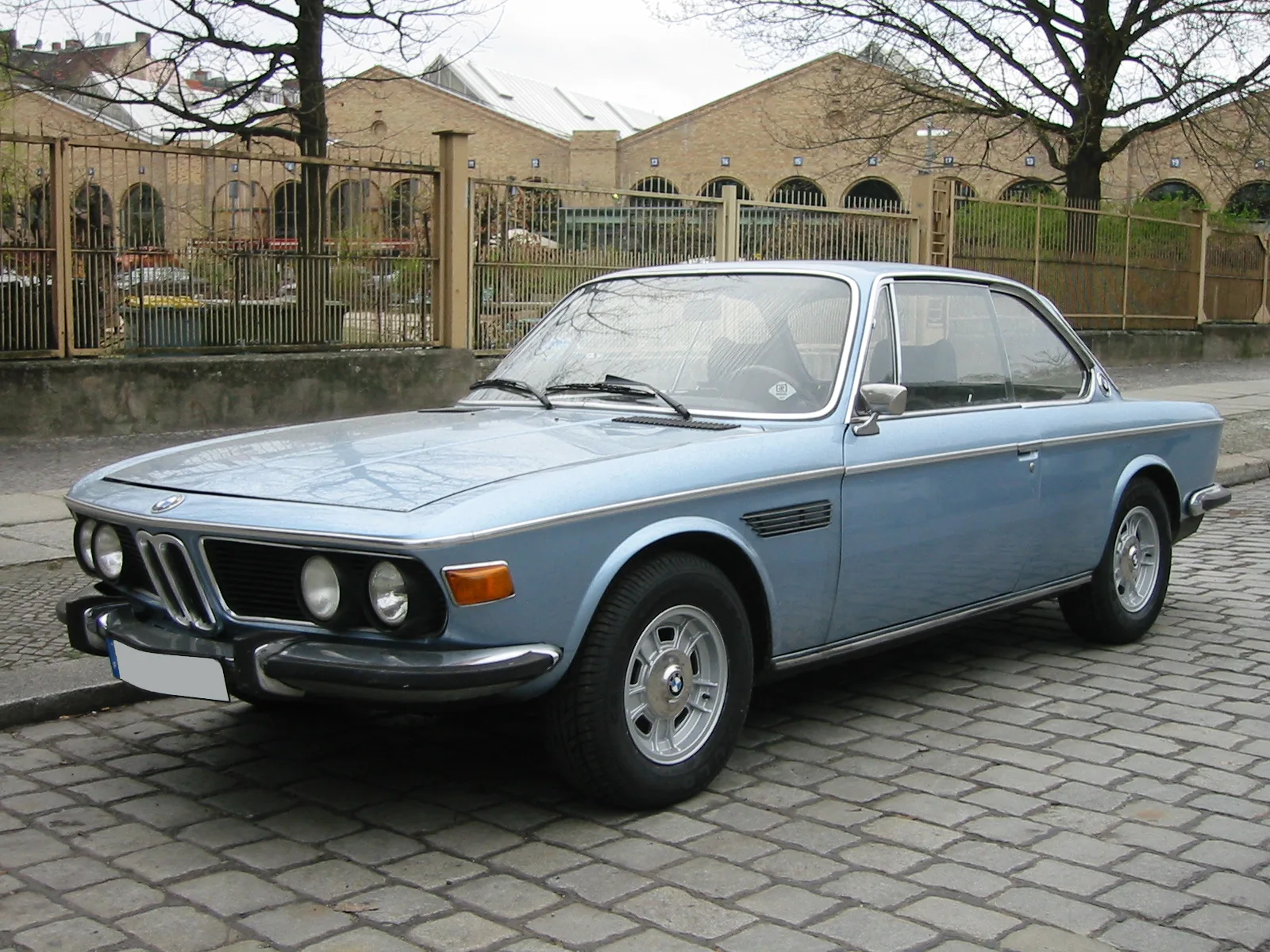
The E9 is a range of coupes BMW built from 1968 to 1975, starting with the 2800 CS and ending with the 2.5 CS, with bodies by Karmann. The 3.0 CSL, a lightened homologation special built to go touring-car racing, is the version that made the E9 famous.
The 2800 CS of 1968 replaced the four-cylinder 2000 C and 2000 CS. Designer Wilhelm Hofmeister stretched the wheelbase and length for the new M30 straight-six and restyled the nose to echo the E3 saloon. The rear axle was unchanged and the rear brakes were drums at first, so the saloon was actually the better performer; the CS's advantages were mostly visual. Its 2,788 cc engine made 125 kW (168 hp), and the car weighed 1,420 kg. In 1971 the 3.0 CS and CSi arrived with 2,986 cc: 134 kW with twin carburettors for the CS, and 149 kW with Bosch D-Jetronic fuel injection for the CSi.
The 3.0 CSL appeared in May 1972, with 1,265 built. The L stood for leicht, light, not lang, long as it does on other BMWs. Weight came off through thinner steel, no trim or soundproofing, doors, bonnet and boot lid in aluminium alloy, and Perspex side windows. The five hundred cars sent to the United Kingdom kept soundproofing, electric windows and standard bumpers, so were heavier. None went to the United States.
Engine capacity was raised in two stages. A quarter-millimetre bore increase in August 1972 made the engine 3,003 cc so that the car could race in the over-three-litre class, and in 1973 a longer stroke took it to 3,153 cc and 206 PS (152 kW). The final version, homologated in July 1973, carried an aerodynamic package of air dam, fins on the front wings, a roof spoiler and a tall rear wing. The wing was left in the boot for the owner to fit, because it was illegal on German roads. The full kit earned the racing cars the nickname Batmobile.
On track the CSL was formidable. Drivers in CSLs won the European Touring Car Championship six times, in 1973 and from 1975 to 1979. Toine Hezemans took the 1973 title and, with Dieter Quester, a class victory at Le Mans. In 1976 the 3.5 CSL built for Group 5 took three victories in that year's World Championship for Makes, and Sam Posey, Brian Redman and Ronnie Peterson won races in the 1975 IMSA GT Championship. BMW's Art Car series began with two 3.0 CSLs, painted by Alexander Calder and then Frank Stella.
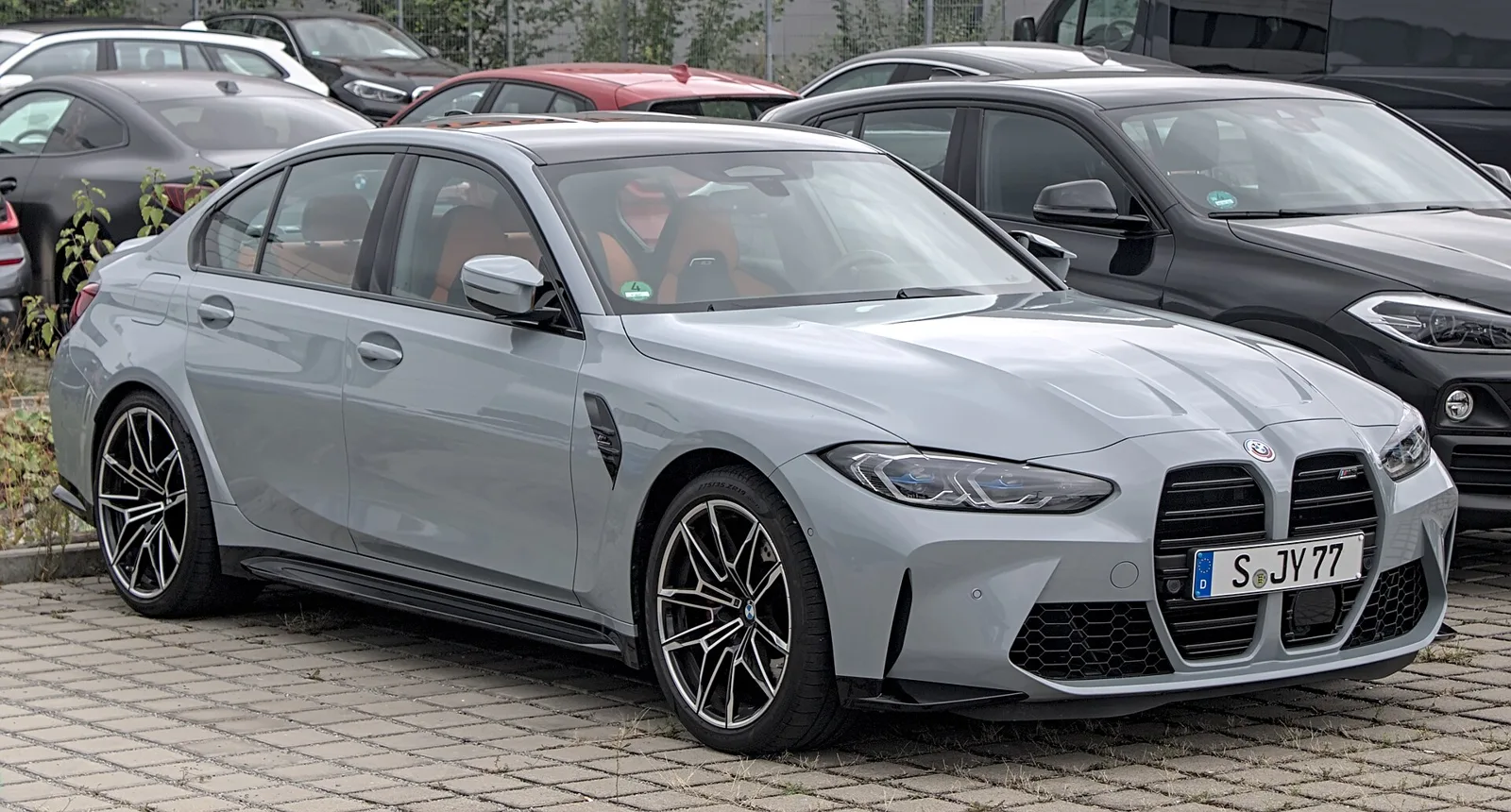
The last E9 was the 2.5 CS of 1974, a response to the 1973 oil crisis, with a 2,494 cc engine of 112 kW. Only 874 were made, and none were exported to the US. The E24 6 Series replaced the range. BMW has kept the CSL name alive: a 3.0 CSL Hommage concept in 2015, and in 2022 an all-new 3.0 CSL based on the M4, with 412 kW (560 PS), built to celebrate BMW M's 50th anniversary in a run of 50.
What made the BMW Z1 so unusual?
The Z1 is a two-seat roadster made in limited numbers from 1989 to 1991, the first model in the Z series. Its doors drop down into the sills, its body panels are plastic and removable, and it used a rear suspension later fitted to the E36 3 Series.
BMW set up BMW Technik GmbH at the start of 1985 to develop concepts, under Ulrich Bez, who oversaw the Z1 until he left in October 1988, when Klaus Faust took over. Harm Lagaay led the design. The board approved the project in August 1985, and the first prototype fit for the road followed a year on. BMW announced in August 1987 that the Z1 would be built and unveiled it in production form at the Frankfurt Motor Show the following month. The price target was DM 80,000, but by the time production started the base price was DM 83,000. Production is dated to October 1988 in one account and to March 1989 in another.
The sole drivetrain was the E30 325i's 2,494 cc straight-six, with 125 kW (168 hp) at 5,800 rpm and 222 N-m, and a five-speed manual. Because the engine sat behind the front axle, tilted 20 degrees to the right to fit under a low bonnet, weight distribution was good. The rear suspension, the Z Axle, was among the first multi-link designs at BMW and later appeared on the E36 3 Series and the Rover 75.
The doors retract vertically into the sills, moved by electric motors and toothed rubber belts, and the windows move independently. The high sills give crash protection without the doors, so the car can be driven with them lowered, although that may not be legal everywhere. The only other production car with retracting doors was the 1954 Kaiser Darrin, whose doors slid forward into the wings. The body also brought removable plastic panels, a flat undertray, a windscreen frame doubling as a roll hoop, and seams welded with zinc along their whole length. BMW suggested owners could buy a second set of panels to change the colour, and said the body could be changed in 40 minutes, though owners have found that optimistic. The drag coefficient is 0.36 with the roof up and 0.43 with it down.
Exactly 8,000 Z1s were built in Munich, all left-hand drive, of which 6,443 went to the German market. Italy, the next biggest, took less than 7% of that German figure. By one count orders reached 3,500 before production began, while BMW was quoted in 1988 as having 35,000. It could build only 10 to 20 cars a day. Red was the most common colour, and the rarest were the fun yellow, of which 133 were made, and a red interior, 38. Production ended in June 1991, and the mass-produced Z3 began in 1995.
The four BMWs side by side
| Model | Years | Engine | Built | Turning point |
|---|---|---|---|---|
| 303 | 1933 to 1934 | 1182 cc straight-six | 2300 | First six-cylinder BMW and first kidney grille |
| 700 | 1959 to 1965 | 697 cc flat-twin, 30 PS | 188,211 | First monocoque BMW, a sales success when the company was close to ruin |
| E9 | 1968 to 1975 | 2,494 to 3,153 cc straight-six | 3.0 CSL: 1,265; 2.5 CS: 874 | Touring-car racing successes |
| Z1 | 1989 to 1991 | 2,494 cc straight-six, 125 kW | 8,000 | First Z series roadster, plastic panels, drop-down doors |
What did each of the four leave behind?
The 303 gave BMW the kidney grille and a platform that lasted until 1937. The 700 was followed by a long absence from economy cars, ended by the Mini. The E9 gave BMW its CSL badge, recalled by a concept in 2015 and a 2022 car, and the Z1 began the Z series that continued with the Z3, Z4 and Z8.
Smaller threads run on from them. The Z in Z1 is sometimes said to mean Zukunft, German for future, but it began as an internal code, with Technik carrying the letters ZT. The 328 that replaced the 315/1 and 319/1 borrowed the 319/1's steering gear and suspension.