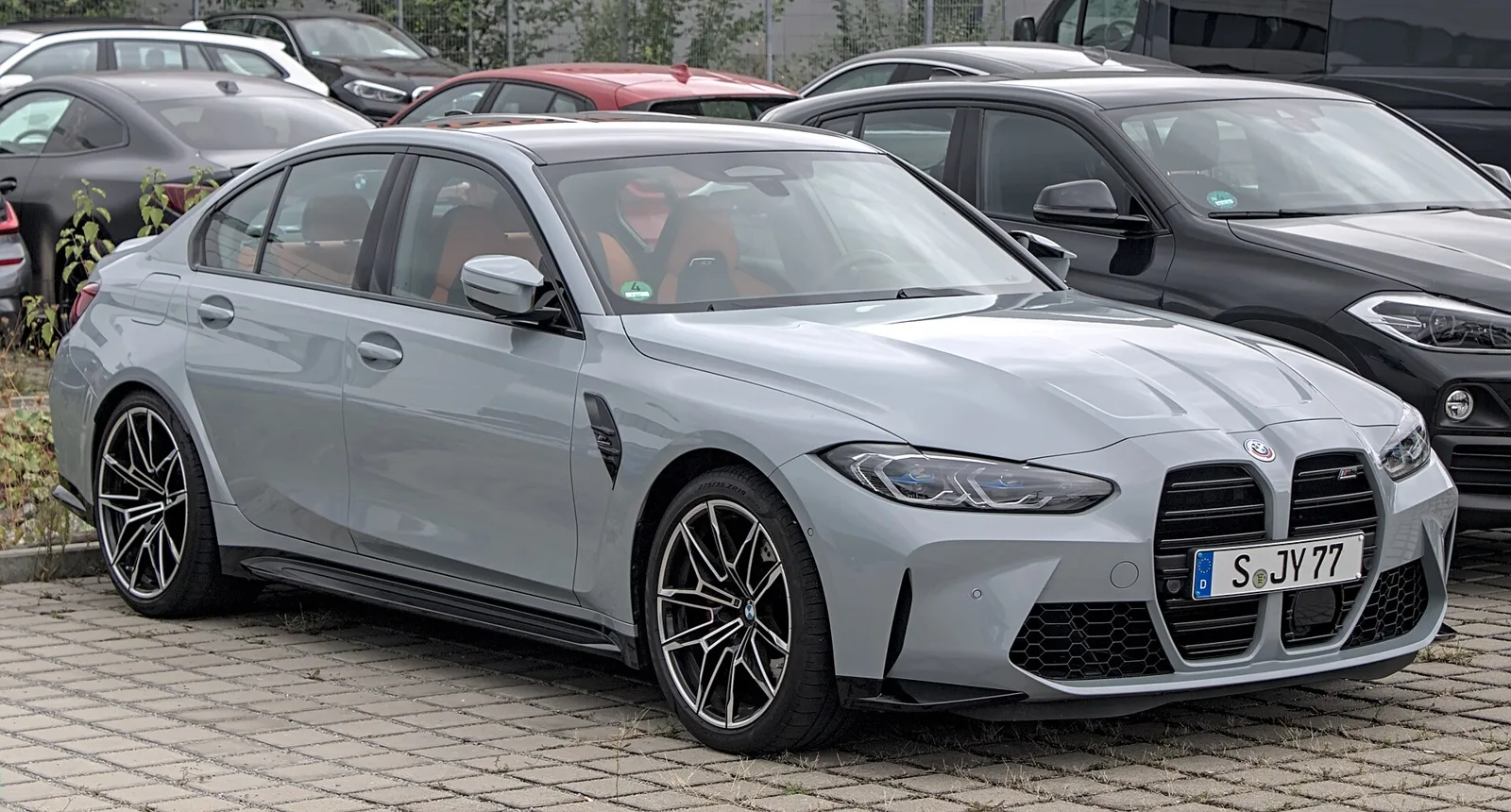
From aircraft engines and motorcycles to M performance cars and the electric i range, the story of a Munich group in one timeline.
BMW, short for Bayerische Motoren Werke, is a Munich-based German maker of luxury cars and motorcycles. It grew out of aircraft engine businesses, began building cars in 1928 and now sells cars under the BMW, Mini and Rolls-Royce names, while its motorcycles sell as BMW Motorrad.
BMW is a German group that builds luxury cars and motorcycles from its headquarters in Munich. Its car brands are BMW, Mini and Rolls-Royce, while its motorcycles sell under the BMW Motorrad name. The business began with aircraft engines before it moved into motorcycles and then cars.
How did BMW begin?
BMW grew out of two Bavarian aircraft engine businesses. Otto Flugmaschinenfabrik was founded in 1910 by Gustav Otto, and Rapp Motorenwerke, founded in 1913 by Karl Rapp, first used the BMW name in 1917. In 1922 Bayerische Flugzeugwerke took the name, and the company that exists today traces its line back to that renaming.
Early work centred on aircraft engines, a legacy that shaped the company's engineering emphasis on performance and precision. Motorcycles came next. The R32 of 1923 started the motorcycle line, which grew into the BMW Motorrad brand that the group still uses today.
A company that began with aircraft engines now reaches from motorcycles to electric SUVs, with a long run of performance models in between.
When did BMW start making cars?
BMW became a carmaker in 1928 when it acquired Fahrzeugfabrik Eisenach, giving it a factory to build cars. Its first car sold under the BMW name was the 3/15, which was a rebadged Dixi. Car manufacture stopped during the Second World War, and production later resumed in Bavaria.
The purchase gave the company a route into cars without starting from a new design. The car business then sat alongside the motorcycle line, which had been running since 1923.
Wartime damage and the postwar recovery
Bombing damaged the factories during the war, and the company survived the lean years by making pots, pans and bicycles. Motorcycle production restarted in 1948, which gave the business a route back into vehicles.
Car production returned in Bavaria in 1952 with the 501 saloon. The war years also carry a darker record. Production of the BMW 801 engine used as many as 40,000 slave laborers, a reminder of how the war reshaped the firm.
Who saved BMW from takeover in 1959?
In 1959 Daimler-Benz came close to taking over BMW. Herbert and Harald Quandt invested that year, which saved BMW from bankruptcy and kept it independent. The Quandt family is still a long-term shareholder, and the rest of the shares are held by the public.
The money behind that rescue has a troubling origin. Nazi-era funds from his father, Gunther Quandt, helped Herbert buy BMW, and Gunther Quandt had joined the Nazi Party in 1933. That history belongs in the company's record alongside its later recovery.
Which landmark models defined BMW?
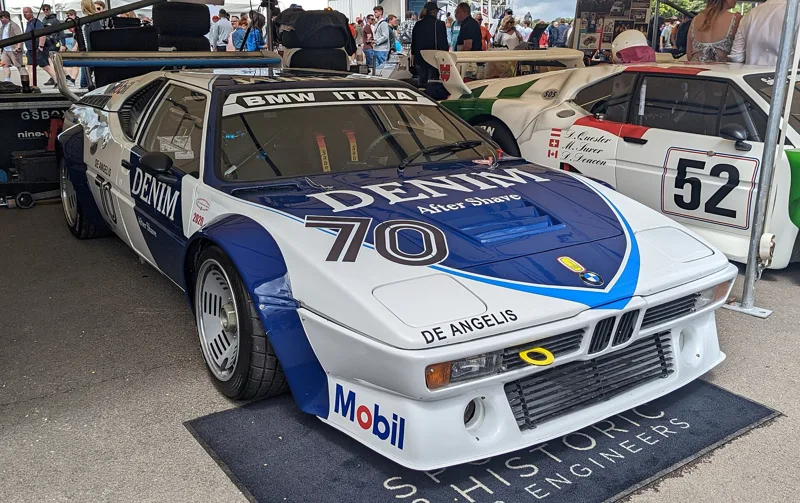
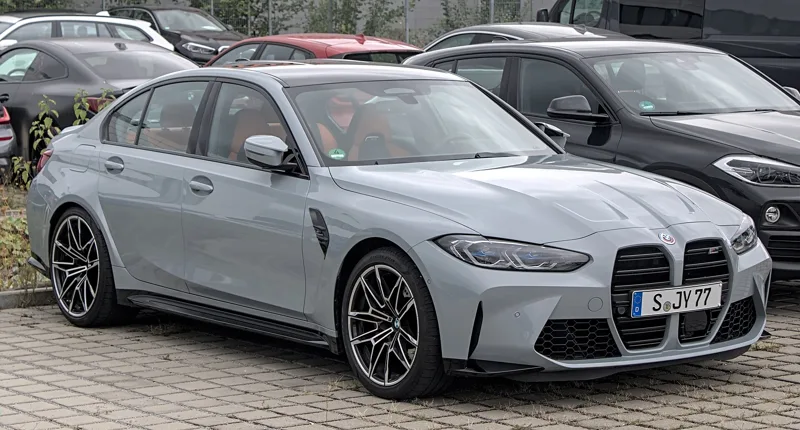
BMW's sporting reputation rests on a series of landmark models. The 5 Series launched in 1972 and the 3 Series followed in 1975. The M1, a mid-engined supercar, arrived in 1978 as the first road car from the M division. The M5 followed in 1984 and the M3 in 1986.
The M models have since grown into a full family. The current lineup includes the M2, M3, M4, M5, X5 M, X6 M and XM, covering coupes, sedans and SUVs.
Roadsters have a place in the story too. The Z1 two-seat roadster arrived in 1989, and the Z3 followed in 1995 as a mass-production roadster.
Engine milestones run through the range as well. The first V12 went into the 750i luxury sedan in 1986, and the last series V12 was fitted to a 7 Series G11 special edition announced on 18 January 2022.
Read together, these launch dates show a company that moved from large sedans into coupes, roadsters and performance versions. Each step widened the range while keeping the driver-focused identity described at the start of this article.
When did BMW start building electric cars?
BMW's first hybrid was the 2010 ActiveHybrid 7, and its first mass-production electric car was the i3 city car, released in 2013. Today electric and plug-in hybrid models sit under the i sub-brand, with the i3, i4, i5 and i7 among them.
The electric range has since grown into SUVs. The iX1, iX2, iX3, iX5 and iX sit alongside the i models. In January 2025 BMW launched a closed-loop battery recycling system to reuse raw materials from high-voltage batteries.
The i sub-brand gives electric and plug-in hybrid models their own identity within the group, separate from the combustion lineup.
BMW also moved into front-wheel drive. The 2014 2 Series Active Tourer was the first front-wheel drive car the company made, and it opened a new chapter for the range.
Engineering work has kept pace in other areas. The first modern mass-produced turbocharged petrol engine arrived in 2006. More recently, BMW developed an automated driving system with Qualcomm that is due to debut on the iX3.
Motorcycles and the Telelever front end
The motorcycle range is marketed as BMW Motorrad. The Telelever front suspension, used on some BMW motorcycles, significantly reduces dive under braking.
Motorcycle production has been based at Berlin-Spandau since 1969, which keeps the motorcycle side of the business rooted in one factory.
Where does BMW build its cars?
BMW builds complete cars in Germany, the United States, Mexico, China, South Africa and Hungary. Its German plants are at Munich, Dingolfing, Regensburg and Leipzig, while the US plant is at Spartanburg. The Mexican plant is at San Luis Potosi, and the Chinese plant is at Shenyang, where the first joint venture opened in 2004.
Assembly work also runs outside those sites. The Brazilian plant at Araquari assembled its first car on 9 October 2014, and the South African operation has long been based at Rosslyn. Debrecen in Hungary completes the list of complete-car plants.
Taken together, the plant list shows a group that builds cars on several continents.
How big is BMW's business in China?
BMW's Shenyang factory opened in 2004 through a joint venture with Brilliance Auto. The stake was raised from 50% to 75% in February 2022, and between January and November 2014 BMW sold 415,200 vehicles in China. Those figures show how much the Chinese market mattered to the group.
The Lydia plant in Shenyang is designed for electric vehicles and carries an investment of 15 billion yuan (2.13 billion euros). Two other large commitments were planned in Hungary and Mexico, each for 150,000 cars a year: a 1 billion euro factory in Hungary and a $1 billion plant at San Luis Potosi.
Market exits and plant closures
BMW's South African assembly began in 1968, and the company took full ownership in 1975. US sales started in 1956, and manufacturing in the United States began in 1994. Those steps built up its footprint over several decades.
Not every market has stayed open. BMW withdrew from the Russian market in March 2022, and that exit is one of the more recent changes to its global map.
The group also tried car sharing. DriveNow was a joint venture with Sixt that ran from 2011-2019.
Each of these moves shows how a long-established manufacturer adjusts its footprint as markets change.
What have BMW's recalls included?
BMW's recall record includes a 2018 action in South Korea covering 106,000 diesel vehicles, linked to 39 engine fires. The recall was later expanded by 324,000 more cars in Europe. A 2016 recall covered 136,000 US cars from the 2007-2012 model years over fuel pump wiring.
South Korea banned uninspected recalled cars from public roads, and up to 25% of recalled cars were affected by that ban. More than 4% of Korean recall cars had EGR cooler failures, and approximately 20 owners sued the company over EGR failures.
The recall figures show how one component problem can spread across several markets, with a different response in each one.
Subscriptions and the 2026 over-the-air promotion
BMW planned a CarPlay subscription in 2018 but dropped it after widespread criticism. In 2022 it set out a plan to charge $18 a month for heated seats, and that feature was removed in 2023.
The most recent controversy involved a Spider-Man animation pushed over the air to cars built after July 2020. The promotion ran from 27 July to 10 August 2026 in 70 countries, and critics called it an intrusion on owners' personal space.
Both episodes raised the same question: how much of the car should a manufacturer sell to the owner after the sale?
Brand, slogan and design
The slogan 'Freude am Fahren' was standardized in 1972 as the company's official line. In English, the phrase 'The Ultimate Driving Machine' was coined by BMW North America in 1974.
The circular logo evolved from the black ring of the Rapp Motorenwerke logo. The current version was introduced in 2020, with the 3D effects removed.
Architecture carries the brand too. Karl Schwanzer's headquarters tower was completed in 1972, and BMW Welt, designed by Coop Himmelb(l)au, opened in 2007.
The BMW Museum opened in 1972 with a roof formed by a 40-metre diameter logo.
The company's trademark filings also stand out. In 2023 BMW ranked second in the world under the Madrid System, with 124 applications.
Art Cars and the Le Mans link
The BMW Art Car series began in 1975 with a 3.0 CSL painted by Alexander Calder. Herve Poulain drove that car at the 24 Hours of Le Mans. To date, 19 BMW Art Cars have been created.
Among the artists who worked on the cars were David Hockney, Jenny Holzer and Andy Warhol.
Motorsport record
High-performance versions of BMW models started in 1978. The subsidiary behind them was called BMW Motorsport GmbH until 1993.
The company's competition programme covers several disciplines:
- Touring cars: DTM, WTCC, ETCC and BTCC
- Endurance racing: 24 Hours Nurburgring, Le Mans, Daytona and Spa 24 Hours
- Single-seater racing: Formula One, Formula Two, Formula E and Formula BMW
- Also in the Isle of Man TT, Dakar Rally and Superbike World Championship
- Sportscar entries in the IMSA SportsCar Championship and American Le Mans Series
The programme spans road racing, sportscars and open-wheel formulae.
Those programmes ran alongside the road car line, and the M models are the clearest link between the two.
What are BMW's key figures?
BMW produced 2,555,341 vehicles in 2023, placing it ninth among global carmakers by volume. It was the 6th-largest automaker by revenue in 2023 and was placed 46th in the Forbes Global 2000. The table below sets out the main figures, including production totals, the China stake and trademark filings.
| Specification | Detail |
|---|---|
| Headquarters | Munich, Germany |
| Legal name | Bayerische Motoren Werke AG, trading as BMW Group |
| Brands | BMW, Mini, Rolls-Royce; motorcycles as BMW Motorrad |
| Vehicles made in 2023 | 2,555,341 |
| World producer rank (2023) | Ninth-largest producer of motor vehicles |
| Revenue rank (2023) | 6th-largest automaker by revenue |
| Forbes Global 2000 rank (2023) | 46th |
| Group automobiles, 2010 | 1,481,253 |
| China joint venture stake | 50% to 75% (February 2022) |
| Trademark applications (2023) | 124, second in the world under the Madrid System |
| Art Cars to date | 19 |
Who has led BMW?
Eberhard von Kuenheim led the company from 1970 to 1993, and Oliver Zipse headed the group from 2019 to 2026. A successor took over the chair in May 2026, so the group now has a new head. Each change of leadership is part of the record traced through this article.
Frequently asked questions
Does BMW make motorcycles as well as cars?
Yes. Motorcycles are sold under the BMW Motorrad brand, and the motorcycle line began with the R32 in 1923. Some BMW motorcycles use the Telelever front suspension, which significantly reduces dive under braking.
Who owns BMW?
The Quandt family remains a long-term shareholder, and the other shares are held by the public. Herbert and Harald Quandt's investment in 1959 is what kept the company independent after a near takeover by Daimler-Benz.
How many vehicles did BMW make in 2023?
BMW made 2,555,341 vehicles in 2023, which made it the world's ninth-largest producer of motor vehicles that year. It was also ranked 46th in the Forbes Global 2000 in 2023.
Where is BMW headquartered?
BMW is headquartered in Munich, Germany. Its legal name is Bayerische Motoren Werke AG, and it trades as the BMW Group.
Did BMW ever stop making cars?
Yes. Car manufacture ceased altogether during the Second World War, and car production resumed in Bavaria in 1952 with the 501 saloon.
_IMG_1176.jpg)