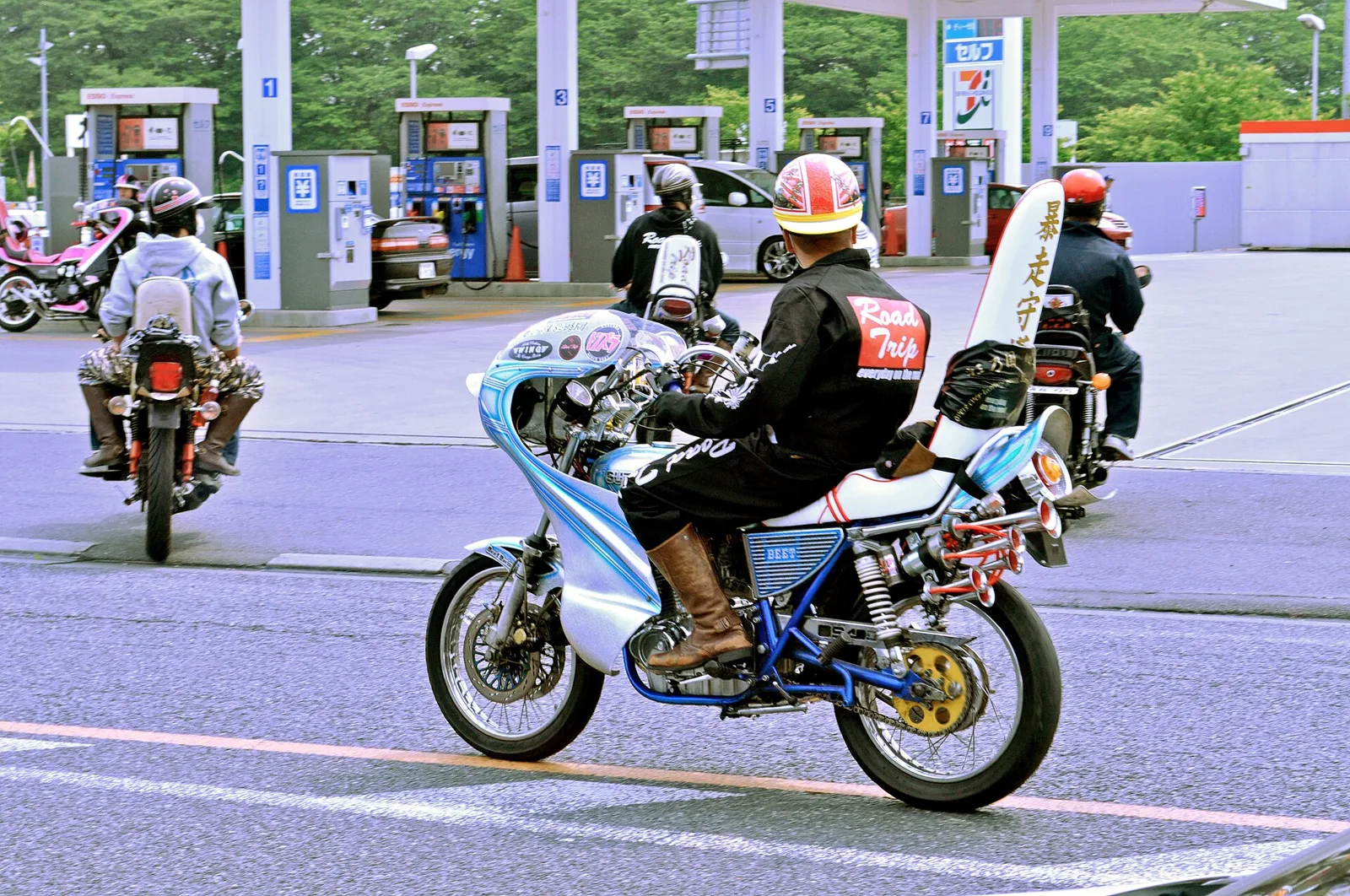
From biker gangs that peaked at 42,510 members to a manga set on Tokyo's Bayshore Route, the story of Japan's loud, modified and often illegal road culture.
Bosozoku is a Japanese youth subculture of customised motorcycles that began in the 1950s and peaked at an estimated 42,510 members in 1982. Wangan Midnight, a manga launched in 1990, is built around expressway racing in Tokyo, which has become rare after crackdowns.
In 1982 Japan's bosozoku biker gangs reached an estimated 42,510 members. By 2020 a rally that once pulled in thousands drew just 53, and police remarked that they had not had to round up so many people in a long while. Those two figures sum up the decline.
What is bosozoku?
Bosozoku means wild gang or group. It is a Japanese youth subculture associated with customised motorcycles, and the first gangs of this type appeared in the 1950s. Members wear a uniform called the tokko-fuku, meaning special attack clothing, and ride heavily modified machines, often noisily.
The uniform is a boilersuit like those worn by manual labourers, or a leather military-style jacket, worn with baggy trousers and tall boots, and it is often embroidered with kanji slogans. Typical accessories include the hachimaki headband, surgical masks and patches showing the Rising Sun Flag. Many members wore a pompadour haircut, a look borrowed from American greaser culture. Others took cues from choppers and Teddy boys. Tokko-fuku were often worn open at the front with bandage wrapping at the waist, and they counted as a status symbol that spoke of pride and strength. Most members are between 16 and 20.
Circuit time can cost 20,000 yen; the highway toll averages under 1,000.
Where did bosozoku come from?
The movement began in the 1950s with young pilots coming back from World War II. Some veterans struggled to settle into civilian life and turned to custom machines and gang-like street activity for an adrenaline fix. They drew on greasers in America and on films imported from the West, and younger people, especially marginalised ones looking for change, soon took over the identity.
The word itself was not coined by the riders. It only came into use in the 1970s, a period marked by actual riots between police and youth groups. During the 1980s and 1990s the gangs staged massed rides in which as many as 100 bikers cruised slowly along an expressway or major road, ran through toll booths without stopping and ignored officers who tried to stop them. New Year's Eve was a favourite date. Riders sometimes smashed cars and threatened or beat motorists and bystanders who objected. In 1982 membership peaked, which made bosozoku the dominant form of youth delinquency in Japan.
Why did the bosozoku fade?
| Year | Reported bosozoku numbers |
|---|---|
| 1982 | 42,510 (the peak) |
| 1990s | Around 28,000 |
| 2012 | Fewer than 7,297 |
| 2015 | 6,771 active members |
| 2020 | 53 at a rally that once drew thousands |
The turning point was legal. In 2004 Japan passed a revised road traffic law giving police more power to arrest bikers who ride recklessly in groups, and arrests and prosecutions drove participation down fast. By 2010 police were reporting a new trend: riding in much smaller groups, and on scooters rather than heavily modified motorcycles. Aichi prefecture led for rider numbers, with Tokyo, Osaka, Ibaraki and Fukuoka after it. In 2013 the National Police Agency re-classified the gangs as pseudo-yakuza organisations.
The government regards the groups as highly organised, affiliated under several national federations, with clear rules, uniforms and symbols, and in some cases membership fees and set punishments. They account for a large share of Japanese criminal activity, including vandalism and traffic violations. Around a quarter of members are over twenty, and by some estimates up to one-third of yakuza recruits have come from a handful of bosozoku groups, though those links are said to be loosening as the gangs shrink and organised crime recruits from other marginalised communities.
What do bosozoku cars and bikes look like?
Bosozoku modify their machines in peculiar and showy ways, and the results are called kaizosha, meaning modified vehicles. The general style mixes an American chopper with a British cafe racer: raised handlebars from the first, oversized fairings from the second, though bosozoku fit the fairings much higher than the original position and tilt them upwards at the front.
A typical build starts with an ordinary Japanese road bike of 250 to 400cc. The owner adds a shugo exhaust, a multi-tube header, squeezes the handlebars inwards in a move called shibori, from the verb meaning to squeeze, and fits a horn with three or four trumpets, known as sanren or yonren. Loud paint on the fenders or fuel tank is common, with flames or kamikaze-style rising sun designs, and stickers or flags show the gang's logo. Regional styles differ. Ibaraki riders are known for extremely colourful bikes carrying three or four oversized fairings stacked like a tower, plus a mass of lights.
The same label has crossed over to four wheels. In America, bosozoku is applied to cars that have been modified to extremes, almost always Japanese-built ones, and it is more or less interchangeable with Kaido Racer. Broadly, bosozoku covers the idea of Japanese vehicle modification, while Kaido Racer refers specifically to cars.
Not all of this activity is racing. Noise is part of the appeal, with mufflers removed or modified, and riders sometimes go without helmets, which is illegal in Japan. Police give such groups the code name Maru-So and sometimes send vehicles to trail them. Complaints include crawling through suburbs at 10 to 15 km/h (6.2 to 9.3 mph) while making a racket and waving flags. Speeding on city streets is usually done for thrills rather than to race, and the leader of the pack may not be overtaken.
What is Wangan Midnight?
Wangan Midnight is a Japanese racing manga by Michiharu Kusunoki, set on Tokyo's Bayshore Route, the Wangan, and other roads of the Shuto Expressway network. It first ran in Shogakukan's Big Comic Spirits in 1990 and moved to Kodansha's Weekly Young Magazine, where it was serialised from 1992 to 2008 and collected in 42 volumes. In 1999 it took the general-category prize at the 23rd Kodansha Manga Award.
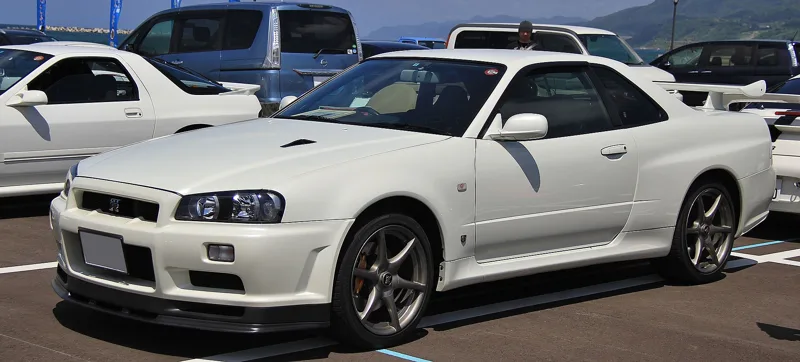
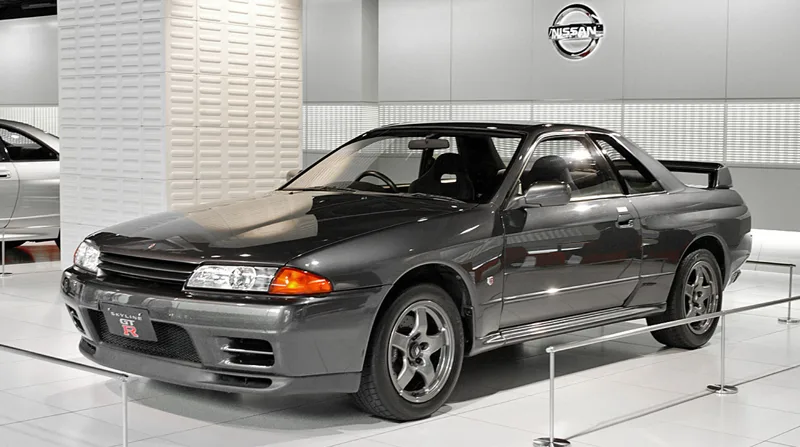
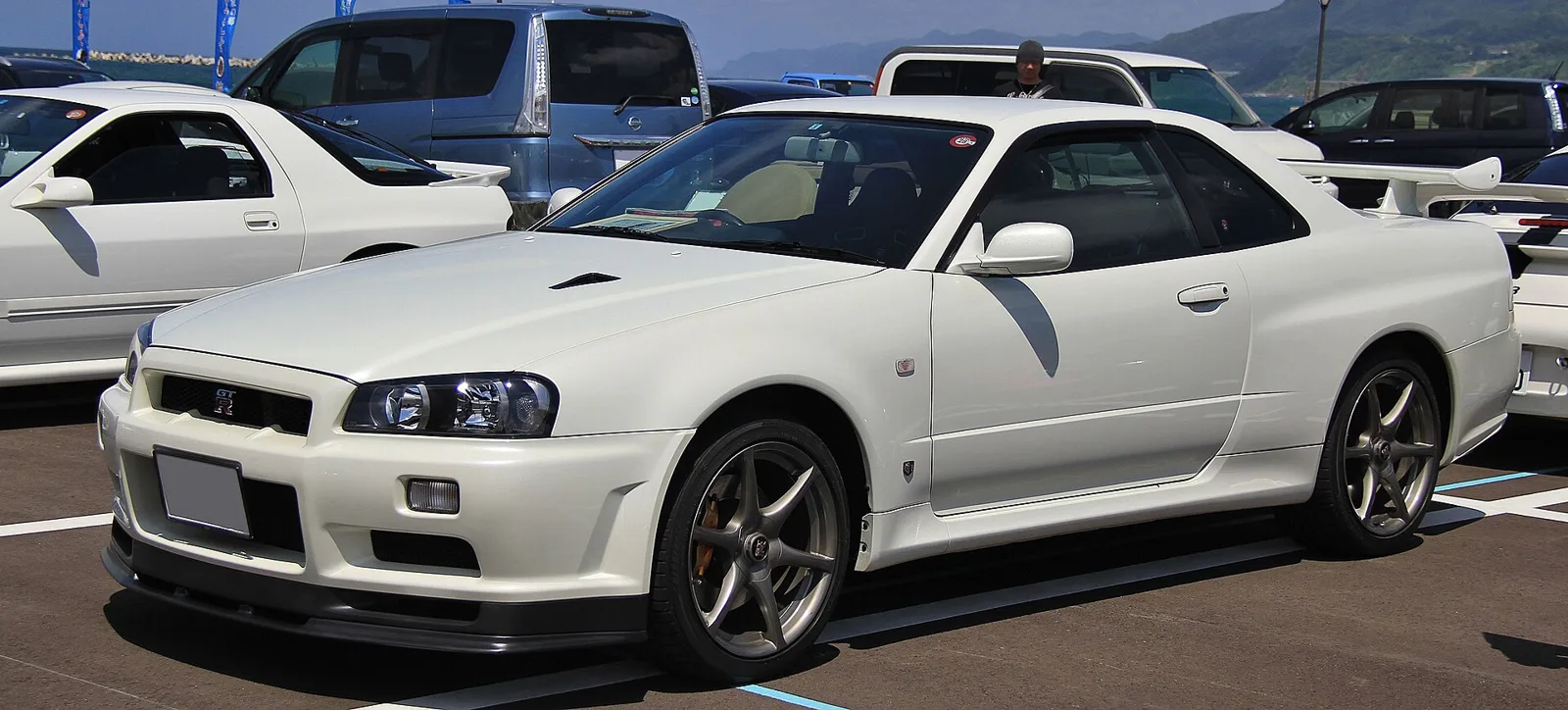
The story begins with a high-school student, Akio Asakura, who meets a black Porsche 911 Turbo, nicknamed Blackbird, out on the Wangan and cannot keep up with it. Its driver is Tatsuya Shima, a doctor. Determined to go faster, Akio finds an old blue Nissan Fairlady Z (S30) in a junkyard, heavily tuned around an L28 engine. The car is supposedly cursed, hard to drive and linked with several accidents, and is known as the Devil Z. Akio restores it and becomes a feared name on the expressway. In the story the Devil Z makes 620 hp (460 kW), and Shima has the Blackbird boosted to 700 hp (520 kW) by Jun Kitami, who built the Devil Z. Reina Akikawa, a model and television host, joins the scene in a Nissan Skyline GT-R (R32) after meeting Akio. The Blackbird nickname is a reference to the RUF CTR Yellowbird.
Sequels followed: Wangan Midnight: C1 Runner from 2008 to 2012, Ginkai no Speed Star from 2014 to 2015 and Shutoko SPL, which began in 2016. Beyond print there have been direct-to-video films in 1991, 1993, 1994, 1998 and 2001, a theatrical film in 2009, an anime of 26 episodes on Animax and a long line of games. The arcade series Wangan Midnight Maximum Tune began on 6 July 2004 and has run through sequel after sequel, up to the 6RR+ edition released in Japan in April 2024.
How do Japanese street racing and hashiriya fit in?
Japanese street racers are known as hashiriya. Many run their cars on expressways, where the pastime is called kosoku battle, or Roulette-zoku when drivers lap round and round, and it often takes place on the Shuto Expressway in Tokyo. The best-known group was Mid Night, which became famous for speeds at times above 300 km/h (190 mph).
Expressway racing has since become a rare sight compared with its peak in the 1980s and 1990s, after heavier punishments, a bigger police presence, crackdowns on meeting areas and speed cameras. One contributor to street racing in Japan is a shortage of places to race legally: circuits are overcrowded and limited in number, and private use can cost as much as 20,000 yen, whereas highway tolls average under 1,000 yen.
Terminology varies by country. Boy-racer and hoonigan are used in New Zealand and Australia, tramero in Spain and mat rempit in Malaysia.
What is touge racing?
Touge is the Japanese word for a mountain pass. It refers to racing on mountain roads, a single car at a time, or one car chasing another, and the definition of a pass changes with the place and the organisation. Drifting and touge racing, mainly from Japan, now have a bigger following elsewhere in the world than at home.
Street racing around the world takes other forms. Car meets are social gatherings of enthusiasts, and some of them take place at closed circuits. Sprints, known too as cannonball runs, are unlawful rallies from one point to another between two or more racers. They echo the European road races of the end of the 19th century, which fell out of favour after the 1903 Paris-Madrid race was stopped at Bordeaux following numerous deaths of drivers and pedestrians. In the United States, Erwin George Baker drove record-setting cross-country runs in the mid-1910s and earned the nickname Cannonball from a reporter. Brock Yates later founded the illegal Cannonball Run of the 1970s, which inspired films, and in 1984 created One Lap of America, a family-friendly and partly legal version run on race circuits.
People take part for many reasons. Racing on the street avoids entry fees and rules, offers a community and a chance to show off a car, and appeals to those who find no sanctioned venue nearby. Public roads can also offer longer and more varied routes than a circuit, with changes in elevation and camber. Some races are wagered on, usually with cash.
What are the dangers and penalties of street racing?
Street racing is illegal racing on public roads, outside the safety controls of sanctioned motorsport. Dangers include serious injury, legal consequences and death. In Los Angeles at least 179 people died in street racing accidents between 2000 and 2018. The cars rarely carry roll cages or racing fuel cells, drivers seldom wear fire suits or have high-performance training, and ordinary road users share the same tarmac.
Penalties vary widely. Brazil has banned street racing since 1997, with licence and car confiscation, a fine and six months to two years in jail. A Canadian driver who causes a fatality can face life imprisonment, with full parole possible after seven years. In China, 13 Hong Kong residents caught in 2015 driving at up to 275 km/h (171 mph) were fined and jailed for between one and four months. San Diego was the first American city to prosecute spectators, and in Malaysia even watching a race is illegal.
Research puts the typical participant at an age between 16 and 25. A survey of 2,395 street racers found that 33% had no driving licence and 14% had been in a crash, most often at night or in the early morning.
What this means for drivers who like fast and modified cars
The legal routes are plain. Car meets are gatherings to share a hobby, some are held at closed circuits, and many organisers advise against racing at all because it attracts police attention. In the United States, the Racers Against Street Racing campaign, launched in 2000, pushes enthusiasts towards safe, legal raceways, and some police departments run outreach to steer racers into sanctioned events. In Japan itself, the cost gap between circuits and tolls shows why legal alternatives matter.
Where this goes next
Wangan Midnight is still being extended. Shutoko SPL, begun in 2016, had twelve volumes out by 19 September 2024, and a Maximum Tune title called Ignition is listed with no release date. Bosozoku, by contrast, has settled into small groups; the latest figures show 53 members at the 2020 rally and 6,771 across the country in 2015.