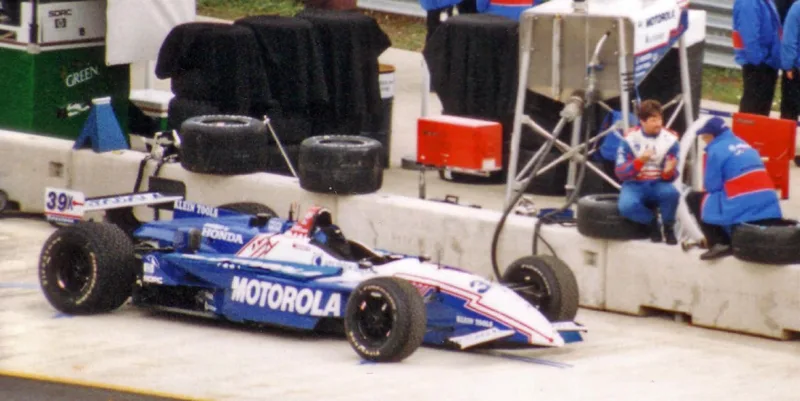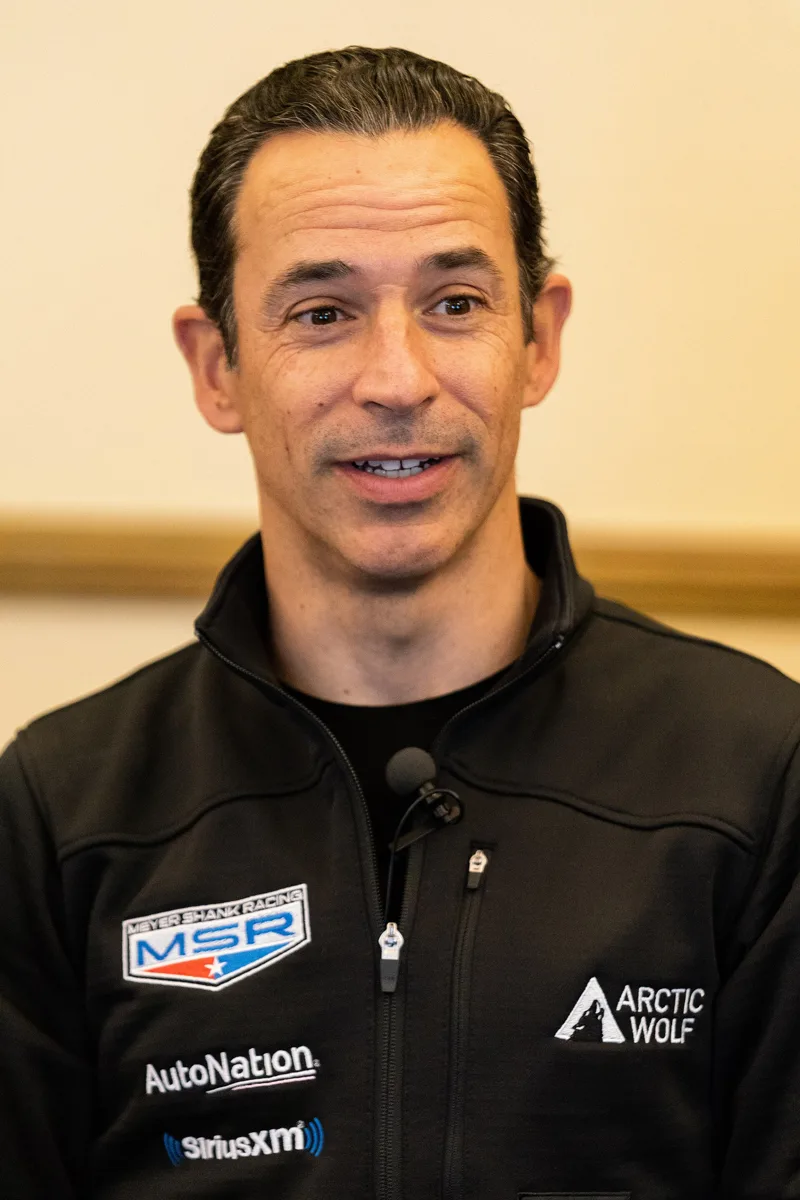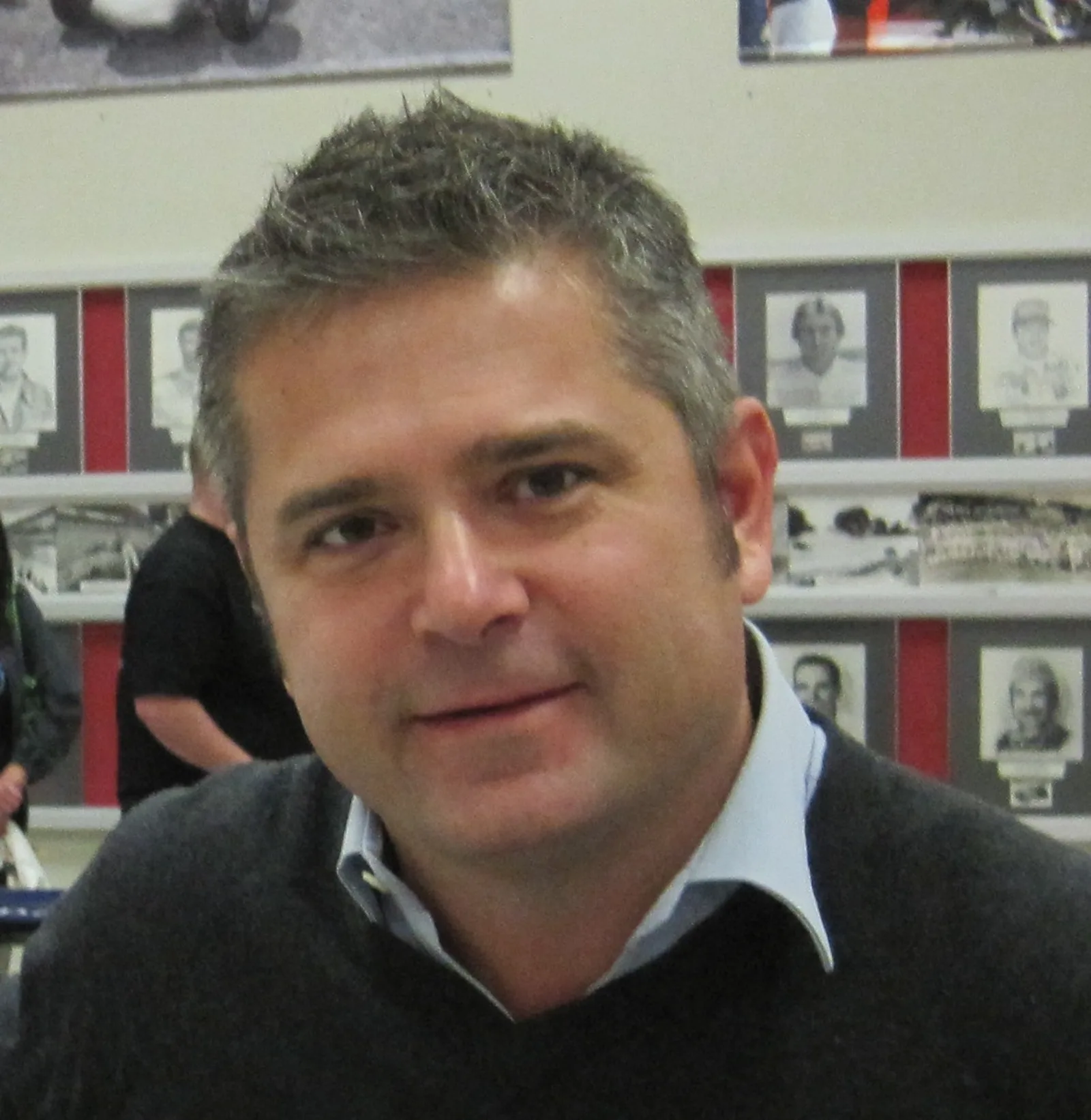
Gil de Ferran, Cristiano da Matta, Christian Fittipaldi and Raul Boesel took very different routes through CART, Indianapolis, Daytona and Formula One.
Four Brazilians made the United States their racing base. De Ferran won CART titles in 2000 and 2001 and the 2003 Indianapolis 500, da Matta won the 2002 CART crown, Fittipaldi won three Daytona 24 Hours, and Boesel won the 1988 edition after a World Sportscar title.
On 28 October 2000, qualifying at California Speedway in Fontana, Gil de Ferran set a lap at 388.541 km/h (241.428 mph), and as of May 2026 nobody has gone faster at an official race meeting. Two days later, at the same track, the Brazilian clinched the CART championship. His story and those of three compatriots, Cristiano da Matta, Christian Fittipaldi and Raul Boesel, show the many ways a Brazilian driver could build a career in American racing.
De Ferran took two CART titles and the Indianapolis 500. Da Matta won the CART championship in 2002 and then tried Formula One. Fittipaldi became a sports prototype winner at Daytona long after his open-wheel days, and Boesel won a world sports car title and a Daytona 24 Hours without ever winning a CART race.
Who was Gil de Ferran?
Born in Paris on 11 November 1967 and died on 29 December 2023, de Ferran was a Brazilian driver and team owner. He won the Champ Car title in 2000 and 2001 with Team Penske and took the 2003 Indianapolis 500. His own team, de Ferran Motorsports, ended 2009 as runner-up in the LMP1 category of the American Le Mans Series.
Two days later, at the same track, the Brazilian clinched the CART championship.
How did de Ferran end up in American racing?
By default, at first. Inspired by Emerson Fittipaldi, he began in karts in the 1980s, won the Brazilian Formula Ford championship in 1987 and moved into Formula Three in 1991. Driving for Edenbridge Racing he finished that British season third, behind Rubens Barrichello and David Coulthard, then won the 1992 title with Paul Stewart Racing, scoring seven victories on the way.
International Formula 3000 followed in 1993 and 1994, with fifth place and then a championship fight that ended in third. Formula One did not follow. In 1993 he tested for Footwork Arrows alongside Jos Verstappen, and his day went badly when he split his head open on a locker door while walking between two trucks. A year later Hall/VDS Racing invited him to test a CART car. Their sponsor, Pennzoil, worried that he was not a big enough name, but the team liked what it saw and offered him a 1995 drive. With no top-line Formula One seat open, he went to the United States.
His first win came at the final race of 1995, at Laguna Seca, after he had dominated the Cleveland round only to be taken out while lapping Scott Pruett. He finished fourteenth in the standings and was named Rookie of the Year. A single win followed at Cleveland in 1996, the last for team owner Jim Hall, who retired and closed the team. De Ferran then joined Walker Racing, finished runner-up to Alex Zanardi in 1997 with twelve top-ten finishes but no win, and lost the closest finish in CART history at Portland to PacWest's Mark Blundell. A poor 1998, with unreliability, driver errors and Goodyear tyres that lagged Firestone's, left him twelfth.
The breakthrough arrived in 1999 when he beat Juan Pablo Montoya at Portland, Walker's first win since early 1995. Both Goodyear and Valvoline then left CART, but Marlboro Team Penske signed de Ferran, together with Greg Moore, to replace Al Unser Jr. Moore was killed in the season finale at California Speedway, and Helio Castroneves was named as his replacement soon afterwards.
What did de Ferran win with Team Penske?
Two CART titles and an Indianapolis 500. After the record lap in 2000, rain forced the Fontana finale to run over into 30 October, and de Ferran won the series championship there. His analytical approach earned comparisons with Mark Donohue, the first driver Penske ever hired.
In 2003 he broke his back in a crash at Phoenix, yet with 31 laps to go he overtook teammate Castroneves and took the Indianapolis 500, the second Penske one-two finish in that race. He decided to retire at the end of that year, took his last race, at Texas Motor Speedway, though a crash that seriously injured Kenny Brack soured the day, and ended second in the standings behind Scott Dixon. Autosport magazine, in July 2013, placed him among the 50 greatest drivers never to have raced in Formula One.
What did Gil de Ferran do after he stopped racing?
He moved into management and ownership. In 2005 he became sporting director of the BAR-Honda Formula One team and resigned in July 2007 after becoming increasingly uncomfortable there. On 29 January 2008 he announced that he would drive again, fielding an Acura ARX-01b prototype with factory backing, in the American Le Mans Series, as de Ferran Motorsports, with Simon Pagenaud sharing the driving. In its first season the team took four front-row grid slots, led six races and made three podiums in eight starts. In 2009 Honda picked it to develop the Acura ARX-02a for the LMP1 class, and it scored five outright wins and seven poles on the way to runner-up.
In August 2009 he announced his retirement, aiming to expand the team and return to IndyCar as an owner. He merged with Luczo Dragon Racing, started by Jay Penske and Steve Luczo, to form de Ferran Dragon Racing, with Raphael Matos driving. It closed in 2011 for lack of sponsorship. He also sat on the committee that shaped IndyCar's new car. Later he served as McLaren's sporting director from July 2018, when Eric Boullier resigned, until early 2021, and returned in an advisory role in May 2023. He died on 29 December 2023, aged 56, in Opa-locka, Florida, of a heart attack suffered at the wheel. He was at a private event at The Concours Club with his son.
Who is Cristiano da Matta?
A Brazilian born in Belo Horizonte on 19 September 1973, the son of a fourteen-time Brazilian touring car champion. He won the 2002 CART championship with Newman/Haas Racing under Toyota power, then drove for Toyota in Formula One in 2003 and 2004.
He started karting at sixteen with a helmet design almost identical to his father's, and won the 1993 Brazilian Formula Ford title and the 1994 Brazilian Formula 3 championship against Helio Castroneves and Ricardo Zonta. A year in British Formula 3 brought one win and eighth place, and a season of Formula 3000 another eighth, his best result a fourth at Pau. In 1997 he crossed to the United States for Indy Lights, taking Rookie of the Year honours, and the 1998 title with seven wins and four poles. From 1999 he raced Toyota-powered CART cars, first for Team Arciero Wells, won for the first time in 2000, and joined front-runners Newman/Haas in 2001 despite some sponsor opposition. His 2002 championship came with seven wins and seven poles.
How did da Matta fare in Formula One?
Brilliantly at first, then badly. In 2003 he scored ten points for Toyota, four more than veteran teammate Olivier Panis. At the Brazilian Grand Prix he spent much of the first half hounding the reigning champion, Michael Schumacher, in a monsoon-hit race before finishing tenth. At the British Grand Prix a protester on the track brought out the Safety Car, the front-runners made unscheduled stops and da Matta led for seventeen laps, eventually finishing seventh.
The 2004 season went the other way. He scored only three points and lost his seat to Zonta after the German Grand Prix at Hockenheim, a decision put down both to performance and to his open comments that the Toyota was uncompetitive. In 2005 he returned to the Champ Car World Series with PKV Racing, won at Portland and finished eleventh overall. For 2006 he moved to Dale Coyne Racing and, from 9 June, to RuSPORT in A. J. Allmendinger's seat, and second at San Jose lifted him to sixth in the series.
What happened to da Matta at Road America?
On 3 August 2006, during Champ Car open testing, a deer ran across his path as he approached turn 6. He hit it with his right front tyre, the animal flew back into the cockpit, and he is thought to have been knocked out, because rescuers found him unconscious with his foot on the throttle. He was flown to a hospital in Neenah, Wisconsin, where surgery removed a subdural hematoma, and he was kept in an induced coma while the swelling subsided.
Progress was slow but steady. By 30 August he could talk in both English and Portuguese and manage short walks, and on 21 September 2006 he left the hospital, having recovered better than expected. When Champ Car returned to Road America on 24 September, he gave the traditional command to start engines. On 20 March 2008 he climbed back into a race car, finishing a two-day test of a Riley Daytona Prototype, and later that year he shared a car with Jimmy Vasser at Laguna Seca, finishing thirty-second.
He then drove the 2010 Brazilian Formula Truck season for Iveco and, in 2011, raced in the American Le Mans Series with Rocketsports, scoring six points at Long Beach. He appears in the film Driven and in two Formula One video games, and a 2017 documentary, Familia Gasolina, tells the story of his family in racing. He no longer races and works on the logistical and financial side of the family clothing business, Da Matta Design.
Who is Christian Fittipaldi?
Born on 18 January 1971 in Sao Paulo, he is a member of the Fittipaldi racing family: son of Wilson Fittipaldi, nephew of two-time world champion Emerson Fittipaldi and cousin of Emerson Fittipaldi Jr. Between 1992 and 1994 he started 43 Formula One Grands Prix, for Minardi and then Footwork, and he has since won at the top level of American sports car racing.
His first name honours Christian Heins, a Brazilian driver killed at the 1963 24 Hours of Le Mans. He was second in Brazilian Formula Ford in 1988, won the 1990 Formula 3 Sudamericana title, and in 1991 took the Formula 3000 championship against Alessandro Zanardi winning twice and reaching the podium seven times in ten races. He was also third in the Macau Grand Prix for Formula 3. A single point for Minardi in 1992 and five in 1993 preceded his dismissal with two races left, and in 1994 two fourth places for Footwork made six points. A 2016 academic paper using mathematical modelling to weigh driver against machine ranked him the eleventh best Formula One driver of all time.
How did Fittipaldi do in CART and NASCAR?
Steadily. He left Formula One for the United States after 1994 and became known in CART for consistency rather than raw pace. His second place in the 1995 Indianapolis 500 earned him Rookie of the Year honours in the race, and he was fifth in the CART series in 1996 and again in 2002. He broke his leg at Surfers Paradise in 1997, the first of two such injuries in CART, and still won two races, the first at Road America in 1999. He never won a CART title.
With his Champ Car career on hold he turned to NASCAR. He made three Busch Series appearances in 2001 and 2002 and, after catching Richard Petty's eye, signed with Petty Enterprises and debuted in the Winston Cup at Phoenix. His only Daytona 500 start came in 2003 with Andy Petree, and in the summer he took over the number 43 car from John Andretti. He struggled and moved to the number 44 car after the start of autumn.
Where has Fittipaldi won in sports cars?
Daytona, mainly. While still in Formula One he won the 1993 24 Hours of Spa and the 1994 Brazilian 1000 Miles. He debuted at the Daytona 24 Hours in 2003 and won it the following year in a Doran-Pontiac, then returned to the winner's circle with Action Express Racing in 2014 in a Corvette DP alongside Joao Barbosa and Sebastien Bourdais, and again in 2018.
His other major results include the 12 Hours of Sebring in 2015 and the 6 Hours of Watkins Glen in 2013, 2016 and 2017, and two IMSA SportsCar Championships with Action Express in 2014 and 2015. At Le Mans he was sixth in the GT1 class in 2006 in a Saleen S7, tenth in that class in 2007 in an Aston Martin DB9 run by Modena, and thirtieth overall in 2008.
Who is Raul Boesel?
A Brazilian born in Curitiba on 4 December 1957. He drove Formula One for March and Ligier, then moved to Champ Car and the Indy Racing League. His honours include the 1987 World Sportscar Championship and the 1988 Daytona 24 Hours.
Boesel had a brief career in show jumping, winning state championships, before studying engineering and abandoning his degree for racing. He entered the first Brazilian Stock Car season in 1979, moved to Britain in 1980 for Formula Ford 1600, and finished third in the 1981 Formula 3 championship. He tried a McLaren in November 1981 but ended up at March, and moved on to Ligier in 1983; late that year he crossed to America for CART.
How did Boesel make his name in America?
Through Jaguar. In 1987 he switched to the World Sportscar Championship with the team and took the title, winning five races. The next year he won the Daytona 24 Hours in a Jaguar XJR-9, sharing with Martin Brundle and John Nielsen, and he also returned to CART. He finished third at Indianapolis in 1989, second at Le Mans for Jaguar in 1991, and fifth in the 1993 CART series, though he never won a CART race.
He kept racing in CART and later moved to the Indy Racing League, which gave him multiple Indianapolis 500 starts. His last CART race was the 1999 Marlboro 500 at Fontana. The circuit in his home city, the Autodromo Internacional de Curitiba, is nicknamed Circuito Raul Boesel in honour of his success in Europe. He stopped racing professionally in 2005, back in Stock Car Brasil, though he still entered the odd race afterwards, and in 2007 he began a career as a disc jockey. He has lived in Key Biscayne, Florida, since 1988.
The four Brazilians side by side
| Gil de Ferran | Cristiano da Matta | Christian Fittipaldi | Raul Boesel | |
|---|---|---|---|---|
| Born | 11 November 1967 | 19 September 1973 | 18 January 1971 | 4 December 1957 |
| Biggest American prizes | CART titles 2000 and 2001, Indianapolis 500 in 2003 | CART title 2002, Indy Lights title 1998 | Daytona 24 Hours 2004, 2014 and 2018, IMSA titles 2014 and 2015 | Daytona 24 Hours 1988, third at Indianapolis 1989 |
| Formula One | Tested for Footwork Arrows only | Toyota, 2003 and 2004 | 43 Grands Prix, 1992 to 1994 | March and Ligier |
| Open-wheel record in America | First win at Laguna Seca in 1995 | First CART win in 2000 | Two CART wins, second at Indianapolis in 1995 | Fifth in CART in 1993, no wins |
| After racing | Team owner, BAR-Honda and McLaren sporting director | Family clothing business | Sports car racing into the 2010s | Disc jockey from 2007 |