A 1999 Honda Insight has a smaller drag area than a cyclist, and the physics behind that explains motorway economy, top speed and the odd habits of sports cars.
A drag coefficient (Cd) is a unit-less number showing how much a shape resists air; lower is better. The average modern car scores 0.25 to 0.3 and SUVs 0.35 to 0.45. Because drag rises with the square of speed, it matters most at motorway pace, and drag area (CdA) sets the power needed to cruise.
A 1999 Honda Insight pushes less air out of the way than a cyclist on a bicycle. That is not a joke about the Insight's size. It is a measurement of drag area, the figure that combines how slippery a shape is with how big it is, and the Insight's number is smaller than the one for a rider and bike. Hold that thought, because it explains why aerodynamics decides more about a car's fuel use and top speed than most buyers realise.
What is the drag coefficient of a car?
Drag is the force that pushes back along the direction of the airflow as a car moves through the air. The drag coefficient, written Cd, is a pure number with no units that tells you how strongly an object resists being pushed through a fluid like air or water. A lower value means less resistance. It is tied to a particular reference area, and for a car that area is the projected frontal area, the silhouette you would see looking at the car head-on.
Engineers define it by taking the measured drag force, doubling it, and dividing by the air density, the square of the speed and the reference area. The practical meaning is simpler. Two objects of the same size travelling at the same speed through the same air feel drag forces in proportion to their coefficients. A shape that stops all the oncoming air dead, such as a flat plate square-on to the wind, scores 1 or more. A square flat plate is often given as 1.17. A smooth sphere in turbulent flow scores 0.47. Streamlined shapes score much less.
Two things add up to the coefficient: skin friction, the drag of air rubbing over the surface, and form drag, the drag from the shape of the body. A good shape keeps the layer of air next to the surface attached for as long as possible, which leaves a narrow wake behind. A blunt shape lets the air break away early and leaves a broad wake, which is a sign of high form drag.
The coefficient is not a fixed property of a shape. It shifts with airflow speed, flow direction, object size, and the density and viscosity of the fluid. A smooth sphere shows the catch: its coefficient falls to 0.47 once the flow turns turbulent, yet the drag force it feels still rises as speed climbs. For a car at highway speed, the incoming flow direction is more or less constant and the variation is small enough that engineers often treat Cd as a constant.
Aerodynamic drag grows with the square of speed, which is why a slippery shape matters most where you drive fastest.
Why does drag matter more at motorway speed?
Because it grows with the square of speed. The drag equation says the force depends on air density and on speed squared, along with the coefficient and area. That is why aerodynamic drag becomes critically important at higher speeds. Cutting it raises top speed and improves fuel efficiency, and it helps handling and acceleration too.
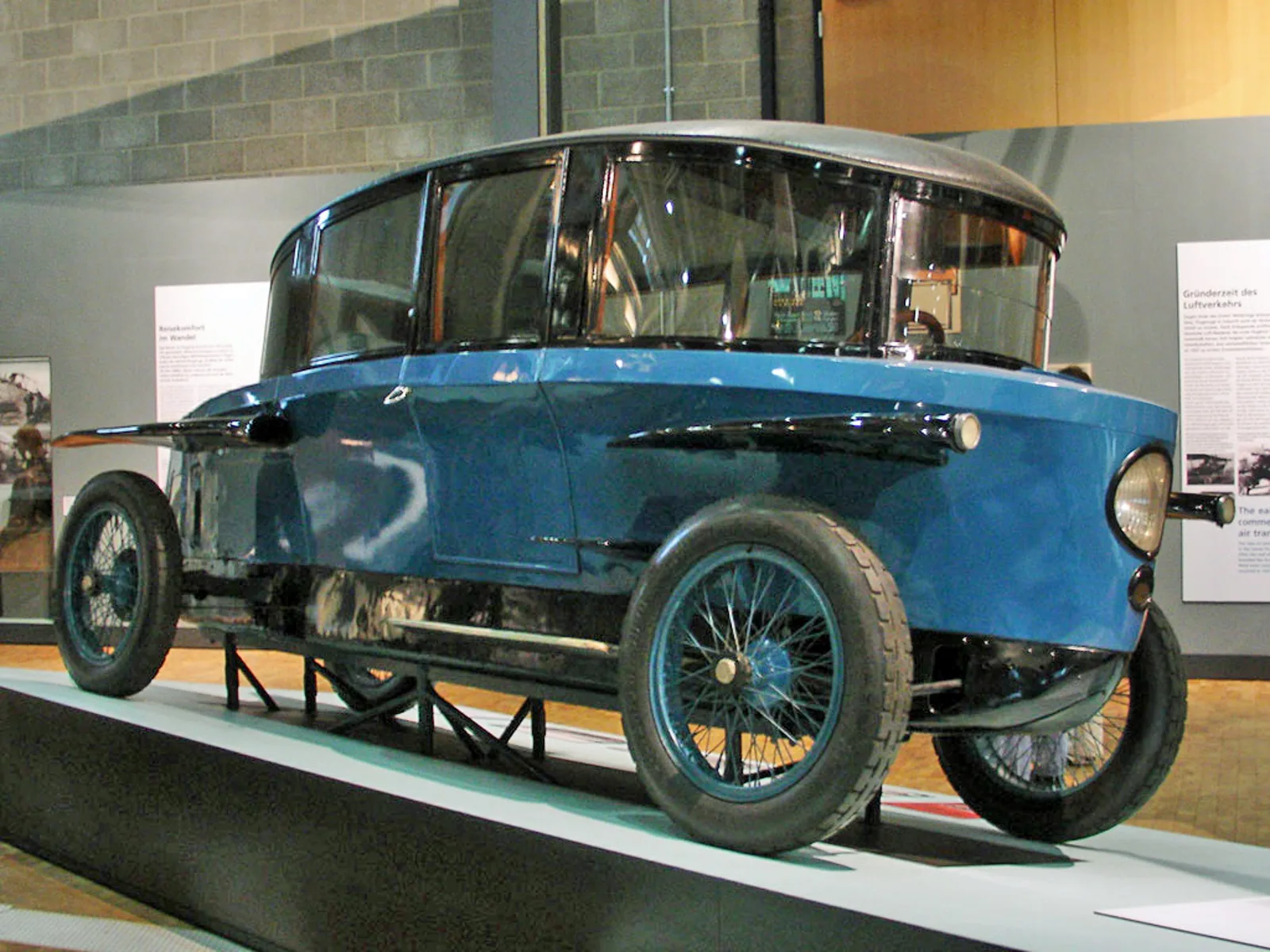
Engineers noticed early. As far back as the 1920s they began to consider body shape as a way of reducing drag at speed, and by the 1950s German and British engineers were analysing the effects systematically for higher-performance cars. By the late 1960s there was awareness of another side effect: sound levels from cars climbed sharply at high speed.
What is drag area, and what is CdA?
The coefficient alone does not tell the full story, because a big car with a good Cd can still push a lot of air. Designers therefore multiply the coefficient by the area to get drag area, written CdA. Car and Driver magazine adopted the metric in 2003 because it made comparing the aerodynamic efficiency of different cars more intuitive.
Drag area is the fundamental value that sets the power a car needs to cruise at a given speed, so it matters enormously for fuel consumption at a steady pace. The force needed to beat drag equals half the air density, times the drag area, times the speed squared. The same relationship lets you estimate the effect of tuning: a new top speed is the original multiplied by the cube root of the power ratio, and the power needed for a target speed is the original power multiplied by the speed ratio cubed. In plain terms, every extra bit of speed at the top end demands far more power than the last.
| Vehicle | Drag area |
|---|---|
| 1999 Honda Insight | 0.47 m2 (5.1 sq ft) |
| Bicycle and rider | 0.60 to 0.70 m2 (6.5 to 7.5 sq ft) |
| Average full-size passenger car | About 0.74 m2 (8 sq ft) |
| 2003 Hummer H2 | 2.46 m2 (26.5 sq ft) |
Which cars have the lowest drag figures?
Among the reported drag areas, the 1999 Honda Insight sits at the bottom of the range and the 2003 Hummer H2 at the top, more than five times as large. The Insight's first generation also used fender skirts over its rear wheels, a drag-cutting trick.
On the coefficient itself, the average modern car achieves 0.25 to 0.3. Sport utility vehicles, with their typically boxy shapes, usually manage 0.35 to 0.45. Sports cars confuse the picture. Many have a surprisingly high drag coefficient, because downforce implies drag, while others are designed for speed and efficiency and have much lower figures. A car that clings to the road at speed is often paying for it in the wind.
A published coefficient also needs a pinch of salt. The same car measured in different wind tunnels can give different results, with variations of up to 5% documented, and differences in test technique and analysis add to the spread. A car quoted at 0.30 might read anywhere from 0.285 to 0.315 in another tunnel.
How do designers cut drag?
The simplest way is to remove things. Deleting parts is a cheap and easy way for designers and owners to reduce parasitic and frontal drag, and most production sports cars and high-efficiency cars already come with many deletions. Other makers keep the drag-raising items for their looks or to suit their customers.
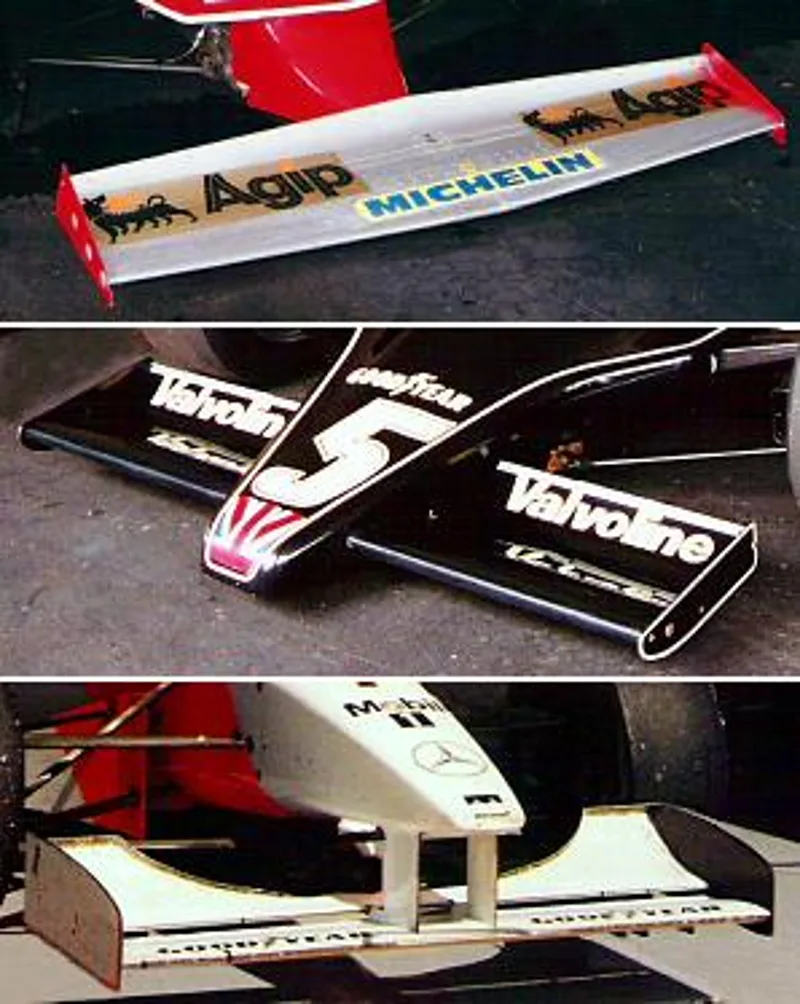
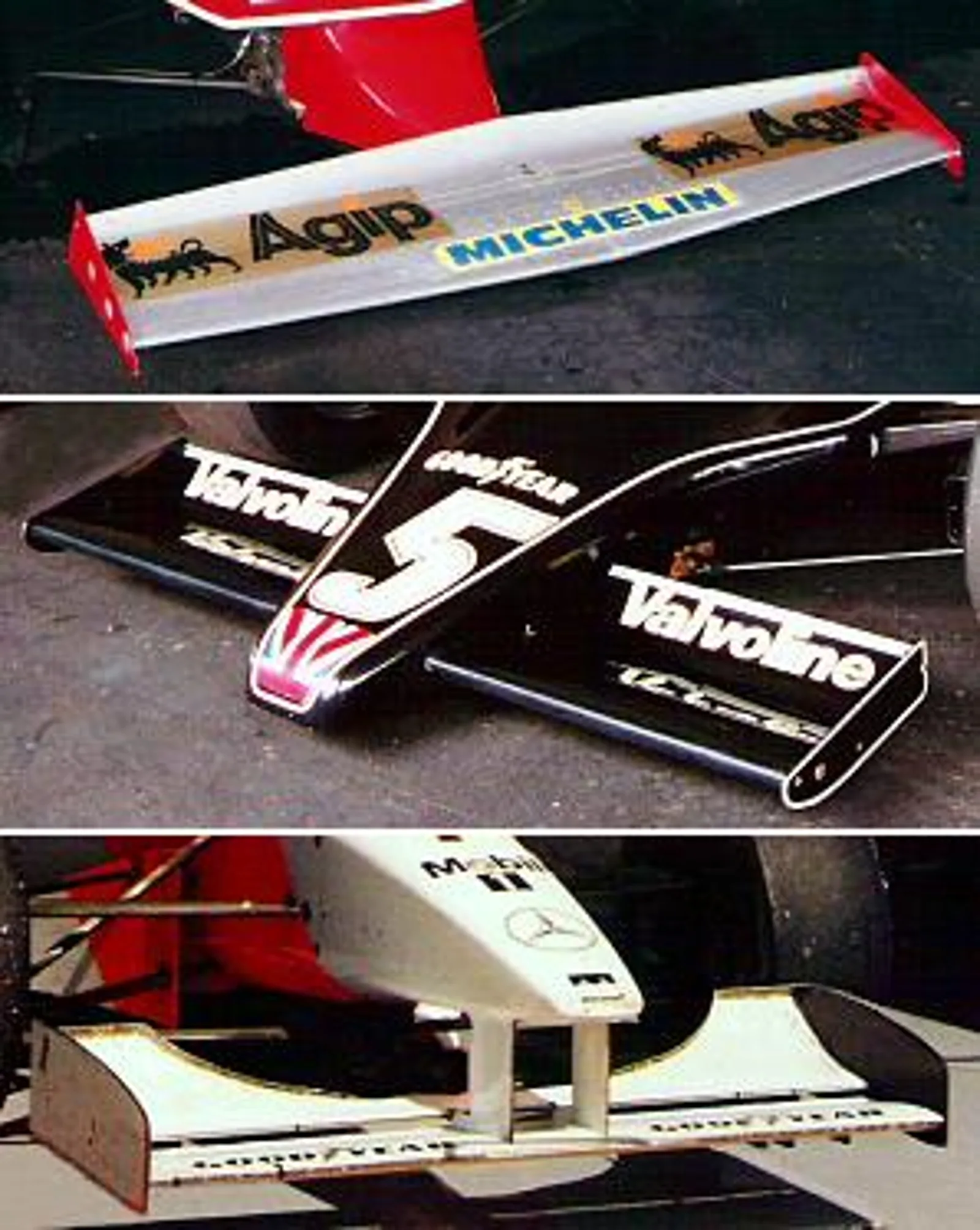
Spoilers sit on most sports cars to counteract lift and add stability at higher speeds. A spoiler that stands off the rear deck lid raises downforce and reduces lift, but costs drag. A flat spoiler, perhaps angled slightly downward, may reduce turbulence and so reduce the coefficient. Some cars now have adjustable rear spoilers, so the drag effect is smaller at lower speeds when the lift benefits are not needed.
Mirrors stick out from the side of the car, adding frontal area and raising the coefficient. Two mirrors are estimated to cause 2 to 7% of total aerodynamic drag, and taking them off could add 1.5 to 2 miles per US gallon. Smaller or reshaped mirrors help. Cameras help more: the Honda e was one of the first production passenger cars to swap mirrors for cameras, and Honda claims they cut drag by around 90% compared with conventional door mirrors, which contributed to an approximate 3.8% reduction for the entire vehicle. Most countries still require side mirrors, which is why the idea has stayed on concept cars of the 2010s and not spread through production.
Antennas have little effect because of their size, but replacing a protruding aerial with a shark fin removes the drag. Wheels disturb the air as it passes the wheel wells, so smooth wheel covers, hub caps without holes, cut drag. The drawback is that they block cooling airflow and the brakes heat up faster, which is why such covers are more common on efficiency cars than on sports or racing cars. Air curtains steer air from slots in the body towards the outer edges of the wheel wells. Fender skirts cover the wheel wells entirely, and they usually go on the rear wheels, which do not pivot when steering, as on the first-generation Honda Insight. Front skirts work equally well but have to stand further out from the body to leave room for the turning tyres.
At the front, a grille directs air through the radiator, and that makes the car redirect air through itself rather than around itself, which adds drag. A grille block covers part or all of the opening. In cars already designed for efficiency, a very small grille makes a block unnecessary. In other production cars the grille can send too much air into the engine compartment, slowing warm-up, so a block can help engine performance and cut drag at the same time.
Underneath, a car traps air in many places and creates turbulence. Most racing cars solve that with an under tray covering the whole underside. At the back, a boattail gives the body a teardrop profile and reduces flow separation, which can greatly reduce total drag. A kammback is a truncated boattail, bringing the rear in at a slight angle towards the bumper. It reduces drag too, though not as much as a full boattail, and for practical and style reasons it is more common in racing, in efficiency cars and in trucking.
Aerodynamics and fuel economy: what the numbers mean on the road
Streamlining a body means making assumptions about the airspeed it will meet and how the car will typically be used, so a shape tuned for one purpose is not automatically best for another.
Because CdA sets the power needed to hold a steady speed, it is the number that matters most for steady-speed fuel consumption. At the pace of a motorway it dominates, and that is where a slippery shape pays you back. Cars that try to cut drag also have to watch the other side of the equation. Altering a car's aerodynamics can create too much lift, a force acting perpendicular to the airflow, and too much lift reduces traction, which can be very unsafe.
Designers use both computer modelling and wind tunnel testing to find the balance. For the most accurate wind tunnel results, a tunnel is sometimes fitted with a rolling road, a moving floor that travels at the same speed as the airflow so a boundary layer does not build up on the floor and distort the reading.
Road cars also differ from aircraft in several ways. A car is far less streamlined, operates near the ground instead of in open air, and has to meet constraints on purpose, safety and regulation. Safety standards, for example, require more dead structural space to act as crumple zones.