From veterans racing on disused airfields to nitromethane engines that burn more fuel than they can breathe air for, with the safety rules written after each hard lesson.
Drag racing began in the 1940s on airfields and streets, and the NHRA, founded in 1951, turned it into a regulated sport. Top Fuel dragsters burn up to 90 per cent nitromethane in a supercharged 500 cubic inch engine, reaching over 340 mph in 3.641 seconds over 1,000 feet.
A Top Fuel dragster goes from a standstill to 100 mph (160.9 km/h) in as few as 0.8 seconds, which is less than a third of the time a production Porsche 911 Turbo needs to reach 60 mph. Drag racing grew from airfield strips into the NHRA, a Top Fuel car accelerates this violently because of its fuel and engine, and the sport tries to keep its drivers alive with rules written after each hard lesson.
How did drag racing begin?
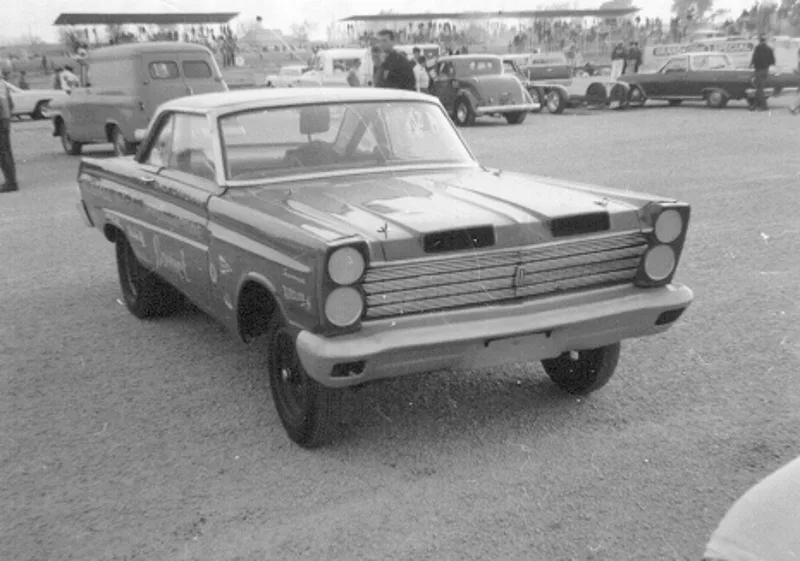
Drag racing started in the 1940s, with World War II veterans prominent in the early scene. Some of the first races took place at decommissioned aircraft bases, whose landing strips made ideal straight courses. Using cars and motorcycles to race over a short distance is almost as old as motorised transport, and it has existed both as illegal street racing and as a regulated sport.
The format is simple. Usually two vehicles start from rest and race over a measured distance, and the first across the line wins. Electronic timing and speed sensing have recorded results since the 1960s. Everything else in the sport, from the rule books to the engines, grew out of that single idea of two cars and a straight strip.
An engine is an air pump, and nitromethane brings its own oxygen.
How did the NHRA shape the sport?
The National Hot Rod Association was formed in 1951 by Wally Parks, a dry lakes racer who edited Hot Rod magazine. It aimed to promote safety, sportsmanship and fellowship among hot rodders, and it signed up about 25,000 members in its first year. Within six years the total passed 57,000.
Image was the first problem. The magazine and the NHRA set out to persuade the public, and above all the police, that a hot-rodder was a different animal from a reckless street racer, sometimes nicknamed a "shot rodder". They drew in adults such as auto shop teachers and garage owners, and made short films. In The Cool Hot Rod (1953), a delinquent teenager is told that a reckless kid in an old junker is no hot-rodder.
In 1954 the NHRA ran a nationwide tour called the Drag Safari, sponsored by Mobil Oil. The crew visited law enforcement and city officials at each stop, set up sites, involved local car clubs and ran races. That tour led to the first Nationals in 1955 at Great Bend, Kansas. The association banned nitromethane in 1957, calling it unsafe, and lifted the ban in 1963. Parks founded National Dragster, the official publication, in 1960.
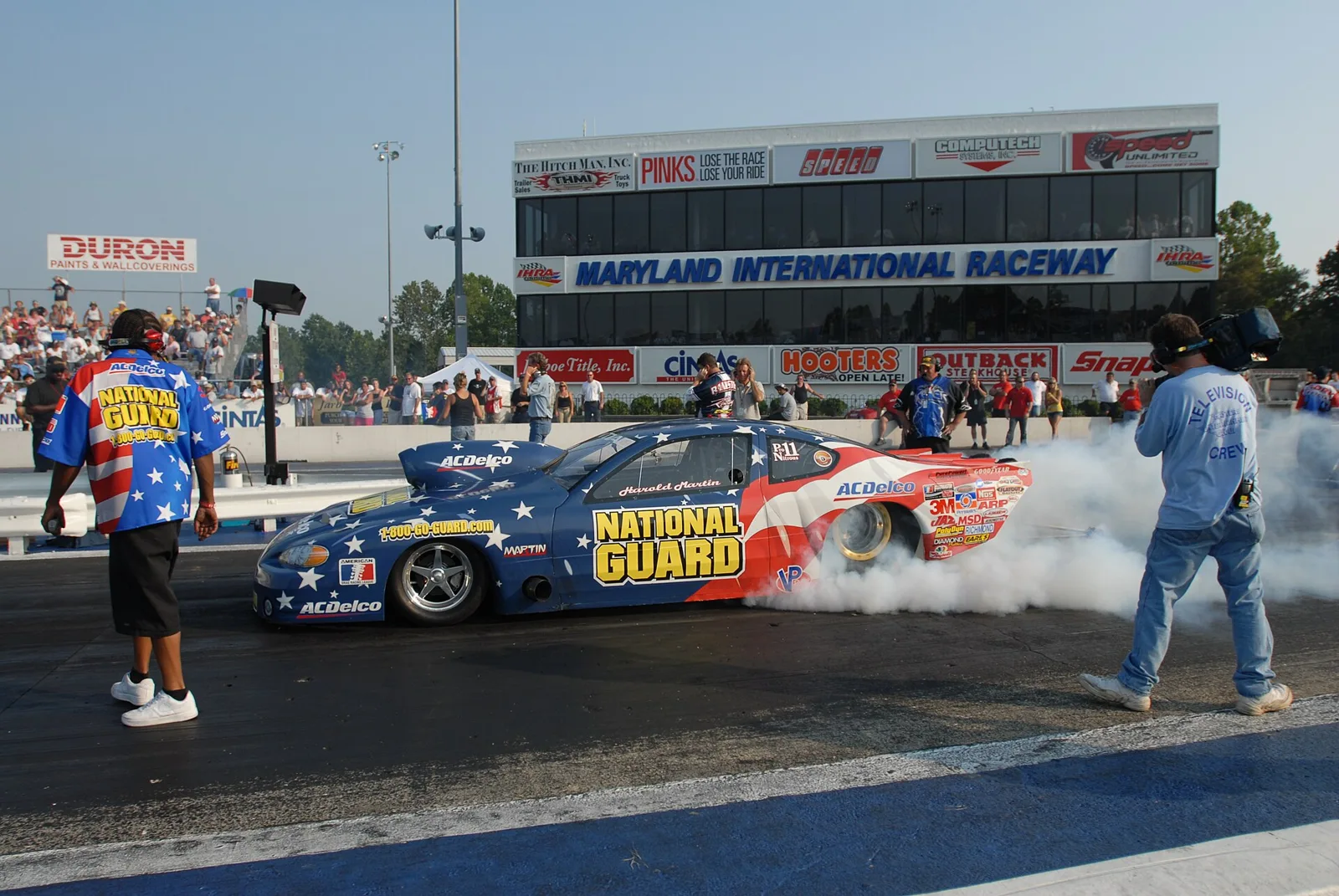
Many of today's habits arrived over the decades. Push starts to fire up engines ended in 1976 when the NHRA required self-starters, and cars no longer had to be pushed back after burnouts once reversing systems became mandatory in 1980. Don Garlits was the first to do burnouts across the starting line, now standard. Water replaced flammable traction compound in the burnout box in the 1970s, after spectacular but dangerous flame burnouts.
The NHRA claims over 40,000 drivers on its rosters, which it says makes it the largest sanctioning body in motorsport. Its Mission Foods Drag Racing Series runs 24 races a year, and winners of national events receive a trophy statue called the Wally in honour of the founder. The NHRA is marking its 75th anniversary in 2026, with a special Diamond Wally awarded to winners that year.
How does a drag race work?
Before each run, or pass, a driver performs a burnout through a water box, heating the tyres and laying rubber on the start line for traction. Each car then rolls to the line, where two light beams per lane tell the timing system whether it is pre-staged, about 7 inches (180 mm) from the line, and then staged. Once both cars are staged, a random delay starts the tree, a measure that stops drivers anticipating the start.
The Christmas tree is a column of lights for each lane. In the NHRA's professional classes, three amber lights flash together and the green follows 0.4 seconds later. In sportsman classes the ambers come on one after another, 0.5 seconds apart, with the green 0.5 seconds after the last. Leave before green and a red light disqualifies you. If a rival fails to stage within a set time, that driver is disqualified too.
Three measurements are taken for each run. Reaction time runs from the green light to the car leaving the beams. Elapsed time, shown as E.T., runs from leaving the line to crossing the finish line. Speed is measured through a trap over the final 66 feet (20 m). The winner is normally the first across the line, so a car with a slower E.T. can still win through a better reaction time, a result called a holeshot.
Some classes add a twist called the breakout rule. Each competitor has a predetermined time, and anyone who runs faster than it loses; if both break out, the one who is closer wins. Most events use a bracket system, with 16 to over 100 cars, in which each loser is eliminated and the winner advances. The Chicago Style format, called Three Round in Australia, instead has all cars qualify, then race one elimination round, with the two fastest winners meeting in the final.
Is the quarter mile still the standard?
The standard drag race distance is 1,320 feet, or a quarter of a mile (402 m). But the NHRA shortened Top Fuel and Funny Car races to 1,000 feet (304.8 m) for safety in 2008, after Funny Car driver Scott Kalitta died in a qualifying crash at Englishtown, New Jersey. The FIA made it the standard Top Fuel distance from 2012.
| Distance | Metric | Where it is used |
|---|---|---|
| 1/4 mile (1,320 ft) | 402 m | Standard distance; most classes in the NHRA |
| 1,000 ft | 304.8 m | NHRA Top Fuel and Funny Car; American Drag Racing League primary classes; popular in bracket racing |
| 1/8 mile (660 ft) | 201 m | Some strips, and the Professional Drag Racers Association |
How fast is a Top Fuel dragster?
No racing car in the world accelerates harder than a Top Fuel dragster, and no sanctioned drag category is faster. The best reach more than 340 mph (547.2 km/h) and complete the 1,000 foot run in 3.641 seconds. They can exceed 297 mph (478.0 km/h) in only 660 feet (201.2 m).
The driver feels an average acceleration of about 4.0 g (39 m/s2), with a peak above 5.6 g (55 m/s2). The car makes its own downforce too: at full throttle the exhaust gases leaving the open headers push down with about 900 to 1,100 pounds-force (4.0 to 4.9 kN), and the large wing over and behind the rear wheels peaks at around 12,000 pounds-force (53.4 kN) when the car reaches roughly 330 mph (531.1 km/h). Sound reaches around 150 dB, enough to hurt or even cause permanent damage, so announcers tell spectators to cover their ears and ear plugs are handed out at the gate.
Records belong to people as well as machines. Tony Schumacher is the most prolific active Top Fuel driver, and Alan Johnson the most successful crew chief, having worked on six of Schumacher's championships. The first woman to drive in the class, Shirley Muldowney, is still the best-known female name in drag racing, and she won three championships.
Why does nitromethane make so much power?
An engine is basically an air pump. How much fuel it can burn depends on how much air it swallows, and nitromethane breaks the usual limit because it carries oxygen inside its own molecules. Petrol needs 14.7 parts of air to one of fuel, while nitromethane needs only 1.7. For the same amount of air, an engine can burn 7.6 times as much nitromethane.
The surprise is that nitromethane holds far less energy per kilogram, 11.2 MJ/kg against 22.7 for methanol and 44 for gasoline. Burning so much more of it still lets an engine make up to 2.4 times the power of a petrol one. Since 2015 NHRA rules cap the fuel at a maximum of 90 per cent nitromethane, with the rest largely methanol, though teams may use less.
The fuel also helps cool the engine, because it absorbs a great deal of heat as it vaporises. Flame speed is 0.5 m/s (1.6 ft/s) and combustion temperature 2,400 C (4,350 F), both higher than petrol. Rich mixtures help guard against pre-ignition but leave unburnt fuel to escape the pipes and burn with a yellow flame, while hydrogen made once the oxygen runs out can be seen burning bright white at night. A typical run consumes between 12 US gallons (45.42 L) and 22.75 US gallons (86.12 L), counting warmup, burnout, staging and the run itself.
What is inside a Top Fuel engine?
The Top Fuel engine is based on a second-generation Chrysler RB Hemi but is built entirely from specialised parts. The NHRA limits displacement to 500 cubic inches (8.19 L), with a bore of 4.1875 inches (106.36 mm), a stroke of 4.5 inches (114.30 mm) and a compression ratio of about 6.5:1.
Like many American racing formulas, the rules restrict engine layout heavily, and sometimes teams must use technology decades old, so the cars can look less advanced than a family car. Fuel injection, clutch operation, ignition and materials are all still evolving. The block is machined from forged aluminium with no water passages at all, which adds strength and stiffness. Incoming air and fuel, plus lubricating oil, do the cooling. There are two valves per cylinder, driven by pushrods, with a titanium intake valve.
The connecting rods are forged aluminium rather than titanium, because aluminium damps some shock, while titanium would pass too much of each combustion impulse to the bearings. The crankshaft is billet steel. A lighter 180-degree design has been tried, but it vibrates heavily. One incident showed how strong the parts are: an engine failure blew the entire block off the car, leaving the crank, with all eight rods and pistons, still bolted to the clutch.
The supercharger is a 14-71 Roots blower, a descendant of scavenging blowers General Motors built for its two-stroke diesels; the name refers to the size of the original cylinders. Manifold pressure is usually 56 to 66 psi (386 to 455 kPa), and up to 74 psi (510 kPa) is possible. At peak pressure it takes about 1,000 horsepower (750 kW) just to drive the blower. Because blower explosions are not uncommon, a Kevlar-style blanket must cover it. The fuel pump moves 100 US gallons (380 L) per minute at 7500 rpm through about 42 nozzles.
How does the NHRA keep drag racing safe?
The NHRA requires a stack of equipment and rules for every competitor, and many of them were introduced after a death or a near miss. All vehicles need a five-point harness with a quick-release latch that frees the driver in under a second. Drivers in the fastest classes wear fire suits of seven layers of Nomex, and the HANS device limits head and neck movement in an impact.
Several features came from specific accidents. The fuel cell came from NASCAR after Fireball Roberts died. A titanium shield behind the driver's head, and tougher rear slicks with a minimum pressure of 7 psi (48 kPa), followed the death of Top Fuel racer Darrell Russell. An on-board fire extinguishing system has been compulsory since 1983, after an engine explosion and fire nearly killed Funny Car driver Mike Dunn. Funny Cars have had a roof escape hatch since the early 1970s, and after Eric Medlen died in 2007 the Funny Car roll bars were padded and coated in Nomex.
Scott Kalitta's death in 2008 brought several changes. The sand traps at the end of the track grew from 40 feet (12 m) long and three feet deep to 80 feet (24 m) long and six feet deep, heavily padded walls replaced the old safety nets, and from the 2009 season a sensor shuts off the fuel pump and releases the parachutes automatically if a car backfires or its burst panel blows. It is used in Funny Car and Top Fuel only. Fans are no longer permitted within 75 feet (23 m) of the guardrail. After a crash in which John Force's car split in two behind the engine, hardened chrome moly tubing was banned from Top Fuel and Funny Car frames.
Other rules keep the track clean. Cars carry "diapers" under the engine to catch fluid and broken parts, and oil-downs bring fines and loss of points. Wheelie bars stop cars flipping at launch, and cars capable of 150 mph need braking parachutes. Cars running 9.99 or quicker in the quarter mile also need a fireproof engine blanket.
What are the main drag racing classes and organisations?
The NHRA's top division has four professional classes: Top Fuel Dragster, Funny Car, Pro Stock and Pro Stock Motorcycle. It also runs more than a dozen Sportsman classes, and most of its participants are Sportsman racers. The International Hot Rod Association represents 117 member tracks across the United States, Canada, Aruba, Australia and New Zealand.
Smaller bodies fill niches. The Professional Drag Racers Association, founded in 2014, races over an eighth of a mile. The National Mustang Racers Association started in 1999, and the National Muscle Car Association is the longest-running major street-legal body. The Nostalgia Drag Racing League is for cars from 1979 and older, with its fastest classes making heads-up passes at 200 mph (320 km/h). The National Electric Drag Racing Association pits electric cars against petrol cars such as Dodge Vipers, and its record stands at 6.940 seconds at 201.37 mph (324.0736 km/h) for a quarter mile.
Australia has its own scene. The first Australian Nationals took place in 1965 at Riverside near Melbourne, and ANDRA was established in 1973. Its professional series covers Top Fuel, Top Alcohol, Top Doorslammer, Pro Stock using 400 cubic inch (6.5 litre) engines, Top Bike and Pro Stock Motorcycle. In Europe, American NATO troops brought drag racing during the Cold War, and Santa Pod Raceway opened in 1966 as the continent's first permanent drag strip.
Where this goes next
The NHRA marks its 75th anniversary in 2026. Its calendar came back in 2022 after the 2020 and 2021 editions of the Virginia event were cancelled during the coronavirus pandemic. Drag racing fandom has also grown in the past decade, partly thanks to the Discovery series Street Outlaws.
In Australia, ANDRA has launched a new national series, initially for Top Doorslammer and Top Fuel Motorcycle, which it says will give wider national coverage than the rival 400 Thunder Series did, and which will soon add other professional categories. A dispute in 2015 had seen Sydney Dragway, Willowbank Raceway and the Perth Motorplex invite the IHRA to sanction their events, though Perth went back to ANDRA soon afterwards.