Staged makeovers, slow Mopar restorations, three-week deadlines and a YouTube channel that began in a driveway, set side by side.
Pimp My Ride, Graveyard Carz, Wrecks to Riches and Mighty Car Mods each showed car builds on screen in a different way. Pimp My Ride staged quick cosmetic makeovers on MTV, Graveyard Carz documents slow Mopar restorations, Wrecks to Riches set three-week deadlines, and Mighty Car Mods teaches DIY modifying on YouTube.
The young Californians who handed their cars to MTV in the mid-2000s watched a makeover that seemed to take a few days. According to participants who spoke afterwards, it took 6-7 months, and they had to find their own transport in the meantime. That gap between screen time and workshop time runs through the whole story of car-build television.
Pimp My Ride, Graveyard Carz, Wrecks to Riches and Mighty Car Mods each filmed the same basic job in a different way: a staged makeover, a restoration measured in seasons, a race against a three-week deadline, and a pair of friends teaching viewers to do it themselves. Between them they show what building a car on camera looks like, and how much of it is real.
What Pimp My Ride actually was
Pimp My Ride was a staged American television series made by MTV and fronted by the rapper Xzibit. It ran for six seasons, from 2004 to 2007, and the premise fitted on a postcard: take a tired car, restore it and customise it. Inside the US it ranked second among MTV programmes, behind only The Real World, and it was one of the channel's most popular shows with viewers around the world.
Every episode ran on rails. A young owner, usually from Los Angeles or another part of Southern California, pitched the car to MTV as a candidate for the treatment. Xzibit inspected it with a stream of jokes about whatever was wrong, turned up at the owner's home, and promised a full makeover. The car was then driven off to a custom shop, rebuilt, and revealed at the end, often with a gift connected to the owner's hobby.
The car must run, and it must be legal where it will be driven.
West Coast Customs and Galpin Auto Sports
The shop in the first four seasons was West Coast Customs in Corona, California. Its owner, Ryan Friedlinghaus, led the design talk in season 4, and the crew came with specialities that viewers learned like a football line-up: tyres, interior and fabric, accessories, paint, and an electronics man called Michael "Mad Mike" Martin who handled the outrageous engineering.
The manager, Quinton "Q" Dodson, stepped away after the third season. He wanted to grow the business with a shop called Coast 2 Coast Customs in St. Louis, Missouri. In season 5 the production changed garages altogether. Friedlinghaus moved his shop and signed with another television company, so the work shifted to Galpin Auto Sports in Van Nuys. Mad Mike came across to the new team, now billed as a car customisation specialist, and the cast was fronted by Beau Boeckmann, presented as the owner although he was really a vice president of Galpin Auto, which his father, Bert Boeckmann, owned.
Themed builds, mostly skin deep
The signature trick was personalisation. Cars were fitted out to match what their owners did or loved. A fan of the Need for Speed: Underground video games got a car painted to look like one of the machines from the series. A bowler got a ball spinner fitted in the boot. A badminton player received a net in the back of a Dodge Caravan, and a surfer's Volkswagen Type 2 came with a clothes dryer fitted in the rear.
The standard shopping list was new paint, accessories, chrome, tyres, rims and cabin electronics: DVD players, video games and large TFT screens. Most of it was cosmetic. Mechanical work was generally carried out only to get a car running, although the show did swap engines on occasion. Anyone copying the look at home should note the difference, because a screen in the dashboard and fresh paint do not change how a car brakes or stays cool.
Three season finales broke the pattern entirely. In season 1 the "car" turned out to be two halves of Ford Escorts welded together, a cut and shut job, and it was declared unsafe. In season 2 the owner was studying to be a mechanic, so the shop let him work on his own car as a study project. In season 5 a Nissan Pulsar was leaking engine heat and battery fluid into the cab, which created a fire hazard, and Xzibit decided it was not worth fixing. All three owners were given brand new cars with extensive modifications.
The claims of faking
Several people who appeared in seasons 4 and 6 later said that parts of the show were exaggerated or invented. The homes where Xzibit sprang the news on contestants were often rented by MTV. Some cars had been made to look worse than they were, with paint stripped, rubbish dropped in the interior and bumpers loosened until they were close to falling off. Reveal reactions took several takes, and some participants said they were coached to show more amazement.
The modifications themselves drew complaints too. Some features added during filming were taken out again straight afterwards because of potential trouble with local and state traffic laws. Participants said many of the changes were purely cosmetic and that any faults in how the car ran were still theirs to sort out. Xzibit told HipHopDX that social media turned on him over the show, although he was just the host and had no say in the modifications.
How far Pimp My Ride travelled
The format was copied across the world, usually with a local presenter and a local workshop. Some versions stretched the idea well beyond the motor car.
| Version | Where | Presenter |
|---|---|---|
| Pimp My Ride UK (2005-2007) | United Kingdom | Tim Westwood |
| Pimp My Ride International | Europe, built in the Netherlands | Lil' Jon and Fat Joe |
| Pimp My Ride Brasil (2007-2008) | Brazil | Jimmy London |
| Pimp My Ride France (2009-2011) | France | Ramzy |
| Pimp My Ride Malaysia | Malaysia, on MTV Southeast Asia | Altimet and Herrera |
There were also versions for the Baltic countries (2008) and Indonesia, and a spinoff for trucks, Trick My Truck, on MTV's sister channel CMT. In Germany the idea turned to bicycles: Pimp My Fahrrad had a Hamburg bike shop rebuild almost an entire bicycle, usually keeping only the frame. German safety rules are among the toughest anywhere, so a heavily customised vehicle there is close to unobtainable as far as a road permit goes, and most of continental Europe is similar. In Italy, Pimp My Wheels turned rusty scooters and motorcycles into shiny ones, and Pimp My Room in the Netherlands did the same for student bedrooms.
The brand also had a lawyer's side. In 2006 Viacom, which owned the franchise, threatened legal action against small businesses that used "Pimp My..." in their names. A recipe-sharing website called Pimp My Snack received a warning letter and became Pimp That Snack. A British lawyer who specialises in copyright criticised the move, arguing that a trademark claim cannot reach firms in unrelated lines of business.
Graveyard Carz and the slow restoration
Graveyard Carz works to a very different clock. Made in Springfield, Oregon, it restores Mopar muscle cars from the late 1960s and early 1970s, and the shop's motto is It's Mopar or No Car. Mark Worman created and owns it, and it is produced by The Division, the television company where he is chief executive. Its relationship with the Velocity channel is described as a pre-sale acquisition, which leaves The Division in charge creatively while taking notes from the network.
The show began with one wreck. Worman set out to film the rebuild of a 1971 Plymouth 'Cuda in Hemi Orange, fitted with a 440 Six Barrel V8, a heavy-duty four-speed manual gearbox and a Dana 60 rear axle with a 3.54 ratio. On 5 July 1980 it was crashed when the driver lost control while racing a pickup truck at 100 mph. Worman took on the restoration for a collector, and to prove that the car could be saved he had the son of a local friend, Aaron Smith, film the work. The footage grew into test material for a pilot episode.
That car, known as the Phantom 'Cuda, became a running thread. In season 1 it went into a paint-stripping tank. Season 2 assessed its overall condition, and season 3 repaired a fender to test whether the panels were too far gone to reuse. At the end of season 4 it was sent to Auto Metal Direct, a retailer of replacement panels, and it returned in season 5 with all-new sheet metal. By season 6 it had been completed and restored to factory condition.
The Ghouls and how the show is made
The cast, nicknamed the Ghouls, are working automotive technicians. The first four seasons featured Royal Yoakum, Josh Rose, Daren Kirkpatrick and Worman himself, with Holly Chedester recurring in seasons 2 and 3. Season 5 brought back Worman's daughter Allysa Rose, added the painter Will Scott, and introduced David Rea, a mechanic who was a long-time fan of the show.
Production is slow even by television standards. A 13-episode season now needs roughly 100 days of non-stop filming. Earlier seasons stretched past a year, because the original crew only worked on the Mopar builds on Saturdays. Because episodes are edited alongside the filming, they rarely end in a classic reveal. The emphasis falls on the smaller sub-assembly jobs that a car needs before it is finished. Where owners are willing, a reveal is still filmed, and the crew tries to keep it true to life. The humour is shot separately from the real car work, and the makers say most of the comic storylines depict events that really happened in the shop.
In season 6 the programme was revamped with a new logo, new graphics and a new format. Rather than following the cast through their days, the focus moved to the cars and the builds, in an effort to win back viewers who had drifted away from the original format. In 2016 the company TERN commissioned and acquired global rights to 26 episodes filmed in HFR UHD.
Wrecks to Riches and the three-week deadline
Wrecks to Riches was a Discovery Channel series that aired between 28 March 2006 and 14 June 2007 across two seasons. It followed Barry White and his staff as they bought old cars cheaply and turned them into what the programme called Super Muscle cars. Each car usually had three to four weeks to finish, and was then auctioned at a location somewhere in the United States. One finished car was sold on eBay.
Set that against Graveyard Carz, where a single wreck ran across six seasons, and the range of timetables in build television becomes clear.
Mighty Car Mods and the do-it-yourself generation
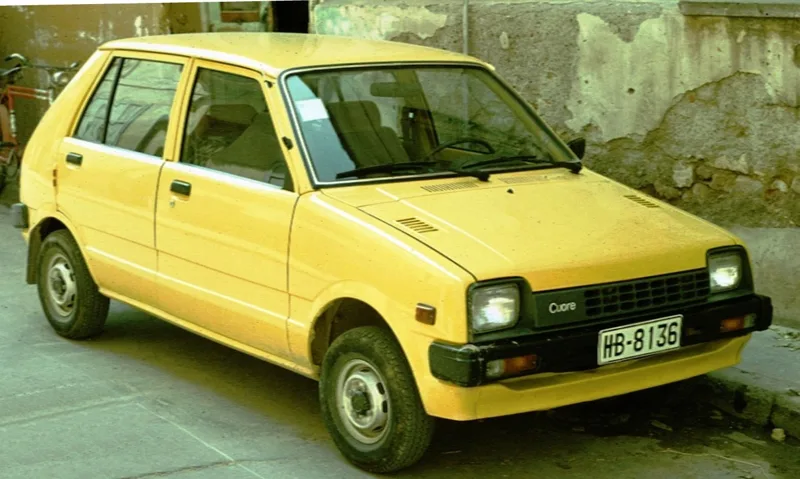
Mighty Car Mods started with two friends and a YouTube channel. Blair "Moog" Joscelyne and Martin "Marty" Mulholland, both car lovers, decided in 2007 to make videos showing enthusiasts how easily a vehicle could be modified whatever their qualifications. The channel debuted in January 2008 with "How to pimp your car for $500", in which the pair carried out basic modifications of the period on Moog's 2001 Daihatsu Cuore. The aim was to educate with a dash of Australian humour, and to let amateurs feel confident about modifying a car within the law.
Marty is a sound engineer by trade and Moog is a composer and music producer, and Moog writes all the music for the show. On screen, Marty usually brings the hands-on mechanical experience while Moog leans towards design and appearance. When a build is complex, they bring in qualified experts, and recurring guests go by nicknames such as Dose Vader, Tuning Fork, Mechanical Stig and Turbo Yoda.
The cars come mainly from the late-model Japanese and European tuning scene, ranging from the mid-1980s to the 2000s, though the pair have also built a classic HQ Holden and near-new cars such as a Subaru BRZ, Audi RS3, Volkswagen Golf R and Lotus Exige S240. Episodes run from 15 to 60 minutes, with most lasting about 20. Cars are given pun names such as Yaris Hilton or Taylor Drift so that viewers form an attachment. Some series are head-to-head contests in which each presenter buys a car under a budget or style constraint and builds it alone, and "Catch and Release" episodes feature a car for only one or two instalments before it moves on. Other projects run for months.
The setting changed as the channel grew. The show was first filmed on Marty's mother's driveway and in her garage, and in 2015 it relocated to a private indoor space in Sydney after spoilers and traffic problems in the suburban street. In 2022 the pair opened a collaborative workspace in Sydney called Super Garage.
Imports, films and the law
The duo have made several feature-length films about car travel, among them Turbos and Temples and its two sequels, Kei to the City, Chasing Midnight and The Cars of Cuba. They have filmed in Japan, Cuba, Germany, the UAE, the United States, Switzerland, the United Kingdom and New Zealand.
Some of the cars from those films turned into long series. The Daihatsu Mira TR-XX from Kei to the City and the Nissan March Super Turbo from Turbos and Temples II were both imported from Japan and then remodified or retrofitted to meet the safety regulations of Australia's road laws. For anybody who dreams of importing a favourite from a film, that is the practical lesson: a car has to satisfy local rules before the build counts as finished.
The audience figures reflect the approach. Videos have been viewed more than 950 million times, with almost five billion impressions, and Mighty Car Mods was the first motoring programme made in Australia to go out worldwide on Discovery Channel. It also appears in Qantas in-flight entertainment. In 2018, for the tenth anniversary, the pair released a limited-edition 128-page hardcover called The Cars of Mighty Car Mods, with illustrations of every car in their first ten years. A 2019 edition added a further 30 cars.
Revivals and recent news
Pimp My Ride is not finished. In 2024 co-creator Rick Hurvitz took a reworked version to Netflix as Resurrected Rides, with Hurvitz as executive producer and Chris Redd as host, and the cars are handled by mechanics and customisers drawn from several shops around California rather than from one garage.
Graveyard Carz began its 13th season on 16 March 2021. On 17 August 2026 a selection of Mighty Car Mods videos was added to the National Film and Sound Archive, alongside nine other creators, in a partnership with YouTube. The collection includes physical items from the channel's history, which are to be displayed in Canberra with the videos.
What the shows mean if you want to build a car
Put side by side, the four programmes give four timetables. Pimp My Ride compressed 6-7 months of work into a short episode. Wrecks to Riches gave itself three to four weeks. Graveyard Carz needs about 100 days of shooting for a season and followed one wreck for six. Mighty Car Mods lets builds run for months when the scale demands it.
The practical points are the same across all of them. On Pimp My Ride most of the changes were cosmetic, mechanical work stopped at making the car run, and some additions came off again over traffic rules. Mighty Car Mods framed its builds as modifying within the law and retrofitted imports to meet Australian road regulations. Anyone planning a build can take the same order of priorities: the car must run, and it must be legal where it will be driven.