From the wooden Buick Estate of 1940 to the skylit Vista Cruiser, the 19-foot Custom Cruiser and the Pontiac Safari, how General Motors built wagons for American families.
The Buick Estate, Oldsmobile Custom Cruiser, Oldsmobile Vista Cruiser and Pontiac Safari were General Motors station wagons sold in large numbers from the 1950s to the 1990s. They carried up to eight passengers, wore simulated woodgrain and gave way to minivans and SUVs.
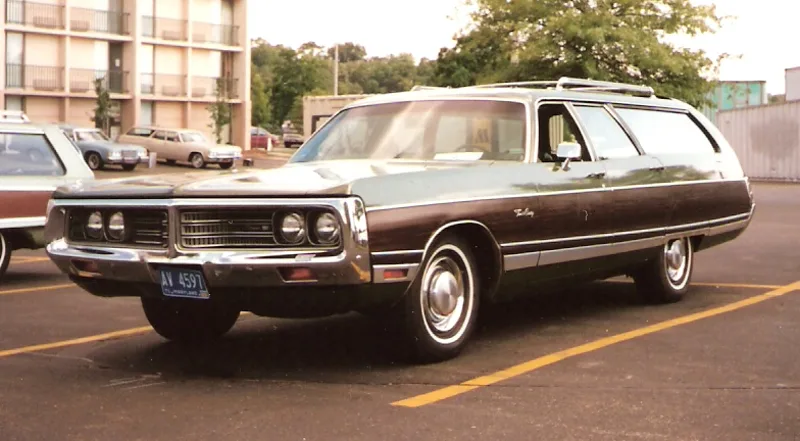
In 1974 General Motors was building station wagons more than 19 feet long. A three-seat Oldsmobile Custom Cruiser of that year weighed about 5,400 lb (2,400 kg) at the kerb, which made it the heaviest Oldsmobile ever built, and its rear window slid up into the roof while the tailgate dropped away under the floor.
What were GM's big family wagons?
They were the station wagon versions of General Motors' mid-price full-size cars: the Buick Estate, the Oldsmobile Custom Cruiser and the Pontiac Safari, with the Oldsmobile Vista Cruiser as a mid-size cousin. They sat above the Chevrolet wagons, shared a platform and often a body, and became known for third-row seating and simulated wood panels.
The names mean something. Estate comes from the idea of a country estate in wealthy suburbs, and from estate car, which is what the British call a station wagon. Safari is Swahili for journey. Cruiser, used by Oldsmobile, spread over its wagon range in the 1970s and 1980s. Buick's Estate was the flagship, slotted a little above the Custom Cruiser. Pontiac's Safari sat between the Chevrolet wagons and its Buick and Oldsmobile counterparts.
GM's big wagons grew to more than 19 feet long and then vanished within a few years as minivans took over.
How did the Buick Estate begin?
The first Buick Estate was a wood-bodied 1940 Super with a 121.0 in (3,073 mm) wheelbase, introduced mid-year at US$1,242. It used mahogany panels with oak trim, and Buick sold only 495 against 95,875 Touring Sedans. GM had introduced wagons in 1939 on the Chevrolet Master, in 1940 on the Oldsmobile Series 60 and in 1937 on the Pontiac Streamliner, and Packard had a station wagon in 1937 as well.
After the war the Estate returned on Super and Roadmaster chassis in 1946 and 1947, with bodies built by Mitchell-Bentley rather than GM's Fisher Body, a tradition that lasted until 1964. The 1946 Super Estate cost US$2,594, and 786 were built. Real wood needed regular varnish, so by 1950 it was little more than window surrounds on the outside.
The 1950 Roadmaster Deluxe Estate added leather and a carpeted load area, and it was the first time that power windows and a power front seat were offered. At US$3,433 it was the most expensive Buick that year. Sales stayed small, and Buick changed platforms several times to stimulate them. The best year was 1955, with 7,195, and in 1957 and 1958 the hardtop Century Caballero sold 10,186, ahead of the Chrysler New Yorker Town & Country and Mercury Colony Park.
The Estate faded in the 1960s. The Invicta Estate sold 3,495 for 1963 and then the name went, with the smaller A-platform Sport Wagon taking the job. For several years the Chevrolet Impala Estate and Pontiac Safari were GM's only full-size wagons.
Why did the Estate return in 1970?
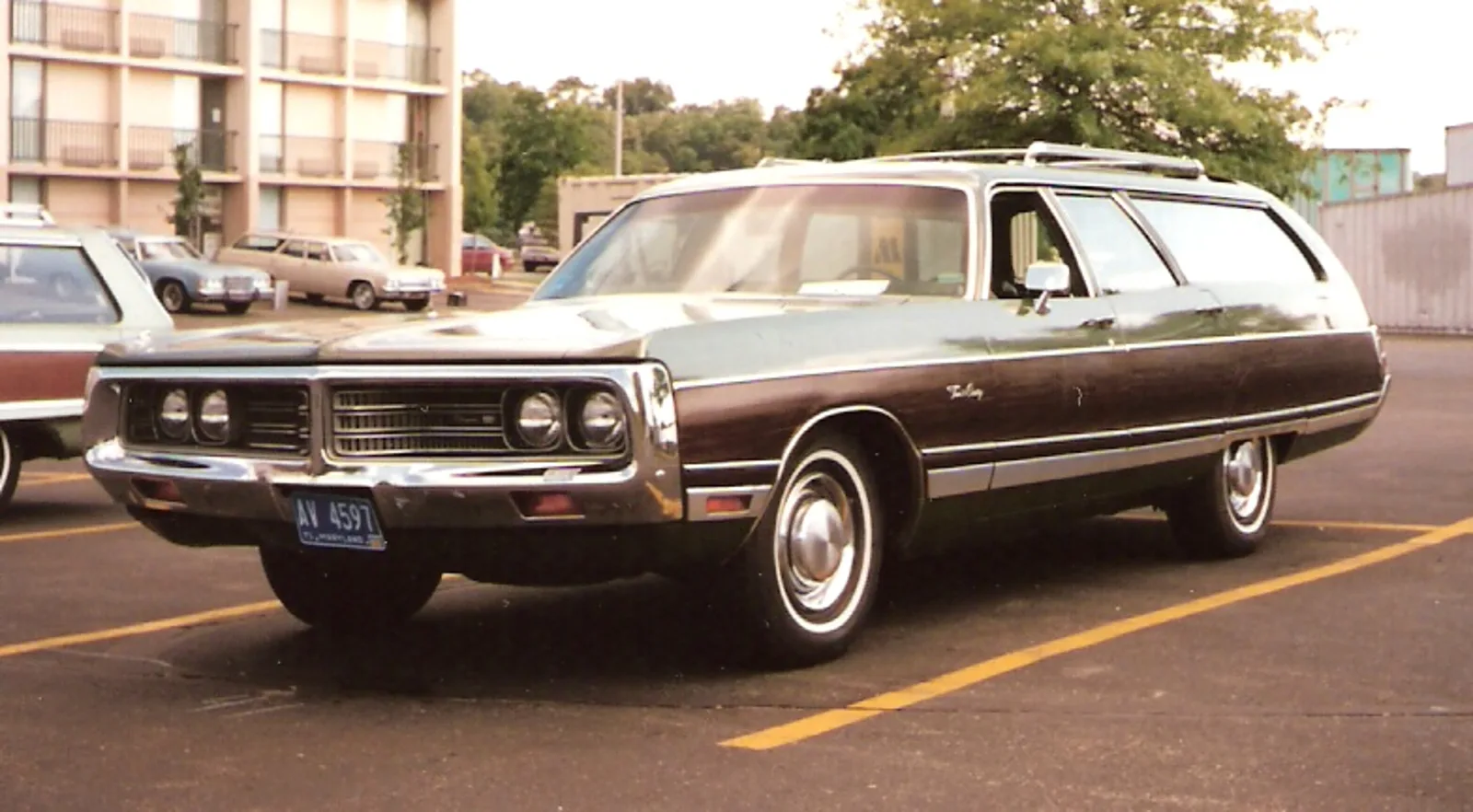
Buick brought it back in 1970 as GM's top luxury wagon, to compete with the Mercury Colony Park and Chrysler New Yorker Town & Country. It rode on the LeSabre chassis with a 124.0 in (3,150 mm) wheelbase, carried a 455 V8 and cost US$5,047, and Buick built 28,306. A 60/40 second-row bench and a rear-facing third row seated eight, and a DI-NOC vinyl woodgrain option revived the old woodie look.
From 1971 to 1976 the Estate moved onto the longest chassis, with a 127.0 in (3,230 mm) wheelbase shared with the Electra 225. Interior width, at 64.3 in (1,630 mm) of front shoulder room and 63.4 in (1,610 mm) at the rear, set a record that no car matched until the full-size GM rear-drive models of the early to mid-1990s.
What was the Oldsmobile Vista Cruiser?
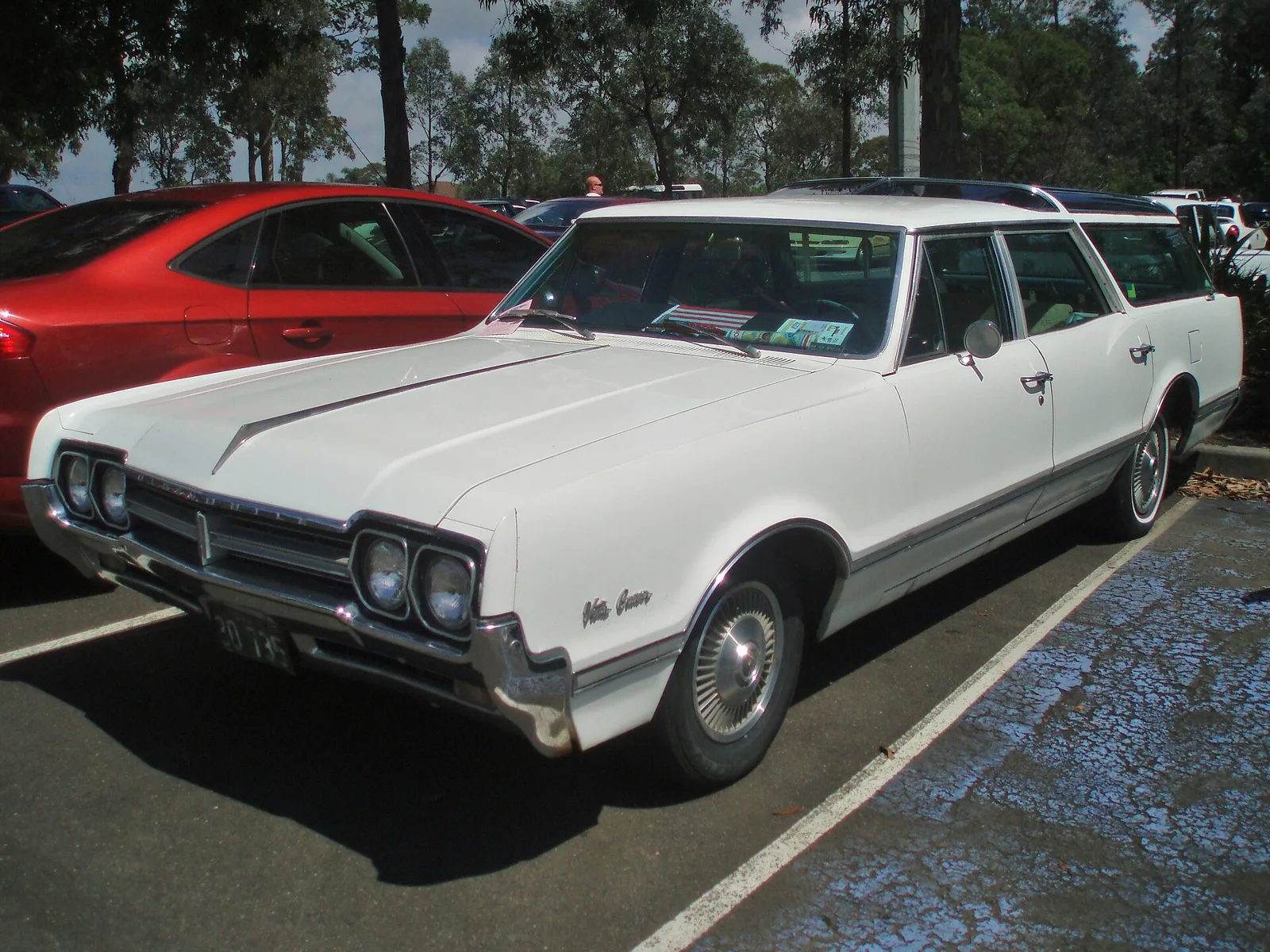
The Vista Cruiser was an Oldsmobile mid-size wagon built from 1964 to 1977, known for a raised roof with glass skylights over the second row. Introduced on 4 February 1964 on the Cutlass and F-85 platform, it shared its body with the Buick Sport Wagon, Pontiac Tempest Safari and Chevrolet Chevelle Greenbrier, though only the Buick shared the skylight.
The glass idea came from the 1954 GMC Scenicruiser bus. The first-generation wagon had a split skylight, glass panels along the cargo area, sun visors for second-row passengers and an optional forward-facing third row, reached by retracting the split second-row bench. The wheelbase was 5 in (127 mm) longer than a Cutlass sedan's. The price was US$3,122, and the 330 cu in (5.4 L) Rocket V8 made 210 to 320 horsepower (160 to 240 kW) depending on year and carburation.
A 1968 restyle replaced the split skylight with a single piece and stretched the wheelbase to 121 in (3,073 mm). The 350 cu in (5.7 L) V8 became standard, a high-output 400 from the 442 was optional in 1968 and 1969, and a 455 cu in (7.5 L) was available from 1970 to 1972. Hurst Performance modified a few 1972 cars for support duties at the Indianapolis 500, and two are known to survive as of 2012.
For 1973 GM's A-body intermediates were redesigned onto one 116-inch wheelbase. The third row now faced backward, the Dual-Action tailgate gave way to a one-piece hatchback, and boxy Colonnade styling replaced the skylights, with a pop-up sunroof above the front seats as an option. The Vista Cruiser's best-known screen appearance came later: a 1969 Aztec Gold car was a fixture of That '70s Show, and in 2016 Rod Authority ranked it number 22 among the 50 greatest television cars.
What was the Oldsmobile Custom Cruiser?
The Custom Cruiser was Oldsmobile's full-size station wagon from 1971 to 1992, and it marked the brand's return to that segment for the first time since 1964. It sat above the Vista Cruiser, shared GM's B platform with the Buick Estate and Pontiac Safari, and Oldsmobile built 451,819 of them in 21 years.
The name was older than the wagon. Oldsmobile first used Custom Cruiser in 1940 for its flagship 90, and the 98 kept the platform until 1996. When the wagon revived the name in 1971, it replaced the earlier Fiesta, and the Cruiser branding then spread to the Cutlass Supreme Cruiser and others.
Why was the 1971 to 1976 car so big?
GM took the B-body chassis and stretched it to the 127-inch wheelbase of the C-body, and the wagon grew past 19 feet in length by 1974, after five-mph bumpers were added. The three-seat 1974 version shipped at 5,161 lb (2,341 kg), or 5,186 lb (2,352 kg) with woodgrain, and weighed about 5,400 lb (2,400 kg) at the kerb. That is the heaviest of any Oldsmobile, and the heaviest sedan-based GM vehicle. Its wheelbase beat all Chrysler wagons (124 inches), the AMC Ambassador (122) and the Ford and Mercury wagons (121). Power came from the 455 Rocket V8, with a Turbo-Hydramatic 400 automatic the only gearbox.
Woodgrain was popular. Nearly 80% of buyers took the option.
How did the clamshell tailgate work?
A two-piece system let the tailgate slide into a recess below the cargo floor while the rear window retracted up into the roof, either by hand or with power assist. It was the first powered tailgate in automotive history. Switches on the dashboard, or a key on the rear quarter panel, operated it, and the idea was to ease loading a 19-foot wagon in a tight space.
The system was heavy and complex. When GM redesigned its wagons for 1977, with a body over a foot shorter and more than 1,000 pounds lighter, it dropped the clamshell for a two-way tailgate of the kind Ford had pioneered.
What changed in 1977?
Downsizing cut 14 inches of length, 11 inches of wheelbase and up to 900 pounds from the Custom Cruiser, which now rode on a 115.9-inch wheelbase. Engines were a 170 hp 350 and an optional 185 hp 403, detuned to 160 and 175 for 1979, and from 1980 the 307 took over at 150 hp. Oldsmobile added a 350 diesel in 1978 with 120 hp, retuned to 105 hp for 1980. After 1985, when GM moved its sedans to front drive, the Custom Cruiser became the largest Oldsmobile. The 307 in 1990 was the last V8 the company built.
The third generation, in 1991 and 1992, was the final one. Oldsmobile already had alternatives in the Silhouette minivan of 1990 and the Bravada SUV of 1991, and production ended after 1992.
What was the Pontiac Safari?
The Pontiac Safari was a line of station wagons from 1955 to 1989. It started as Pontiac's version of the two-door Chevrolet Nomad, a sport wagon born as a 1954 Motorama concept derived from the Corvette, and in 1957 it became the name of the whole full-size Pontiac wagon range. It was introduced on 31 January 1955 at US$2,962.
The first Safari used the Chieftain's front end, with a design by Paul Gillan, and a 287 cu in V8 with 180 hp or 200 hp. Only 3,760 were built in 1955, the fewest of any Pontiac. For 1956 the V8 grew to 317 cu in and 227 hp, and sales rose to 4,042. In 1957 a 347 cu in V8 made 270 or 290 hp, and the Safari sold 1,294 two-doors and 1,894 four-door Transcontinentals, 9,094 A-body Safaris in all. GM ended the two-door sport wagons in 1958, but both names carried on.
Pontiac's naming wandered. The Catalina Safari and Bonneville Safari arrived in 1959. The Safari name was dropped for 1966, then used in 1967 for the Executive wagon and the Bonneville Safari, with Safari becoming a term for exterior woodgrain trim. From 1971 the Grand Safari, on the Grand Ville, was the largest vehicle Pontiac ever sold. It shared the glide-away clamshell tailgate and the 127-inch wheelbase with its Buick and Oldsmobile cousins, and in 1977 it shed over 1,000 pounds and gained 301 and 403 V8s. Pontiac put the Safari on hiatus for 1982 and revived it in 1987 for the Parisienne Wagon.
Why did the big GM wagons disappear?
Minivans overtook demand, and the divisions competed against each other. Pontiac ended the Safari after 1989, the first GM division to stop making B-body wagons, and introduced the Trans Sport minivan for 1990. Oldsmobile ended the Custom Cruiser after 1992. GM then stopped producing full-size wagons after 1996, the last American-brand maker to stop at that point.
The Buick Roadmaster Estate and its Chevrolet Caprice counterpart were the last full-size wagons made, and the last with exterior woodgrain. Buick retired the Estate name after 1996 and sold no wagon in the US until 2018, when it rebadged the Opel Insignia B Country Tourer as the Regal TourX. The GMC Safari van, an unrelated vehicle that shared the name, ran from 1985 to 2005.
How do the four wagons compare?
| Wagon | Years | Platform | Signature feature | How it ended |
|---|---|---|---|---|
| Buick Estate | 1940-1964, 1970-1996 | C and B platforms; 127.0 in (3,230 mm) in 1971-76 | Flagship GM wagon, woodgrain | Name retired after 1996 |
| Oldsmobile Vista Cruiser | 1964-1977 | A-body intermediate | Skylight roof | Skylights dropped for 1973, then the wagon ended |
| Oldsmobile Custom Cruiser | 1971-1992 | B platform | Clamshell tailgate | Production ended after 1992 |
| Pontiac Safari | 1955-1989 | A-body, then B-body | Woodgrain trim, Nomad cousin | Full-size wagon ended after 1989 |
What should someone know about owning one?
Which year you pick changes the car a great deal. A 1971 to 1976 wagon has the clamshell tailgate and a 127-inch wheelbase, and the 1977 downsizing took out well over 1,000 pounds. In the Vista Cruiser, the 1970 to 1972 cars are regarded as a second-generation variant that the GM Skywagon Club calls Generation 2a, because many body parts are no longer interchangeable with the 1968 and 1969 cars. Woodgrain on most examples is a vinyl wrap, not wood.
What replaced the big wagons at Pontiac, Oldsmobile and Buick?
After the Safari, Pontiac moved to the Trans Sport minivan, and Oldsmobile followed with the Silhouette and the Bravada. Buick came back to wagons only in 2018, with the Regal TourX.