An electric SUV series that crossed deserts by ship, a touring car championship that lasted two seasons and a rally won by timing rather than speed.
Extreme E raced electric SUVs in remote regions from 2021 to 2025 before giving way to hydrogen-based Extreme H. Pure ETCR, renamed the eTouring Car World Cup, ran touring cars for two seasons, while the Electric Marathon is an annual road rally decided by timing accuracy.
Extreme E carried its race cars around the planet on a former Royal Mail ship, powered its charging with hydrogen made from water and sunshine, and ended after four seasons, the last abandoned halfway. It was one of four electric competitions run outside Formula E, and the other three took very different routes.
What was Extreme E?
Extreme E, or XE, pitted spec electric SUVs in silhouette bodywork against each other in an international off-road series, staged in remote corners of the world, among them the Arabian desert in Saudi Arabia and the Arctic. Venues were picked to draw attention to aspects of climate change, and a Legacy Programme offered social and environmental support at each one. Every team had to field one woman and one man who shared the driving equally.
The project began in 2018, led by Alejandro Agag, the man who founded Formula E, with ex-driver Gil de Ferran. It was unveiled in January 2019 in London, aboard the St Helena, a ship meant to act as the series' floating paddock. The same event named Continental as tyre supplier and the Brazilian firm CBMM as supplier of niobium for the cars.
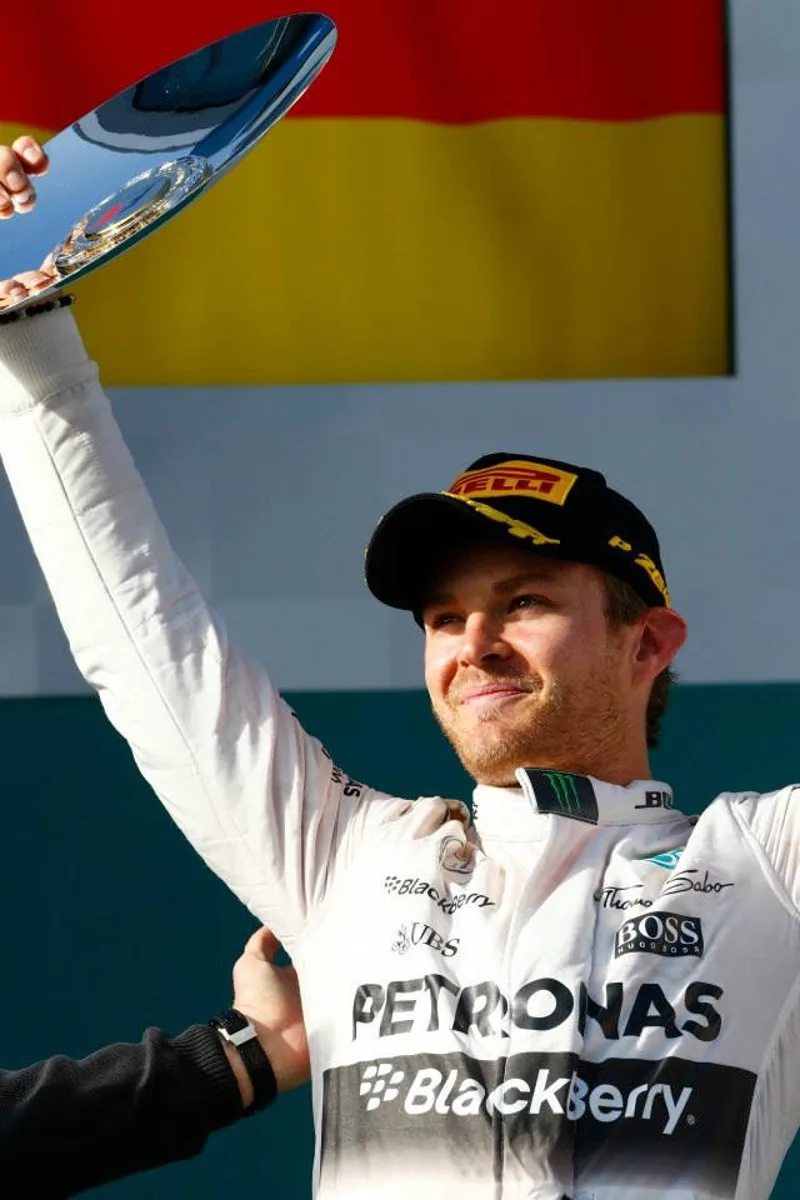
Venturi Racing was the first team to commit, in May 2019, though it withdrew again before the first season, and Germany's Abt Sportsline followed. In 2020 Ken Block drove the car on the last stage of the Dakar Rally, and Lewis Hamilton announced his X44 team. Nico Rosberg set up Rosberg X Racing, and Jenson Button launched JBXE and drove its car at the 2021 Desert X-Prix. A six-day drivers' test in southern France brought in Valtteri Bottas, Sebastien Loeb and Jean-Eric Vergne.
Winning is decided by accuracy of timing and navigation, not by speed.
How did the Extreme E car work?
The Spark Odyssey 21 was unveiled at the Goodwood Festival of Speed on 5 July 2019. Spark Racing Technology, which builds Formula E cars, manufactured it, with a battery from Williams Advanced Engineering. It carries a niobium-reinforced steel alloy tubular frame, a crash structure and a roll cage. It weighs 1,650 kg (3,640 lb), makes 400 kW (540 hp) and covers 0 to 60 mph in 4.5 seconds.
Its public debut was the 2020 Dakar, in Saudi Arabia, where Guerlain Chicherit took it through shakedown. Ken Block then drove the last stage, which ran from Haradh to Al-Qiddiya, and was third quickest of the cars.
Races were short and sharp. A team completed two or four laps in each session depending on the length of the course, splitting the time between its drivers, who swapped in a designated switch zone with a speed limit and a minimum swap time. A weekend was made of two rounds, on Saturday and Sunday, starting with two qualifying sessions of two five-car heats each. Heat results earned intermediate points of 10, 8, 6, 4 and 2, and the top five qualifiers went to the Grand Final while the bottom five contested the Redemption Race. The Grand Final settled places one to five, the Redemption Race six to ten.
Two details stood out. A super sector gave two extra points to the fastest team through it, and one Hyperdrive, giving extra power for four seconds, could be used per lap.
Why did Extreme E travel by ship?
The RMS St Helena, once a Royal Mail Ship, was the series' floating paddock and headquarters, carrying everything including the cars to the race sites or the nearest port to cut emissions compared with air freight. Its propulsion units and generators were converted to run on ultra-low-sulfur diesel, and it doubled as a research vessel with scientists on board.
On the ground, hydrogen fuel cell generators from AFC Energy produced power. The hydrogen came from water and solar energy and was used to charge the batteries of the cars, which allowed generation away from any grid. The ship left Liverpool on 20 February 2021 with nine cars and arrived in Jeddah on 14 March, in time for the first race.
Who won Extreme E, and why did it stop?
Nine teams contested five rounds in 2021, which began in April with the Desert X-Prix and closed in December in the UK. The pandemic forced two European rounds to replace two planned South American events. Rosberg X Racing, with Molly Taylor and Johan Kristoffersson, became the first champions. Team X44 won in 2022 with Cristina Gutierrez and Sebastien Loeb, when McLaren joined and the season ended in Uruguay. Rosberg X Racing won again in 2023, with Kristoffersson and Mikaela Ahlin-Kottulinsky, after a finale in Chile.
The fourth season began in Saudi Arabia in February 2024. Four teams departed (Abt Cupra XE, X44, Chip Ganassi Racing and Carl Cox Motorsport) and two arrived (SUN Minimeal XE Team and Legacy Motor Club). On 6 September, a week before Island X-Prix I, the series cancelled its remaining rounds in Sardinia and Phoenix. Veloce Racing's Kevin Hansen and Molly Taylor led the championship at that point.
A successor was already in the works. Before the 2022 opener Agag announced Extreme H, a hydrogen fuel cell edition of the Spark Odyssey 21. Then, in August 2023, Extreme E and the FIA agreed a non-binding Memorandum of Understanding setting out a framework for it, with a first season in 2025 and FIA World Championship status in 2026 should the criteria be met. In January 2024 the organisers said Extreme H would replace Extreme E and not run beside it.
In September 2025 Extreme E announced one last race, The Final Lap, at Qiddiya City in Saudi Arabia on 4 and 5 October 2025, ahead of the debut of the FIA Extreme H World Cup, set for 9 to 11 October. Of the eight teams, six were new, among them STARD, Jameel Motorsport, Kristoffersson Motorsport, Team Hansen and Team EVEN, and Yokohama took over from Continental as tyre supplier. The last Extreme E victory went to the Team Hansen pair of Andreas Bakkerud and Catie Munnings.
What was Pure ETCR, and how did its racing work?
Pure ETCR was a touring car series for electric cars. Its first season, in 2021, started on 18 June and used cars from three manufacturers at five venues in Europe and Asia, according to a calendar revealed in February 2021. Swedish driver Mattias Ekstrom took the drivers' title and Cupra won the manufacturers' championship.
The format was unusual because only six cars were ready, two per team. The twelve drivers were drawn at random into Pool A and Pool B for every weekend and never met anyone from the other pool on track. Round 1 comprised four battles, two in each pool, with three drivers apiece. In round 2 the winners faced each other, as did the runners-up and the third-placed drivers, for six battles of two cars. Points went to both rounds.
Round 3 was a time trial that set the grid for the final with no points on offer. Round 4 brought the superfinals, with six cars from each pool racing together. The driver with the most points across the weekend was called the king of the weekend.
What happened to the eTouring Car World Cup?
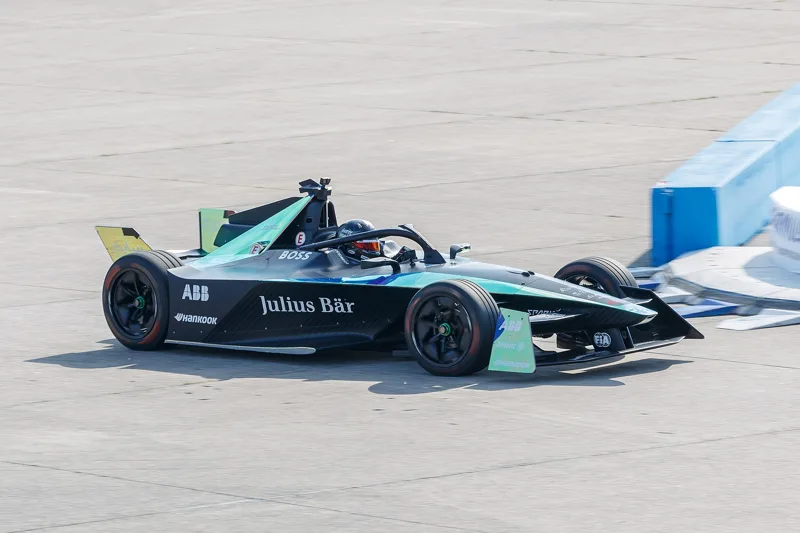
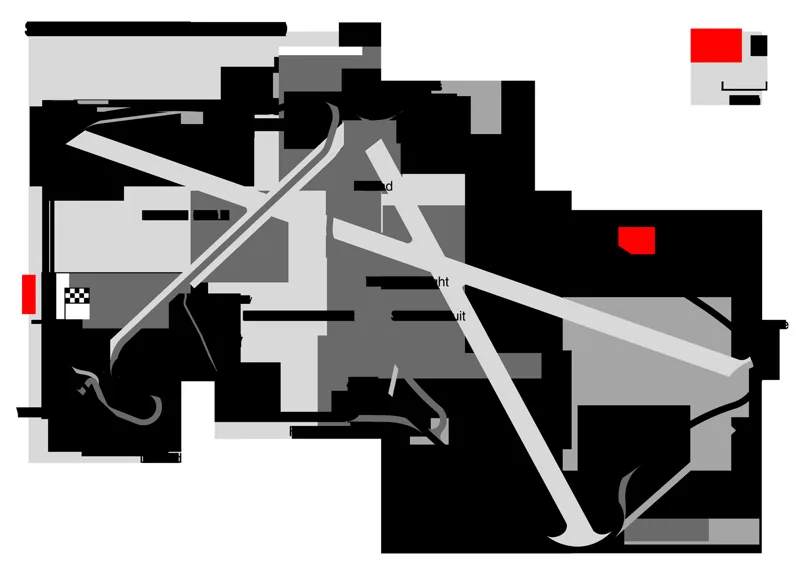
The 2022 FIA ETCR eTouring Car World Cup, the name the series took in its second year, turned out to be its last. It opened at the Circuit de Pau-Ville on 6 May 2022 and finished at the Sachsenring on 25 September. Adrien Tambay succeeded his teammate Ekstrom as drivers' champion, and Cupra EKS won the manufacturers' title again. The promoter said in March 2023 that there would be no more seasons.
The calendar had been shaky. In December 2021 a calendar of seven rounds in Europe and Asia was published. On 17 May the Istanbul round was moved to November because of organisational issues, on 29 June the Inje round was cancelled because of logistical challenges in Asia, and on 16 August the Sachsenring replaced Istanbul as the finale.
What is the Electric Marathon?
The Electric Marathon is an annual rally started in 2011. Any electric vehicle with official registration that is allowed on public roads can take part, from mass-produced cars to converted, modified or prototype machines and electric bikes. Scooters and electric quadricycles can also join, and at official ceremonies trams, trolleybuses and electric buses show symbolic support.
It is not a speed contest. The rally runs on public roads and is described as an intellectual rally: the winner is determined by the accuracy of timing and navigation and by a vehicle's reliability over long, complicated distances. A so-called zero car sets the ideal time, and the crew closest to it wins. All participants must follow traffic rules.
Its stated mission is to attract public attention in Europe and worldwide to environmental issues, popularise zero-emission vehicles and help build service infrastructure for electric cars in Europe. Events with local authorities, environmental conferences and artistic contests surround it. In 2016, for example, a forum on energy safety was held on the final day, organised with the Prince Albert II of Monaco Foundation. Prince Albert II is the rally's patron.
The first edition revived the Star Race rally from Tallinn to Monte Carlo, which ran from 1930 to 1939. The idea came from Prince Albert II and Estonia's honorary consul, Juri Tamm, and the prince gave the start in Tallinn in 2011. That year the route ran from 3 to 11 June through nine countries, from Estonia to Monaco.
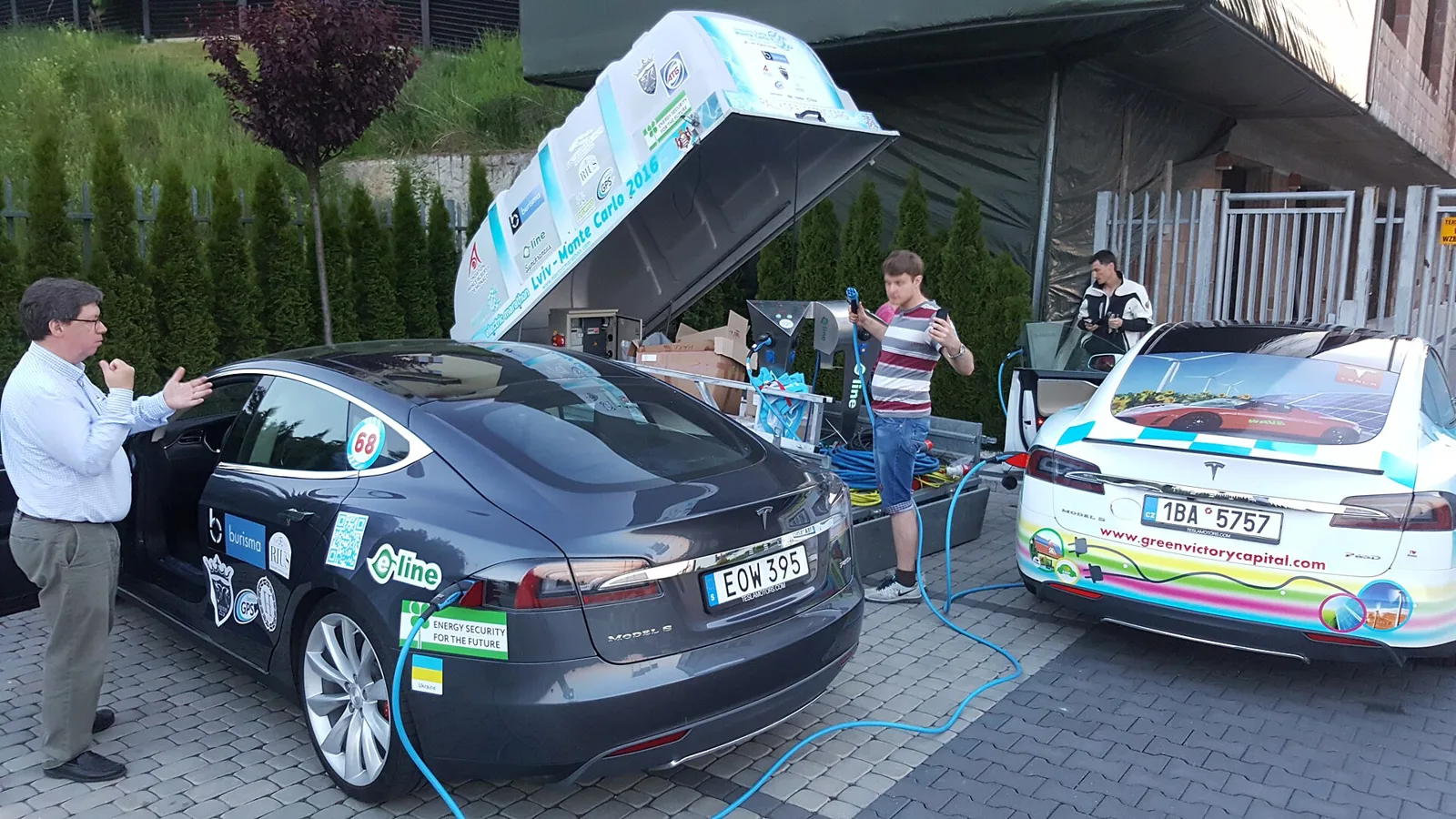
Routes have moved around. In 2012 the start was again Tallinn and in 2013 it was St Petersburg. The 2015 ceremony took place in Kyiv, and Lviv was the starting point in 2016, when 82 electric and hybrid cars from 10 European countries took part. In 2018 the event was named Tallsinki - Monte-Carlo Electric Marathon and ran from 17 to 29 September from Tallinn and Helsinki to Monaco. In 2019 it went the other way, from Monte Carlo to St Petersburg via Moscow, covering 5000 km, 10 countries and 29 cities.
Small stories pepper its history. Carl Barlev won in 2013 with his crew Half Danes and travelled with his wife and three children, the youngest only 11 months old. Andriy Bilyy, later the event's vice-president, joined in 2011 as an ordinary driver and won the final stage from Cuneo to Monte Carlo in a Tesla Roadster. In 2013 a Czech crew in an ethanol-converted Dacia Logan could not start in St Petersburg, because Russian border rules did not allow so much alcohol to be brought in. In 2016 the entry list included Synchronous, the first electric car prototype developed and built entirely in Ukraine, and in 2018 the Estonian Postal Service issued a stamp for the marathon.
How do the four compare?
| Series | Years | Where | What decided the winner |
|---|---|---|---|
| Extreme E | 2021 to 2025 | Remote locations, off-road | Qualifying heats, then Grand Final and Redemption Race |
| Pure ETCR | 2021 | Five venues across Europe and Asia | Short battles and superfinals, points over a weekend |
| eTouring Car World Cup | 2022 | Europe and Asia, finishing at the Sachsenring | Drivers' and manufacturers' championships, won by Tambay and Cupra EKS |
| Electric Marathon | Annual since 2011 | Public roads across Europe | Accuracy of timing and navigation against a zero car |