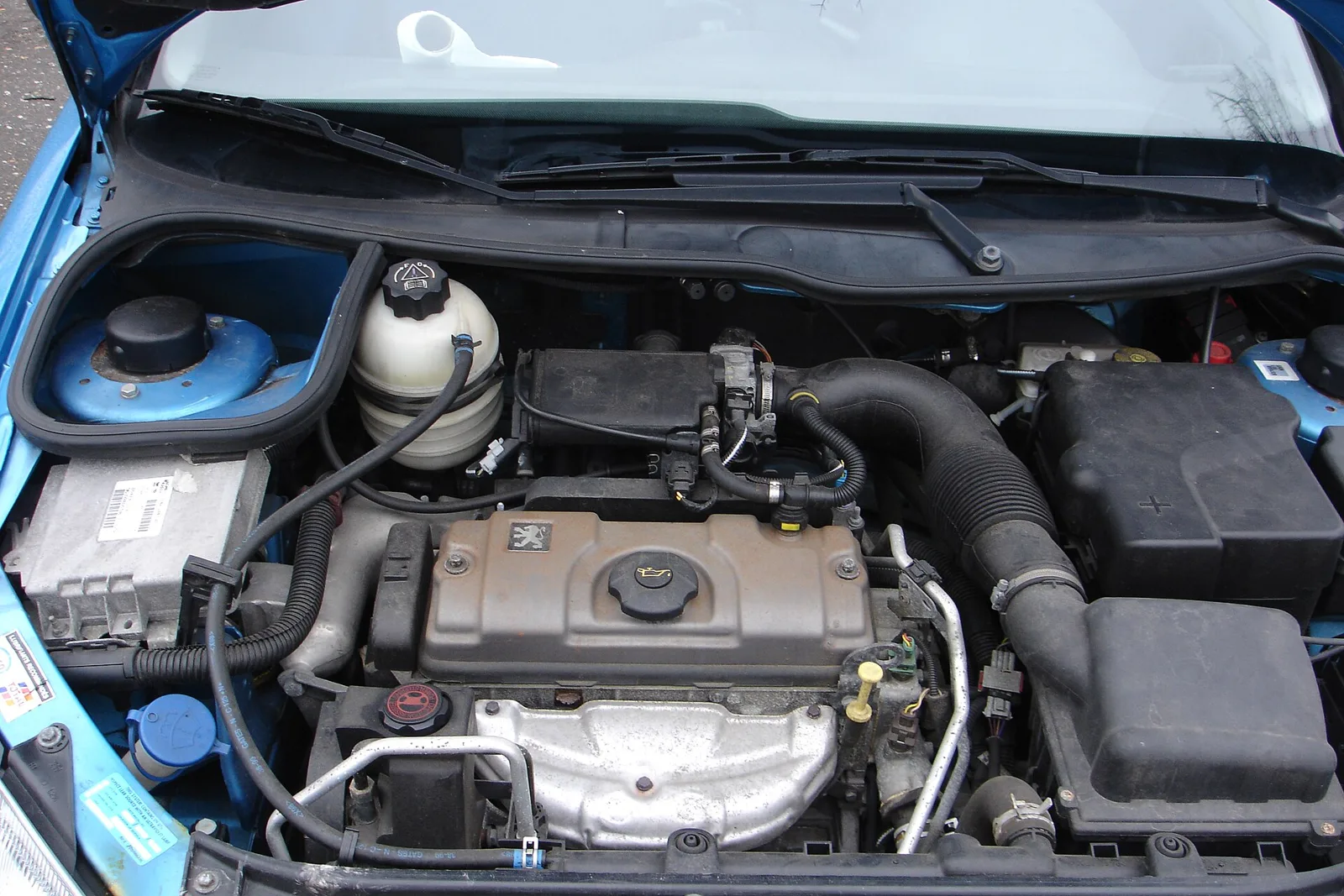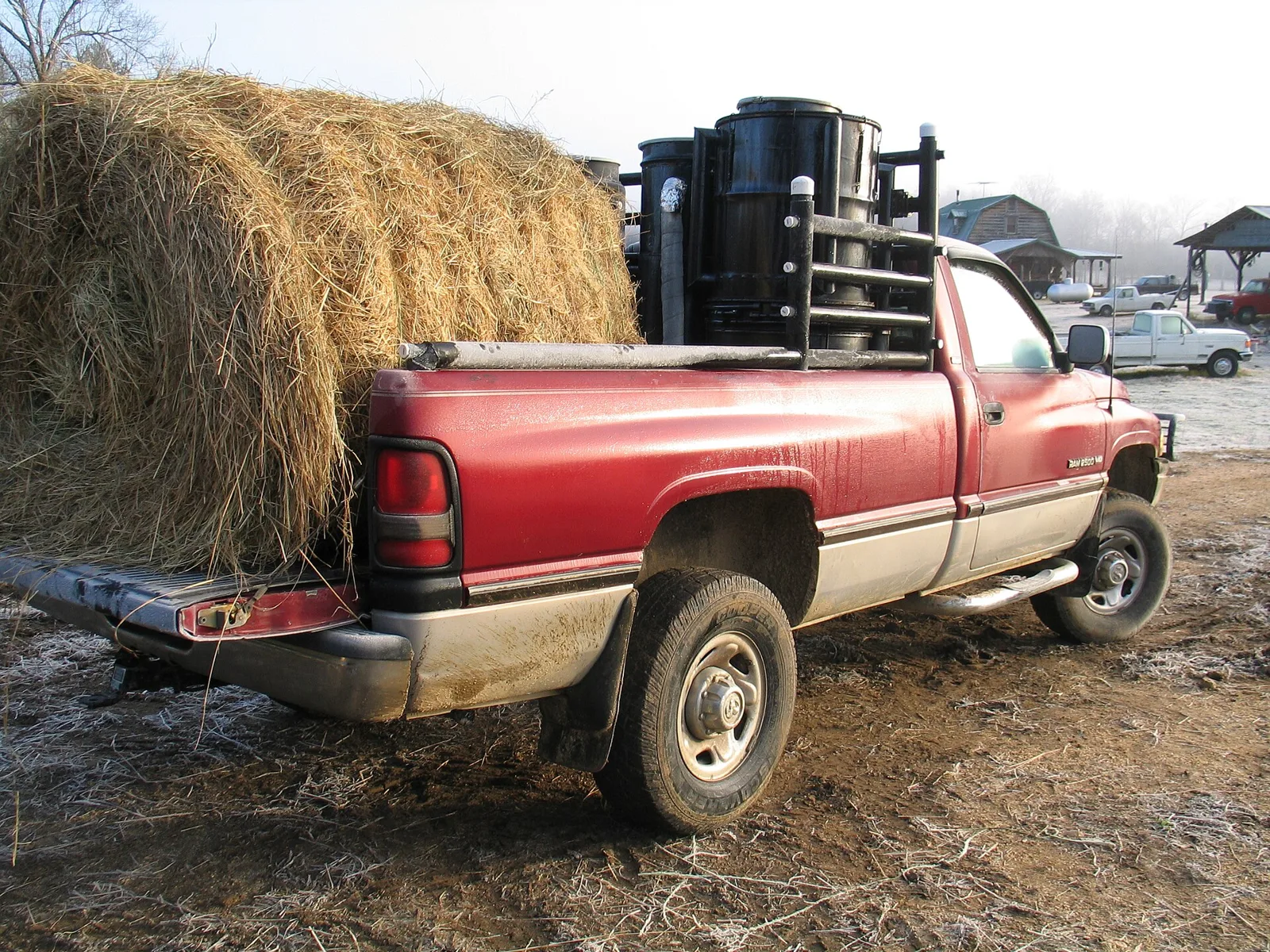
A wood gas Alfa Romeo winning in 1944, a steam-injecting six-stroke and an air car promised for production within six months.
Six-stroke engines, compressed-air cars and wood gas generators have all powered real prototypes or vehicles, from Samuel Griffin in 1883 to MDI in 2002 and wartime Gazogene cars. None became the norm because of power loss, tank pressure, development costs and size.
In 1944 a wood gas-powered Alfa Romeo won a race at Interlagos in Brazil. The driver was Chico Landi, the fuel was gas cooked out of timber, and the engine behind it is one of three ideas that engineers have pursued over many decades without ever making them the norm.
The other two are the six-stroke engine, which tries to squeeze a second power stroke out of every cycle, and the compressed-air car, which runs on nothing but stored pressure. Each has a real history, real prototypes and some hard numbers, and each has failed to turn into a car you can buy.
What is a six stroke engine?
A six-stroke engine is one of several alternative designs that try to improve on the ordinary two-stroke and four-stroke. The claimed benefits are better fuel efficiency, less mechanical complexity, lower emissions, or some mix of the three.
Designs fall into two groups. In single-piston versions, the engine captures heat that would be wasted in the normal four-stroke cycle and uses it to drive an extra power stroke and exhaust stroke in the same cylinder, with steam or air doing the work. The piston goes up and down three times for each squirt of fuel. In the other group, two pistons interact, either opposed in one cylinder or in separate cylinders, usually with one making two strokes while the other makes four. The second piston can replace the valve mechanism, which cuts complexity and allows a higher compression ratio by removing hot spots, or it can raise the expansion ratio independently, much like the Miller or Atkinson cycle.
None of the three is on a dealer's forecourt.
The Griffin six-stroke engine
The Griffin six-stroke dates from Bath in 1883. Samuel Griffin, an established maker of steam and gas engines, wanted to build an internal combustion engine without paying licence fees on the Otto patents. His answer was a patented slide valve and a single-acting six-stroke.
By 1886 the Scottish locomotive builder Dick, Kerr & Co. had licensed the patents and sold large double-acting tandem engines as the Kilmarnock. Electricity generation was the main market, where the engines were known for running happily on light load for long periods and then suddenly taking up a large demand. Their size and weight ruled out mobile use, but they could burn heavier, cheaper oil.
The key to the Griffin Simplex was an exhaust-jacketed external vapouriser held at around 550 F (288 C), hot enough to vapourise the oil without breaking it down chemically. Tars and asphalts separated out, so heavy fuel was usable. Ignition came from a hot bulb that Griffin called the catathermic igniter. Griffin went out of business in 1923, and only two engines are known to survive: one at the Anson Engine Museum, the other built in 1885, which returned in 2007 to the Museum of Bath at Work.
Modern six-stroke claims
| Design | Year | Extra stroke uses | Claim or result |
|---|---|---|---|
| Dyer | 1915 | Steam from injected water | No cooling system needed, better fuel consumption |
| Bajulaz | 1989 | Pre-heated air from extra chambers | At least 40% less fuel (claimed) |
| Velozeta | 2005 | Fresh air injected on the exhaust stroke | 40% less fuel and 65% less carbon monoxide (claimed) |
| NIYKADO | Patent filed 2005 | Added air intake and air exhaust strokes | Inventor: 23% more efficient; later profile: 50%; trade press: 40% better economy, 30% less power |
| Crower | Prototype, 2006 coverage | Steam from injected water | Estimated 40% less fuel |
Dyer, Crower and the steam six-strokes
Leonard Dyer invented a six-stroke water-injection engine in 1915. It needs no cooling system and improves fuel consumption, but it must have a supply of pure water, which supplies the steam for the second power stroke. A dozen similar patents have followed.
Bruce Crower prototyped a very similar idea in the United States. Water is injected after the exhaust stroke and turns instantly to steam, which expands and pushes the piston down again. Heat that most engines must shed through an air or water cooling system is put to work. Crower estimated a 40% cut in fuel consumption from making the same power at a lower speed. Dropping the cooling system would save weight, but a water tank would be needed on top of the fuel tank. The design drew media attention in 2006 through an interview with the 75-year-old inventor, and his patent application was later abandoned.
Bajulaz, Velozeta and NIYKADO
Roger Bajulaz of Geneva invented his engine in 1989. It modifies the cylinder head with two extra chambers, one for combustion and one for air preheating. Fuel burns at constant volume in the first, giving a thermal efficiency gain, and heated air from the second powers an extra stroke. The claimed advantages include a fuel saving of at least 40%, multifuel capability including liquefied petroleum gas, a dramatic pollution cut and costs comparable to a four-stroke.
The Velozeta engine, developed in 2005 by engineering students at the College of Engineering, Trivandrum, injects fresh air during the exhaust stroke. The air expands in the heat and drives the piston down. Valve overlap is removed, and the extra strokes improve scavenging. The reported figures are a 40% fuel saving and, on an altered engine, 65% less carbon monoxide, though power-to-weight is slightly lower than a four-stroke petrol engine.
The NIYKADO engine comes from Chanayil Cleetus Anil, a mechanic from Cochin, India, who first tested it in 2004 and filed an Indian patent on 4 April 2005. The patent was granted on 25 May 2012 and its legal status is now recorded as term expired. In the four-valve version, an air intake stroke and an air final exhaust stroke follow the normal exhaust stroke, to boost oxygen for the next cycle and clear leftover gas. A two-valve version adds a buffer stroke and a retake stroke instead.
The claims differ depending on who is speaking. The inventor says the engine is 23% more fuel efficient than a conventional four-stroke. The Kerala startup profile of Niykado Technologies, incorporated in 2022, says 50 percent more fuel economy. According to a report in Overdrive, testing at the Automotive Research Association of India produced a 40 percent economy gain and lower NOx emissions, at the cost of 30 percent of the power; the report blamed the single power stroke in every six-stroke cycle.
Opposed-piston six-strokes
The Beare-head engine from Malcolm Beare of Australia pairs a normal four-stroke bottom end with a second, opposed piston in the head running at half the rate of the lower one. That piston takes the place of the valve mechanism. Claimed benefits are 9% more power and better thermodynamic efficiency, because removing the hot exhaust valve allows a higher compression ratio.
The M4+2 came from the Silesian University of Technology in Poland under Adam Ciesiolkiewicz, and holds Polish patent 195052. It takes the same principle further. The two-stroke section handles the air exchange while the four-stroke piston works as a valve system, the cylinder fills under overpressure through a slide inlet, exhaust leaves through windows in the cylinder wall as in a classic two-stroke, and two crankshafts deliver the power.
What is a compressed air car?
A compressed-air car is propelled by the release and expansion of air stored in pressure vessels, passing through a motor adapted to compressed air. It might use air alone or be combined, as in a hybrid, with petrol, diesel or electric power with regenerative braking.
Physics sets the tone: air cools as it expands and heats as it is compressed, and thermal losses in the compressor and the tanks reduce the capacity factor of the whole system. The tanks follow pressure vessel safety standards; ISO 11439 is the equivalent for compressed natural gas tanks. Tanks may hold low pressure (9 atm) or high pressure (240+ atm); built from composites such as fibre reinforced thermoplastic, they can weigh far less than lithium-iron batteries and 70% less than steel tanks. In crash tests of advanced 700-atmosphere vessels developed for hydrogen cars, fibre reinforced thermoplastic tanks only ruptured and did not shatter or explode.
Compressed air cars: advantages and disadvantages
Supporters list a long run of benefits. A car driven by air is emission free at the tailpipe, does not need the electric grid, and can be refuelled from a compressor driven directly by a wind turbine or hydropower. With no electric motor there is no need for copper or magnets. Self-discharge is very low, so a charged air car can sit unused longer than an electric one. There is no fire hazard after an accident, the cooling system, spark plugs, starter motor and mufflers can go, and pistonless air engines are very quiet. Expanding air also produces cold that can run the climate control.
The drawbacks are plain. Air stores less energy per unit volume than liquid nitrogen or hydrogen. And whereas a battery roughly holds its voltage as it discharges, the pressure in an air tank falls as air is drawn off. Continuously variable transmissions or auxiliary motors can reduce the effect, but they add expense.
The most recent efficiency figures come from an isothermal prototype built in 2020 by Dr Reza Alizade Evrin of Ontario Tech University. It used low-pressure tanks and recovered exhaust air to power a paraffin heat exchanger, and had a range of 140 km (86 mi). Reported figures for its energy efficiency vary, from 59.4% of a lithium-ion vehicle's to 74%. Suggested improvements include building the tank into the chassis, higher pressures, new rotary engines and recycled thermoplastics.
Who has tried to build an air car?
MDI showed its Air Car publicly in South Africa in 2002, and in January 2004 production was predicted within six months. It had still not reached production as of 2022. MDI has proposed a range called AIRPod, OneFlowAir, CityFlowAir, MiniFlowAir and MultiFlowAir, with an "active chamber" that burns a fuel to heat the air and double the energy output, an idea first used in torpedoes in 1904.
In January 2009, Tata Motors said it planned to launch a car with an MDI engine in 2011. By December 2009 its vice president of engineering systems confirmed that limited range and low engine temperatures were causing problems. In May 2012 Tata announced it had passed the proof-of-concept phase and moved to phase two, detailed development, and in February 2017 Dr Tim Leverton said the project was starting industrialisation, with first vehicles by 2020.
Others joined in. Engineair in Australia built small prototype vehicles with a rotary air engine designed by Angelo Di Pietro and is looking for commercial partners. APUQ made an air car powered by a Quasiturbine. Peugeot and Citroen announced a hybrid in which a petrol engine drives the car above 70 km/h or when the air tank is empty, but in January 2015 PSA delayed the Hybrid Air powertrain indefinitely. Development was estimated to cost 500 million euros, and production would have to exceed 500,000 cars a year to repay it. The head of the project had left in 2014.
What is a wood gas generator?
A wood gas generator is a gasification unit that converts timber or charcoal into producer gas made up of atmospheric nitrogen, carbon monoxide, hydrogen and traces of methane. After cooling and filtering, it can run an internal combustion engine. Historically the units were often mounted on vehicles, though present studies concentrate mostly on stationary plants.
Thomas Hugh Parker built the first known wood gas motor vehicle in 1901. In the 1920s French engineer Georges Imbert developed a compact generator that was easier to fit to standard vehicles, and most successful designs in Europe and the United States are variants of it.
The Second World War made them common. With petrol rationed, large numbers of generators were built or improvised in Great Britain, France, the United States and Germany to turn wood and coal into vehicle fuel. Germany made Gazogene units for cars, trucks, artillery tractors and even tanks, and the technology was popular in neutral Sweden, Brazil and Spain. Chico Landi's Alfa Romeo win came from this era.
Wood gas after the war
When oil prices rose, interest returned. In March 1989 the US Federal Emergency Management Agency published a manual on building a stratified downdraft gasifier in an emergency. It is simple to build and refuel, but it has a tar problem, since it has no fixed oxidation zone and lacks a true reduction zone, and tar quickly gums up a motor and can leave valves and rings stuck. The later Keith gasifier recovers heat and eliminates the tar problem. Testing at Auburn University showed it 37% more efficient than running on gasoline, and it set the world speed record for biomass-powered vehicles. The United Nations and the World Bank have both published designs.
A European Union project at Guessing in Austria, started in 2005, paired a wood gas generator with a gas engine to produce 2 MW of electricity and 4.5 MW of heat, and by October 2005 could turn 5 kg of wood into 1 litre of fuel. North Korea is also known to run wood gas trucks, common outside Pyongyang, because of sanctions on oil imports.
Wood gas: advantages and disadvantages
On the plus side, wood is a renewable resource, the carbon cycle is closed, a generator can be fabricated in a crisis from materials on hand, and the gas burns far cleaner than a wood fire. It works best in a stationary role, for combined heat and power.
The disadvantages are big. The units are large. Starting is slow, taking many minutes while a cold batch of wood heats up, and stopping from high load is difficult because residual heat keeps making gas. The main fuel gas, carbon monoxide, can be fatal to humans even at small to moderate concentrations. And wood moisture, usually 15 to 20%, plus about 0.4 litres of water for each kilogram of dry wood, condenses into a liquid that needs waste water treatment, using about 25 to 35% of the wood gas energy.
Records still fall. A truck at the Bonneville Salt Flats set a wood gas record of 73 mph in 2011, and the fastest wood-gas car, a 1987 Chevrolet El Camino known as El Kamina, reached 140 km/h (87 mph). In 2010 a Volkswagen Scirocco converted by Martin Bacon for the BBC series Bang Goes The Theory ran from London to Manchester on coffee grounds.
What it means if you are buying or driving a car
None of the three is on a dealer's forecourt. The MDI Air Car was not in production as of 2022, the six-strokes remain a collection of claims and prototypes, and today's wood gas development concentrates on stationary plants. Anyone considering the idea should note that wood gas contains poisonous carbon monoxide and that unproven designs call for great caution.
Where this goes next
Tata's 2017 statement set a target of first air vehicles by 2020, and other reports said it was reviving plans for a compressed-air Nano. Engineair is seeking commercial partners, and Evrin's team lists tank, engine and heat exchanger improvements that might raise range and efficiency. Niykado Technologies lists a hybrid six-stroke engine, a power generator and pumps as later applications. For wood gas, work is mostly aimed at stationary plants.