A family business from 1810 that became a car maker in 1896, with landmark models, six European Car of the Year awards and a long motorsport record.
Peugeot is a French car brand owned by Stellantis, with a lineage that starts with a family manufacturing business founded in 1810. Its car company was created in 1896, and it has earned six European Car of the Year awards and a long run of motorsport titles.
Peugeot is a French car brand that began as a family manufacturing firm in 1810 and now sits within the Stellantis group. Its car business dates from 1896, which makes it the oldest car company in the world, and the brand has built a long record in road cars, motorcycles and competition.
What is Peugeot and where did it begin?
Peugeot is a French automobile brand owned by Stellantis. The family started in 1810, when a steel foundry began producing saws, and the lion logo was chosen to suggest the speed, strength and flexibility of those blades. The family's car business came much later, in 1896.
The family and the company were originally from Sochaux. The Sochaux factory opened in 1910 and became the main plant from 1928.
The lion was a symbol for the saw blades the family made, and Emile Peugeot applied for the lion trademark on 20 November 1858. That date came decades before the company built its first vehicle, which shows how long the badge has been part of the brand.
A lion trademark from 1858, a car company from 1896 and a motorsport record that runs from Le Mans to the Dakar.
How did Peugeot become a car maker?
Peugeot moved into cars through Armand Peugeot, who built the company's first vehicle, a steam tricycle. The firm then worked with Leon Serpollet in 1886 and, by 1890, had turned to an internal combustion car with a Panhard-Daimler engine. The 1896 creation of Automobiles Peugeot gave that car work its own company.
Output rose steadily after 1890. Car sales were 29 in 1892, 40 in 1894, 72 in 1895 and 156 in 1898, and the company reached 300 in 1899.
Motorcycles were part of the story from the start. Peugeot Motocycles remains the oldest motorcycle manufacturer in the world, and the family has kept that line of work alongside its cars for well over a century.
Early motorsport and the 1912 breakthrough
Peugeot was an early pioneer in motor racing. The company won the 1894 Paris-Rouen, the first motor race, and its cars went on to contest the biggest events of the period.
Georges Boillot won the 1912 French Grand Prix at Dieppe in a Peugeot. The car was a 7.6-litre four-cylinder with 110x200 mm dimensions, and it was the first Grand Prix car to use a dual overhead camshaft layout with four valves per cylinder. Its average of 110.2 km/h (68.45 mph) in the race showed what the design could do.
The engineering carried into 1913. The L5 used a 5,655 cc engine for the French Grand Prix and introduced a ballbearing crankshaft and dry sump lubrication. A car of this design went to Indianapolis that year, where the average speed reached 122.2 km/h (75.92 mph).
Those results gave Peugeot Indianapolis 500 wins in 1913, 1916 and 1919. In 1914 the L5 set an Indianapolis lap record of 160.1 km/h (99.5 mph).
Which Peugeot road cars became landmarks?
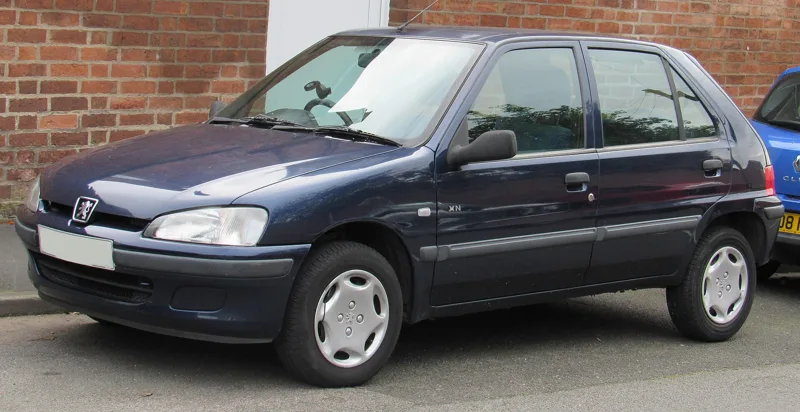
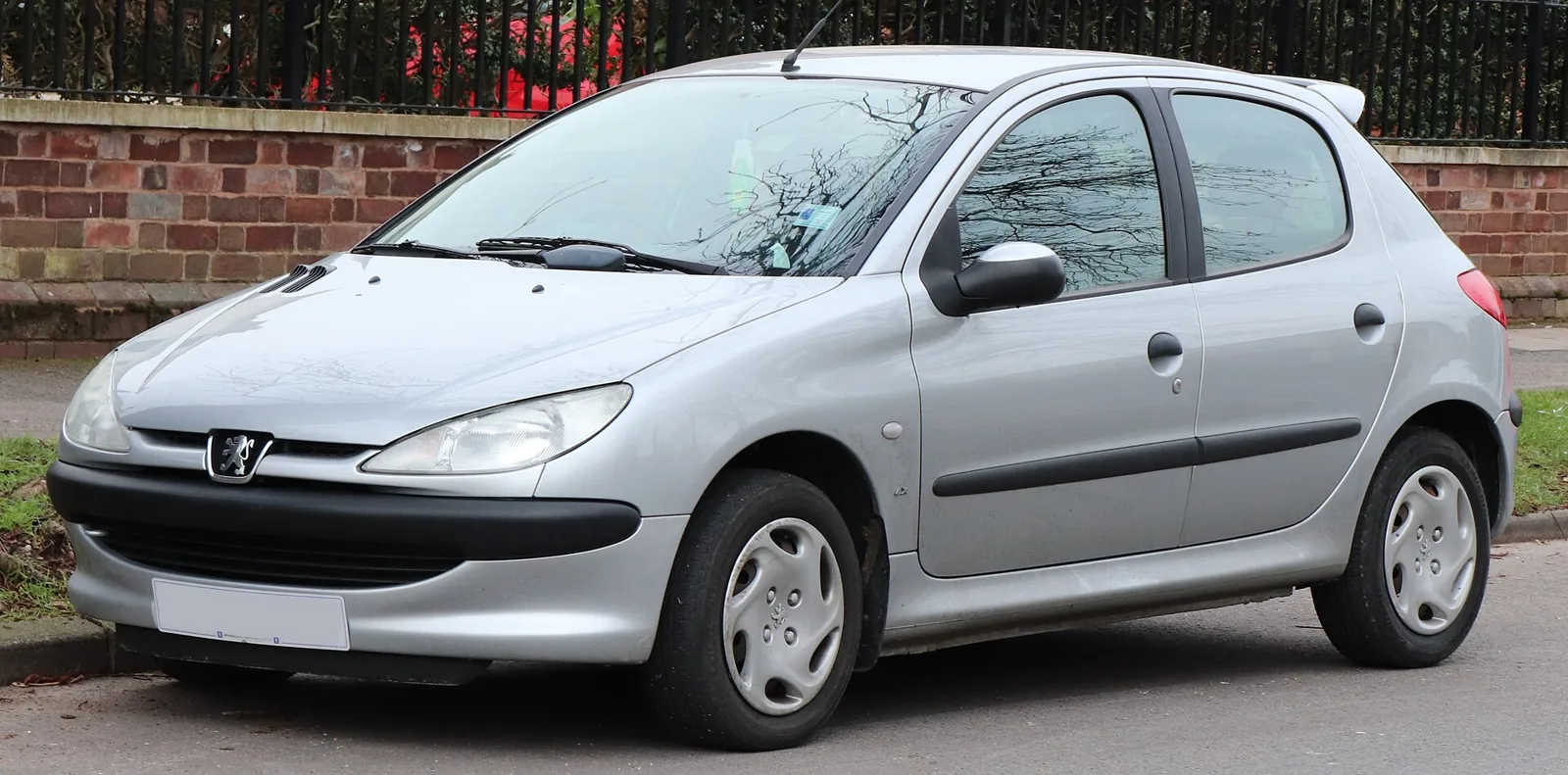
The Peugeot 201 of 1929 was the cheapest car on the French market, and it introduced the three-digit naming system with a central zero. Later landmarks include the 205 and the 405, while the 206 was the best-selling Peugeot model, with 8,358,217 cars sold by 2012.
The naming system explains a great deal about the range. The same pattern carried into the 2000s and 2010s, with the 1007 (2004-2009), the 2008 (2013-present), the 3008 (2008-present) and the 5008 (2009-present). The first digit signals a car's size and the final digit marks its generation, so the central zero stayed fixed in every name. That method is why the 308 and the 508 follow the same pattern.
The years after 1929 brought curvaceous body styles to the range. The 402 BL Eclipse of 1934 used an early retractable hardtop, a body style the brand would return to in later years.
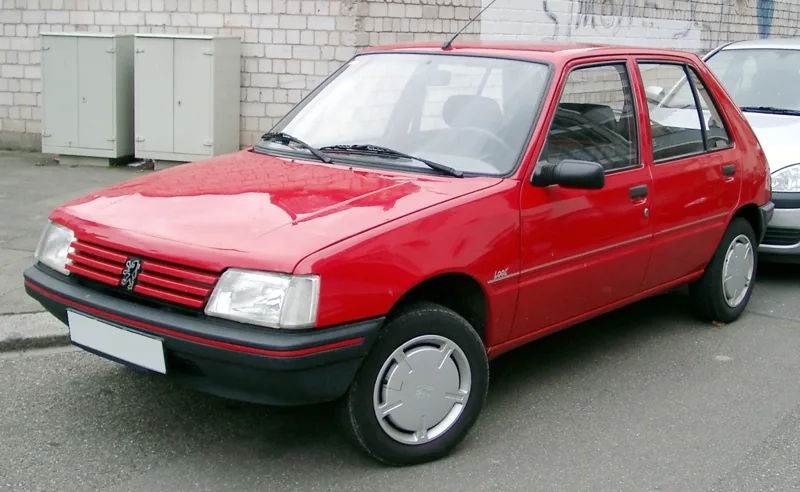
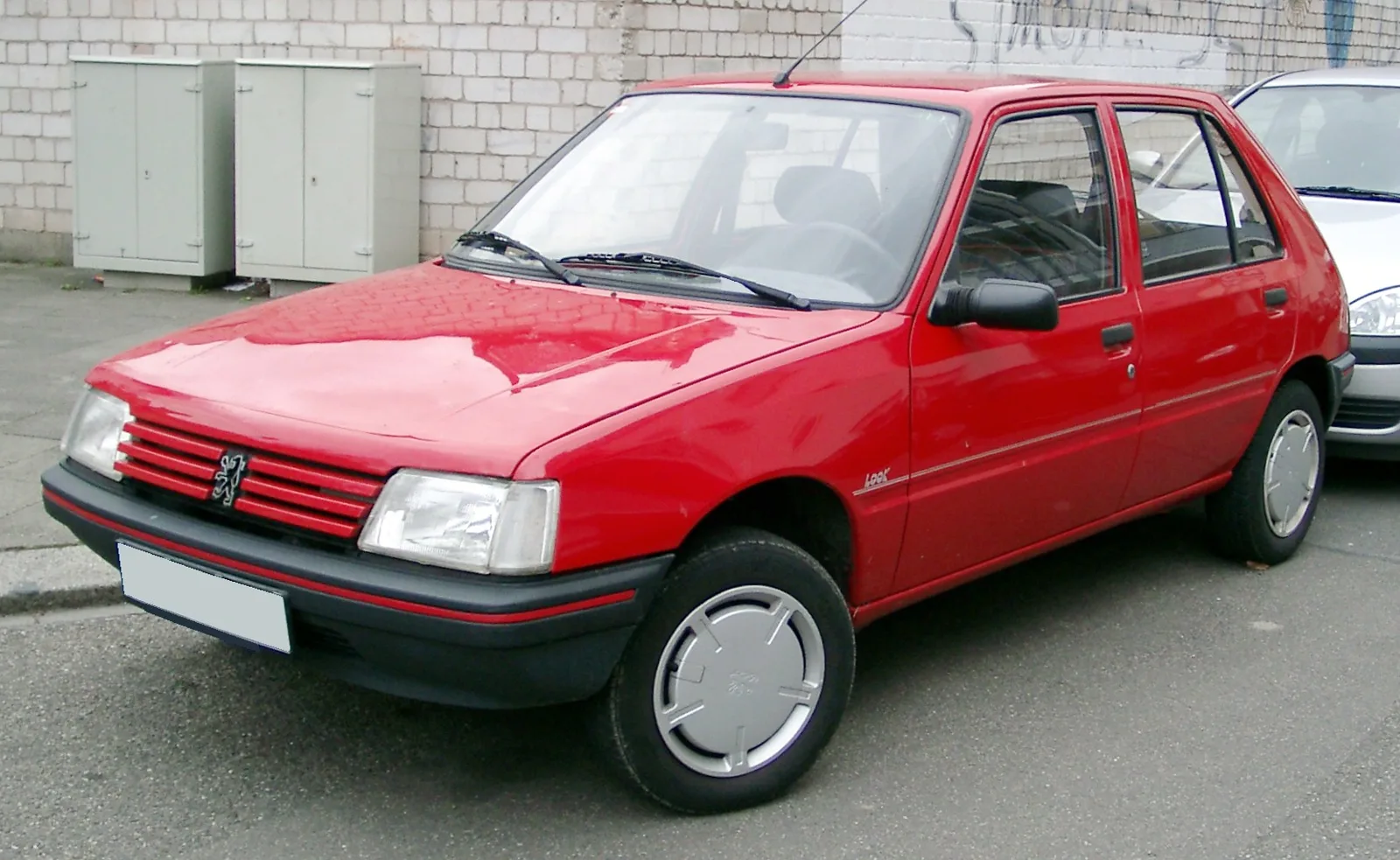
Pininfarina styled a number of models, including the 504. The 405 was voted European Car of the Year in 1988, and the 205 was praised for its styling, ride and handling. The 205 was built between 1983 and 1998.
The 1,618 cc engine of the 404 was tilted 45 degrees, and the 403 had a 1.5-litre engine. The 403 went on to sell one million copies by the end of its production in 1962.
The 205 was a strong seller at home and abroad. It was regularly France's bestselling car, and UK sales topped 50,000 a year by the late 1980s.
Showrooms carried the range into major cities. Peugeot Avenue has a flagship on the Champs-Elysees in Paris, and the Peugeot Avenue in Berlin closed in 2009. Both sites were places where the brand presented its production and concept cars to the public.
What engineering milestones shaped the company?
Peugeot's engineering milestones run from its first petrol-engined cars to the rally machines of the 1980s. The first Peugeot engine, built in 1896, was an 8 hp horizontal twin, and the company became the first maker to fit rubber tyres to a petrol-powered car. Its PRV V6 followed in 1974.
The Group B 205 Turbo 16 debuted at the 1984 Tour de Corse, and the car is closely tied to the company's rally history from that point.
Earlier engineering also shows a clear line of development. The 1912 car introduced DOHC and four valves per cylinder, and the 1913 L5 added a ballbearing crankshaft and dry sump lubrication.
How did the company grow through takeovers and partnerships?
Peugeot grew by acquisition as well as by design. In 1974 it bought 30% of Citroen and took over the company completely in 1975. In 1978 it also took over the European operations of Chrysler. Later deals brought in new partners, including General Motors in 2012 and Dongfeng in 2014.
General Motors bought a 7% share in Peugeot in March 2012 for 320 million euros. The deal was part of a cooperation aimed at joint purchasing and product development.
In 2014 an agreement was reached under which Dongfeng and the French state would each take a 14% stake. The arrangement added two new 14% shareholders to the company's ownership.
The Stellantis merger closed on 16 January 2021, and Peugeot now sits within the group that merger created. The merger brought the brand into a much larger organisation.
Where did the business face setbacks?
Peugeot's manufacturing footprint has changed over time. The Ryton plant closed in January 2007 with the loss of 2,300 jobs, and the Aulnay-sous-Bois plant closed in October 2013. Its later difficulties also included a fine from Spain's competition regulator and a change of ownership at its motorcycle arm, both covered below.
The American market was another area of retreat. US sales fell to 4,261 units in 1990, and the company ceased operations in the United States after 33 years in the market.
Legal and ownership matters also arose. In 2015 Spain's competition regulator fined Peugeot Espana over 15 million euros. In January 2015 Mahindra bought 51% of Peugeot Motocycles for 28 million euro, a deal that changed the ownership of the motorcycle business.
How did Peugeot perform in rallying?
Peugeot won the World Rally Championship manufacturers' title in 1985, 1986, 2000, 2001 and 2002. It also won the Dakar Rally between 1987 and 1990 and again between 2016 and 2018, and its 404 won the East African Safari Rally four times. Those results make rallying one of the core strands of the company's competition history.
The Peugeot 207 S2000 won the Intercontinental Rally Challenge from 2007 to 2009, adding another series title to the rally record.
Endurance racing, hill climbs and Formula One
Peugeot won the 24 Hours of Le Mans in 1992, 1993 and 2009, and took the World Endurance Championship in 1992 and 1993. In 2009 the 908 HDi FAP finished first and second at Le Mans, which gave the company a one-two finish in the same race.
The company also won the Intercontinental Le Mans Cup in 2010 and 2011. Its 306 GTi took the Spa 24 Hours in 1999 and 2000, and in 2013 the 208GTi scored a one-two-three at the 24 Hours Nurburgring.
Peugeot won the Pikes Peak International Hill Climb in 1988, 1989 and 2013. The 2013 car was a 208 T16 with a 3.2-litre twin-turbo V6 producing 875 bhp (652 kW; 887 PS), and it weighed 875 kg (1,929 lb). Its time on the mountain was 8:13.878.
In Formula One, Peugeot supplied engines to McLaren in 1994, then to Jordan from 1995 to 1997 and to Prost from 1998 to 2000, with no wins from those teams.The touring car record also includes the Asian Touring Car Series titles in 2000, 2001 and 2002, and the Stock Car Brasil championships in 2008, 2009 and 2011.
What do the awards show?
Peugeot has produced six European Car of the Year winners, from the 504 in 1969 to the 208 in 2020. The 308 also won Women's World Car of the Year in 2022. The 208 was the Best-Selling Car in Europe during the same year.
The European Car of the Year wins span five decades. The 405 took the award in 1988, the 307 in 2002, the 308 in 2014, and the 3008 in 2017.
The brand's cars also reached popular culture. In the film Blade Runner 2049, the Spinner flying car was branded as a Peugeot.
Electrification and concept cars
Peugeot presented the RC HYmotion4 concept at the 2008 Paris Motor Show. It carried an electric motor at the front wheels.
The BB1 concept, shown in September 2009 at the Frankfurt Motor Show, used in-wheel motors in its rear wheels.
Peugeot's current direction is clear from the target it has set for the range. Every model is expected to have an electrified variant by 2025, and the brand's shift to electrified transport is now a central part of its plans.
Other Peugeot businesses
Peugeot Saveurs produces over two million mills a year and exports to over 80 countries.
The Z pepper mill, launched in 1874, is still in production. Bicycles were part of the early business too, and Peugeot bicycles began in 1882 at Beaulieu. The bicycle line recorded ten Tour de France wins between 1903 and 1983.
Key Peugeot figures
The table gathers the main figures for the marque in one place, so the dates, totals and competition results can be checked at a glance.
| Figure | Detail |
|---|---|
| Founded | 1810, as a family business |
| Automobiles Peugeot | Created in 1896 |
| Lion trademark application | 20 November 1858 |
| Main plant | Sochaux, France; factory opened 1910, main plant from 1928 |
| Owner | Stellantis; merger closed 16 January 2021 |
| European Car of the Year | Six awards, 1969 to 2020 |
| Indianapolis 500 wins | 1913, 1916 and 1919 |
| World Rally manufacturers' titles | 1985, 1986, 2000, 2001 and 2002 |
| Dakar Rally wins | 1987-1990 and 2016-2018 |
| Le Mans wins | 1992, 1993 and 2009 |
| Pikes Peak wins | 1988, 1989 and 2013 |
| Best-selling model | 206, with sales of 8,358,217 cars by 2012 |
Frequently asked questions
Is Peugeot the oldest car company in the world?
Peugeot is described as the oldest car company in the world. Its car arm, Automobiles Peugeot, was created in 1896, and the family business behind it was founded in 1810.
How many European Car of the Year awards has Peugeot won?
The six winning models are the 504 (1969), the 405 (1988), the 307 (2002), the 308 (2014), the 3008 (2017) and the 208 (2020).
Which Peugeot model has sold the most?
The 206 is the top-selling Peugeot, having sold 8,358,217 cars by 2012. It took over from the 205 when that model ended production in 1998.
Who owns Peugeot today?
Peugeot is owned by Stellantis. The group took shape through a merger finalised in January 2021, and the brand operates within it.