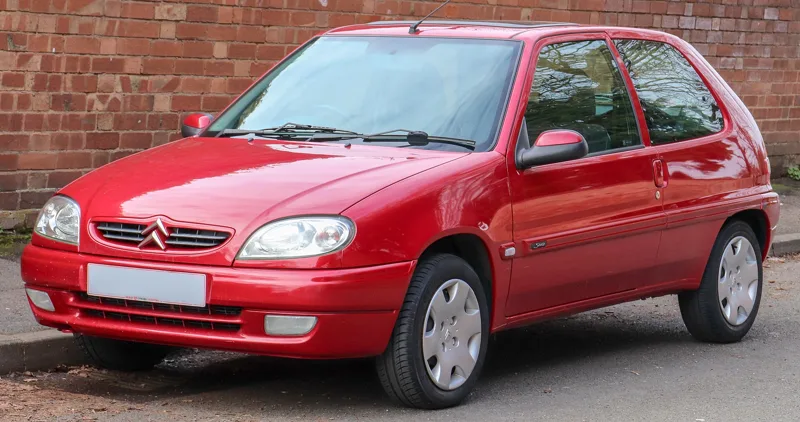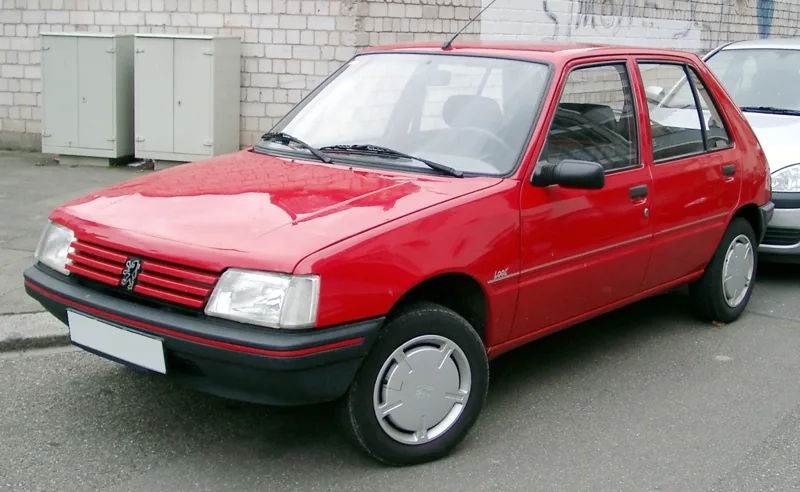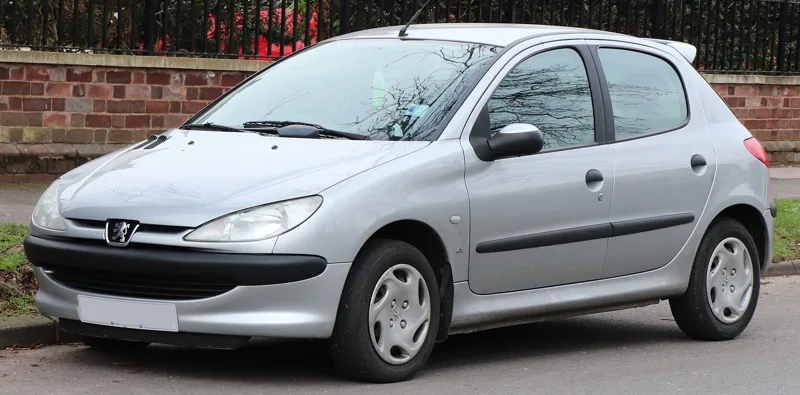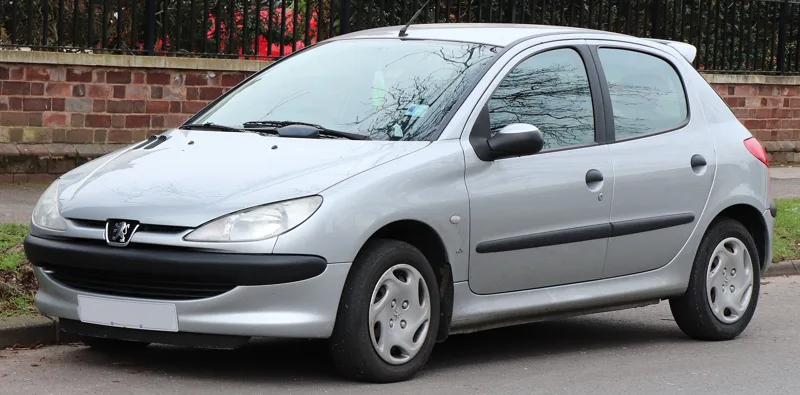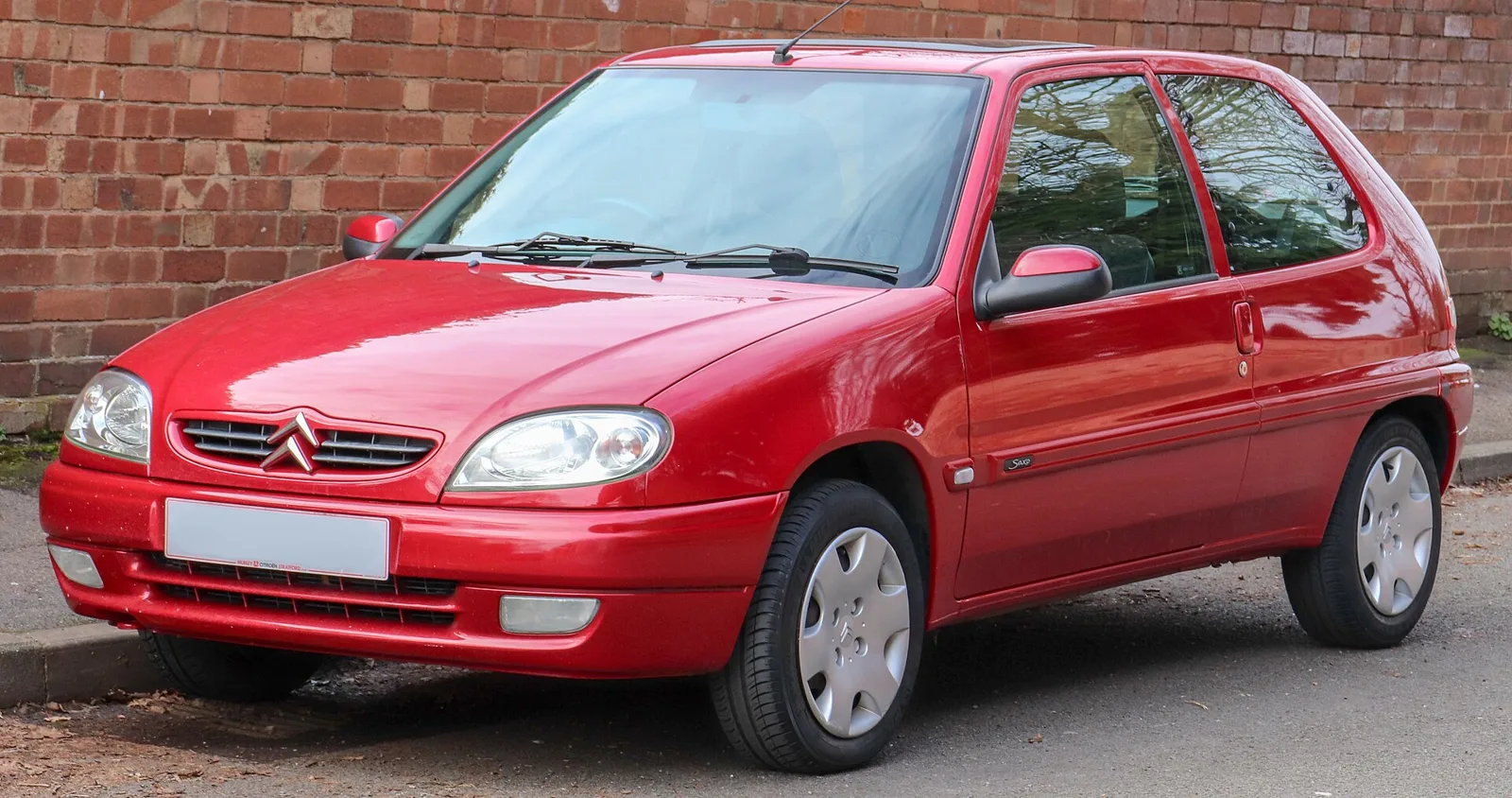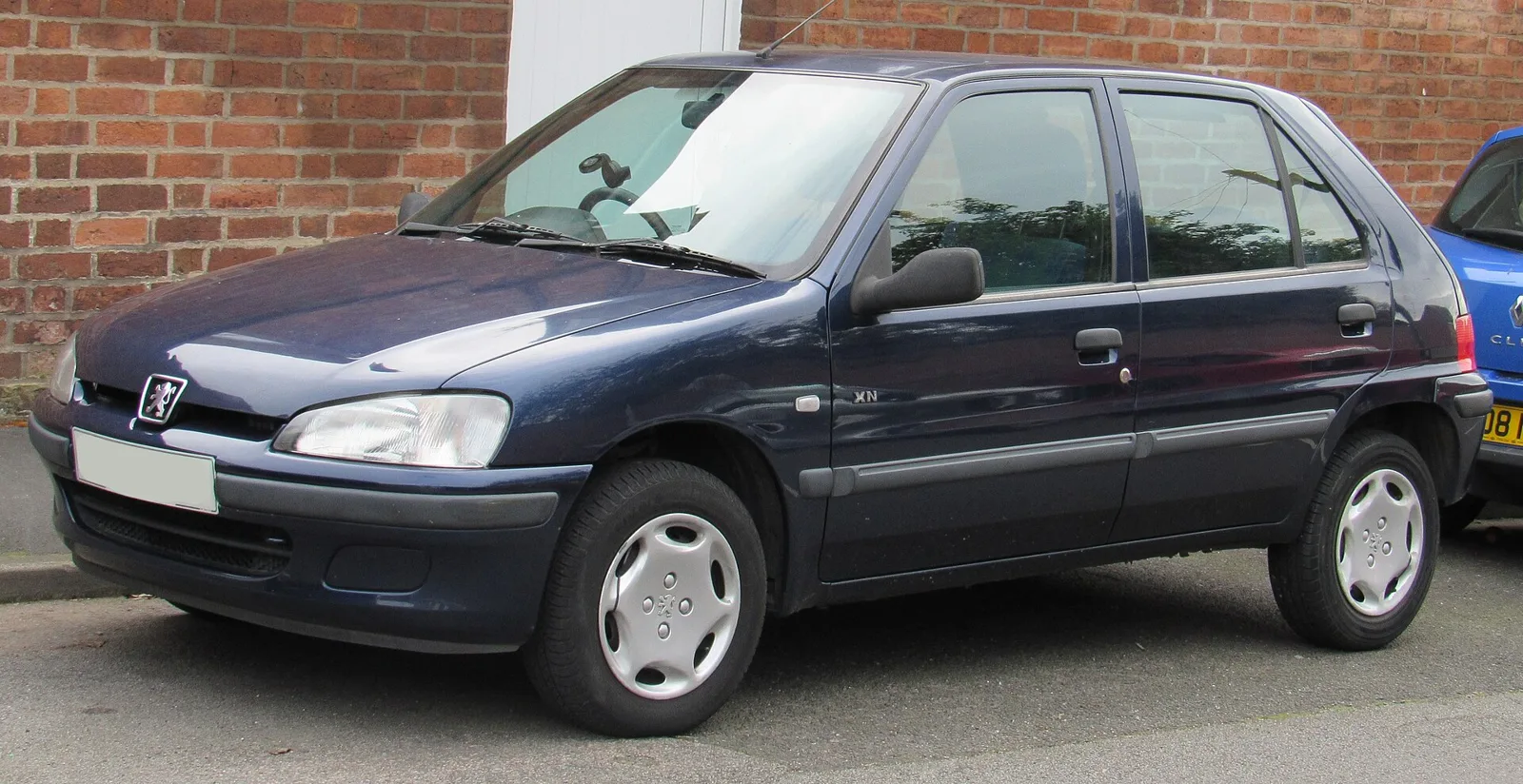
Peugeot's entry-level car for almost twelve years, from its Citroen AX based beginnings to the Rallye and the 106 Electrique.
The Peugeot 106 was a supermini that Peugeot built from September 1991 to July 2003 as its entry-level car. It was developed from the Citroen AX platform, and its high-performance Rallye versions, with their lightweight specification and high-revving engines, are the best known today.
The Peugeot 106 was a supermini that the French maker built from 1991 to 2003. It served as Peugeot's entry-level car for the whole of its life, and the Rallye versions with their high-revving engines are the models that enthusiasts still talk about. An electric 106 also reached showrooms in several European countries.
When did the Peugeot 106 go on sale?
The 106 was introduced in September 1991 as a three-door hatchback, first in continental Europe and then, two months later, in the United Kingdom. A five-door version followed in August 1992. Production finished in July 2003, after almost twelve years on sale.
Carburettors were fitted to the earliest 1.0 and 1.1 petrol cars. From the end of 1992, fuel injection took over, a change driven by EEC emissions regulations that every European manufacturer had to meet at that time.
Trim levels ran from the basic XN and mid-range XR to the top-spec XT and the sporty XSi. Low-end cars showed visible metal on the doors and had a sparser interior, and a radio was optional on some variants.
The launch set the pattern for the rest of the model's life: a modest car with a wide range of engines and a sporting variant that drew enthusiasts.
A supermini that was always the entry point to Peugeot, and the Rallye that made it famous.
Where did the 106 fit in Peugeot's range?
The 106 belonged to the "100" line of small Peugeots, a family that began in 1972 with the 104. The 104 was one of the first modern European superminis. It was effectively replaced by the 205 in 1983, although it stayed in production in some markets until 1988.
There was never a "105" in that sequence. The 106 sat beneath the 205 in the range, and it was engineered on a substantial rework of the Citroen AX platform. Its direct rival was the Renault Clio, which had entered production a year before the 106 appeared.
Like the AX and the 205, the 106 had independent suspension. MacPherson struts were fitted at the front, and transverse torsion bars at the rear kept the back end compact. The result was a light and tidy small car for city streets.
A close relative followed. The Citroen Saxo was based on the 106 from January 1996, and it was nearly identical in looks and size to its Peugeot sibling, so the two cars shared most of their engineering.
What engines did the 106 use?
Petrol engines in the first range were 1.0, 1.1 and 1.4 litres. A 1.4-litre diesel arrived in August 1992. By late 1994 that diesel had been replaced by a 1.5-litre unit that offered slightly more power and a much stronger pull at low revs.
After October 1994 the French range lost its 1.0 XN, and the 1.1-litre became the starting engine. Across the range, the smaller engines were the ones that defined the car's character, and the larger units were chosen by buyers who wanted more pace.
Transmission choices were straightforward. The 1.0 and early 1.1 cars had a four-speed manual, and every other model had a five-speed manual. An automatic was available on a few engines.
Smaller engines suited a car designed for city use, while the 1.5-litre diesel brought a bigger step up in pulling power for buyers who covered longer distances.
Power output came from the engine and the gearbox working together, and the diesel's extra torque suited the car's role as a family runabout rather than a performance machine.
Right-hand drive cars created a packaging problem. Phase I cars could not take power steering because there was no room for the pump, and that was corrected with the Phase II revisions. Power steering then came as standard on the higher specifications and as an option on the rest.
Air-conditioning was never offered on right-hand drive 106s. The blower motor sat in the bulkhead on the driver's side, which left too little space for an evaporator, and the windscreen wiper motor occupied the passenger side, so the blower could not simply be moved.
What changed with the Phase II 106?
The car was updated in July 1996. Side impact bars were added, and driver and passenger airbags appeared for the first time. The new 1.6 GTI took the place of the 205 GTI in spirit, since the 205 GTI had left the lineup in 1994 and was still highly regarded.
The Phase II body was 114 mm (4.5 in) longer, and it had a larger nose that echoed the newer 406 range. The changes gave the car a more modern look while keeping the same basic layout.
At the end of 1998 the larger Peugeot 206 arrived, and it competed directly with the 106. The 106 range was trimmed back to the Zest versions and the GTI. The Zest line came as Zest, Zest 2 and Zest 3, with the diesel or the smallest petrol engines. The GTI sat at the top of the revised range, above the Zest cars.
Phase II therefore marked a shift from a basic small car to one with modern safety equipment, and the GTI gave enthusiasts a reason to look twice. The car was safer and more practical, though its basic character stayed the same.
Special editions carried the car to the end of its life. The Quiksilver, Look and Independence versions were offered in the later years. The UK market had its own list, including Graduate, Inca, Aztec and Independence, many of which were built on the XN trim with added graphics.
The successor was the Peugeot 107, which arrived in June 2005 through a tie-up with Toyota. The same project produced the Citroen C1 and the Toyota Aygo, so the 107 belonged to a shared family of small cars.
Why was the Rallye special?
The Rallye was sold on the idea of fewer frills and more thrills. Its steel wheels were painted white, and the car lost its power steering, central locking and electric windows to reach a kerb weight of 825 kg (1,819 lb).
Enthusiasts separate the cars into two groups. The pre-facelift versions are known as S1, and the later facelifted cars as S2. The S2 gained a 1.6-litre TU5J2 engine, replacing the high-revving 1.3-litre TU2J2 of the S1, and it produced 103 PS (76 kW) against the S1's 100 PS (74 kW).
The S2 therefore offered a little more power than the S1, but the S1 was the purer homologation car, with its engine built around the 1300 cc class rules.
The S1 was not a copy of the 205 Rallye unit. The 205 and the AX Sport used a carburettor TU24 engine, while the S1 used a fuel-injected unit. Its aluminium block shares the outline of the 1.4 iron block, but with a smaller capacity, so the car stayed under 1,300 cc for the lower French rally classes.
The S1 was built as a homologation special for the 1300 cc rally class. Its four-cylinder, 8-valve, high compression engine had an aggressive cam profile, and it came on song between 5,400 and 7,200 rpm.
The 1.3 was a sprinter rather than a cruiser, thanks to its short-ratio five-speed gearbox. At 70 mph in fifth gear the engine turned at 4,000 rpm, and on a long enough straight the car would reach its redline in top gear at 115 mph. Both S1 and S2 used Magneti Marelli multipoint fuel injection.
The facelift brought the 106 GTI, with a 1.6-litre 16-valve engine producing 120 hp. It had a new body kit and new wheels, and in some European markets it was badged as the S16 or the Rallye.
Those details made the Rallye a distinct model, separate from the everyday 106 range.
How did the 106 race?
The car competed in the National Saloon Car Cup during the early 1990s and held its own in its class. It was competitive on track while remaining a practical small family car.
In 1993 Olympic decathlete Daley Thompson took a 106 into the NSCC, winning his class at Thruxton. Thompson's car also started the 1993 Willhire 24 Hour at Snetterton.
The 106 raced in the Nurburgring 24 Hours each year from 1993 to 2003, and it also appeared at Spa's 24-hour event between 1997 and 1999. The best showing was 11th at Spa in 1998, in the 24-hour event.
What was the 106 Electrique?
In 1995 Peugeot launched an electric version, the 106 Electrique. The United Kingdom, Norway, Switzerland, the Netherlands, Belgium and France all received the car. The drive system came from the engineering firm Heuliez, which developed and built it. It was a specialist project rather than a mainstream version of the car.
The car ran on nickel-cadmium batteries from Saft Groupe S.A. The pack held 20 batteries of 6V and 100Ah, all of them liquid cooled. Top speed was 56 mph (90 km/h), and the official range was 100 km (62 mi).
The motor, built by Leroy Somer, was a brushed DC unit rated at 20 kW (26 hp) peak, the same design used in the Citroen AX and Saxo electric twins. Its nominal output was 11 kW (15 hp), and a diesel heater helped with range in winter.
Sales fell well short of the plan. Peugeot had expected to sell 15,000 to 20,000 cars each year, but only 6,400 were sold between 1995 and 2003, most of them to the French Administration.
The expected total production run had been set at 100,000 vehicles, so the gap between plan and reality was very wide. Most buyers of the electric car were members of the French Administration.
What are the Peugeot 106 specifications?
The table lists the core figures for the 106 across its production life. Rallye and Electrique figures appear in their own rows, so the performance versions are not mixed in with the standard car.
| Specification | Detail |
|---|---|
| Production | September 1991 to July 2003 |
| Body | Three-door hatchback, five-door from August 1992 |
| Initial engines | Petrol 1.0, 1.1 and 1.4 litre; diesel 1.4 from August 1992 |
| Front suspension | MacPherson struts |
| Rallye weight | 825 kg (1,819 lb) |
| S2 engine | 1.6-litre TU5J2, 103 PS (76 kW) |
| S1 engine | 1.3-litre TU2J2, 100 PS (74 kW) |
| Rallye top gear | 115 mph |
| 106 GTI | 1.6-litre 16-valve, 120 hp |
| 106 Electrique range | 100 km (62 mi) |
| 106 Electrique top speed | 56 mph (90 km/h) |
| 106 Electrique sales | 6,400, 1995 to 2003 |
Frequently asked questions
When did the Peugeot 106 stop production?
Production ended in July 2003. The 107 that followed was launched in June 2005 with Toyota's involvement.
Did the 106 Rallye have power steering?
No. Power steering was among the features removed to keep the car light at 825 kg (1,819 lb).
How many 106 Electriques were sold?
The electric car sold 6,400 examples in total, mostly to French government buyers.
What was the best result for a 106 in the Spa 24 Hours?
It came at Spa in 1998, when the car finished 11th overall.