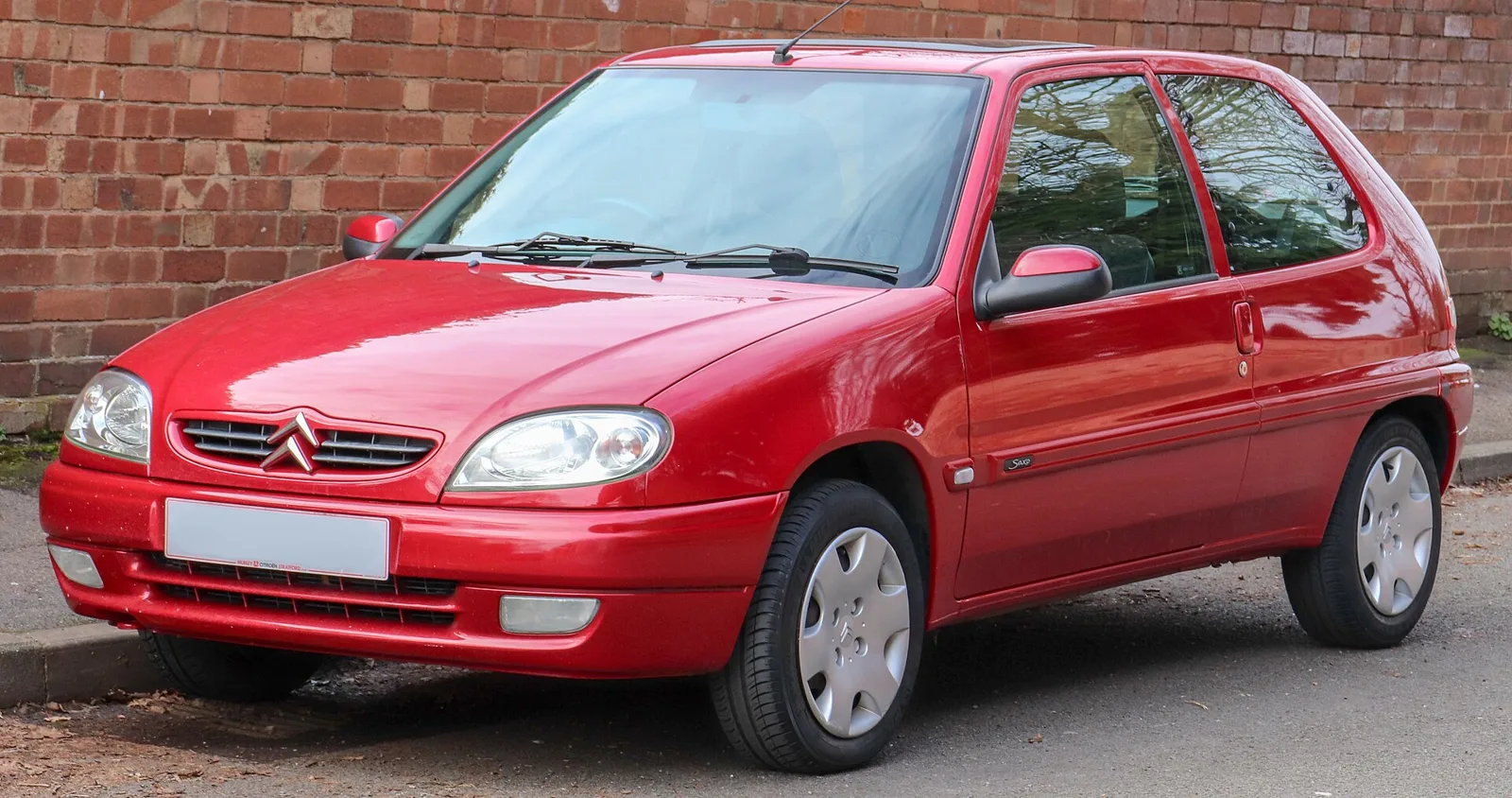
Built from 1996 to 2003 on the AX and 106 platform, the Saxo was light, cheap to run and surprisingly successful in rallying and junior racing.
The Citroen Saxo was a supermini produced from 1996 to 2003, built on the same platform as the Citroen AX and Peugeot 106. It was replaced by the C2 and C3, and its VTS version reached 205 km/h. The Saxo later became a successful rally car.
The Citroen Saxo was a supermini built from 1996 to 2003, sharing its underpinnings with the Citroen AX and Peugeot 106. It was light, easy to park and cheap to run, and its sporty versions went on to earn a surprising rally record. The car ended as the C2 and C3 arrived to take its place.
Where did the Saxo come from?
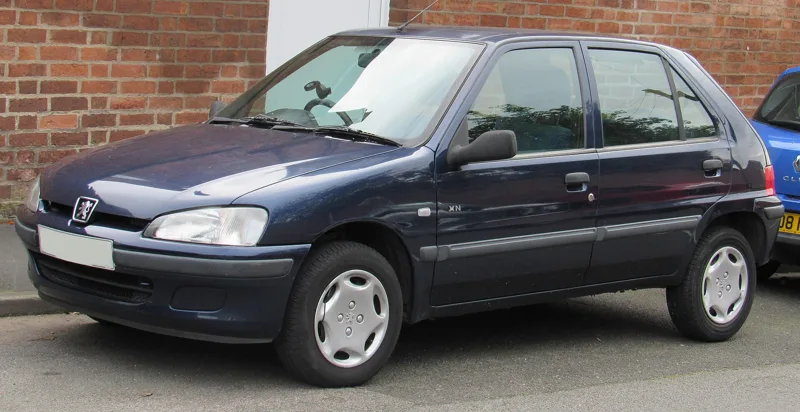
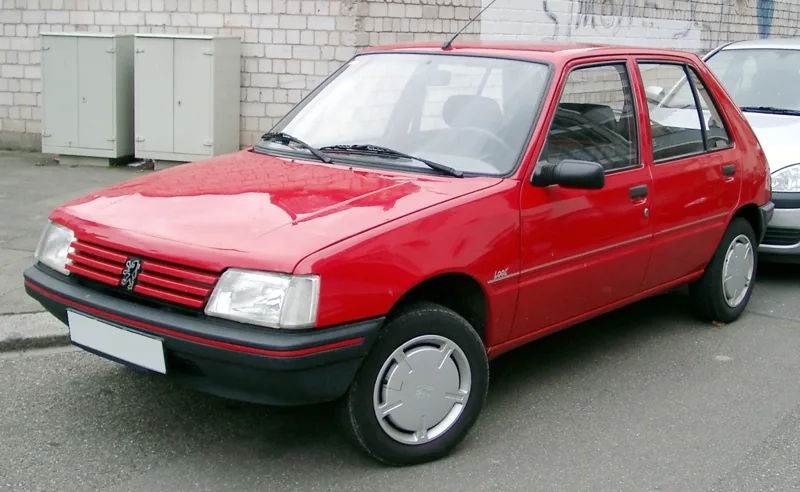
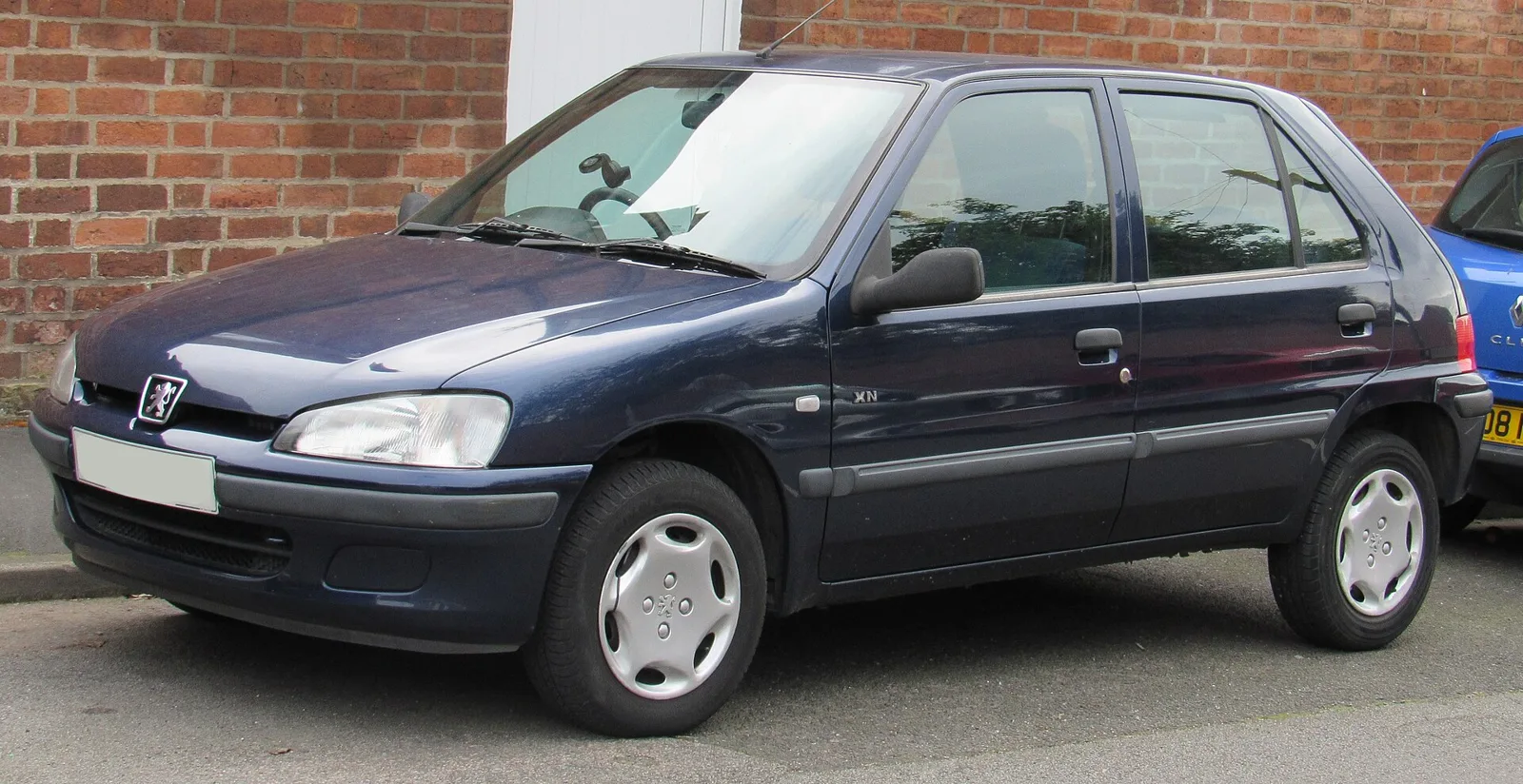
The Saxo was built on the underpinnings of the Citroen AX and Peugeot 106, two cars it closely resembled. The main differences were the interiors and body panels, so the three cars were close relatives under the skin. Its name was not used in every market, because Honda had already registered it in Japan.
In Japan the car was sold as the Citroen Chanson. The Saxo was discontinued in 2003, when the C2 and C3 took its place. The C3 had launched a year earlier, and both new models were developed alongside the Peugeot 206.
A light, cheap supermini that went on to take hundreds of rally podiums and a junior racing series of its own.
What engines did the Saxo offer?
Every engine came from the PSA TU series, which had powered the Peugeot 205 from 1988 and the Citroen AX. The range included five petrol engines and one diesel engine, all of them naturally aspirated. Their roots went back to the older OHC PSA X engine used in earlier Citroen and Peugeot cars.
Aside from the VTS, which used 16 valves, the engines were older SOHC units. That kept the car simple and cheap to maintain, although it also left city fuel economy behind the best small hatchbacks of the period.
How heavy was the Saxo, and how did it go?
Quoted power figures were modest even by the standards of the period. The range-topping VTS weighed just 935 kg (2,061 lb), and most smaller engines were noticeably lighter still. That gave the car a high power-to-weight ratio, which meant decent acceleration and good city manners.
The early 1.0i was underpowered. The 1.1i was considered much better, since it was nearly 200 cc larger and produced roughly 30% more torque. The 1.1i could still struggle to reach more than about 35 mpg in town when driven carefully.
Which sporty Saxos were built?
There were three sport models. The Westcoast, later replaced by the Furio, used a 1.4 8V engine producing 55 kW (75 hp), topping out at 175 km/h (109 mph) and a quick sprint for its class.
The VTR MK1 ran from 1997 to 1999 with a fuel-injected 1.6-litre engine producing 66 kW (90 hp), peaking at 187 km/h (116 mph) and a 10.0 second sprint. The VTR MK2 from 1999 to 2003 raised output to 72 kW (98 hp), lifting the maximum to 193 km/h (120 mph).
The VTS 16V relied on a 1.6-litre engine producing 88 kW (120 hp), reaching 205 km/h (127 mph) and covering 0-60 mph in 7.8 seconds. The two VTS generations performed in much the same way, though the later car was a touch slower owing to its extra weight.
How did the sports models stop and turn?
The sports models used 247 mm (9.7 in) vented front brake discs, and the VTR and VTS also had rear discs of the same size. The VTS had a 22 mm (0.9 in) master brake cylinder, while the VTR and Westcoast used a smaller cylinder.
Suspension control arms and struts were different from the standard car, and the VTS had a thicker rear anti-roll bar than the VTR. All sports models carried a unique bodykit, commonly known as the VT bodykit, which made them easy to spot in traffic. Each model kept the same basic chassis as the standard car, with the sporting changes concentrated in the brakes, suspension and body.
How did the automatic Saxo work?
In 1997 an automatic option paired the three-speed gearbox with the 1.6i 8V, offered on the SX and VSX trims. Later that year the 1.6i automatic gave way to a 1.4i rated at 55 kW (75 hp). The 1.6 was the faster of the two, with a clearly higher top speed than the 1.4.
Citroen kept the 1.4i in the facelift Saxo Automatic from 1999. The Saxo Automatic eventually ended, because the C3 used a 1.4i automatic gearbox, while manual models were sold right up to the end of 2003.
What was the Saxo interior like?
The equipment list was sparse on budget models, which had a driver's airbag, seat belt pretensioners, a cassette player, a heated rear screen and tinted windows. Early Mark One cars had keypad immobilisers and a clock in place of a tachometer.
Higher trims added sunroofs, power steering, electric windows, an ultrasonic alarm, a passenger airbag, a CD player and alloy wheels. Even so, the interior looked dated next to rivals such as the Vauxhall Corsa, and many centre console controls came from the older AX.
What changed with the 1999 Mark II?
In September 1999 the Saxo received a facelift, usually called the Mark II. The main changes were more modern headlights, a new bonnet and grille to replace the square styling of the Mark I, and multipoint injection on the 1.1-litre engines.
Power steering became standard on all but the most basic models, and the engine control unit moved from one plug to three. The old three-stud wheel layout from the AX was dropped. In September 2000 the car, along with its twin the 106, achieved poor results in Euro NCAP crash testing.
Why was air conditioning missing on right-hand drive Saxos?
Air conditioning was never offered on right-hand drive Saxos. The blower motor sat in the bulkhead on the driver's side, and there was not enough room for the evaporator unless the airflow was ducted across to the passenger side at the expense of the glove box.
An aftermarket kit did exactly that, but the pressure loss made the system noisy and ineffective. The blower motor could not easily be moved, because the windscreen wiper motor occupied the passenger's side space.
Why was the Saxo sold as the Chanson in Japan?
Honda had already registered the Saxo name in Japan, so Citroen sold the car there as the Chanson. Otherwise the model followed the same development path as the European cars, sharing its platform with the AX and 106.
Like its European sibling, the Chanson belonged to a family of superminis built on a shared platform. That relationship explains why the three cars share so much of their engineering while differing mainly in trim and body panels.
What was the Saxo Electrique?
The Saxo Electrique was Citroen's next step in electric vehicles, following a few hundred Citroen AX Electriques. Working again with Heuliez, Citroen produced the Saxo in much larger numbers, with 2,174 units built, which made it a useful step toward electric mobility for the brand. It shared its battery and traction motor layout with the AX.
The motor was a 20 kW separately excited brushed DC unit made by Leroy Somer, although it could only hold that peak for short periods. Its nominal output was just 11 kW (15 hp), with an estimated range of around 80 km (50 mi) and a top speed of 91 km/h (56 mph). A diesel heater helped with winter range. The car carried 20 SAFT STM5 batteries, and its charging arrangement was designed for fast top-ups compared with many earlier electric cars.
What was the Saxo Dynavolt?
A prototype series hybrid was developed from the Saxo Electrique and shown at the 1998 Paris Auto Show. It used a small two-stroke flat twin as a range extender, connected to an integrated starter alternator that charged the batteries when needed.
Its range figures were about 80 km (50 mi) on electric power alone and 340 km (210 mi) overall. It was never designed as a performance car. A later development became the Citroen Berlingo Dynavolt, shown at the Geneva Motor Show in March 1999 with a larger four-stroke engine.
How aerodynamic was the Saxo?
The Saxo had a drag coefficient of Cd 0.340, with a frontal area of 1.83 m2. That made it a respectable result for a small hatchback built to a tight budget.
Good aerodynamics did not make the car fast on its own. Its modest figures reflected its brief rather than any shortcoming in the design. Its real strengths were light weight and a simple layout, which made it easy to tune and easy to drive hard in competition.
How did the Saxo perform in motorsport?
The Saxo competed in the S1600 and Kit Car classes in rallying from 1997. It appeared in the World Rally Championship between 1997 and 2007, and by 2025 it had recorded over 700 podiums and 200 wins.
The car also raced in endurance events in Germany and the Netherlands from 1997 to 2007, mostly at the Nurburgring 24 Hours. A Saxo finished 30th at the 1998 Spa 24 Hours.
How did the Saxo end its life?
The production run ended in September 2003 as the three-door C2 took over, and the 106 twin stopped building at that same moment. By then the design was seven years old, and buyers were drawn to the more spacious five-door C3.
The Mark II models stayed popular with enthusiasts, and the 1.6 VTR and VTS remained in demand. The Saxo's later life owed much to those sporty versions and to the junior racing series that followed. Its later years showed how a well-judged small car could keep a loyal following long after its design had aged.
What is the Junior Saloon Car Championship?
The Junior Saloon Car Championship uses the Citroen Saxo as its basis, and it has run since 2014 for young racing drivers aged 14 to 17. Before 2014 the series was called the SAXMAX Championship and had run since 2006.
Dorlin, who won in 2014, and Hall, the 2022 winner, both later moved up to the British Touring Car Championship in 2025. Two champions reaching a national touring car grid shows how the programme works as a route into professional racing. The series gave the Saxo a second life on the track long after the road car had gone.
Frequently asked questions
When was the Citroen Saxo built?
The Saxo was built from 1996 to 2003. It was replaced by the C2 and C3, and the C3 had launched a year before the Saxo finished production.
How fast was the VTS?
From its 1.6-litre engine the VTS made 88 kW (120 hp). It peaked at 205 km/h (127 mph) and took 7.8 seconds for the 0-60 mph sprint.
How far could the Saxo Electrique go?
The Saxo Electrique was rated at roughly 80 km (50 mi) between charges, and Citroen built 2,174 units of it.
Did the Saxo race in rallies?
Yes. Rallying was a major outlet for the car from 1997, and it had recorded over 700 podiums and 200 wins by 2025.