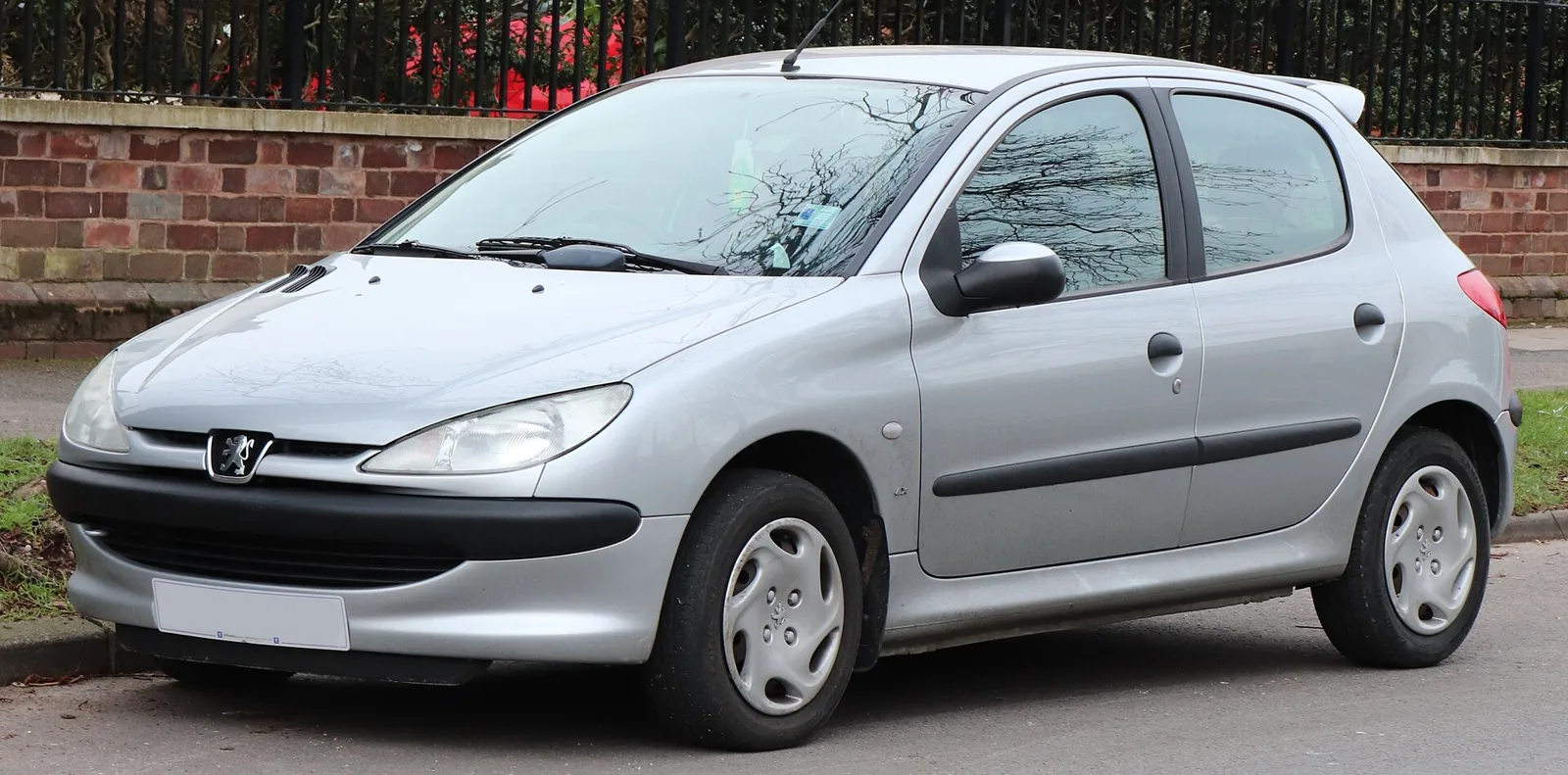
Built from 1998 to 2024, a late replacement for the 205 that sold more than any other Peugeot, won rallies and made one of the most admired car adverts.
Peugeot's 206 was a supermini built from 1998 to 2024 that replaced the 205 late and then sold more than any other Peugeot model. It spawned coupe, estate and saloon versions, a WRC rally car that won the world titles in 2000 and 2002, and a famous television commercial.
The Peugeot 206 was a French supermini that Peugeot built from 1998 to 2024 as a late replacement for the 205. It became the best-selling Peugeot ever, reaching 8,358,217 cars by 2012, and it spawned coupe, estate, saloon and rally versions along the way.
This profile follows the car from the planning that produced it through its bodies, engines, factories, sales, rally career and advertising. Metric figures come first, with imperial values in brackets.
Why did Peugeot build the 206?
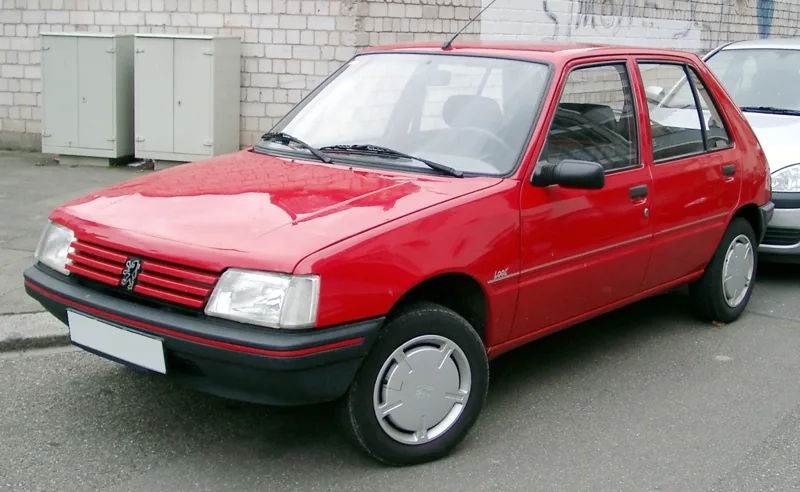
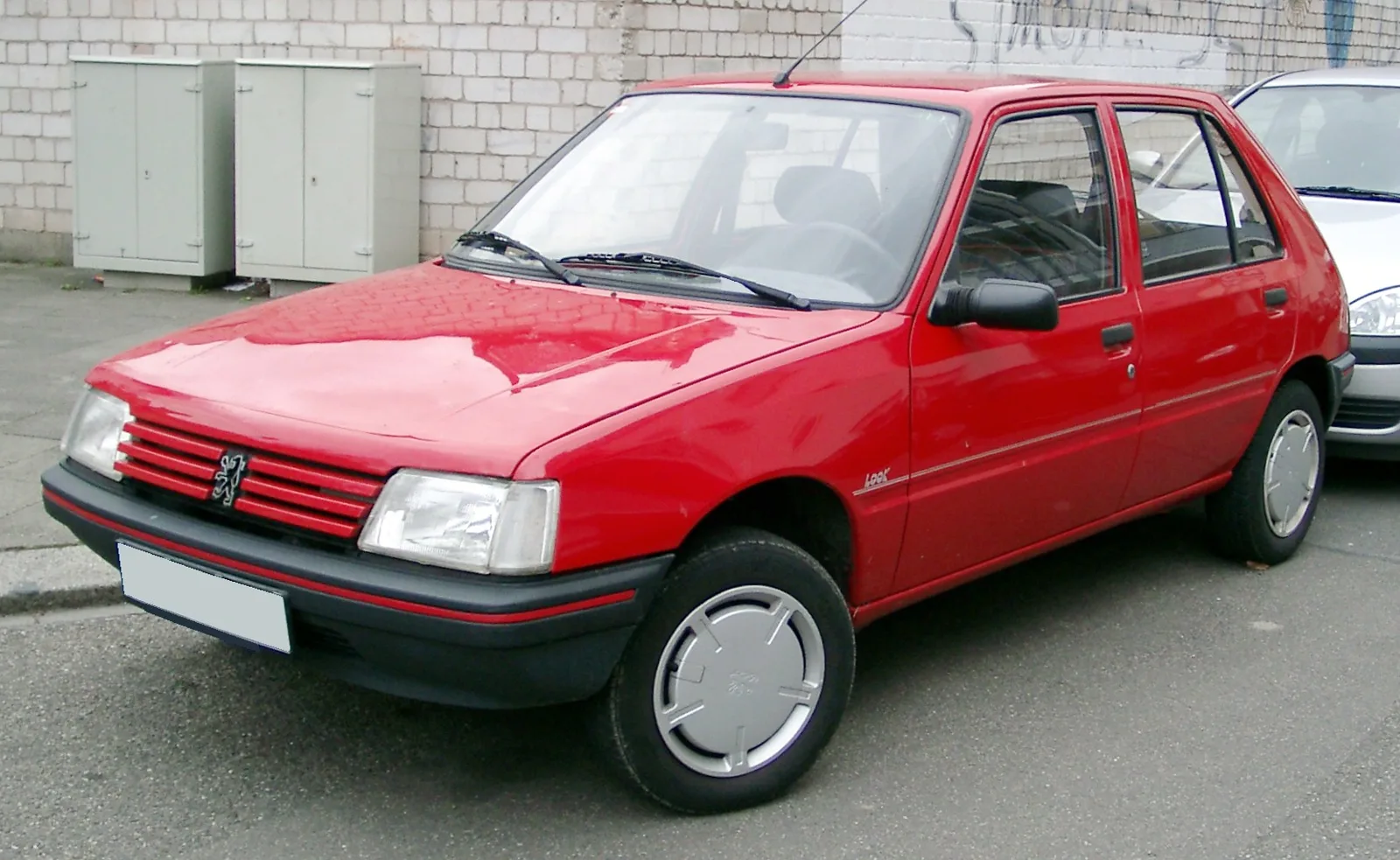
Peugeot dropped the 205 without a direct successor, reasoning that superminis were no longer profitable. Rivals such as the Ford Fiesta and Volkswagen Polo kept selling well, leaving Peugeot short of a competitor. The 206 arrived in September 1998 as a belated replacement.
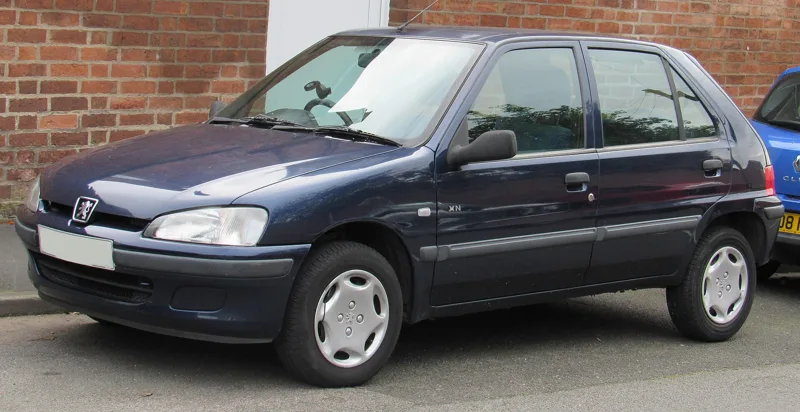
The company had hoped to split the 205's buyers between two new cars. The 106, introduced in 1991, was meant to take the cheaper end of the 205 market, and the 306 from 1993 was to cover the upper end. That plan failed, because the 205 faded before anything filled the gap.
The programme carried the codename T1. Jacques Calvet approved it on 7 April 1994, and the in-house team was led by Peugeot's head of design, Murat Gunak, with Gerard Welter as designer. The design was frozen six months after approval, and the project took 34 months from design freeze to production.
Money and tools mattered too. The development cost 6.3 billion francs, and the 206 was the first Peugeot designed with a digital mock-up and crash simulations. Because the 106 shared its platform with the Citroen Saxo, Peugeot created an all-new front-drive platform for the 206.
A supermini that arrived late, sold more than any other Peugeot and then won a world rally title.
What body styles did the 206 come in?
The 206 began as a hatchback in September 1998. A coupe cabriolet, the 206 CC, followed in September 2000, a station wagon, the 206 SW, arrived in 2001, and a saloon, the 206 SD, was introduced in September 2005. The 207 replaced the 206 in April 2006.
The CC was shown at the Paris Motor Show in September 2000, based on the 20Coeur concept that had appeared at Geneva two years earlier. Its powered folding roof used the Georges Paulin system, first seen on the 1935 Peugeot 402 Eclipse. The roof-trunk modules were built by Heuliez in Cerizay, and final assembly took place in Mulhouse.
The station wagon was manufactured at Ryton, and the production model followed in March 2002. It used a reinforced rear axle to carry the extra weight. Production moved to Poissy after the Ryton plant closed, and in total 366,000 SW units were produced before sales ended in July 2006.
The CC was not replaced by the 206 in its own right. Production stopped in early 2008, and the 207 CC took over the role, which left the convertible niche to a new generation.
The saloon was designed jointly by Peugeot's design centre and Iran Khodro, and it became the fifth and last body version of the 206 family. Iran Khodro then exported the SD to several countries, including Russia, Turkey and Romania.
Which engines did the 206 use?
At launch the 206 used a range of petrol engines and a diesel. A common rail HDi diesel arrived later to modernise the range. The GTi followed in 1999 with a two-litre engine and a top speed of 210 km/h (130 mph).
The sporting range peaked with the GTi 180 and RC in 2003. The two-litre EW10J4S engine produced 175 bhp (130 kW; 177 PS), helped by variable valve timing and reworked manifolds. The GTi 180 reached 100 km/h (62 mph) in 7.4 seconds, and its top speed was 220 km/h (137 mph).
Those cars also carried 17-inch alloy wheels and racing bucket front seats, plus a short-shift gear linkage and altered first and second gear ratios. The GTi 180 was sold in the UK, while the RC was offered across the rest of Europe.
How well did the 206 sell?
The 206 was Peugeot's best-selling model of all time, with 8,358,217 cars sold by 2012. It ranked among Europe's best sellers between 2001 and 2003, and the UK named it car of the year for three years running, from 1998 to 2001.
The 1.4 L XR was the best-selling version. The five millionth car was celebrated on 26 May 2005, after the car's launch on 10 September 1998. Sales in the UK were strong from the start, and the 206 regularly ranked among the nation's five most popular new cars in its first six years.
Used examples have held their value well, thanks to high demand. The car stayed on sale for more than two decades, which is a long run for any supermini, especially one that began as a late replacement for the 205 and had to win over buyers from rivals. Autocar placed the 206 thirtieth in its 2020 list of the most long-lived single-generation cars, which underlines how long the design stayed on sale.
Where was the 206 built?
The main factories were Poissy and Mulhouse in France, which kept building the car until 18 December 2012. The Ryton plant in Coventry also built the 206 until production ended on 12 December 2006, after which the company moved output to Slovakia because it could match quality at a lower price.
Overseas, Iran Khodro built the 206 from April 2001. Brazil began production at Porto Real in 2001, with the hatchback and then the station wagon. In Argentina the Villa Bosch plant ran from July 1999 to 7 December 2016, and China began Dongfeng production in 2006.
Brazilian cars were offered with several petrol engines, and some could run on petrol or ethanol, which suited local fuel markets. The Brazilian line was sold alongside a facelifted variant that Peugeot marketed under a different name.
How did the 206 WRC win rallies?
The 206 WRC was Peugeot Sport's World Rally Championship car, unveiled in 1999. It won the manufacturers' and drivers' championships in 2000, the first such titles for Peugeot since Group B was banned after the 1986 season. Marcus Gronholm took the drivers' crown that year.
Gilles Panizzi narrowly missed the 1999 Rallye Sanremo, which Tommi Makinen won. For 2001 Harri Rovanpera and Didier Auriol each claimed a single win, on the Swedish Rally and Rally Catalunya, and Peugeot defended the constructors' title with a one-two on the Rally of Great Britain.
In 2002 Gronholm led Peugeot to a repeat of the title double. His dominance that year was compared with Michael Schumacher's grip on Formula One. Peugeot had now won three manufacturers' titles in a row, from 2000 to 2002.
By 2003 the 206 WRC was showing its age against the Citroen Xsara WRC and the Subaru Impreza WRC. It was retired at the end of that season and replaced by the 307 WRC. The car won Autosport's Rally Car of the Year in 2002, and Peugeot GB launched the 206 Cup, a one-make rally series for young drivers, in the same year. The cars were built by Vic Lee Racing, and Tom Boardman, Luke Pinder and Garry Jennings were among the drivers.
What happened to the 206 after the facelift?
The 206+ stayed on sale in Europe until May 2013, when the newer 208 and the 207-based 301 took over its role. In South America the facelifted car kept going under the 207 Compact name, and it was produced in Argentina as well as Brazil.
Peugeot sold the car as the 207 Compact in Argentina and Uruguay, to set it apart from the European 207 CC and RC. The Brazilian version was first planned as the 207 Brasil, but the Brasil part was dropped after negative reactions from the media.
The Brazilian car was also criticised for being seen as a facelifted 206, despite Peugeot's efforts to market it as an entirely new model. The Mulhouse plant later built the 206+ for Europe as a left-hand drive car, and the company recruited extra workers to support that output.
Did the 206 advert become famous?
Yes. The 2003 television commercial known as The Sculptor, directed by Matthijs van Heijningen, won gold at Cannes Lions and at the Clio Awards. It follows a young man in India who sees the car advertised, then damages a Hindustan Ambassador and welds it into a replica of the 206.
In the commercial an elephant sits on the Ambassador, and the man spends the night welding it. The next day the car emerges as an exact copy of the 206's shape, covered in dents and discolouration. He then takes the replica out with friends, and onlookers stop to watch.
The advert collected a wide run of awards, including gold at EPICA in 2002 for automobiles. A 2018 remake marked the 206's 20th anniversary, with the Ambassador replaced by a replica of the 208 GTI.
What are the Peugeot 206 specifications?
The table below lists the main 206 versions in order of introduction, with the engine and key figure for each. It covers the hatchback and the major variants, so the sporting and bodystyle changes can be followed in one place.
| Version | Introduced | Engine | Key figure |
|---|---|---|---|
| Hatchback | September 1998 | Petrol range and a diesel | Launch range |
| GTi | 1999 | Two-litre | 210 km/h (130 mph) top speed |
| CC | September 2000 | Hatchback petrol engines | Powered folding roof |
| SW | 2001 | Petrol and diesel | 366,000 units built |
| GTi 180 and RC | 2003 | Two-litre EW10J4S | 175 bhp (130 kW; 177 PS), 0-100 km/h in 7.4 seconds |
| SD saloon | September 2005 | Iran Khodro built | Notchback body |
| 206+ | February 2009 | Facelifted range | New front end |
The version list shows how the car grew from a single hatchback into a family of bodies and performance models, all built on the same front-drive base.
Frequently asked questions
What was the 206+?
The 206+ was a 2009 facelift with a new front end and styling close to the European 207. It was built at Mulhouse for the European market, left-hand drive only, and it was dropped from Europe in May 2013.
Was there an off-road 206?
Yes, in selected South American markets. The 206 Escapade was based on the station wagon, with an SUV-style body kit, higher and tougher suspension and a 1.6 L 16v engine.
How did the 206 do in safety tests?
The European 206 earned four stars for adult occupants and two stars for pedestrians from Euro NCAP in 2000. Latin American versions of the 207 Compact scored lower in Latin NCAP tests in 2010, with one star when built without airbags.
Did the UK get right-hand drive rally cars?
Yes. The Grand Tourisme homologation run totalled 4000 cars, and 600 right-hand drive versions were built for the UK. Each car carried a numbered plaque on each door pillar.
Did Iran build its own 206?
Yes. Iran Khodro began producing the 206 in April 2001, and it later built the 206 SD saloon, which was introduced in September 2005 and sold to several export markets.