Founded by three brothers in 1899, the French maker survived nationalisation and war, then built a long Nissan alliance and a Le Mans-winning motorsport record.
Renault is a French car maker founded on 25 February 1899 by Louis Renault and his brothers. It has been part of the Renault-Nissan alliance since 1999, sells under the Renault, Dacia and Alpine brands, and is known for the Clio and its motorsport record.
Renault is a French multinational car maker based in Boulogne-Billancourt, just outside Paris. The company began in 1899 as Societe Renault Freres, went through state ownership and returned to private hands in 1996. Today it sells cars and vans under the Renault, Dacia and Alpine names, and it remains linked to Nissan through a long-running alliance.
When was Renault founded and what did it sell first?
Renault was founded on 25 February 1899 as Societe Renault Freres by Louis Renault and his brothers Marcel and Fernand. The first Renault car, the Voiturette 1CV, was test ridden on 24 December 1898, and the company began making its own engines in 1903.
Louis handled the design and production work, while Marcel and Fernand managed the business. The brothers had learned their business skills in their father's textile firm, which gave the venture a sound footing from the start.
Taxis gave the company its first big break. A volume order for cars to equip a Paris taxi fleet built its name, and by 1908 Renault was producing 3,575 units a year, which made it the country's largest car manufacturer.
A brothers' workshop from 1899 that became a national champion, a state-owned giant and a global alliance partner.
How did racing shape the early company?
The brothers saw that motor racing could sell cars, and the company's success in early city-to-city races helped drive sales. Marcel was killed in an accident during the 1903 Paris-Madrid race, and his death left Louis to carry the racing effort forward.
Louis took full control of the company in 1906, when Fernand retired for health reasons. Fernand died in 1909, which left Louis as sole owner, and the business took the name Societe des Automobiles Renault.
How did Renault contribute to aircraft and war work?
Renault was an important pre-war maker of aircraft engines. In 1911 its 90 hp engine became the world's first V12 aircraft engine, and its 12Fe, rated at 300 hp, was the most successful wartime unit with around 5,300 built.
The company also developed tanks and military vehicles, and it expanded its scope after 1918 into agricultural and industrial machinery. Louis was recognised for the wartime effort, and the business grew into a wider industrial group.
How did Renault survive the Second World War and nationalisation?
The company was taken over by the state after the war. On 16 January 1945 it was formally nationalised as Regie Nationale des Usines Renault. Louis Renault had been arrested in 1944 and died in Fresnes prison on 24 October 1944, before a trial could take place.
Pierre Lefaucheux was appointed provisional administrator on 4 October 1944, and he set about restoring the business. His work laid the foundations for the postwar recovery that followed, which the company built around new small cars.
Renault remained state-owned for decades until it was privatised in 1996. That change gave the company new freedom to expand into Eastern Europe and South America, and it marked the end of the nationalised era.
What was the 4CV and why did it matter?
The 4CV was a rear-engined car launched in 1946, developed in secret during the war. It sold more than half a million units before its production ended in 1961, and it proved a capable rival for the Morris Minor and the Volkswagen Beetle.
Renault debuted its flagship model, the Fregate, a 2-litre four-cylinder car built from 1951 to 1960. The Dauphine followed as the 4CV's successor, and it sold well in the United States before rising competition from domestic compacts took its toll.
Which Renault models defined the 1960s and 1970s?
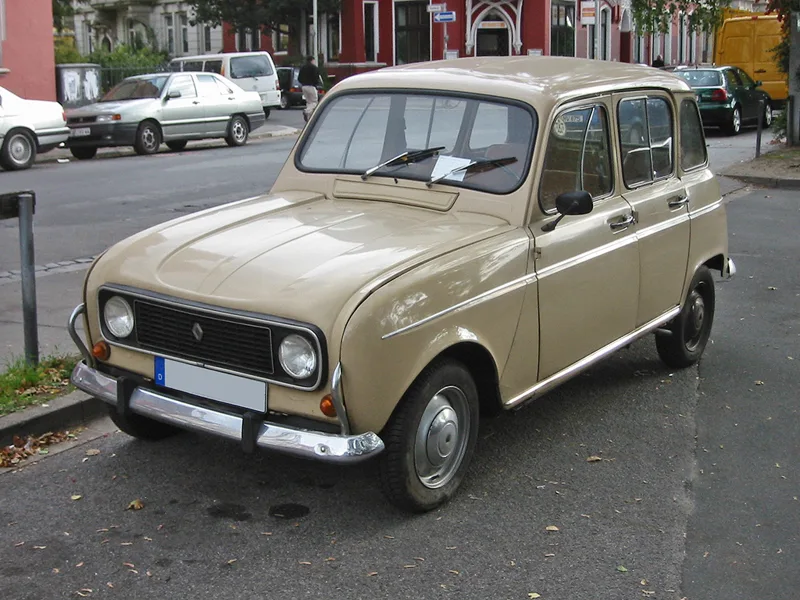
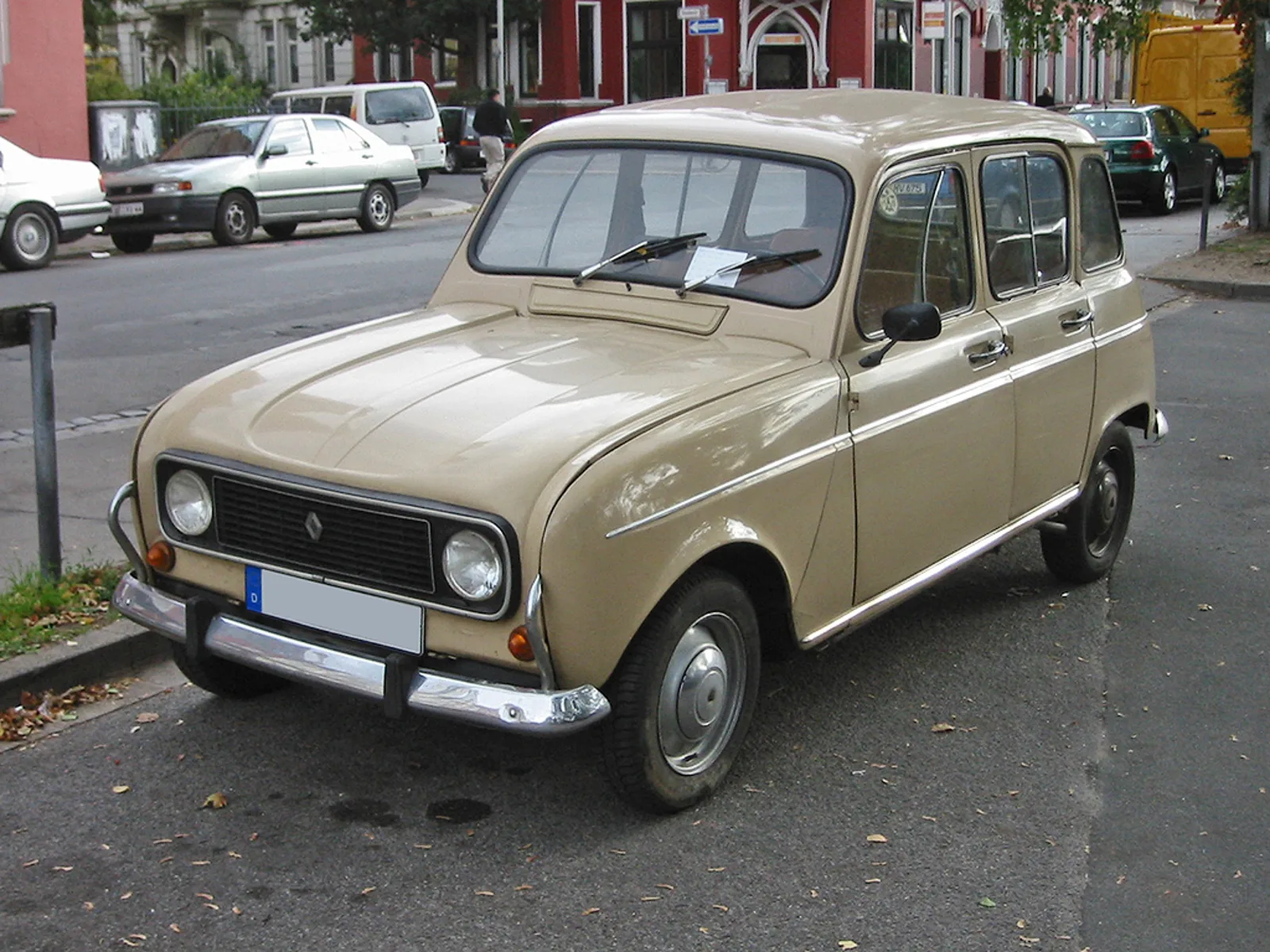
Renault launched two successful cars in the early 1960s: the Renault 4, built from 1961 to 1992, and the rear-engined Renault 8. The Renault 4 was the first serial car with a hatchback body, and the Renault 8 was the first serial car with four-wheel disc brakes, in 1963.
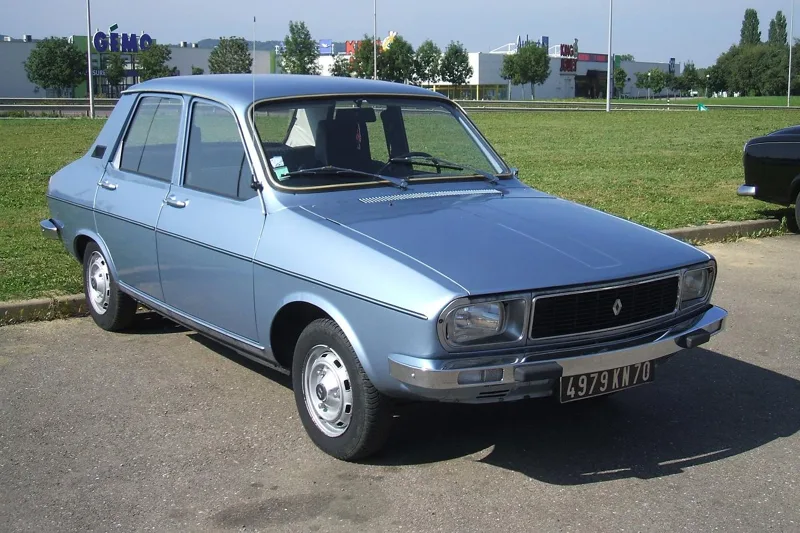
The Renault 16 was a pioneering hatchback launched in 1966, and it was named European Car of the Year that year. The Renault 12 followed in October 1969 in a more conservative three-box design, and it proved a success.
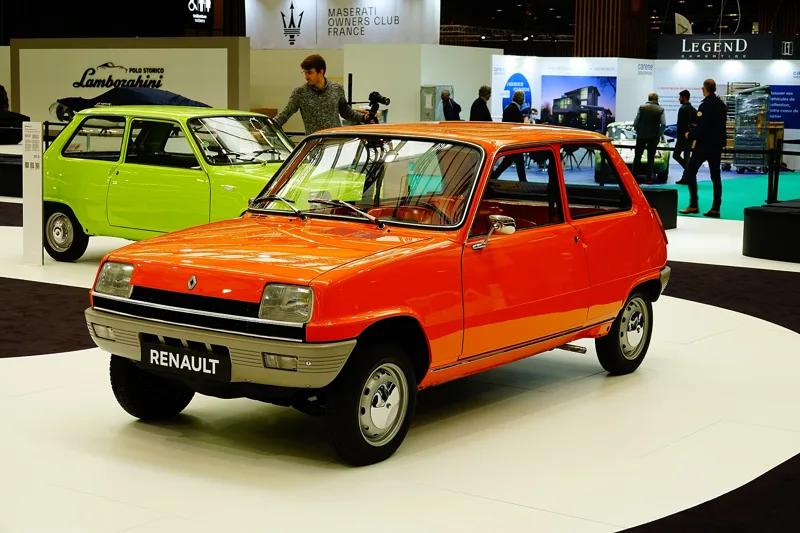
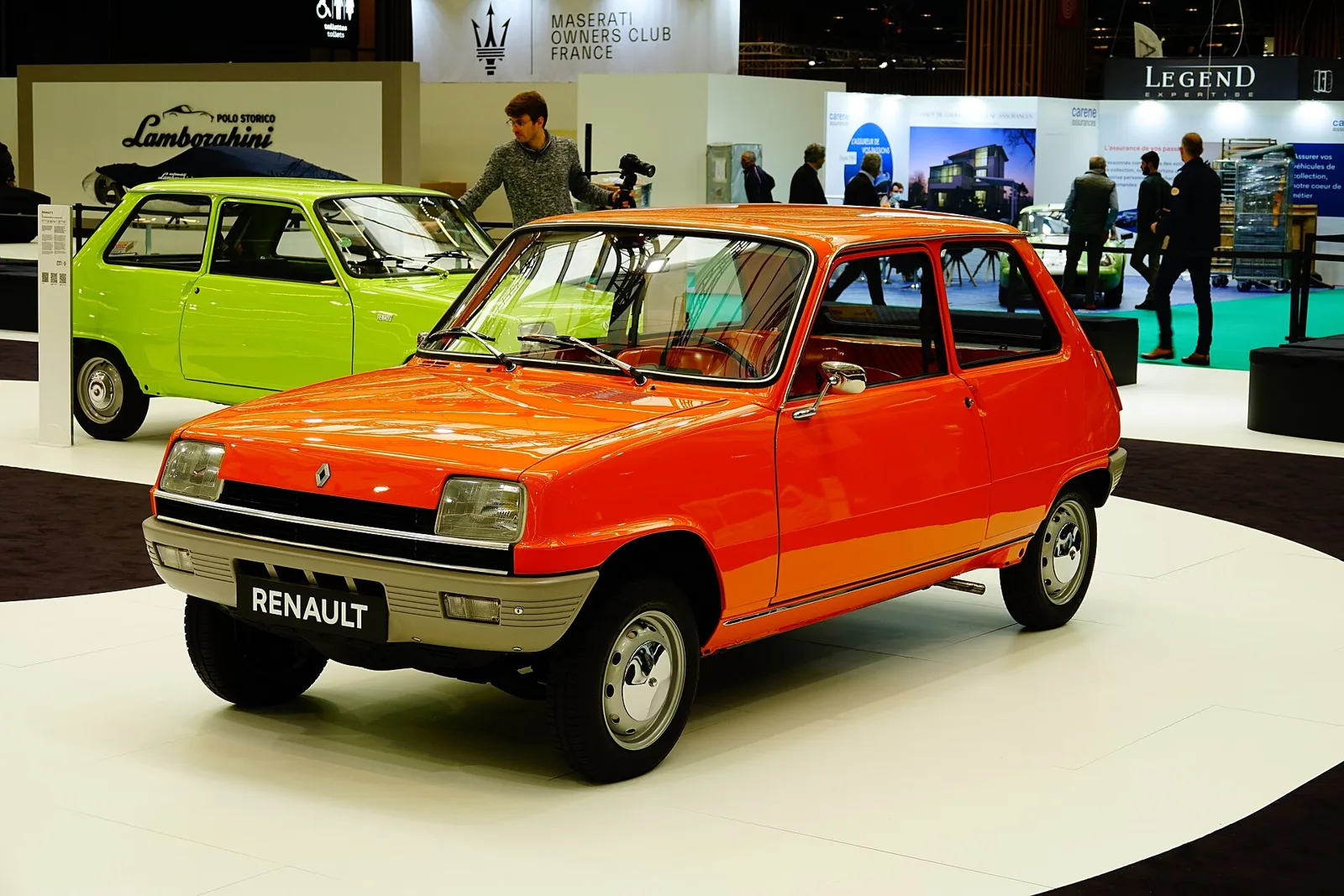
The Renault 5 launched in January 1972 as a compact economy car, and it anticipated the 1973 energy crisis. Renault produced 1,055,803 cars in 1970, the first year it passed a million cars built in a single year.
When did Renault build the Espace and the Clio?
The Renault Espace arrived in 1984 as Europe's first multi-purpose vehicle, and it stayed the best-known minivan in Europe for two decades. Its launch came at a difficult time, when the company was losing heavily and needed a new kind of product.
The Clio launched in May 1990 and was voted European Car of the Year soon after its arrival. It replaced the numeric identifiers of earlier models with a traditional nameplate, and it became one of Europe's best-selling cars through the 1990s.
The Twingo followed in 1992 as the first city car MPV. It was roomier than any previous car in its size range, and Twingo sales reached 2.4 million in Europe.
How did the Nissan alliance begin?
Renault entered an alliance with Nissan in 1999, when the company was facing severe financial difficulties. The Renault-Nissan Alliance was signed on 27 March 1999 and was the first arrangement of its kind between Japanese and French makers.
The initial deal gave Renault a 36.8% holding in Nissan, costing 2.7 billion pounds, and Nissan received a non-voting 15% of Renault. The alliance let both companies share engines and development costs while each kept its own brand identity.
Carlos Ghosn, who had been deputy to Louis Schweitzer, led the cost-cutting programme that helped Renault recover. He later became chief executive of Nissan, and the link between the two companies grew stronger over the following years.
What is Renault's stake in Nissan today?
As of November 2023, Renault holds a 15% voting stake in Nissan, and Nissan holds a 15% stake in Renault. The share transfer that set this balance was completed that month, and the two companies have since taken more independent paths.
The relationship has changed more than once. Renault held a 43.4% stake in Nissan for many years, and the alliance has since moved toward a more balanced structure that lets each company pursue its own plans.
How did Renault's Formula One team develop?
Renault introduced the turbo engine to Formula One when it debuted the RS01 at Silverstone in 1977. The team continued until 1986, and from 1989 Renault supplied engines to the Williams team.
The team was taken over from Benetton in 2000 and was renamed Renault F1 in 2002, ahead of the 2001 season. The team won the Constructors' and Drivers' titles in 2005 and 2006 with Fernando Alonso, the peak of its racing success.
Renault powered the winning 2010 Red Bull Racing team, and it bought the Enstone-based team for the 2016 season. In 2021 the team was renamed Alpine F1 Team, and Renault will stop manufacturing F1 engines at Viry-Chatillon after the 2025 season.
How successful has Renault been in endurance and rallying?
Renault won the 24 Hours of Le Mans in 1978 with the Alpine A442. The company's Alpine division, which it took control of in 1973, had a long history of building successful rally cars and sports racers.
The Alpine A110 won the first World Rally Championship, and the Renault 5 Turbo won the 1981 Monte Carlo Rally. Renault also won the European Rally Championship in 1970, 1999, 2004 and 2005, showing how deep its rally record runs.
Renault cars have also gone well in the Dakar Rally. The Marreau brothers won the 1982 edition in a Renault 20 Turbo 4x4, and Schlesser-Renault Elf buggies won in 1999 and 2000.
Who designed the Renault range?
Renault Styling was created in 1961 with the assistance of the independent designer Philippe Charbonneaux, who had worked on the R8. In 1975 Robert Opron was named chief designer and the department was divided into interior, exterior and advanced design groups.
In 1987 Patrick le Quement became chief designer and the Industrial Design Department replaced Renault Styling. He was behind bold designs such as the Megane II and the Vel Satis, which lifted the brand image.
How did Renault's electric push develop?
Renault became the leader of electric vehicle sales in Europe in 2013, thanks to a wide range that included the Twizy, Zoe, Fluence and Kangoo. The Zoe was Europe's best-selling all-electric car in 2015 and 2016.
Zoe global sales reached 50,000 in June 2016 and 150,000 in June 2019. Group electric vehicle sales had passed 273,550 through December 2019, a total that gave the company a strong base for its later programme.
In 2008 Renault made agreements for its zero-emission products with partners in several countries. The Fluence Z.E. was selected for the Israel project and became the first zero-emission car with a switchable battery, although the partnership ended in 2013 after Better Place went bankrupt.
The Tangier plant in Morocco opened in February 2010 with an annual capacity of 170,000 vehicles, later raised to 340,000. Renault has since shifted its focus toward electric models built on shared platforms.
What did the 2019 to 2025 leadership changes bring?
Carlos Ghosn was arrested in November 2018, and Renault's share price fell more than 15% after the news. Jean-Dominique Senard became chairman in January 2019, and the company then moved through several acting chief executives.
Luca de Meo took over as chief executive from 1 July 2020, and he led the company through the pandemic years. He resigned in June 2025, and Francois Provost has been chief executive since then.
How did the pandemic and the Russian war affect Renault?
In May 2020 Renault announced a cost-cutting plan to eliminate 15,000 jobs worldwide, about 10% of its workforce, because of falling sales and the COVID-19 pandemic. The company later divided its automotive division into four business units.
After the 2022 invasion of Ukraine, Renault was slow to leave Russia. In May 2022 the company transferred its Renault Russia holding to the city of Moscow, and it sold its 67.69% interest in AvtoVAZ for a single rouble, a deal critics called hard to justify.
What is the Renault Clio's place in the range?
The Clio has been in production since 1990, and the current range includes the Clio alongside the Captur, Kangoo and the Megane E-Tech Electric. The Clio's long life made it one of the most important nameplates in Renault's history.
Renault has also used its Dacia subsidiary to build affordable models. The Duster, the Sandero and the Logan were among the most important cars the group sold in Europe.
How has Renault been recognised?
Renault models have won the European Car of the Year award eight times, including the Renault 16 in 1966, the Renault 9 in 1982 and the Clio in 1991. The Megane II won in 2003, and the Renault 5 E-Tech won in 2025.
The Alliance won Motor Trend's domestic Car of the Year award in 1983, and Renault's Art Collection won a 2016 corporate art award in Italy. These honours reflect the company's long record of design and engineering.
Renault at a glance
The table below gathers headline figures for the company, from its 1899 founding and headquarters to its nationalisation, alliance, awards and recent leadership. It is a quick reference for the numbers that matter most.
| Specification | Detail |
|---|---|
| Founded | 25 February 1899 as Societe Renault Freres |
| Headquarters | Boulogne-Billancourt, France |
| Nationalised | 16 January 1945 |
| Privatised | 1996 |
| Nissan alliance | Signed 27 March 1999 |
| Cars and LCVs built, 1980 | 2,053,677 |
| Le Mans win | 1978, with the Alpine A442 |
| European Car of the Year | Eight wins |
| Zoe global sales, June 2019 | 150,000 |
| Current CEO | Francois Provost (as of 2025) |
Frequently asked questions
When was Renault founded?
The company dates from 25 February 1899, when the family business that became Renault was registered in Paris.
How many cars did Renault build in 1980?
Renault produced 2,053,677 cars and light commercial vehicles in 1980, and it also added 54,086 buses, coaches and trucks.
When did the Nissan alliance start?
The Renault-Nissan Alliance dates from 27 March 1999, making it a pioneering tie-up between a Japanese and a French maker.
How many European Car of the Year awards has Renault won?
Renault models have won the award eight times, including the Renault 16 in 1966 and the Clio in 1991.
Who runs Renault now?
Francois Provost has been chief executive since 2025, after Luca de Meo resigned in June 2025.