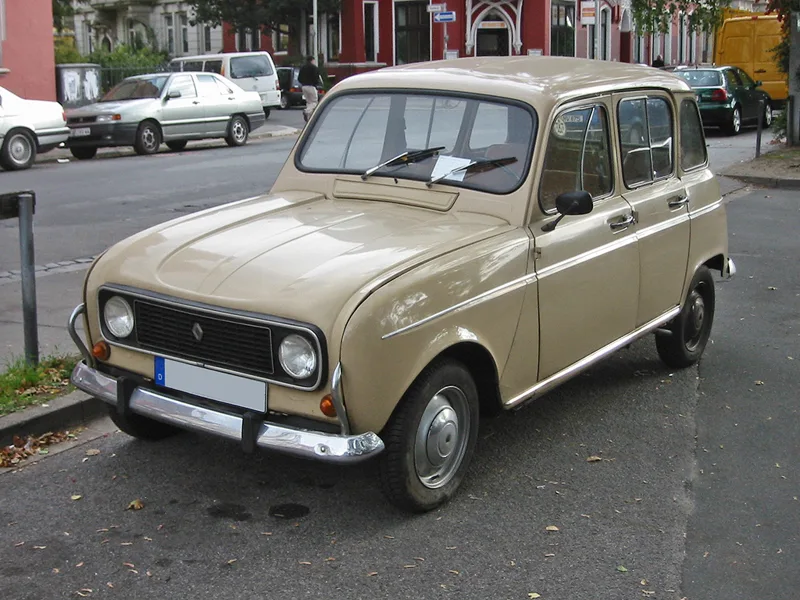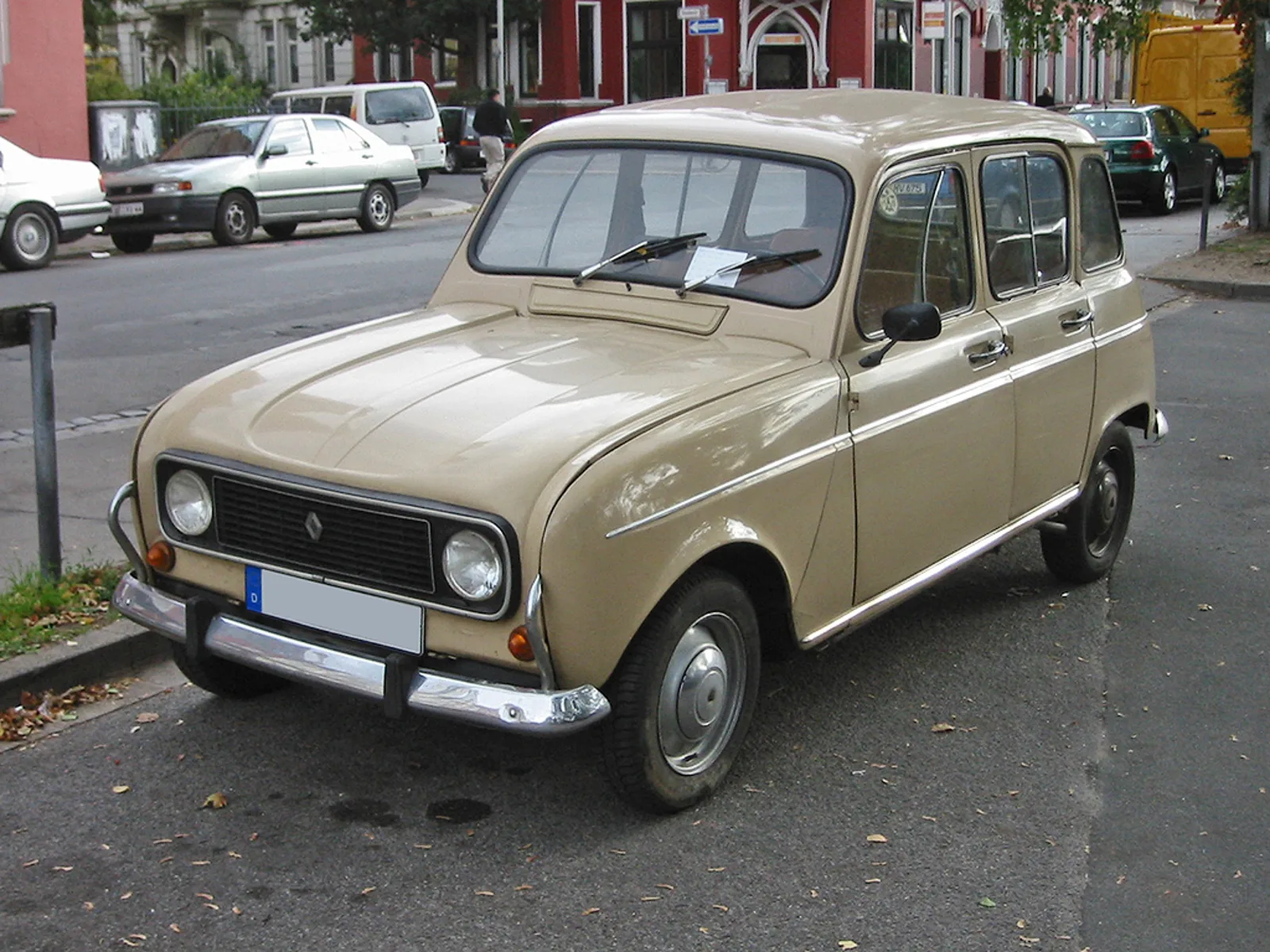
A front-wheel-drive economy car built from 1961 to 1994 for rural and city buyers alike, with over eight million built across twenty factories.
The Renault 4, or R4, was a front-wheel-drive economy car that Renault built from 1961 to 1994. Output passed eight million across a network of plants. It was launched alongside the R3 in July 1961. Its tailgate design helped earn it a place among the earliest volume hatchbacks.
The Renault 4, or R4 for short, was an economy car that Renault built in France from 1961 to 1994. It is often described as the world's first mass-produced hatchback, combining a practical body with front-wheel drive and a simple, durable suspension. This profile covers its origins, engineering, global production and the motorsport life that followed.
Its reach was remarkable. The car was built in twenty factories on four continents, and its design carried its maker through a period of rapid economic change in the countries that bought it.
What was the Renault 4?
The Renault 4, known as the R4, was an economy car built by Renault from 1961 to 1994. More than eight million were built in twenty factories on four continents. It is widely recognised as the world's first mass-produced hatchback, thanks to its top-hinged single-piece tailgate.
Renault launched the R3 and R4 together in July 1961. The cars shared a body and most mechanical parts, but the R3 used a 603 cc engine while the R4 used 747 cc, which placed each in a different tax class.
The car arrived as decades of economic stagnation gave way to prosperity in France and car ownership surged. The first million cars were built by 1 February 1966, a fast pace for a new model with a clear market.
Built around a simple, durable package, the R4 became a global hatchback that outlasted many of its rivals.
Where did the R4 come from?
The R4 was Renault's answer to the 1948 Citroen 2CV. Renault studied what the 2CV did well, including its rough-road ability, its load-carrying body and its low running costs, and it set out to build a car that would suit the same buyers.
Chairman Pierre Dreyfus launched the project in early 1956 and asked for a 'blue jeans car', a vehicle as useful for recreation as for work. The car was meant to serve families, farmers and city drivers alike, which made it a genuinely general-purpose machine.
The R4 carried forward many of the 2CV's strengths, including front-wheel drive, long-travel suspension and a simple body with deckchair seats that could be removed. Renault then improved on that formula with a water-cooled engine and a more refined ride.
What engineering did the R4 use?
The R4 used front-wheel drive with a longitudinally mounted engine and a separate body platform. It had a four-cylinder water-cooled engine with a sealed cooling system, and four-wheel torsion-bar independent suspension. Its design was simple enough to offer a useful car at a modest price.
The torsion bars required no regular maintenance, which mattered to owners who could not afford frequent servicing. The rack-and-pinion steering and the flexible suspension made the car easy to drive on the rough roads of rural France.
Top speed was over 104 km/h (65 mph) at launch. That put the R4 well ahead of the 2CV in refinement and performance, even if the 2CV kept its own distinctive character.
How did the R4 engines develop?
The R3 had a 603 cc engine and the R4 a 747 cc unit at launch. The R4 produced 26.5 or 32 hp (19.5 or 23.5 kW), depending on price level and carburettor. The engine sat ahead of the front axle and drove through a transmission newly developed for the car.
The 845 cc Dauphine engine arrived in 1963 and became standard on the top R4 Super. Later, the 1108 cc engine appeared in the GTL from 1978, and a 956 cc engine replaced the 845 cc unit in 1986.
Synchromesh arrived on all three ratios from 1962, after an early version had only covered the top two gears. The car gained a four-speed gearbox in 1968, which matched the rest of the market more closely.
The cooling system was sealed for life, with an expansion tank on the right side of the engine bay. That feature was ahead of its time and reduced the maintenance that owners had to perform.
How did the R4 change over its life?
The R4 changed little in its core design across its life. Renault added the 1108 cc GTL in 1978, and front disc brakes arrived in 1983. The fuel filler was moved slightly after launch, but the structure stayed the same.
The R4 was the last French automobile sold with drum brakes on all four wheels, a distinction that reflected how long the basic design lasted. Early cars had three-speed gearboxes, so the later changes were a steady march rather than a single leap.
Special editions were numerous. Safari, Sixties and Jogging appeared with special colours and upholstery, while others used decals on standard cars. Those touches kept the model fresh without changing its underlying engineering.
Which countries built the R4?
The R4 was built in Colombia at the SOFASA plant in Envigado from 1970 to 1992, where it was known as Amigo fiel, or faithful friend. The nickname reflected how much owners valued the car.
In Italy Alfa Romeo built 41,809 R4s under licence from 1962 to 1964. In Australia the car was made at Heidelberg, Victoria, from 1962 to 1966.
Slovenia's IMV plant built 575,960 R4s between 1973 and 1992, and Portugal's Guarda plant assembled more than 190,000 units. Ireland built the car at Naas from 1962 and then at Wexford from 1972 to 1984.
Mexican production at Ciudad Sahagun ended in 1976. The French run finished with a series of 1000 numbered examples called Bye-Bye, which closed the chapter on a car that had travelled far from its origins.
How long did the R4 stay in production?
The R4 was produced from 1961 until 1994, and its French production finished in December 1992 after 31 years. The car was counted seventeenth among the most long-lived single generation cars in history in an early 2020 ranking.
The body was never heavily revised, which helped keep costs down over such a long run. The result was a car that felt familiar for decades, even as the market around it changed.
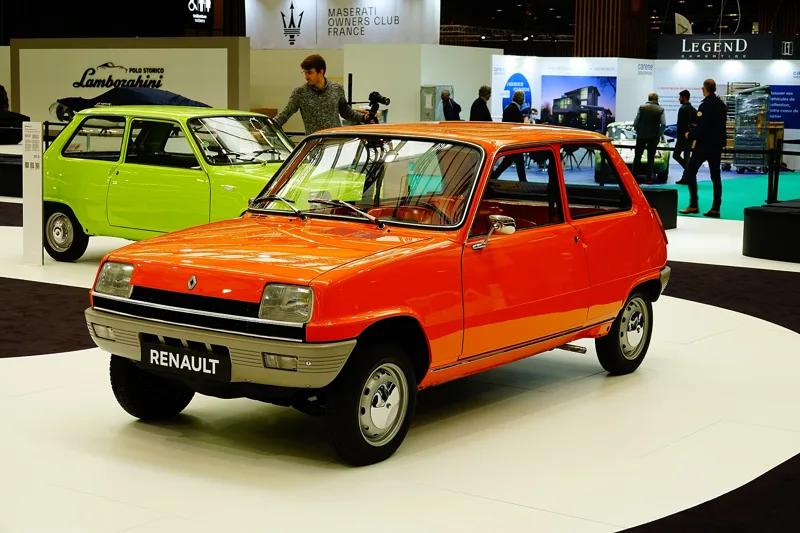
Renault was already developing the R5, which became far more modern and popular. As the newer model took over, the R4 gradually lost its place in the lineup, though it kept selling for years.
Which motorsport efforts used the R4?
The R4 found a second life in motorsport. Its torque, suspension and ground clearance gave it go-anywhere ability, and Renault created events such as the Cross Elf Cup of France, which ran on dirt tracks from 1974.
The Sinpar 4x4 version, a four-wheel-drive variant, was entered in the Paris-Dakar Rally in 1979 and 1980. It finished fifth in 1979 and third in 1980, a strong showing for a car with modest origins.
The 4L Trophy, an annual student rally established in 1997, uses the R4 as its base vehicle and carries educational supplies to the Sahara. Its appeal lies in the car's reliability and its simplicity on rough routes.
The R4 GTL was homologated in Group A and has taken part in several long-distance rallies. Standard cars have raced at Santa Pod Raceway since 2004, with a quarter-mile run of 21.438 seconds and a terminal speed of 59.14 mph.
What variants and special models were built?
The Plein Air was a doorless and roofless version, with only a chain protecting the passengers. It was discontinued in March 1970 after 563 cars had been built, and it was more expensive and less capable than rival beach cars.
Sinpar's 4x4 Torpedo was first shown at the 1968 Geneva Salon. The same firm later built a front-wheel-drive version at its works, which shows how the basic platform could be adapted by specialists.
The Fourgonnette van had a giraffe rear hatch and became the French Boulangerie van. It remained on sale in Europe until 1993, when the Renault Express replaced it.
A Japanese modifier later turned a Suzuki Lapin into an R4 lookalike in 2003. In 2021 Renault announced the 4ever crossover, built on the CMF-B EV platform, as a namesake for the R4.
What are the Renault 4 specifications?
The table pulls together the core figures for the R4, from the 1961 launch to the final French series. Each row names the system or era it describes, so the early and late engines and brakes stay clearly separated.
| Specification | Detail |
|---|---|
| Production | 1961 to 1994 |
| Built | Over eight million in twenty factories |
| Launch | July 1961, alongside the R3 |
| Engines | 603 cc (R3); 747 cc (R4); 845 cc; 956 cc; 1108 cc |
| R4 power | 26.5 or 32 hp (19.5 or 23.5 kW) |
| Suspension | Four-wheel torsion-bar independent |
| Transmission | Three-speed at launch; four-speed from 1968 |
| Cooling | Sealed for life, with expansion tank |
| Brakes | Drum on all four wheels until front discs in 1983 |
| First million | By 1 February 1966 |
| Colombia | SOFASA, Envigado, 1970 to 1992 |
| Slovenia | 575,960 built, 1973 to 1992 |
| Quarter mile | 21.438 seconds |
The figures show a car that moved from modest power to a sealed, durable package over three decades. The changes were gradual, which is part of why the R4 stayed so easy to understand.
Why did the R4 suit so many different buyers?
The R4 suited buyers who needed a car that could carry loads, handle rough tracks and start every morning. Its large cargo space, removable seats and durable suspension made it a versatile tool as much as a passenger car, for work and leisure alike.
Its sealed cooling system and torsion-bar suspension took much of the upkeep out of ownership, which mattered in rural areas where workshops were thinly spread. Owners who valued reliability over comfort found that the car asked little of them.
The same qualities explain why the car found a second life in parts of the world where roads were poor and budgets were tight. Its simplicity made local repair far more practical than with more complex designs.
Owners who kept their cars for many years often knew every part of them, which made repairs a shared skill in many communities rather than a specialist task. That practical culture is part of why the R4 is still fondly remembered.
The R4 was never a showpiece. Its value lay in honest engineering and an ability to take punishment, qualities that owners tended to notice only after years of use.
Its long run also helped it become part of everyday life in many countries. For a generation of drivers, the R4 was simply the car the family owned, and that ordinary presence is a large part of its enduring charm.
Frequently asked questions
Was the Renault 4 the first hatchback?
Many count it as the first mass-produced hatchback, because of its early tailgate and body design.
What nickname did the car have in Colombia?
Colombians called it Amigo fiel, meaning faithful friend, because of how popular it was there.
Did Pope Francis own an R4?
He accepted a white 1984 4L in September 2013, a gift offered by a priest from Verona.
What replaced the R4?
The Renault 5 became the far more modern car in the range, and the Twingo arrived in 1992 as a new entry-level Renault.