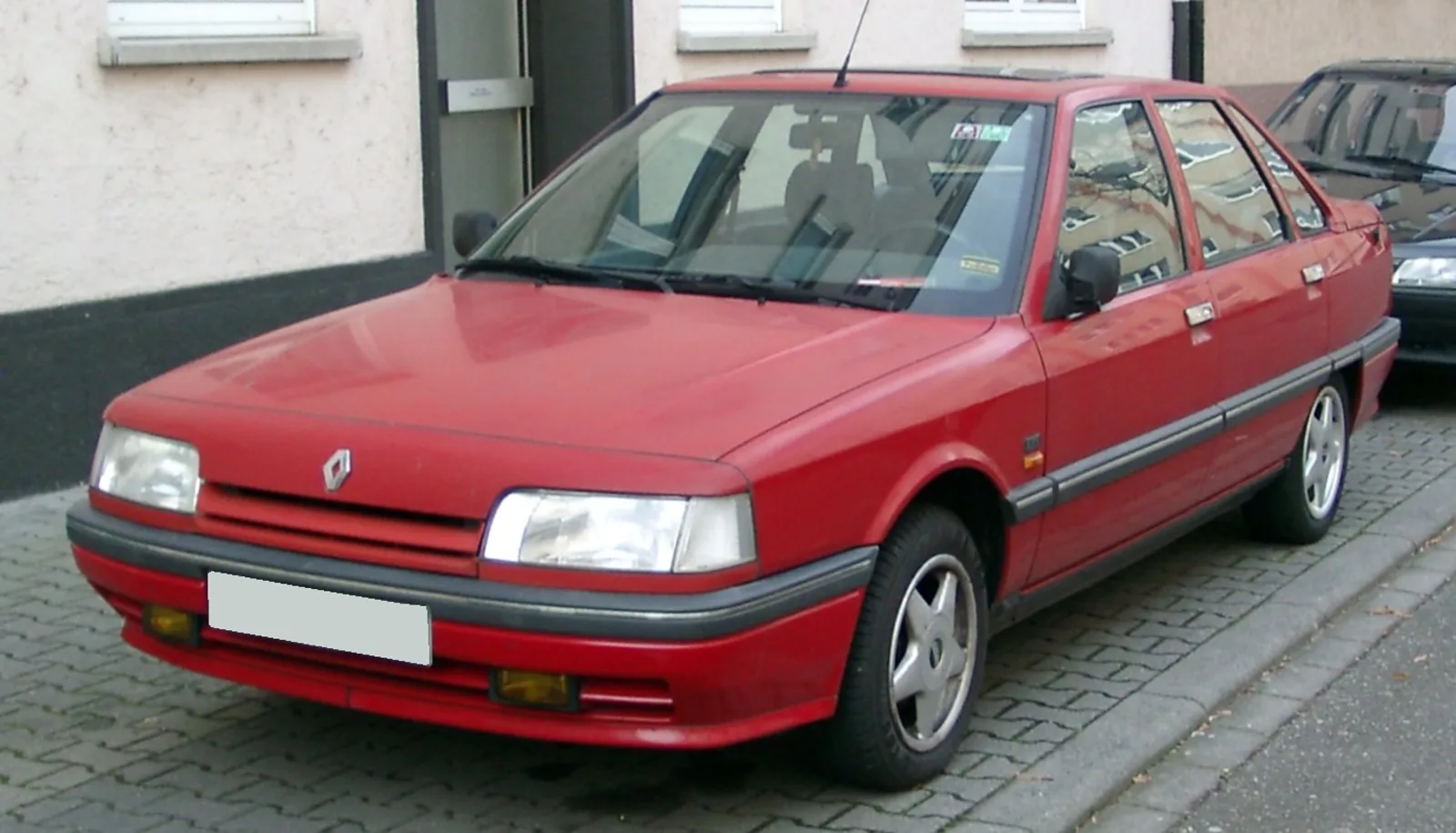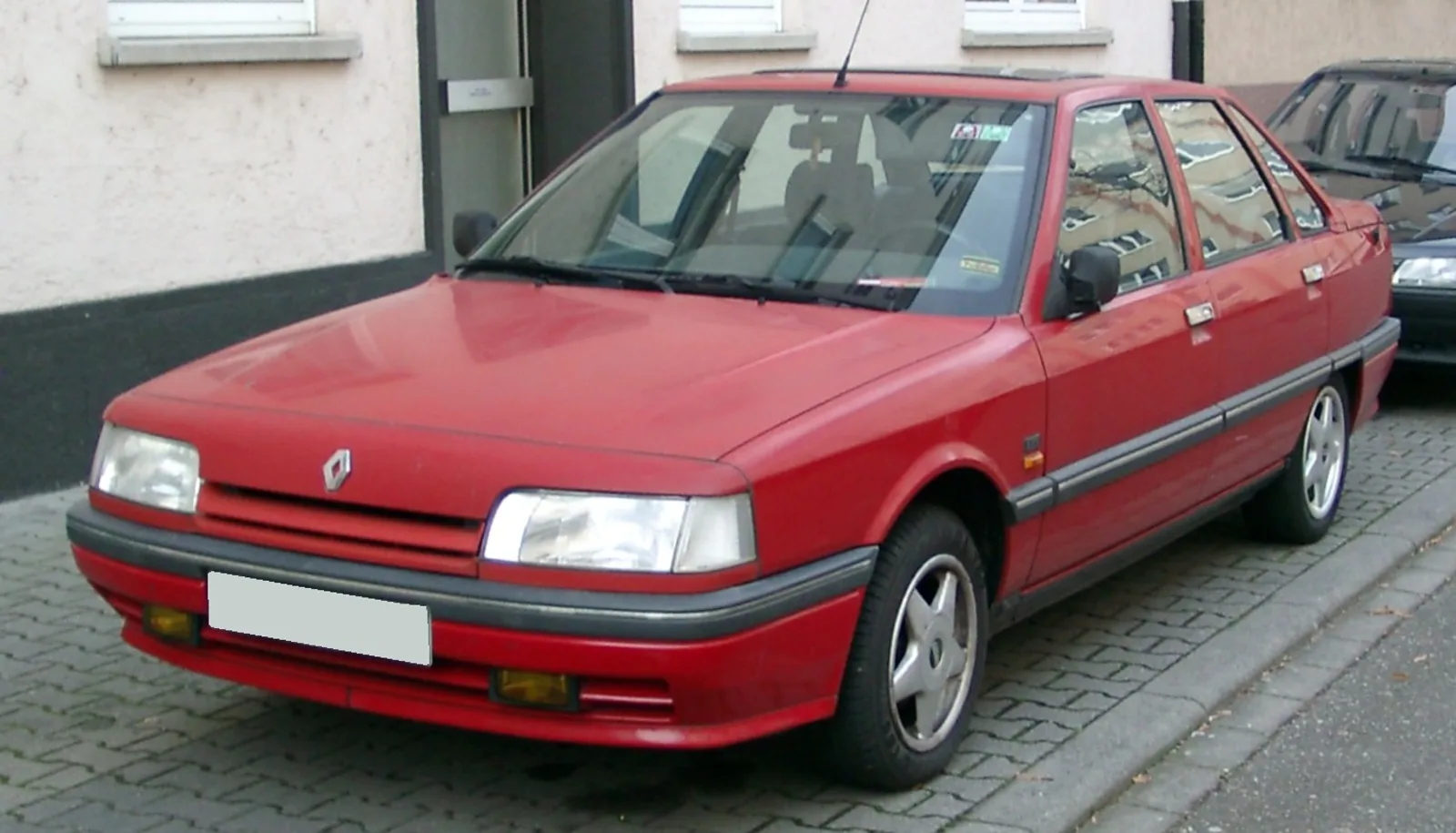
A large French family car with two engine layouts, a seven-seat estate, a 1989 revamp and 2,096,000 units built between 1986 and 1995.
The Renault 21 was a large family car from French maker Renault, built between 1986 and 1995. It replaced the Renault 18 and was sold in North America as the Medallion. Renault built 2,096,000 units across saloon, liftback and station wagon bodies, with engines from 1.4 litres to a 2.0-litre turbo.
The Renault 21 was a large family car that French manufacturer Renault sold from 1986 until 1995. Its body styles were a saloon, a liftback and a seven-seat station wagon, and its engines ranged from small four-cylinder units to a turbocharged 2.0-litre. It arrived as the successor to the R18 and gave Renault a fresh contender in the large family segment.
Where did the Renault 21 come from?
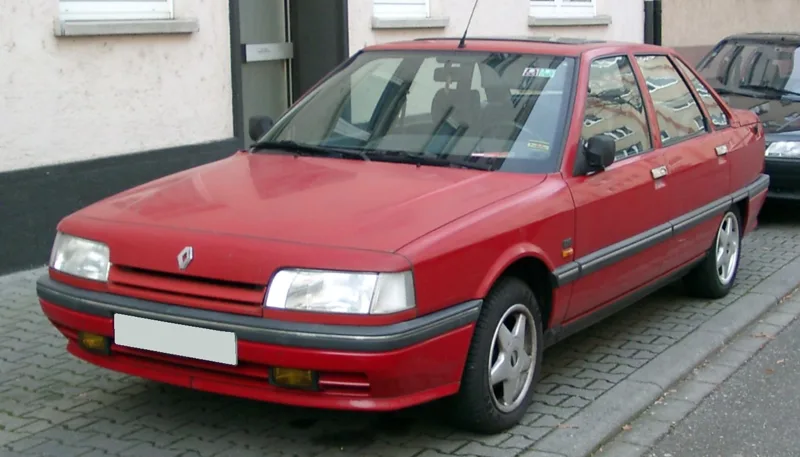
The R21 was unveiled on 20 November 1985, then launched officially in February 1986 to replace the Renault 18, which had been on sale for eight years. Its razor-like design set it apart from rivals such as the Ford Sierra, with its jelly mould styling, and the Opel Ascona.
The R18 had enjoyed a very strong start, but its popularity was declining when the new car arrived. The saloon was followed a few months later by the seven-seat station wagon, the R21 Nevada, which was sold as the Savanna in the United Kingdom. Right-hand drive cars for the UK went on sale from June 1986.
Large family cars of the mid-1980s were judged on space, comfort and running costs, and offering several body styles gave buyers more choice. The R21 range followed that logic with a saloon for traditional buyers and a station wagon for families who needed extra seats. A liftback followed in 1989.
The UK launch was one of several steps that carried the model beyond France, and the North American story is covered later in this piece.
A French family car with two engine layouts that sold 2,096,000 units and even served as a head of state's official car.
How did the Renault 21 look and how was it packaged?
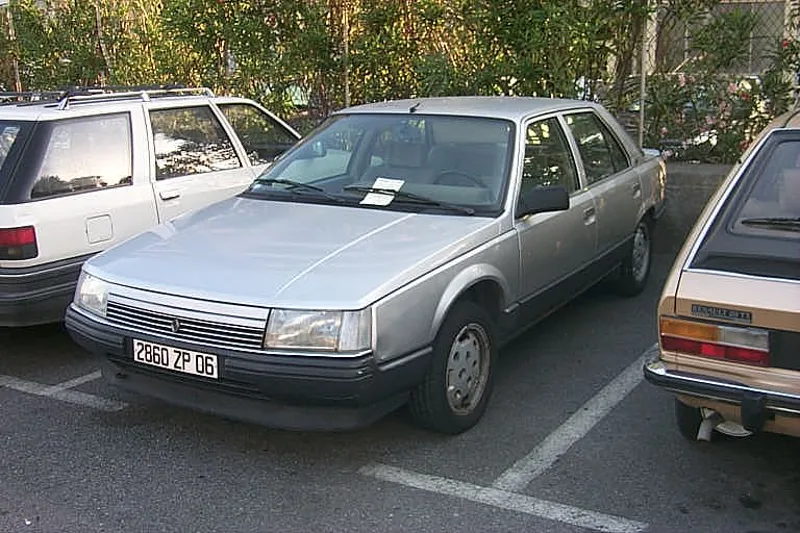
The Renault 21 had a razor-like body that broke with the rounded shapes of many rivals of its era. The Nevada and Savanna station wagon was slightly longer than the saloon, and it could be ordered with seven seats. Roof rack side rails were standard on the wagon.
The station wagon's two extra seats were a forward-facing, foldable bench for children up to about age 10. When folded up, that bench used much of the luggage space, so a family needed to decide between extra seats and a usable boot on a regular basis.
Styling was refreshed in May 1989 with a sleeker outline that echoed the recently revamped Renault 25. The update also added a liftback body style, which quickly outsold the saloon in France.
Why did the Renault 21 use two engine layouts?
The Renault 21 was unusual because it was offered with two engine layouts. The 1.7-litre engine sat transversely, while the faster versions used longitudinal engines, because Renault had no gearbox suited to a more powerful transverse unit. Both layouts fitted the same engine bay without reducing passenger space.
The two versions had subtly different wheelbases, but all of the engines were relatively compact four-cylinder units. That compactness let the engine bay accept either configuration, so the car could be sold with a range of performance levels from one design.
That flexibility had a cost. Assembling differently configured engine bays on a single production line was difficult, and it added inventory needs for both Renault and its dealers. Production technologies of the period were relatively inflexible, and this complexity compromised the car's profitability.
What changed in the 1989 revamp?
The 1989 revamp brought a sleeker body, a liftback and a sporty 2.0-litre turbo model. Quadra four-wheel drive was offered on some saloons and on the Nevada, and a fuel-injected 2.2i was introduced at the 1989 Frankfurt Motor Show. The injected engines used a Renix engine control unit, developed by a joint venture between Renault and Bendix.
The front-wheel-drive 21 Turbo reached 227 km/h (141 mph), placing it among the fastest models in the range. The four-wheel-drive Nevada was offered with the eight-valve 2.0 and with the naturally aspirated 2.1 diesel, because the 12-valve and turbo engines could not be fitted to that body style.
The 2.2i was originally reserved for the German market, where insurance and tax rules favoured larger engines with less peak power. It was a different model from the earlier 2.2 built for the United States.
What engines did the Renault 21 use?
The Renault 21 used four-cylinder petrol engines from 1.4 litres up to a 2.0-litre turbo, plus 1.9-litre and 2.1-litre diesels. The 1.7-litre 90 PS version was the mid-range choice, and the turbo was the performance option. Top speeds across the range ran from 165 km/h (103 mph) up to 227 km/h (141 mph).
The entry 1.4-litre overhead-valve petrol engine produced 68 PS (50 kW; 67 hp). The 1.7-litre carburettor version with 90 PS (66 kW; 89 hp) reached 185 km/h (115 mph) and covered 0-100 km/h in 10.7 seconds, which made it a strong all-round choice for buyers who wanted more than the basic model.
At the top of the range, the 2.0-litre turbo produced 175 PS (129 kW; 173 hp) and covered 0-100 km/h in 7.4 seconds. That was the quickest sprint in the range, ahead of the 2.0-litre 12-valve at 9.2 seconds, and it gave the family saloon a performance edge over the rest of the line.
Renault 21 engine range at a glance
The table lists representative engines from the range, with power, top speed and the 0-100 km/h time where it was quoted. Engines are shown in the order they appear in the range, from the smallest petrol to the diesel turbo.
| Engine | Power | Top speed | 0-100 km/h |
|---|---|---|---|
| 1.4 L petrol OHV, 8-valve | 68 PS (50 kW; 67 hp) | 165 km/h (103 mph) | - |
| 1.7 L petrol SOHC, carburettor | 90 PS (66 kW; 89 hp) | 185 km/h (115 mph) | 10.7 s |
| 2.0 L petrol SOHC, 12-valve | 136 PS (100 kW; 134 hp) | 230 km/h (143 mph) | 9.2 s |
| 2.0 L petrol SOHC, turbo | 175 PS (129 kW; 173 hp) | 227 km/h (141 mph) | 7.4 s |
| 2.2 L petrol MPI | 110 PS (81 kW; 108 hp) | 192 km/h (119 mph) | 9.9 s |
| 1.9 L diesel SOHC | 65 PS (48 kW; 64 hp) | 160 km/h (99 mph) | 16.0 s |
| 2.1 L diesel SOHC, turbo | 88 PS (65 kW; 87 hp) | 177 km/h (110 mph) | 11.8 s |
How did the Renault 21 sell in other markets?
The Renault 21 was built in several countries. It was assembled in Argentina from late 1988 to early 1996, in Turkey by Oyak until the end of 1996, and in Colombia from 1987. In North America it was sold first as the Medallion and later as the Eagle Medallion.
The Argentine plant at Santa Isabel in Cordoba Province built saloon and Nevada body styles, with petrol and diesel engines. Early cars used carburettors, and later engines were fuel injected. The liftback was imported from France and sold under the Alize name, and the Laguna eventually replaced it.
In Turkey the car was offered in three trim levels: the 21 with a 1.7-litre engine, the 21 Manager with 90 PS, and the top-of-the-range 2.0-litre fuel-injected Concorde. Later came the cheaper 1.6-litre Optima, and a Manager 2000 that carried a 122 PS, 2-litre engine.
In Colombia the 21 launched in 1987 as a four-door saloon with the 2.0-litre longitudinal engine, and the Nevada followed in October of the same year. SOFASA launched an RS version in 1989 with the 1.6-litre C2L engine, and in 1990 the name became Etoile. It was the first electronically fuel-injected car built in Colombia.
In North America the car was sold as the Renault Medallion between 1987 and 1988, and the 2.2-litre was its sole engine. Renault sold its American Motors investment to Chrysler soon afterwards, and the car continued as the Eagle Medallion through Jeep-Eagle dealers until 1989. The North American version had different styling to meet impact and lighting rules.
Did the Renault 21 win awards?
Yes. In 1987 the magazine What Car? named the GTS its Best Family Saloon, and the Savanna estate took both Car of the Year and Best Family Estate. The two honours show that the range was taken seriously well beyond its launch year.
Both honours went to the station wagon, which was the UK name for the Nevada.
Was the Renault 21 ever a state car?
Yes. A Renault 21 TSE was donated to Vaclav Havel by Mario Soares, the president of Portugal, just before the Velvet Revolution. The car then acted as the official state vehicle of Czechoslovakia's president in 1989.
The gift was made from one head of state to another, and it gave the model a moment of political history that few family cars can claim. The car's role as a state vehicle is one of the most unusual parts of its story.
How did the Renault 21 end production?
Petrol saloons and liftbacks stopped production in early 1994, after the all-new Laguna liftback arrived. Diesel models continued until the end of 1994, and the Nevada and Savanna station wagons stayed on sale until the end of 1995, when their Laguna replacements were launched.
The staggered end of production shows how Renault managed the switch. Petrol cars went first, diesels followed, and estates were the last to go, so that each body style had a successor ready when it left the line.
Why does the Renault 21 still matter?
The Renault 21 matters because it shows how a mainstream manufacturer tackled the large family segment in the mid-1980s. A car that sold 2,096,000 units across several countries had to satisfy a wide range of buyers, and its mix of engine layouts, body styles and trims was an attempt to do exactly that.
Its unusual engine packaging is a good example. By fitting compact four-cylinder engines into one bay that accepted either a transverse or a longitudinal layout, Renault gained flexibility at the cost of production complexity. That trade-off is one reason the car is remembered as an interesting engineering study rather than simply a volume model.
The car's appearances in other markets, from the Argentine liftback imported from France to the Colombian Etoile, show how a single design could be adapted to local needs and tastes.
Frequently asked questions
How many Renault 21s were built?
A total of 2,096,000 units were produced between 1986 and 1995. The car was also built in several countries outside France, including Argentina, Turkey and Colombia.
What was the Renault 21's top speed?
The 2.0-litre 12-valve reached 230 km/h (143 mph), while the 2.0-litre turbo reached 227 km/h (141 mph). The turbo was the more powerful engine, rated at 175 PS (129 kW; 173 hp).
Was the Renault 21 sold in America?
Yes. It was sold as the Renault Medallion in 1987 and 1988, and as the Eagle Medallion until 1989, always with the 2.2-litre engine.
Did the Renault 21 have four-wheel drive?
Yes. Quadra four-wheel drive was offered on the TXi 2.0 12v and 2.0 turbo saloons, and the Nevada gained it on its eight-valve 2.0 and 2.1 diesel versions.
What name did the liftback use in Argentina?
That body was brought in from France and marketed as the Alize. The Laguna later replaced it.
When did the Renault 21 get its big update?
The major revamp arrived in May 1989, with a sleeker look, a liftback body and a 2.0-litre turbo version added to the range.