A wedge-era executive liftback with a Citroen SM designer, a Marcello Gandini interior, V6 Turbo performance and a gearbox that was its weak point.
A total of 780,976 cars left Sandouville between 1983 and 1992, making the Renault 25 a long-running French executive liftback. Its V6 Turbo was the performance model, while the automatic gearbox was a known weak point.
The Renault 25 was the French maker's executive flagship from 1983 to 1992, and it was the most expensive and largest car in the company's range. It placed second in the 1985 European Car of the Year rankings and sold 780,976 units before Renault replaced it with the Safrane. Its five-door liftback body and V6 engines made it a distinctive alternative to the saloons of its class.
The car is often remembered for its unusual styling and its ride, but it also carried a gearbox that gave owners trouble. Those strengths and weaknesses explain why so few automatic examples survive today, while the manual cars remain the more common sight.
Where did the Renault 25 come from?
The 25 replaced the Renault 20 and Renault 30 range, and it was a large step forward in nearly every respect. It was introduced at the end of 1983, with sales starting in March 1984. Renault had not offered a full-size model outside France since World War II, so the car marked a new chapter for the company.
Every 25 was built at Sandouville, near Le Havre, in northern France. The plant was the only place the car was made across its whole production life, which ran to 780,976 units between 1983 and 1992.
The 25 earned real recognition for its engineering. A runner-up finish at the 1985 European Car of the Year vote confirmed that critics took the car seriously, even though its styling divided opinion.
A French flagship with a Gandini interior, a turbo V6 and a gearbox that decided how many survive today.
How was the Renault 25 styled?
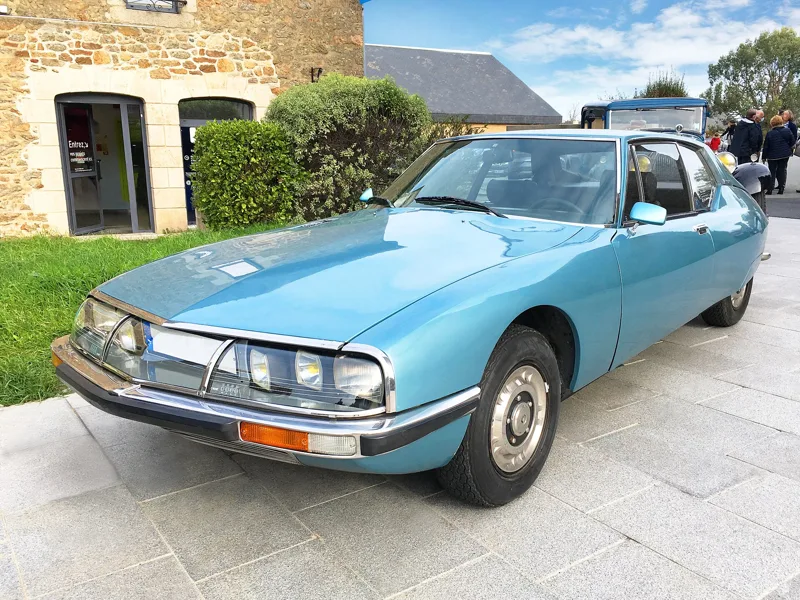
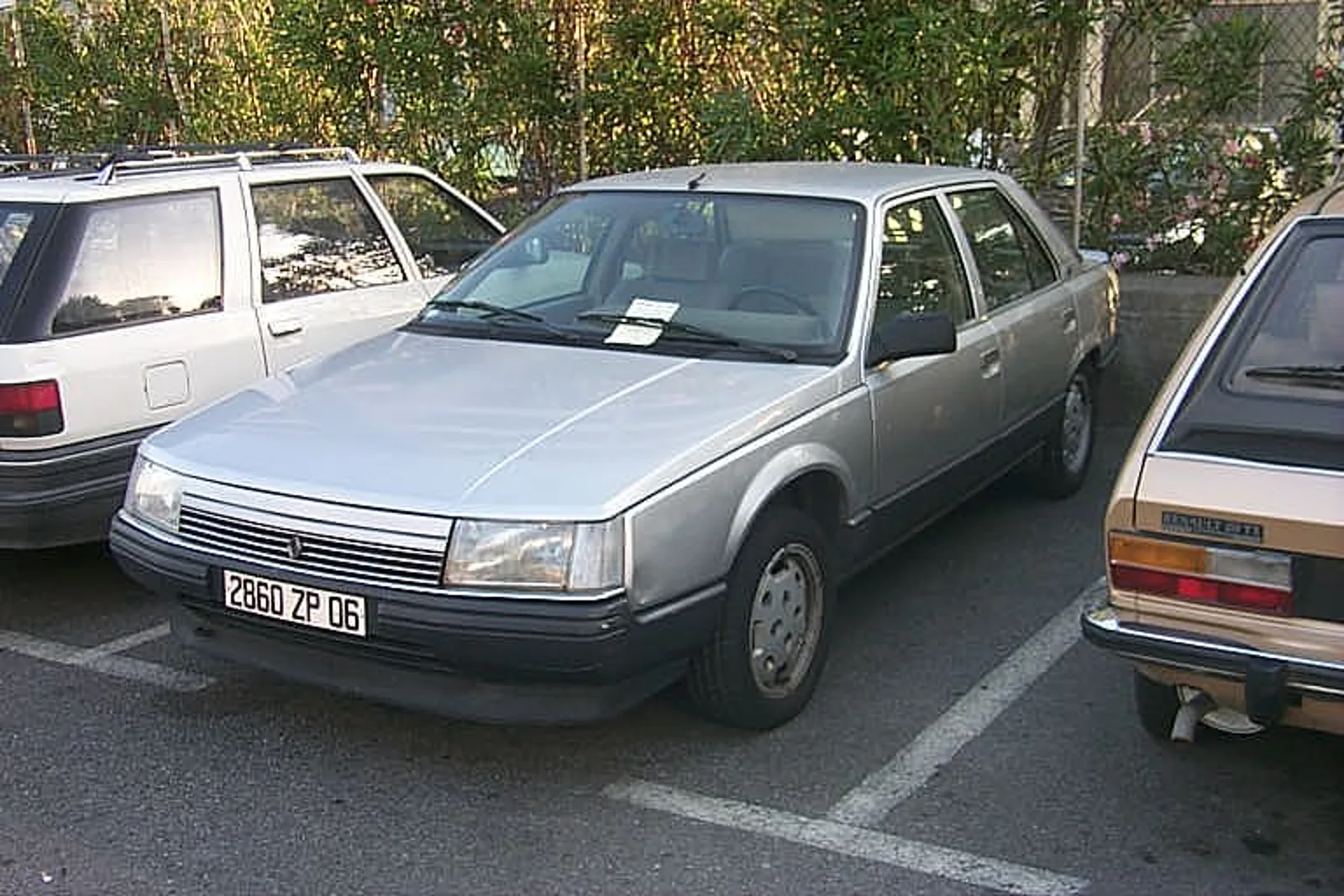
Gaston Juchet and Robert Opron penned the five-door liftback body. Opron had earlier worked on the Citroen SM, the Renault Fuego and the Renault 11, and the wraparound rear window was one of his signature features. The shape was meant to read as a notchback, which suited buyers outside France who preferred a formal saloon.
The car was designed for aerodynamic efficiency from the start. Its drag coefficient was as low as 0.28 on 2-litre models, rising to 0.33 on the diesel and V6 versions. The TS briefly held the unofficial title of the most aerodynamic mass production car in the world with its 0.28 figure.
The interior was the work of Italian designer Marcello Gandini, who was known for his Lamborghini designs. It was futuristic and somewhat controversial, but the passenger compartment was considered quiet, spacious and well lit.
Renault packed the car with features for its time. An express up-and-down driver's window came as standard on higher trims, voice alerts warned of doors, oil pressure and blown bulbs, and one of the world's first remote stereo controls sat to the right of the steering column.
What engines did the Renault 25 offer?
All Renault 25 models were front-wheel drive, with the engines mounted longitudinally ahead of the front axle. The petrol range started with a carburetted 2.0-litre four, then moved to fuel injection and a 12v version, while 2.2-litre fours and 2.7 and 2.8-litre V6 engines filled the upper part of the line.
The turbo V6 was the performance flagship, with 2.5-litre units in 182 PS (134 kW) and later 205 PS (151 kW) forms. Its top speed was 225 km/h (140 mph) in the early version and 233 km/h (145 mph) in the later one. The 25's performance was above average for its class, at least in V6 Turbo specification.
Diesel buyers had a 2.1-litre four in naturally aspirated and turbocharged forms. The Turbo-D produced 88 PS (65 kW) and reached a top speed of 172 km/h (107 mph), a solid if unexciting result for a large family car.
Handling won praise despite a degree of understeer and some torque steer on the V6 Turbo. The ride was comfortable, and the cars were considered refined for their time.
Why is the Renault 25 automatic gearbox a problem?
The automatic transmission was the weakest element of the car. Three automatic units were used on the R25: two three-speed units, the MJ3 and the 4141, and a newer four-speed AR4 that later appeared on the Safrane as the AD4 and AD8.
Problems with the ATF cooler, especially on the later AR4, gave these versions a poor reputation for reliability. A leaking cooler could lead to gearbox failure with little or no physical warning, and the first sign was often a stain on the ground beneath the car that some drivers did not notice.
Renault prepared a replacement cooler package for all cars regardless of age and mileage. The cooler's position in front of the right wheel could not be changed, so the AR4 automatic cars are now rare. Most surviving 25s therefore have the five-speed manual.
The manual, by contrast, drew unanimous praise for precision and smoothness. Its one quirk was a detent spring on fifth gear that could cause misselection of third, but that was a small price for a gearbox that most drivers preferred.
How did the facelift change the Renault 25?
The car was facelifted in June 1988, with a new front end, taillights, interior materials and front suspension. Almost every panel was changed to smooth the styling, and the revised car also received more powerful engines.
The 2.2i was dropped in favour of a 12v version of the 2.0i producing 140 PS (103 kW). A small run of post-facelift cars kept the 2.2i to use up stocks, and those were rated at 126 PS (93 kW). The 2.2 engine left French listings in 1990, although exports continued until production ended in February 1992.
The facelift also brought changes to the V6 line. The Injection's output fell from 160 PS to 153 PS with the catalytic converter after 1990, while the V6 Turbo gained 205 PS and new electronic turbo management from April 1990.
What trim levels did the Renault 25 offer?
French market cars ran through seven trim levels. Level 1 had power steering and single-beam headlights, while Level 2 added side body cladding and a rear wiper. Level 3 brought front and rear power windows, power mirrors and a Philips sound system,, with air conditioning and ABS available as options.
Level 4 added dual-beam headlights and the express up and down driver's window, and Level 5 introduced air conditioning, leather, anti-lock brakes and seven-way power front seats. The top two levels added automatic climate control, cruise control, memory seats and a speed-sensitive power steering system.
Level 7 offered an electronically controlled hydraulic suspension for Baccara models. It could work in a sport mode or an automatic mode that picked between comfort, medium and sport settings based on speed and acceleration.
What was the Renault 25 Baccara?
The Baccara was a luxury finish introduced in October 1988 on the V6 Injection, and it came only with amber leather seats. From April 1990 the finish also appeared on the V6 Turbo, which received new electronic turbo management at the same time.
Baccara cars came with ABS, electric windows front and rear, automatically regulated air conditioning, cruise control and height-adjustable headrests. The Ergomatic pack added front airbags and memory seat settings, and the doors and roof were trimmed in Alcantara.
Visual signs included a spoiler, Baccara light-alloy rims, a monogram on the quarter pillars and a three-spoke leather steering wheel. Shades such as Arabica Brown and Tungsten Grey were offered with a double gold side stripe.
Were there Renault 25 limousines and estates?
An extended-wheelbase version called the Renault 25 Limousine was 22.7 cm (8.9 in) longer than the standard car. The standard limousine kept the bench seat of the regular model, while the Executive version had two individual electric seats. Renault UK dropped the limousine within two years, although it continued in other European markets.
Coachbuilders such as Boonaker produced bulletproof variants and fitted 2.5-litre V6 Turbo engines. For a time the President of France used an armoured limousine based on the 25, which gave the car a notable official role.
A station wagon proposal from coachbuilder Heuliez, called the Sologne, was refused by Renault and never became a prototype. Instead, a kit from the Belgian firm EBS turned the 25 into a shooting brake with a rear tailgate.
How was the Renault 25 sold in Australia and the UK?
The 25 was exported to Australia in 1985, priced at A$35,000 without cruise control. It used disc-drum brakes rather than the four-wheel discs of the Renault 18. The UK received the car from the beginning of 1984, where its hatchback body stood out among conventional saloons.
The UK pre-facelift range included TS, Monaco, GTX, V6 and V6 Turbo. The Monaco was a special edition with metallic brown paint, Monaco badging and a leather interior. After the facelift, the top model became the Baccara with the 2.8 V6 or 2.5 V6 Turbo.
What did the Eagle Premier and Dodge Monaco do with the 25?
The Renault 25 formed the basis of the full-sized Eagle Premier, a car developed by American Motors and built in Canada. It was introduced in 1988 and styled by Italdesign Giugiaro, though the suspension came from the Eagle Medallion, which was itself a Renault 21 derivative.
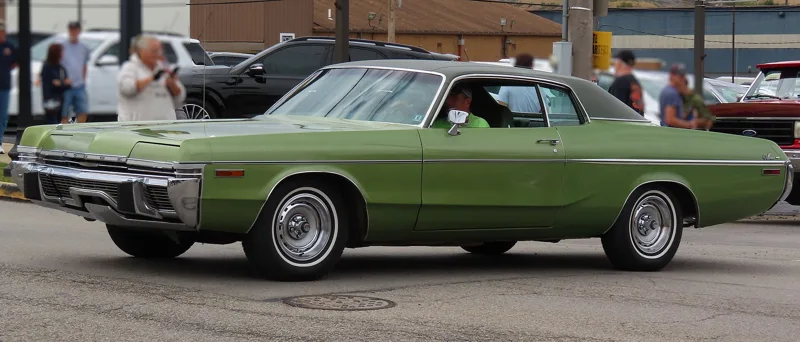
The Premier was a true four-door saloon with a separate boot lid, rather than a lift-up hatchback. After Renault sold its stake in American Motors to Chrysler in 1987, Chrysler marketed a rebadged version as the Dodge Monaco from 1990 to 1992.
What are the Renault 25 specifications?
The table lists the principal engines and key figures for the 25 across its life. It shows the spread of power between the carburetted fours, the fuel-injected V6s and the turbo models.
| Specification | Detail |
|---|---|
| Built | 780,976 from 1983 to 1992 |
| Plant | Sandouville, near Le Havre |
| Early V6 Injection | 2.7-litre, 144 PS (106 kW), 201 km/h (125 mph) |
| V6 Turbo (1985 to 1990) | 2.5-litre, 182 PS (134 kW), 225 km/h (140 mph) |
| V6 Turbo (1990 to 1992) | 2.5-litre, 205 PS (151 kW), 233 km/h (145 mph) |
| Diesel Turbo-D | 2.1-litre, 88 PS (65 kW), 172 km/h (107 mph) |
| Drag coefficient | 0.28 on 2-litre models, 0.33 on diesel and V6 |
| Australian launch price | A$35,000 in 1985 |
Frequently asked questions
How many Renault 25s were built?
In total 780,976 were built from 1983 to 1992, all at the Sandouville plant near Le Havre. Production ended in February 1992 to make way for the Renault Safrane.
Why is the automatic Renault 25 rare?
The automatic gearbox was the weakest link in the drivetrain. Leaking ATF coolers led to failures, and the AR4 cars were especially affected, so most surviving examples have the five-speed manual.
Did the Renault 25 race?
No competition history is recorded for the car. It was built as a luxury executive flagship, and its appeal lay in comfort, ride and the V6 engines.
What is the Eagle Premier?
The Eagle Premier was a full-size North American saloon built on the Renault 25 chassis, with styling by Italdesign Giugiaro and a separate boot lid. Chrysler later sold a rebadged version as the Dodge Monaco.