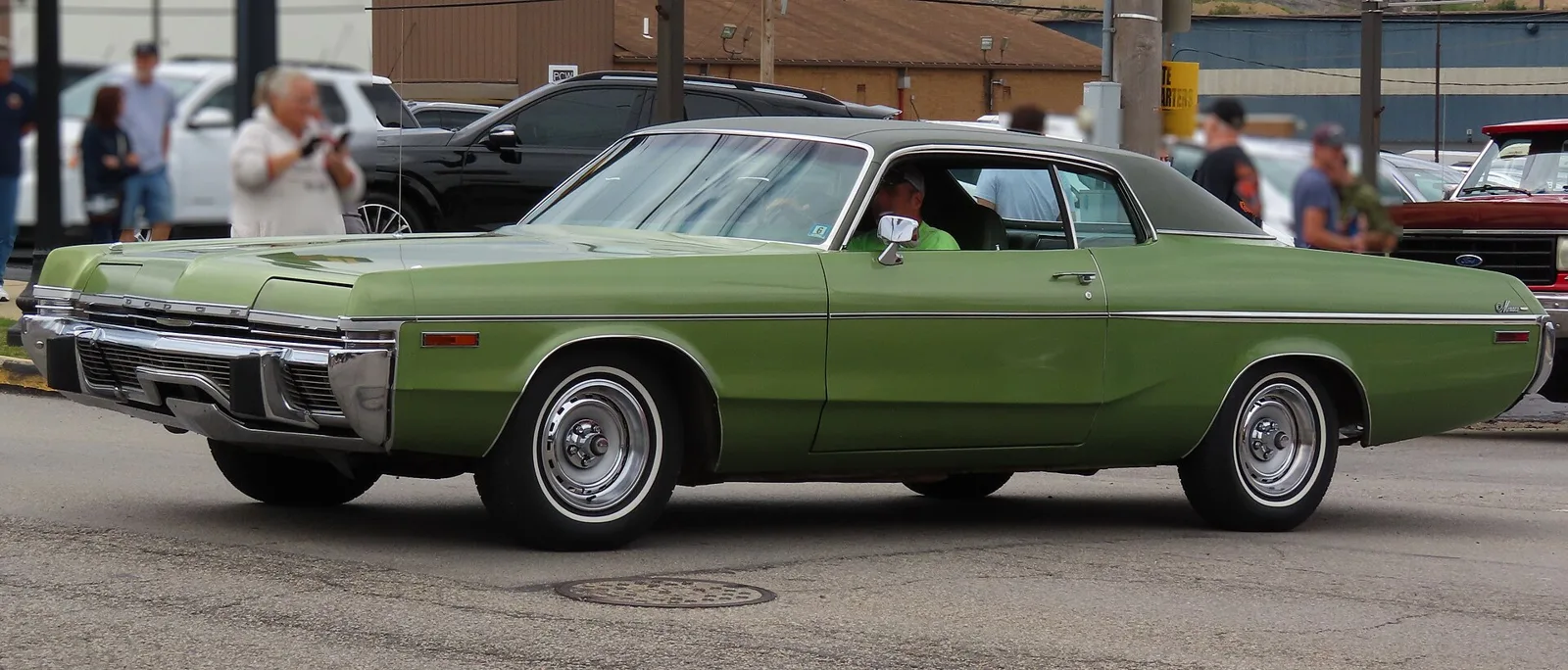
Introduced for 1965 as Dodge's personal luxury flagship, the Monaco moved to a mid-size platform in the 1970s and returned in 1990 as a front-drive sedan.
The Dodge Monaco was a Dodge flagship that ran from 1965 to 1978 on full-size and mid-size platforms, then returned in 1990 as a front-drive sedan. Its name came from the Principality of Monaco, and the Intrepid replaced it for 1993.
The Dodge Monaco was a flagship that Dodge marketed from 1965 to 1978 and again from 1990 to 1992. It began as the top full-size model in the Dodge range, replacing the Custom 880, and it was named after the Principality of Monaco. Its name returned after a twelve-year hiatus, and the Dodge Intrepid replaced it for the 1993 model year.
Where did the Monaco come from?
The Monaco was introduced on 25 September 1964 for the 1965 model year, and it was intended to compete with the Pontiac Grand Prix in the personal luxury market. It was based on the Custom 880 two-door hardtop body and received special badging, a sportier interior and a full-length centre console.
The interior had bucket seats front and rear, rattan wicker accents on the doors and quarter panels, and a unique three-spoke steering wheel. Dodge marketed the car as a limited-edition model for buyers with refined taste, which was a deliberate step up from the Polara.
Compared with the Grand Prix, the Monaco was cheaper, but its front end resembled the lower-priced Polara. After one model year it became Dodge's full-size luxury line. Canadian buyers could also get a Plymouth Sport Fury-based car under the Monaco name, fitted with Plymouth dashboards in 1965 and 1966.
A flagship that went from personal luxury to fleet staple and then to a front-drive sedan, all under one name.
What engines did the Monaco use?
The standard engine in 1965 was a 383 cubic-inch V8 producing 325 hp (330 PS; 242 kW). Buyers could choose a Torqueflite automatic or a four-speed manual, and both had console-mounted shifters that suited the sporty interior. The 383 was still the standard engine in 1969, making 245 hp (183 kW) with a two-barrel carburettor.
By 1969 the 440 cubic-inch Magnum V8 offered 375 hp (280 kW), and the same engine in the wagon was rated at 350 hp (261 kW; 355 PS). The 1970 models dropped the 440 Magnum, and the 350 hp version became the top engine for all Monacos.
What did the 1966 and 1967 Monacos look like?
In 1966 the Custom 880 series gave way to the Monaco, while the former Monaco was renamed Monaco 500. The standard car was offered as a hardtop coupe, a pillarless four-door hardtop sedan, a conventional four-door sedan and a four-door station wagon, and in the US the Monaco 500 was a two-door hardtop only.
The 1967 full-size Dodges received significant facelifts with all-new exterior sheet metal. The chief designer, Elwood Engel, gave the cars generally flat body planes with sharp-edged accent lines. Hardtop coupes featured semi-fastback rooflines with reverse-slanted trailing edges on the rear quarter windows.
How did the 1968 Monaco change?
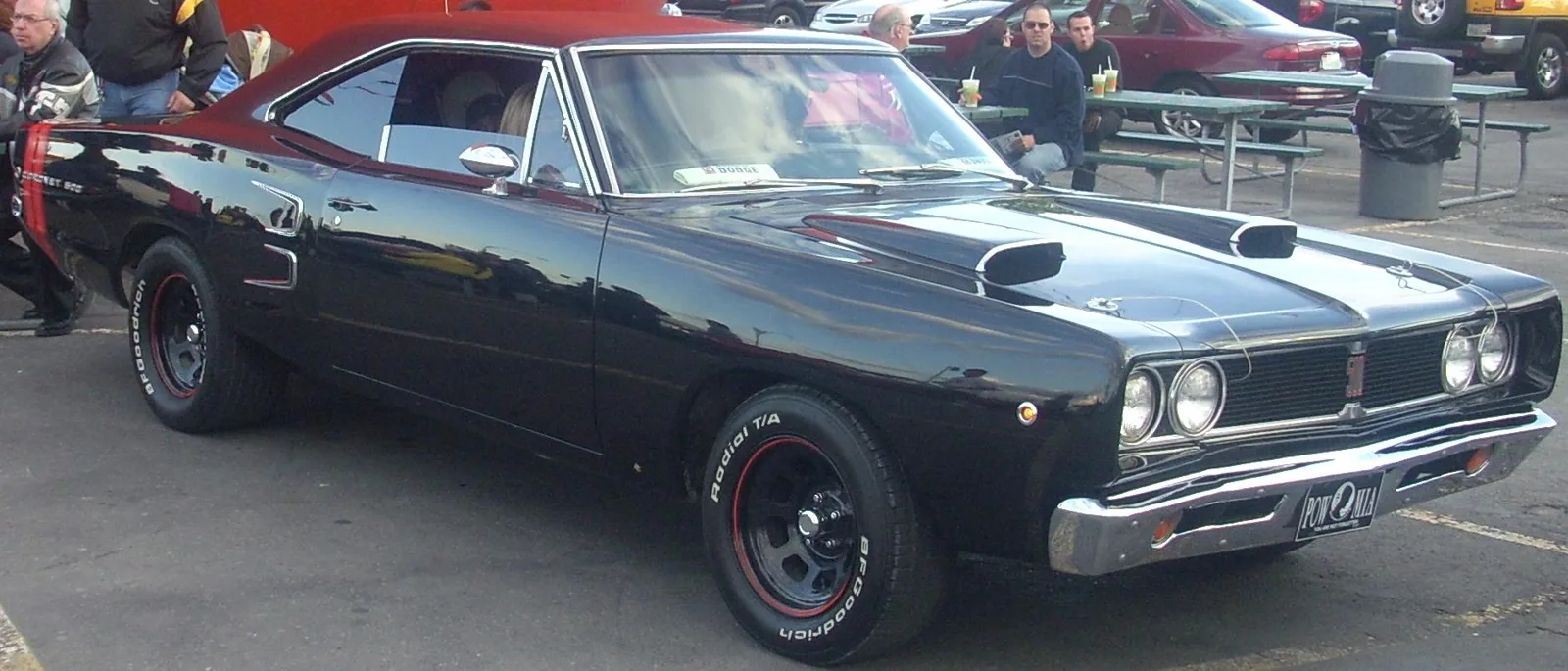
Marker lights were added in the fenders in 1968, along with full-width tail lights. Those visible changes were the year's main styling updates. In the United States the Monaco 500 ended with the 1968 model year, whereas Canadian cars kept it until the close of 1970.
In Canada the Monaco name had been applied to all of the premium full-size Dodge cars from 1967, replacing the Polara 880 at the top of the range. The Canadian Monaco 500 was a separate series with its own side trim, and Canadian buyers could also order a convertible.
What was the fuselage-era Monaco?
For 1969 the Monaco's wheelbase grew from 121 inches to 122 inches, and its length reached about 220 inches. All full-size Dodges adopted Chrysler's fuselage styling, in which the upper and lower body form a uniformly curved unit. Dodge executives demanded a change when sales lagged, and chrome trim arrived by the summer of 1969.
Dodge added chrome trim to the fender caps and the leading edge of the hood as an option, which gave a loop-bumper look without the tooling expense. The Super-Lite auxiliary headlamp was a $50 option developed with Sylvania, using an 85-watt halogen bulb as a mid-beam for turnpike driving.
Sales fell in 1969. The Monaco line accounted for 38,566 of the 127,252 full-size cars that Dodge built for the year, and Polara and Monaco sales together were down by nearly 20,000 cars from 1968.
How did the 1970 to 1973 Monacos develop?
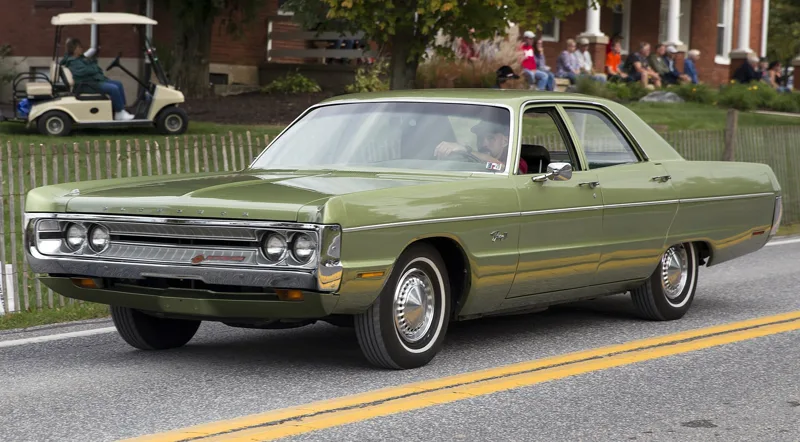
The 1970 models featured new loop-type bumpers at the front and rear. The front end grew by three inches as the hood was lengthened, while the new rear end was four inches shorter. Torsion-Quiet suspension used rubber isolators to reduce road noise, and the rear track was broadened by nearly three inches.
Monaco sales declined again in 1970, with 24,692 cars built. For 1971 the Monaco received a facelift with a new grille inside the bumper and a single-loop rear bumper. The Super-Lite was no longer available, and the 500 option package was discontinued.
For 1972 the full-size Dodges received all-new sheet metal, with hidden headlamps set above a new bumper and grille. A new 400 cubic-inch engine was offered, and the 360 cubic-inch LA-block became the standard V8 at 210 hp (157 kW; 213 PS) net. Sales that year reached 37,013 units.
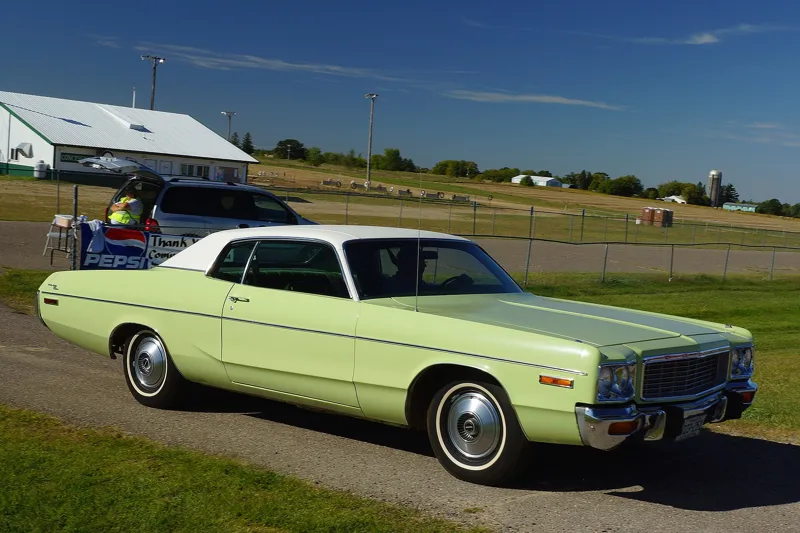
The 1973 car was the last with fuselage styling. Large black rubber guards were added to meet new five-mile-per-hour impact standards, and sales dropped to 29,396. After 14 years the Polara name was discontinued, and from 1974 all big Dodges carried the Monaco name.
How did the Chrysler 383 come about?
In July 1969 Chrysler South Africa introduced a rebadged, locally built Monaco as the Chrysler 383. The badge remained in use for about four years, and the 383 cubic-inch V8 in that car was rated at 290 hp (216 kW). The fully equipped car featured power windows and a standard vinyl roof.
What changed with the 1974 and 1977 cars?
The full-size C-body 1974 Dodge Monaco had an all-new unibody platform and sheet metal, but the 1973 oil crisis began within days of its introduction. Critics said the design was too derivative of a three-year-old Buick or Oldsmobile full-size car, and sales suffered accordingly.
For 1977 the Monaco moved to the mid-size B platform, replacing the Coronet hardtop coupe, four-door wagon and sedan. The full-size car became the Royal Monaco for one year. The 1977 Monaco differed from the Coronet only in its revised front end with stacked rectangular headlamps.
The Monaco was discontinued at the end of the 1978 model year, when it had become Dodge's largest car. The St. Regis replaced it for 1979 on the R platform, and fleet and police buyers supported its sales heavily.
How did the 1990 Monaco arrive?
Dodge revived the Monaco name for 1990 after a twelve-year hiatus, replacing the Diplomat as the flagship sedan. It was the Dodge counterpart of the Eagle Premier, which AMC and Renault had developed, and it was offered in LE and ES trims. Four-wheel disc brakes arrived in 1990, a year before anti-lock brakes.
The car used the front-wheel drive B platform, which was derived from the Renault 25 and was the final platform AMC developed. It had a 3.0 litre PRV V6 with a ZF four-speed automatic and four-wheel disc brakes, and anti-lock brakes were added in 1991.
What were the Monaco's 1990 to 1992 features?
The Monaco was built by the Bramalea Assembly plant in Brampton, Ontario, which AMC had opened in 1986. Chrysler Canada did not sell the model there, and the largest Dodge sedan sold in Canada became the mid-size Spirit. Production at the Bramalea plant was interrupted several times as it struggled to meet demand.
The Monaco was a five-passenger car with front bucket seats and a console-mounted shifter, while the Dodge Dynasty had a six-passenger bench. For 1991 the car replaced chrome trim with black or body-colour trim, and air conditioning and automatic climate control became standard.
What replaced the Monaco?
The Monaco had sat above the slightly smaller Dynasty in size. For 1993 Dodge consolidated its two large sedan lines, and the Intrepid took over from the Monaco and the Dynasty, while the Eagle Vision succeeded the Premier. The Dynasty sat slightly smaller in size, below the Monaco.
Chrysler had agreed to use 260,000 PRV V6 engines when it bought AMC. With Eagle selling fewer than 90,000 Premiers in 1988 and 1989, and the Bramalea plant closing on several occasions, Chrysler added a Dodge-branded version for 1990 to boost production.
What did the Brougham and 500 packages add?
The 500 option gave the 1969 Monaco front bucket seats and a centre armrest, and it was offered alongside the Brougham package. Brougham equipment brought a vinyl roof to sedans and hardtops, plus a split front bench whose passenger side reclined. Two-door hardtops did not get the split seat.
The Brougham package was also available for $220 in 1971, despite the arrival of a separate Polara Brougham series that year. Buckets remained available after the 500 package was discontinued.
How did the Monaco wagons change?
Monaco station wagons received wood-grained vinyl trim along their sides and across the dual-action tailgate in 1969, which was hinged on the side and at the bottom. In 1971 the trim moved up around the side windows, using translucent decals that let some of the paint colour show through.
In 1972 the wagons received a new rear appearance with stacked vertical taillamps. In 1973 all three engines gained electronic ignition as standard, which extended spark plug life and reduced periodic maintenance.
What was the 1975 Diplomat package?
After the start of the 1975 model year, the Royal Monaco Brougham coupe could be ordered with the Diplomat package, a limited-production option. It featured a landau vinyl roof with opera windows and a wide steel roof band, and it was available in only three colours: Cold Metallic, Silver Cloud Metallic and Maroon Metallic.
1975 was also the last year the four-door hardtop was offered. Certain cars, varying with equipment and destination state, were fitted with catalytic converters to satisfy stricter emissions rules. The 1975 Royal Monaco had a top speed of 127 mph and weighed over two tons.
What changed for the 1976 Monaco?
For 1976 all models, including the police packages, adopted the former high-series front panel with hidden headlights. Chrysler's Lean Burn system appeared on the 400 cubic-inch engine, and the four-door hardtop disappeared. The body styles were reduced to a four-door wagon, a four-door sedan and a two-door hardtop.
A 318 cubic-inch V8 with 150 bhp became standard on the base Monaco, while the Royal Monaco Brougham and wagons were downgraded to 400 cubic-inch engines with two-barrel carburettors. The 440 cubic-inch four-barrel could still be ordered.
Frequently asked questions
Where did the Monaco name come from?
The name came from the Principality of Monaco. Dodge positioned the car as a personal luxury flagship when it launched in 1965.
Was the Monaco ever used as a police car?
Yes. Monacos built in 1976 had police packages, and the St. Regis that replaced the car in 1979 was sold heavily to fleets, mainly as law enforcement vehicles.
Did a Monaco appear in films?
A 1974 Dodge Monaco was the basis for the Bluesmobile, the car used in the 1980 film The Blues Brothers.
How did the 1990 Monaco end?
The 1990 to 1992 Monaco was replaced by the Dodge Intrepid for 1993, which took over the roles of both the Monaco and the Dynasty.
.jpg)