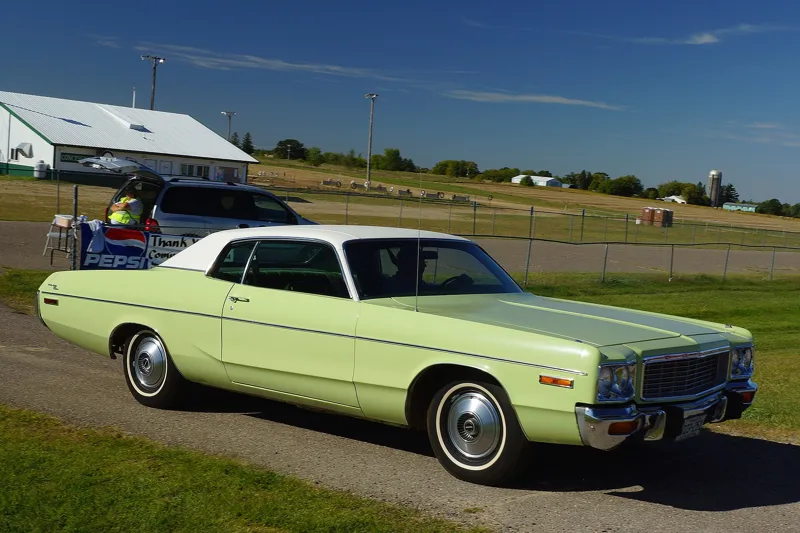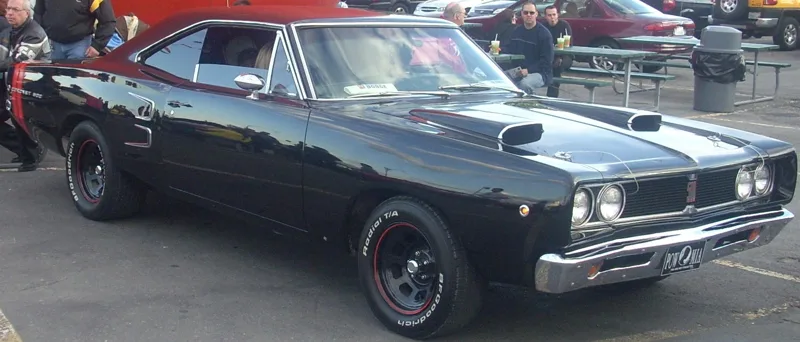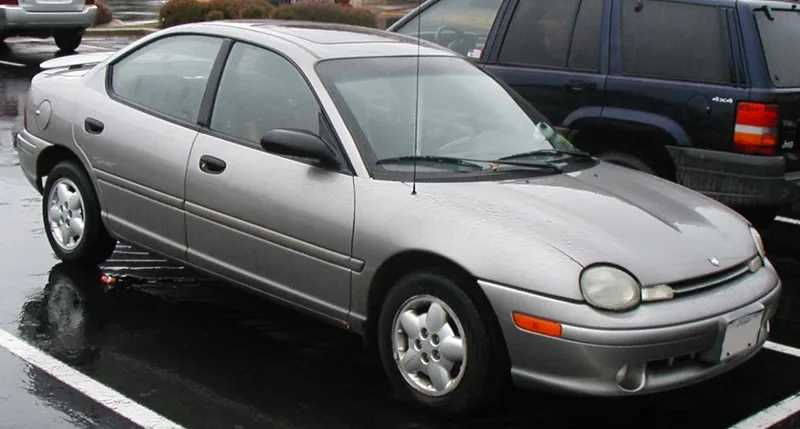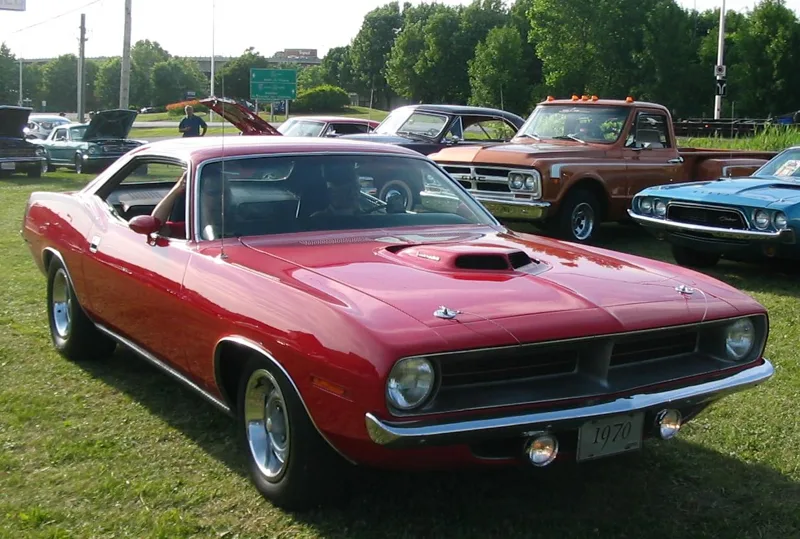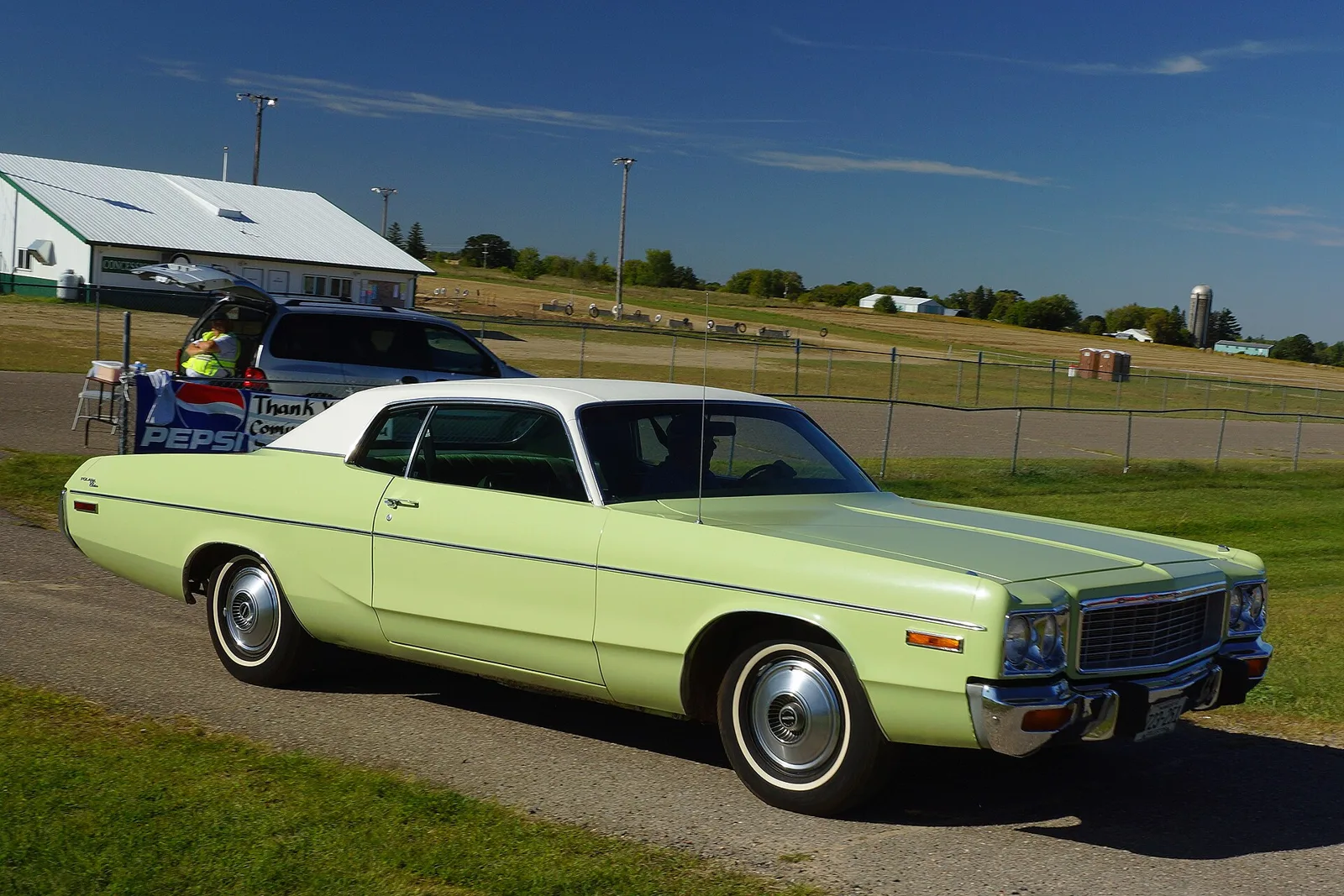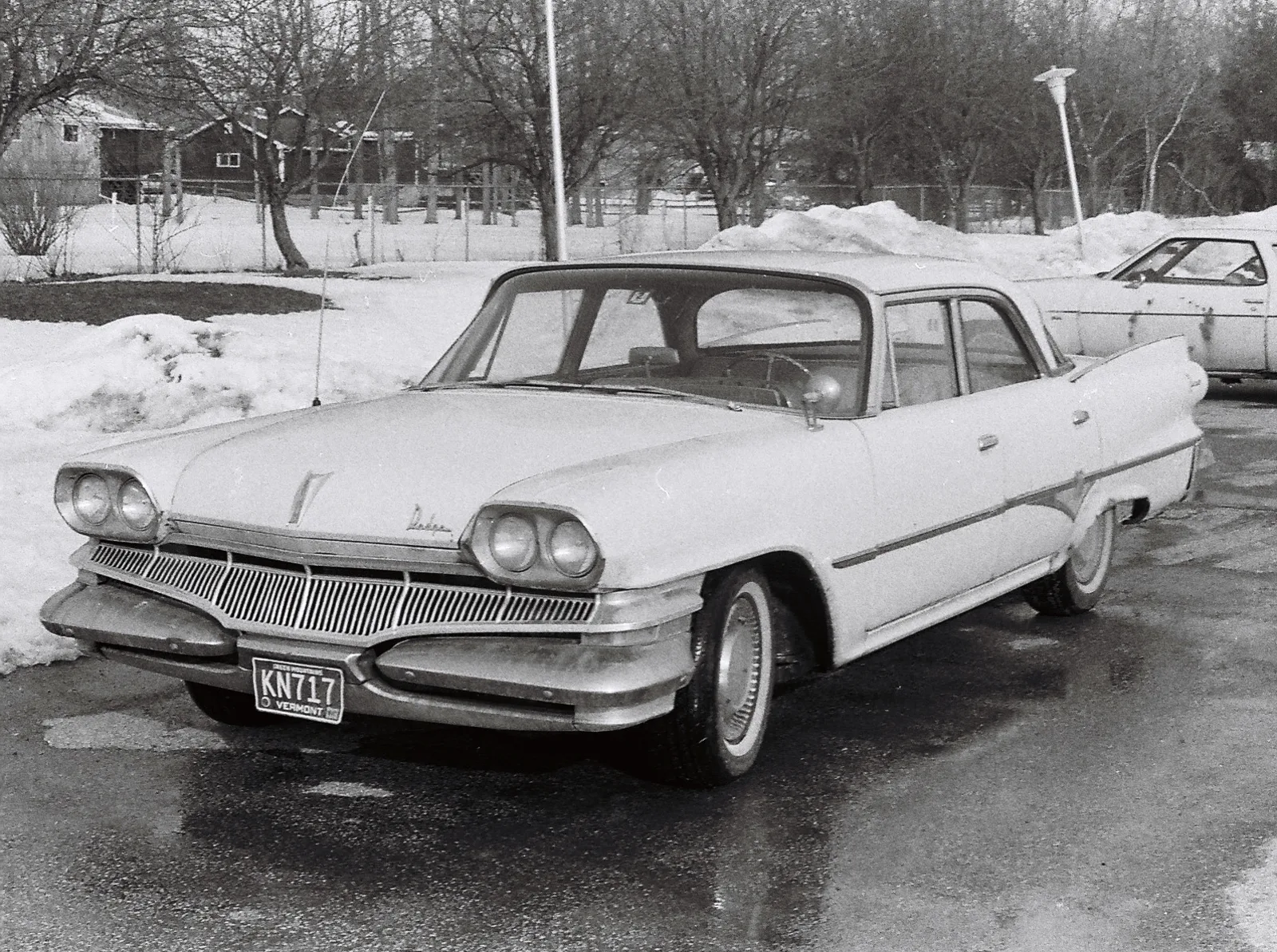
A nameplate that changed size four times, carried police, taxi and drag-strip versions, and came back in 2013 on a Fiat-derived compact.
Built by Dodge in North America from 1960 to 1976, the Dart moved from full-size to intermediate to compact size during its run. Its Hemi drag car and performance trims are the best-known versions, and the nameplate returned for 2013 on a Fiat-derived compact sedan.
The Dodge Dart was a Dodge car line built from the 1960 model year until 1976 in North America, with the nameplate later returning on a compact sedan. It changed size several times, moving from a low-priced full-size car to an intermediate and then to a compact. Along the way it produced a drag-strip Hemi, police and taxi versions, and a long run of sporty trims.
Where did the Dart name come from?
Chrysler first used the name on a 1956 show car with a body by the Italian coachbuilder Ghia, which was later renamed the Dart Diablo. A second Ghia show car, the Super Dart 400, followed for 1957. The name reached production in 1960, after a costly naming study produced the word Zipp, which was rejected in favour of Dart.
A name that went from full-size to compact and back again, carrying a drag-racing Hemi along the way.
Why did the 1960 Dart matter to Dodge?
Dodge dealers had sold Plymouths since 1930, until divisional restructuring took that brand away from them. The new Dart filled the low-priced space in the Dodge range. It was built on a unibody Plymouth platform, with a wheelbase of 2,997 mm (118 in), and its sales pushed Dodge production to 367,804 cars in 1960.
That was good enough for sixth place in the industry, behind Chevrolet, Ford, Plymouth, Rambler and Pontiac. The Dart line supplied 87 percent of Dodge volume that year, while the Matador and Polara sold only 41,000 units between them. The mid-priced Matador was dropped after 1960, as buyers preferred the Dart Phoenix.
What went wrong with the 1961 Dart styling?
The 1961 Dart carried Virgil Exner styling, with reverse fins, scalloped rear fenders and a concave grille. Buyers were unimpressed. The small taillights sat low near the bumper corners, and drivers behind complained they could not see them, so dealers offered auxiliary taillights part way through the model year.
The market was weak that year. Dodge production fell to 269,367 units, of which 142,708 were Darts. The Seneca line dropped from 111,600 units in 1960 to 66,100 in 1961, and the Dart could not match the sales of the Plymouth Valiant.
- 1960: Seneca, Pioneer and Phoenix trims
- 1961: the same three trims, with V8 engines fitted to Phoenix convertibles
- 1961: alternator standard across Chrysler products
What changed with the 1962 and 1963 Darts?
For 1962 the Dart was downsized as part of a hasty response to what Chrysler expected from Chevrolet. Trim names changed to Dart, Dart 330, Dart 440 and Polara 500. The car rode on a new lightweight B platform with Chrysler's Torsion-Aire front suspension, and a mid-year Ramcharger V8 was aimed squarely at drag racing.
The 1963 model was a senior compact built around the Lancer's replacement brief. Its wheelbase grew to 2,819 mm (111 in) from the Lancer's 2,705 mm (106.5 in), and the range came as a two or four-door sedan, a two-door hardtop, a station wagon and a convertible. Three trims were offered: the 170, the 270, and the premium GT.
- Standard engine: 170 cu in slant-six rated 101 hp (75 kW)
- Upgrade: 225 cu in slant-six rated 145 hp (108 kW)
- 1964: 273 cu in LA V8 with 180 bhp (130 kW) in a 2-barrel form
- 1965: four-barrel 273 rated 235 bhp (175 kW) and the Dart Charger badge
How did the 1967 redesign change the Dart?
The 1967 Dart and its sister Plymouth Valiant were substantially redesigned, with new styling, revised steering, wider front track and redesigned K-members that could take larger engines. The new body had a dual-plane front end, curved side glass and a rear window with compound inverse curves.
The model range was simplified. Station wagons were eliminated, the base car was badged simply as Dart, and only two-door and four-door sedans, a hardtop and a convertible remained. The GTS arrived late in 1967, and the 1968 car gained the new high-output 340 cu in V8 as standard equipment.
What was the Hemi Dart?
The Hemi Dart was a limited 1968 model, code L023, reworked by Hurst for drag racing. Only 80 were made, and they were fitted with a 426 cu in (7.0 L) Hemi rated at 425 hp (431 PS; 317 kW) at 5,000 rpm, with 490 lb-ft (664 N m) of torque at 4,000 rpm. Engineers said the car could reach 130 mph (209 km/h) in under 11 seconds.
Construction was lightweight, with a fiberglass hood and fenders, thin acid-dipped steel doors and only two bucket seats taken from a Dodge van. The car weighed approximately 1,361 kg (3,000 lb). It was sold with a non-warranty disclaimer, because the cars were built for supervised acceleration trials rather than normal road use.
How did the performance Darts develop in the 1970s?
The Swinger 340 arrived in 1970 as the performance model of the range, with functional hood scoops, a Rallye suspension and a bumblebee stripe. The Demon 340 took over in 1971 with 275 hp, and the car became the Dart Sport 340 in 1973 after the Demon name was dropped in response to poor sales.
By 1976 the top model was the Dart Sport V8, with a 360 cu in V8 that cost 376 dollars as an option on a car priced at 3,370 dollars. Car and Driver tested a Dart Sport 360 at 121.6 mph (195.7 km/h), which put it second only to a Corvette's 124.5 mph (200.4 km/h) in the magazine's comparison.
Where did the Dart race?
The Dart GT was offered in 1966 as the D-Dart for competition in the NHRA D stock class, where the 273 V8 was modified to produce 275 bhp. The same year the SCCA launched its Trans-American Sedan Championship, which allowed production touring cars with a maximum wheelbase of 116 in (2,946.4 mm).
Bob Tullius ran a Dart team called Group 44, sponsored by Quaker State. The team won the 24-hour race at Marlboro Motor Raceway with a car driven by Tullius and Tony Adamowicz. Dodge pulled its sponsorship after a single season, but the cars had shown what the platform could do.
In 1968 Hurst built Hemi and 440 Darts for the SS/B class. Chrysler's engineering staff later said more than 600 440-powered Darts were built in 1969 alone, basically the same as the 383 GTS apart from the engine.
How did the Dart sell overseas?
Right-hand drive Darts from 1960 to 1962 reached Commonwealth markets including Singapore. Australia sold them as the Dodge Phoenix, while South Africa received a DeSoto-branded version called the Diplomat.
The Dart also had a long life in South America and Spain. Brazilian production began in October 1969 from knock-down kits, replacing the Chrysler Esplanada, and the Spanish Barreiros plant built a Dodge Dart from 1965 to 1970, followed by the 3700 from 1971.
Why did the 1963 Dart sell so quickly?
The 1963 Dart was an instant market success, with sales rising sharply on the year before, when the Lancer had been on sale. It stayed popular until the end of production in 1976, and it held its own against the Ford Falcon and the Chevrolet Nova in a crowded compact segment.
Buyers could pick sedans with two or four doors, a hardtop coupe, a wagon or a convertible. The premium GT was offered only as a hardtop or convertible, and the 1963 car had a turning diameter of 11.9 m (38.9 ft).
Engine choices grew over time. The base 170 cu in slant-six made 101 hp (75 kW), the 225 cu in slant-six gave 145 hp (108 kW) for less than 50 dollars extra, and the 273 cu in LA V8 arrived for 1964 with 180 bhp (130 kW). 1964 was also the last year for pushbutton control of the TorqueFlite automatic.
What special trims did the 1970s Dart offer?
The 1970s Dart leaned on themed trims to keep buyers interested in a fading performance market. The Hang 10 option of 1975 was a surf-inspired package with eggshell white paint, a factory sunroof and orange shag carpet, while the 1974 Caravan Tan brought gold instrument panel accents and a striped vinyl bench seat.
The Spirit of '76 edition used white paint with red and blue bodyside stripes, a tie-in with the US Bicentennial. The Convertriple option of 1973 and 1974 offered a fold-down rear seat and a sunroof, marketed as three cars in one.
Performance lived on at the top of the range. The Dart Sport V8 with automatic transmission listed at 3,370 dollars in 1976, and its 360 cu in V8 was a 376 dollar option on other models.
How did the Dart Lite save weight?
The Dart Lite was a 1976 fuel economy package, and it weighed at least 68 kg (150 lb) less than the ordinary Dart Sport. Its 225 slant-six was the only engine, fitted with an aluminium intake manifold, while the bumper reinforcements and hood and trunk bracing were made from aluminium instead of steel.
With a manual gearbox, the Dart Lite was geared for economy. An aluminium overdrive transmission housing and a taller final drive let the car cruise at highway speed with few engine revolutions.
Specifications at a glance
| Specification | Detail |
|---|---|
| First generation wheelbase | 2,997 mm (118 in) |
| Third generation wheelbase | 2,819 mm (111 in) |
| 1963 turning circle | 11.9 m (38.9 ft) |
| 1968 Hemi engine | 426 cu in (7.0 L), 425 hp (431 PS; 317 kW) |
| 1976 Dart Sport V8 price | 3,370 dollars |
| 1976 Car and Driver top speed | 195.7 km/h (121.6 mph) |
| Revival | 2013 model year, replacing the Caliber |
Frequently asked questions
Did the Dart come as a station wagon?
Yes. Early Darts offered wagons with a 3,099 mm (122 in) wheelbase in 1960 and 1961, and later wagons were built on the Valiant wheelbase until they were eliminated in 1967.
Was the Dart sold in Canada?
Yes. In Canada the base model of the 1962 range was badged Dart 220, while the rest of the range matched the American cars.
What replaced the Dart in 1976?
The Aspen replaced the Dart in late spring 1976. The Dart was briefly sold alongside it for the rest of that model year before its North American run ended.
When did the Dart name come back?
The Dart nameplate returned for the 2013 model year as a compact passenger car, replacing the Caliber. It was based on a Fiat design and marked the first Dart in North America in more than thirty years.