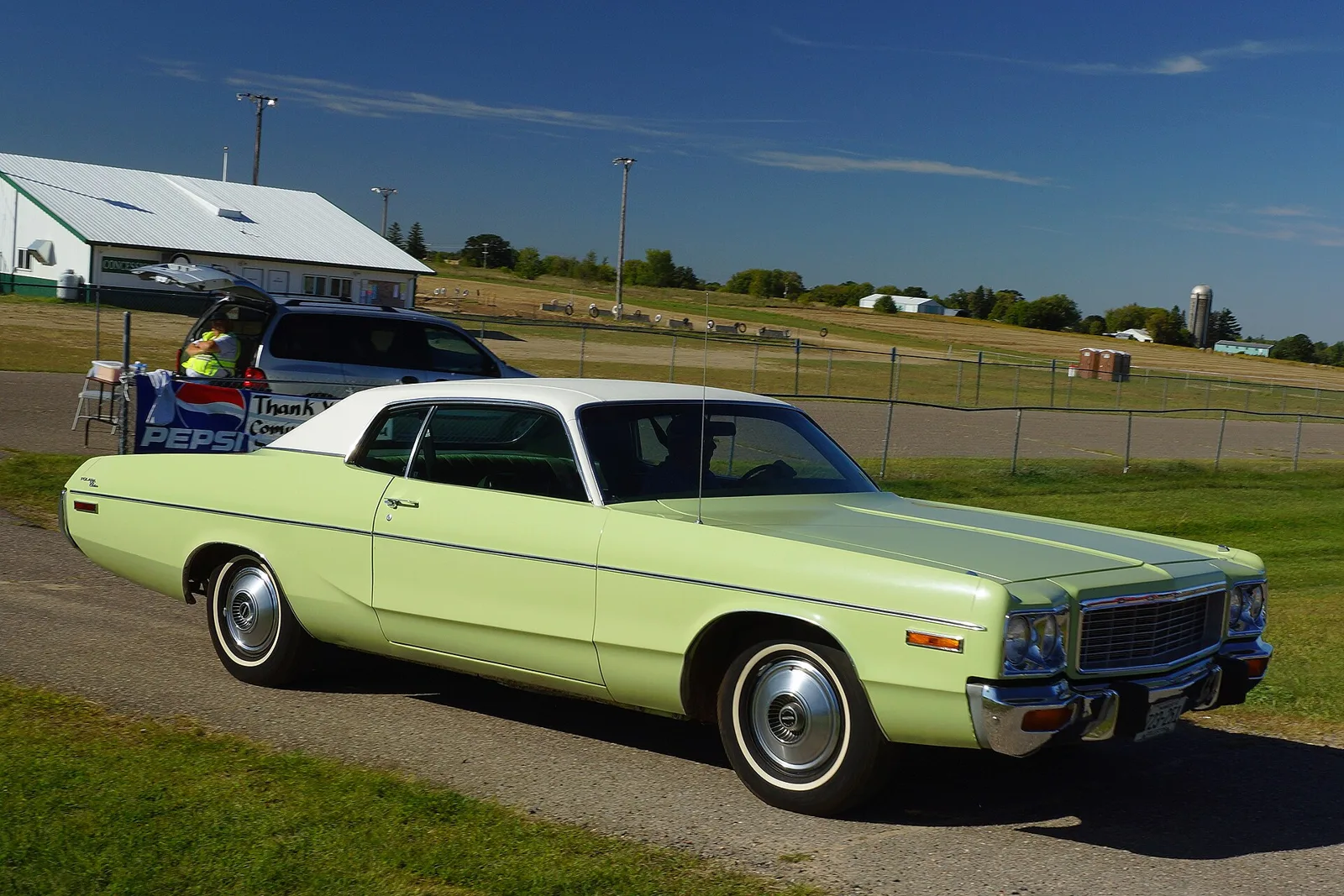
Dodge's top-line full-size car from 1960 to 1973, which changed shape and platform several times and carried the name into Argentina and Canada.
The Dodge Polara was Dodge's top full-size car from 1960 until 1973, when the Monaco took its place. It appeared in several body styles, including a convertible until 1970, and the name also covered Dart-based Argentine cars from 1968 to 1980.
The Dodge Polara was the top full-size Dodge from the 1960 model year, and the name stayed in use until 1973. It was offered in several body styles and changed platform and size more than once. Outside the United States the name also appeared on Argentine cars based on the Dart and on Canadian full-size models.
Where did the Polara name come from?
The name refers to Polaris, the North Star, in a marketing bid to tap the excitement around the Space Race of the early 1960s. Dodge used it for its top-line full-size model from the start, and it stayed with that role until the Monaco took over.
The 1960 Polara and the other full-size Dodges carried styling cues from 1959, which had grown out of Virgil Exner's Forward Look styling of 1957. 1960 was also the first year that every Chrysler model except the Imperial used unibody construction.
The Polara and the Matador kept a 122 in (3,099 mm) wheelbase, while the Darts used a 118 in (2,997 mm) wheelbase, shorter than the Polara's, which Plymouth also used. The Polara came as a convertible, a hardtop coupe, a hardtop sedan, a hardtop wagon and a pillared sedan.
A space-age name on a full-size Dodge that kept the badge from 1960 until the Monaco took over in 1974.
What did the 1960 and 1961 Polara look like?
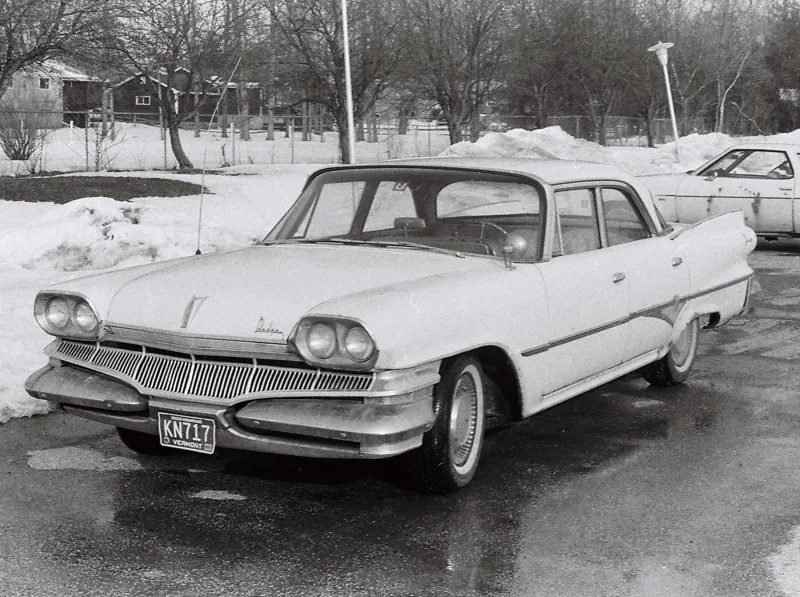
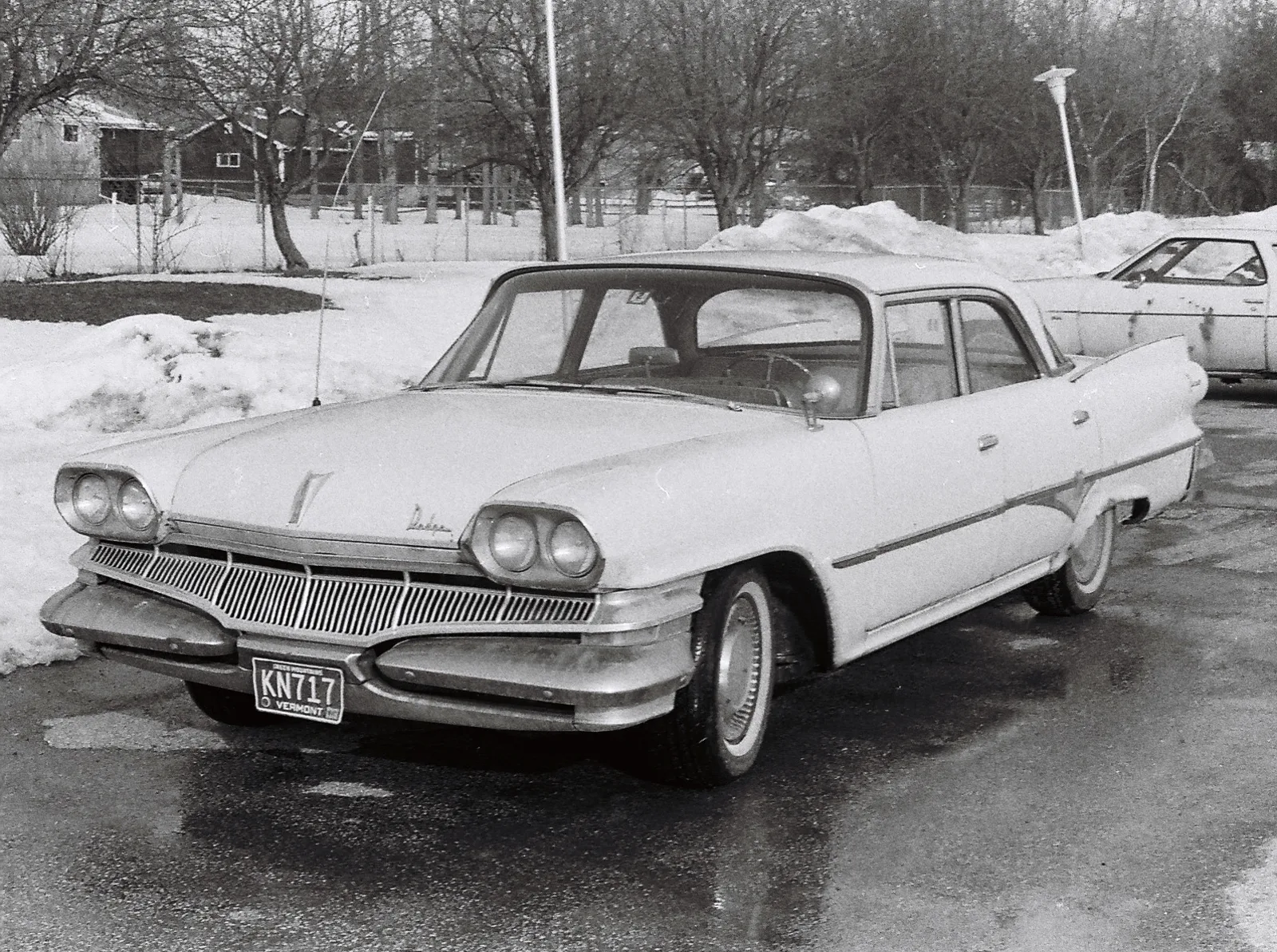
The 1960 car had Dodge's stacked jet-pod tail lights, with larger lights set into the rear bumper, and shortened tail fins that held small vertical tail light lenses. For 1961 the fins were reversed and made taller, sweeping toward the rear window in a C-shaped chrome line.
Polara trim added chrome stone guards just aft of the rear wheel arches, a long chrome spear along the flank and better upholstery. The 1961 front dropped the massive bumper treatment for a simple bar, above a concave grille shared with the Dart.
Why did the 1961 restyle struggle?
Buyers turned away from the 1961 restyle. Only 14,032 full-size Dodges were produced in the United States, the lowest level since the firm was founded in 1914, and Dodge sales for the year fell 53 percent against 1960. Dodge also dropped the Matador for 1961, which made the Polara the only large Dodge left in the range.
The Dart sold 142,000 units that year, but the make still slipped from sixth to ninth place in the American market. A special order for the California Highway Patrol covered 1,236 units in trim code 999. Those cars had a 383 high-output V8, a four-barrel Carter carburettor and a longer wheelbase than the Dart, since the state wanted a pursuit car with more length.
What happened to the Polara between 1962 and 1964?
The 1962 Dodges were redesigned on smaller 116 in (2,946 mm) wheelbases, the first Chrysler B-body. The Custom 880 arrived on 21 January 1962 as Dodge's top model, and for that model year there was no car called the Polara in the US.
The Polara 500 was a bucket-seated sporty model with a 305 hp (227 kW) 361 cu in V8, offered as a convertible or a two-door hardtop. A four-door hardtop joined in December, and these mid-sized Dodges proved competitive stock cars in NASCAR races and stock-automatic drag classes. Being smaller and lighter gave them an edge over the bigger Ford and General Motors machines.
The 1961 Polara bodyshells were reused in 1962 for Chrysler sedans and convertibles, with updated 1961 Chrysler front ends mated to the de-finned Polara bodies. The Polara name returned as part of a wider range, and the wheelbase grew to 119 inches (3,023 mm) for 1963.
Elwood Engel, Chrysler's vice president of styling, revised the basic body until 1964. The 1964 models gained a new front end and six small square taillights, and the hardtop coupes got a reworked C pillar, which helped sales rise sharply over 1963.
How did the Polara change from 1965 to 1968?
For 1965 Chrysler moved the Polara onto its full-size C platform, which Chrysler and Plymouth also used. It was offered in a full range of bodies and sat a step below the Custom 880, while the new Monaco hardtop coupe became Dodge's top model.
Fuel economy drew criticism. Cars with the 383 cu in (6.3 L) engine averaged 16.6 mpg-imp (17.0 L/100 km), or 13.8 mpg-US. The 1966 model year brought the Monaco 500 in place of the 1965 Monaco, and the 1967 facelift gave the hardtop coupe a semi-fastback roof with a reverse-slant rear quarter window.
The 1967 models added an energy-absorbing steering column, a safety steering wheel, blunt dashboard controls, more padding, plus a dual-circuit master cylinder for the brakes. For 1968, front seats gained outboard shoulder belts, and side marker lights were added too. Square edges defined the body through these years, with a refresh most years. From 1965 until 1970 the Polara was the only full-size Dodge offered as a convertible.
What was the Polara like from 1969 to 1973?
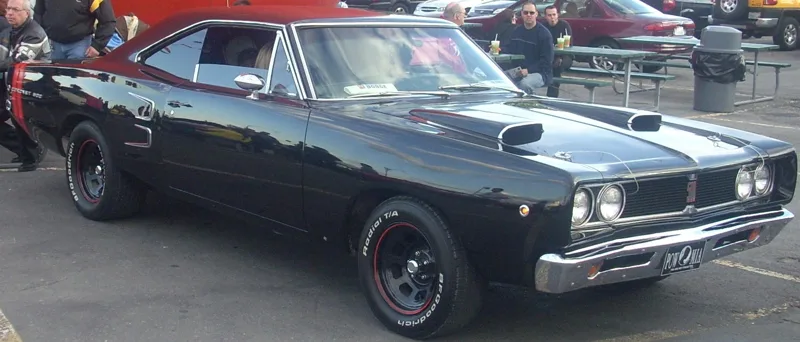
The 1969 Polara adopted a broad-shouldered streamlined design known as the fuselage style, which ran for five model years. The Polara 500 returned that year between the standard Polara and the top Monaco, as a convertible or hardtop coupe, with a standard 225 cu in slant-six.
The 1969 car also offered a Super-Lite option that put one quartz turnpike beam headlamp in the grille. Dodge dropped it at the end of 1970 because buyers showed little interest and some states challenged its legality.
A 1969 California Highway Patrol Polara set a benchmark on Chrysler's test track in Chelsea, Michigan. It recorded 149.6 mph (241 km/h), the highest top speed for a factory-built four-door sedan until a 1994 Chevrolet Caprice with an LT1 engine beat it.
In 1970 the front and rear were restyled, and the front bumper wrapped around both the grille and the headlamps. The Polara Custom took over from the Polara 500 across the hardtop coupe, four-door hardtop and sedan, while a stripped-down Polara Special sedan and wagon sat below it. A new locking steering column also locked the wheel and column shifter when the key came out. The 1970 model was also the last Polara convertible, with just 842 built, and Dodge never offered a full-size convertible again.
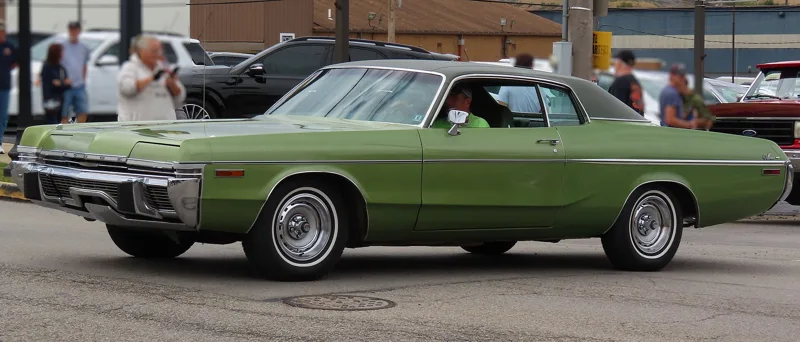
The Polara Special was dropped for 1971 and replaced by the Polara Brougham, a hardtop coupe and four-door hardtop above the Custom. That year also brought a 360 cu in (5.9 L) V8. The 1972 facelift brought new sheet metal and ended the Brougham, and the 1973 cars wore front-end styling reminiscent of the 1970 Chevrolets.
Why was the Polara discontinued after 1973?
Sales were falling, and the Polara had been overshadowed by the Monaco. Dodge discontinued it after 1973, and the energy crisis that autumn, linked to the Arab and OPEC oil embargo, reduced sales of full-size American cars that did not deliver good fuel economy.
The redesigned 1974 Monaco took over the Polara's place in the line-up.
What were the key Polara specifications?
The B-body years are easy to confuse, because the 1962 range did not use the Polara name at all. The table shows the figures that define the car across its life. The wheelbase went from 122 inches in 1960 to 116 inches on the B-body from 1962, then grew to 119 inches in 1963, and the V8 options ran as large as 413 cubic inches.
| Specification | Detail |
|---|---|
| First model year | 1960, top-line full-size Dodge |
| Wheelbase, 1960 | 122 in (3,099 mm) |
| Wheelbase, B-body from 1962 | 116 in (2,946 mm) |
| Wheelbase, 1963 | 119 in (3,023 mm) |
| Polara 500 engine, 1962 | 361 cu in (5.9 L) V8, 305 hp (227 kW) |
| Largest V8 option, 1962 | 413 cu in (6.8 L) |
| Fuel economy, 383 cu in cars, 1965-1968 | 13.8 mpg-US and 16.6 mpg-imp, about 17.0 L/100 km |
| Convertible run, 1970 | 842 built |
| Highest CHP top speed, 1969 | 149.6 mph (241 km/h) |
| Argentine GTX coupe | 318 cu in (5.2 L) V8, 212 hp (158 kW) |
| Final model year | 1973 |
How was the Polara sold in Argentina?
In Argentina the Polara name covered a range of cars built from 1968 to 1980 by Chrysler Fevre Argentina, based on the North American 1967 to 1969 Dodge Dart. The sedans were sold as the Polara and the deluxe Coronado, alongside Argentine versions of the Plymouth Valiant.
The coupes were the Polara, the sporty Polara R/T and the Dodge GTX, and a Polara GT and a Polara diesel sat in the sedan range. The GTX carried a 318 cu in V8 that was considered the most powerful engine ever built in Argentina. Few coupes were sold, because buyers were used to four- and six-cylinder cars and the V8 used a lot of fuel.
The magazine Corsa put a Polara GTX coupe through its paces, and its V8 was rated at 212 hp (158 kW), reaching that peak at 4,400 rpm. Its top speed was 189 km/h (117 mph), and it needed 10.2 seconds for 0-100 km/h. A version built from 1971 to 1978 was exported to Spain as a CKD kit with the Barreiros company, sold as the Dodge 3700.
The Argentine line was designed for that market alone, and its dashboard resembles the early 1970s Dart and Valiant cars. Several restyling programmes gave the range new front and rear ends during its life.
Volkswagen took over Chrysler Fevre Argentina in 1980, including the tooling for the Dodge 1500 saloon. The car was then sold as the Volkswagen 1500 in Argentina until 1988.
Was the Polara sold in Brazil and Canada?
In Brazil the Polara name was revived in 1977 on a version of the Chrysler Avenger, which sold until 1981. Argentine production of the same car, sold as the Dodge 1500 in sedan and station wagon forms, carried on until Volkswagen took over the factory in 1980. In Canada, buyers could get a Polara from Chrysler of Canada from the 1964 model year, as its full-size offering, built on the US full-size Dodge platforms.
Canadian Polaras followed the American platforms, with the 880 and 440 models added in 1965 and 1966 and a base Polara in 1966. From 1970 the Canadian model names matched those used in the US, and Dodge of Canada also offered the Monaco from 1965.
Frequently asked questions
When did the Polara go out of production?
The Polara was discontinued after 1973, and the redesigned 1974 Monaco replaced it in the Dodge range.
How many Polara convertibles were built in 1970?
Only 842 were produced in the 1970 model year, the last year a Polara was available as a convertible.
Was there a police Polara?
Yes. A California Highway Patrol order in 1961 covered 1,236 units, and the 1969 CHP Polara set a top speed record of 149.6 mph (241 km/h).
How quick was the Argentine Polara GTX?
Corsa's figures put the car at 10.2 seconds to 100 km/h, and it topped out near 189 km/h (117 mph).
What was the Polara's wheelbase?
It was 122 inches (3,099 mm) in 1960, 116 inches (2,946 mm) for the B-body from 1962, and 119 inches (3,023 mm) from 1963.
.jpg)