From an 1862 sewing machine workshop to rocket trials, General Motors ownership and a 2028 electric target.
Opel is a German carmaker founded in Russelsheim am Main in 1862 as a sewing machine workshop. General Motors owned it from 1929 to 2017, and it has been part of Stellantis since 16 January 2021. It is known for mass-market cars, a 1920s rocket programme and several European Car of the Year wins.
Opel began as a sewing machine business in Russelsheim am Main in 1862 and grew into one of Germany's best-known car makers. It matters because its story links early mass production, an unusual rocket programme, decades of General Motors ownership and the company's current place inside Stellantis.
Where did Opel begin?
Opel started in Russelsheim am Main in 1862, when Adam Opel founded a workshop that made sewing machines. In 1886 the firm added high-wheel bicycles, and bicycle output soon outstripped sewing machine output. The first cars were designed in 1898 with a locksmith partner, and the first production car followed in early 1899.
The early car years were modest. Only 65 motor cars were delivered between 1899 and 1901, and the partnership with Friedrich Lutzmann was dissolved after a short period. Opel then signed a licence agreement with the French firm Darracq in 1901 to build Opel Darracq cars, which used Opel bodies on Darracq chassis. Production of Opel-designed cars began in 1906, the Darracq-based version was discontinued in 1907, and a fire destroyed the factory in 1911.
From a sewing machine workshop in 1862 to rocket trials and a Stellantis electric plan, Opel has reinvented itself repeatedly.
Which early Opel cars mattered most?
The Doktorwagen, a 4/8 PS model produced from 1909, is the early Opel most often remembered. Doctors valued its reliability on roads where hard surfaces were still rare, and it sold for 3,950 marks, about half the price of the luxury models of its day.
Production methods mattered as much as the cars themselves. From the early 1920s Opel was the first German maker to build cars on a mass-production assembly line. Its 1924 Laubfrosch (Tree Frog) two-seater was finished exclusively in green lacquer and cost 3,900 marks, a price that fell to 1,930 marks by the 1930s as the assembly line and rising demand took effect.
Rocket experiments and the Opel RAK programme
In the 1920s Fritz von Opel, a grandson of the founder and co-owner of the company, began the Opel RAK rocket programme with Max Valier. The programme is described as the world's first rocket programme, and its vehicles set speed records. The RAK2, piloted by von Opel at the AVUS speedway in Berlin in 1928, reached 238 km/h (148 mph) before 3,000 spectators, and the RAK3 set a rail vehicle record of 256 km/h (159 mph).
Liquid-fuel work followed at the Russelsheim racetrack. Friedrich Wilhelm Sander launched two rockets there on 10 and 12 April 1929, and the second rocket disappeared after the rope it was tied to snapped. In September 1929 von Opel flew the RAK.1, a rocket plane whose design came from Julius Hatry, in what is recorded as the world's first public rocket-powered flight. The Great Depression brought the programme to an end, and the German military took Sander's technology in 1935.
How did General Motors shape Opel?
General Motors bought 80% of Opel in March 1929, impressed by its modern production facilities, and took full control in 1931. The Opel family received $33.3 million from the 1929 sale. The American link lasted nearly 90 years, until the 2017 sale to PSA, and it placed Opel at the centre of GM's European business.
Opel and Vauxhall Motors, which GM acquired in 1925, formed the core of its European business. Their operations were combined into General Motors Europe during the 1980s. By the 1970s Opel was the stronger partner, and by the close of the decade the two brands were effectively one range.
Wartime and postwar rebuilding
Opel's wartime record is a difficult part of its history. Car production was halted by government order in autumn 1940, but the company continued to build trucks, and the Opel Blitz was widely used by the Wehrmacht. Opel used forced labour during the Second World War, and both GM and Opel have acknowledged this. An Opel Blitz was also among the vehicles Germans used as a gas van in the Holocaust.
After 1945 the Brandenburg plant was dismantled and moved to the Soviet Union, where it became the base of the Moskvitch 400. With 47% of the buildings in Russelsheim destroyed, former employees rebuilt the plant, and Russelsheim's first postwar Opel Blitz truck came off the line on 15 July 1946. Frigidaire refrigerators were also produced at Russelsheim in the years just after the war.
Which models defined Opel in later decades?
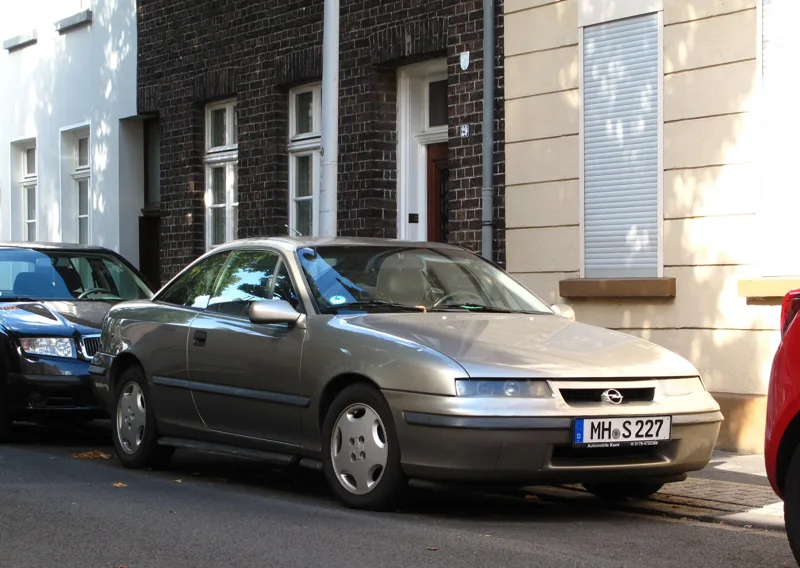
Several nameplates shaped the brand after the war. The Kadett, Omega, Calibra, Astra, Corsa and Insignia each marked a turning point, and the Kadett became the first Opel to win European Car of the Year in 1985. The Insignia took the same award in 2009, the first winner in 22 years.
- Kadett: front-wheel drive from 1979 and European Car of the Year in 1985
- Omega A: European Car of the Year in 1987, with the Lotus-tuned Omega performance variant following it
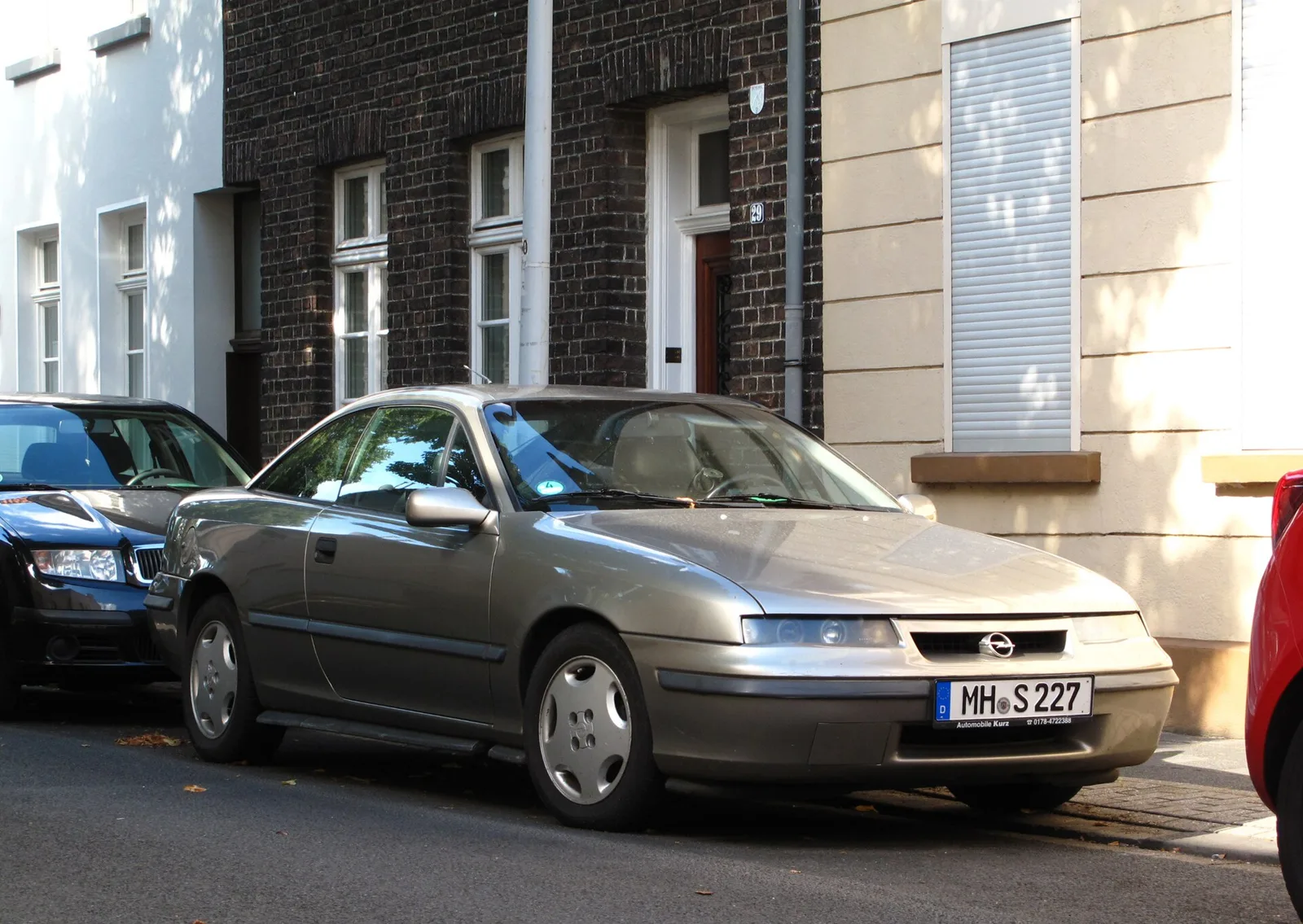
- Calibra: a Vectra-based coupe launched in 1989 that ended in 1997
- Astra: the 1991 model ended the Kadett name, and the Astra K won European Car of the Year in 2016
- Corsa: the first product of the Zaragoza plant in Spain, which opened in 1982
- Insignia: European Car of the Year in 2009, the first win in 22 years
The people behind the brand
Adam Opel led the company until his death in 1895, when he was the leader in both the sewing machine and bicycle markets. His widow Sophie and his eldest sons then entered a partnership with Friedrich Lutzmann to begin car production. His grandson Fritz von Opel later drove the rocket work forward alongside Max Valier.
Max Valier, who worked with Fritz von Opel on the rocket programme, moved from solid-fuel to liquid-fuel rockets and then died while testing one. Friedrich Wilhelm Sander, who built the Opel RAK rockets, saw his technology confiscated by the German military in 1935.
In the modern era, Michael Lohscheller, the finance chief, replaced Karl-Thomas Neumann as chief executive in June 2017. He left in September 2021, and Uwe Hochgeschurtz was appointed to replace him. Florian Huettl became chief executive of Opel and Vauxhall on 1 June 2022.
Did Opel win motorsport titles?
Yes, in several categories. Opel Rally Team contested the World Rally Championship in the early 1980s, fielding the Ascona 400 and Manta 400 developed with Irmscher and Cosworth. Walter Rohrl won the 1982 world drivers' title. The Calibra later won the 1996 International Touring Car Championship, and Opel took the 1998 Super Tourenwagen Cup manufacturers' title.
Opel also won the Nurburgring 24 Hours with the Astra in 2003. It contested the German DTM series between 2000 and 2005 with Astra and Vectra models, without ever winning that title. Opel returned to competition in 2013 with the Adam, and in 2014 it presented the road-legal Adam S, with a 1.4 L turbocharged engine producing 112 kW (150 hp) and accelerating from 0 to 100 km/h (62 mph) in 8.5 seconds.
Electric motorsport followed. The Corsa Rally Electric, presented at the IAA in 2019, takes its electric motor, battery, inverter and onboard charger from the production Corsa. The ADAC Opel Electric Rally Cup began in 2021 and was described as the first of its kind for electric cars, and in 2023 teams from 7 nations contested 8 races. In March 2026 Opel announced a Formula E entry under the Opel GSE banner for Season 13 (2026-27), which opens the Gen4 era.
How did Stellantis change the brand?
Opel became part of Stellantis on 16 January 2021, when its parent PSA Group merged with Fiat Chrysler Automobiles. A July 2021 plan set 2028 as the year Opel becomes fully electric in its core European markets, as part of the group's wider electrification strategy.
The first step came in March 2017, when PSA Peugeot Citroen agreed to buy Opel, Vauxhall and GM's European car lending business for EUR 2 billion ($2.3 billion). The deal was completed in August 2017, and the 2018 financial year then produced operating income of EUR 859 million, the first positive result since 1999.
Key Opel figures
The table gathers the main dates and figures from the brand's history and its current footprint.
| Figure | Value |
|---|---|
| Founded | 21 January 1862, Russelsheim am Main |
| Founder | Adam Opel |
| First production car | Early 1899 |
| General Motors ownership | 1929 to 2017 |
| Stellantis member since | 16 January 2021 |
| Operating income, 2018 financial year | EUR 859 million |
| Vehicle, powertrain and component plants | 10 |
| People employed in Europe | Around 30,000 |
| Engineering and design staff in Russelsheim | Around 6,250 |
| Markets served | More than 60 |
| European Car of the Year wins | 5 |
| First front-wheel drive Kadett | 1979 |
Several of these figures reflect Opel's place inside Stellantis. Its engineering and design teams in Russelsheim are a key part of the group's global research and development footprint.
How is Opel organised today?
Opel runs 10 plants for vehicles, powertrain units and components, plus four development and test centres spread over six countries. Its headquarters in Russelsheim am Main houses its technical development centre and its European design centre, and the Dudenhofen Test Center nearby handles technical testing and vehicle validation.
Other plants are spread across Germany, Hungary, Spain, Poland, Austria and the United Kingdom, including sites at Eisenach, Kaiserslautern, Figueruelas, Gliwice, Tychy, Aspern, Ellesmere Port and Luton. Around 30,000 people work for the brand in Europe, and around 6,250 people handle engineering and design in Russelsheim. Stellantis treats the brand as an important part of its global research and development footprint.
Where is Opel sold today?
Opel sells in more than 60 markets. Its footprint covers much of Europe, several North African and South African countries, and the Middle East. In Great Britain most of the range has been sold under the Vauxhall name since the 1980s, which keeps the two brands closely linked.
Withdrawals have been frequent. Opel left Malaysia in 2003, Japan in December 2006 and India in 2006. Its Australian exports ended on 2 August 2013 after poor sales, and the brand returned to New Zealand and Taiwan in 2022.
- Australia: launched 1 September 2012, with 1,530 vehicles sold in the first 10 months before exports ended on 2 August 2013
- New Zealand: returned in 2022 with the Corsa, Mokka, Astra and Grandland
- Japan: sales peaked at 38,000 in 1996 before the December 2006 withdrawal
- Taiwan: relaunched in 2022 by Master Win Group
Logo and identity
The Opel logo has been redesigned many times since the company's early days. The earliest known version paired a bronze "A" for Adam with a red "O" for Opel, using the founder's initials as the foundation of the brand's visual identity.
The lightning bolt that later became the badge comes from the Opel Blitz truck, which was a commercial success. Its original logo used loosely arranged stripes that resembled lightning, and over time the design simplified to a single horizontal bolt. The basic form has changed little since, so the emblem still reads as the same mark.
Which football clubs has Opel sponsored?
Opel's current football deals include Borussia Dortmund and Mainz, and it is working with TotalEnergies on a battery cell factory. Earlier sponsorships covered AC Milan, Bayern Munich and Paris Saint-Germain, along with clubs in Italy, France and the Netherlands. The brand has backed football clubs in several European countries for decades.
Frequently asked questions
Is Opel still owned by General Motors?
No. General Motors owned Opel from 1929 until 2017, when PSA agreed to buy the brand. General Motors had taken full control in 1931 and held the company for nearly 90 years. Opel has been part of Stellantis since 16 January 2021, after PSA merged with Fiat Chrysler Automobiles.
Who founded Opel, and when?
Adam Opel founded the company in Russelsheim am Main on 21 January 1862. It began with sewing machines and added high-wheel bicycles in 1886. Early car designs appeared in 1898 through a partnership with a locksmith, and production cars came in early 1899.
Did Opel really build rockets?
Yes. The Opel RAK programme began in the 1920s with Max Valier, and in April 1929 its liquid-fuel rockets were launched at the Russelsheim racetrack. Its RAK2 car set a speed record at AVUS in 1928.
Did Opel sell cars in Australia?
Yes, but briefly. Opel launched there on 1 September 2012 and ended exports on 2 August 2013 after poor sales. Holden then sold newer Opel models under its own badge, and several of them ended on 1 May 2017.