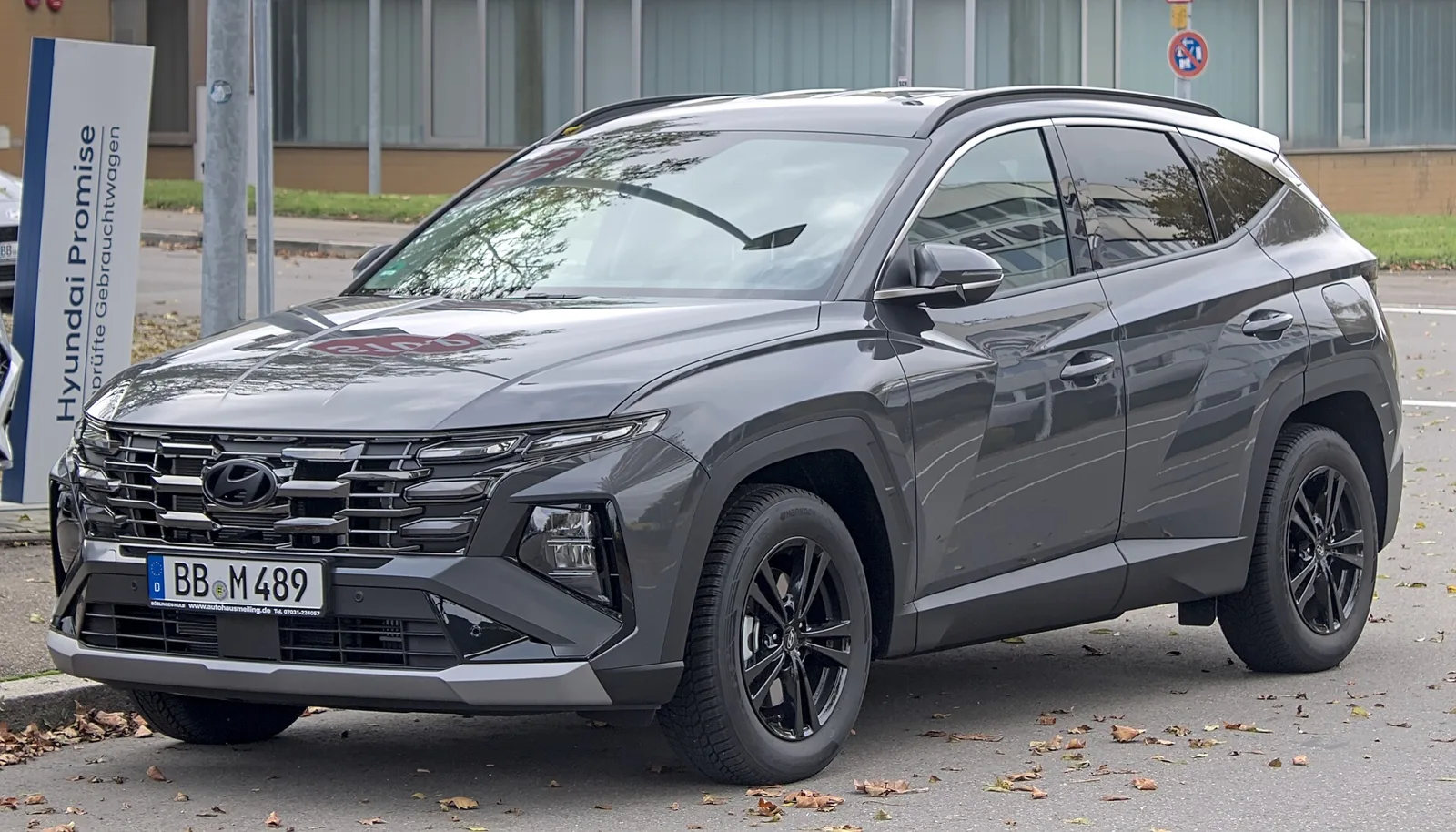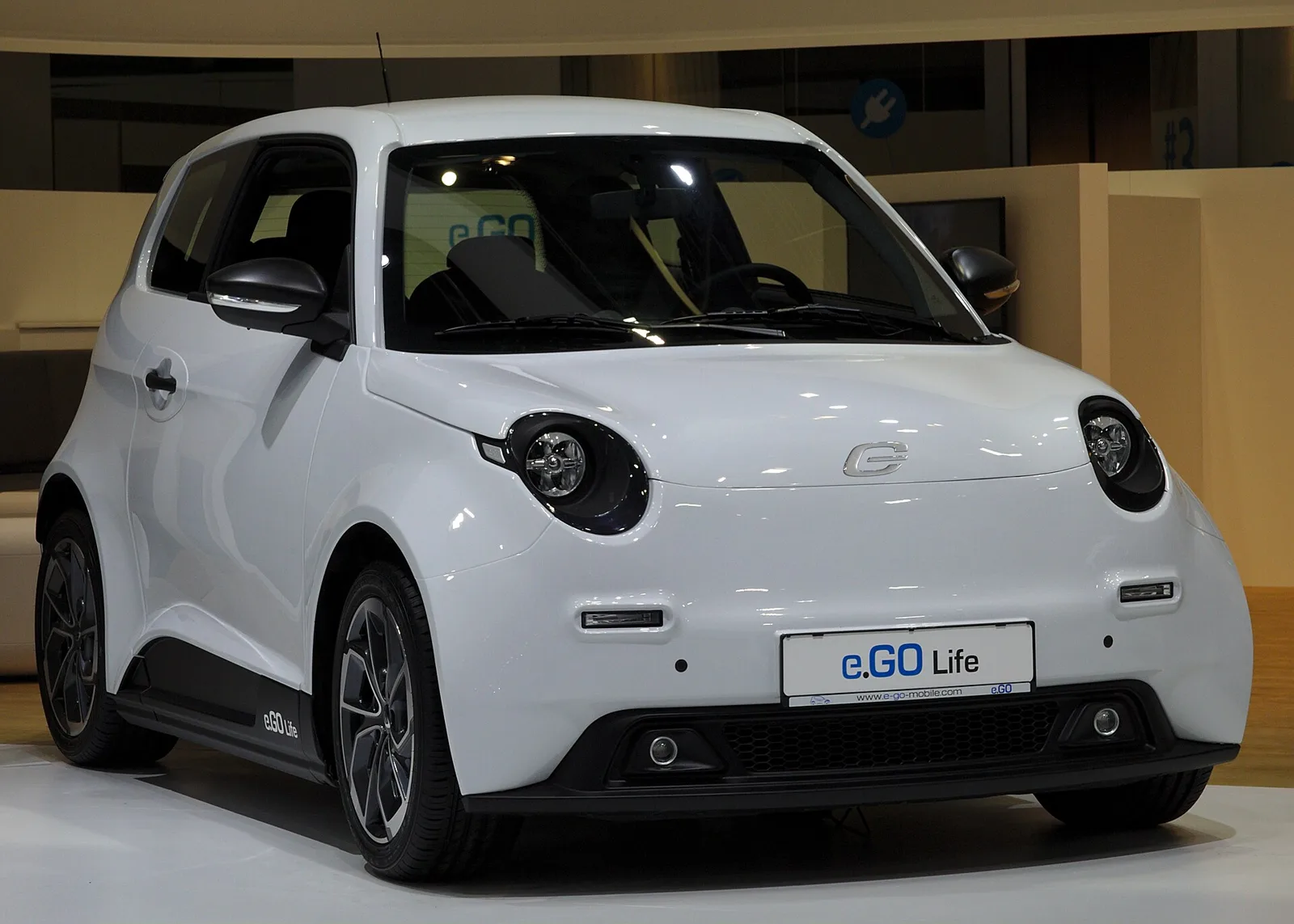
A UK electric van maker that lost its Nasdaq listing, an Aachen microcar that sold in the hundreds and a Basque folding city car with one test vehicle.
Arrival, the e.GO Life and Hiriko were European electric ventures that struggled. Arrival was delisted from Nasdaq in January 2024 after peaking at $15 billion, the e.GO Life microcar was discontinued by 2024, and the Hiriko folding city car collapsed in 2013 without production.
At its peak Arrival, a British electric van maker, was worth $15 billion. By January 2023 its value had dropped to $250 million, and by January 2024 Nasdaq had removed it. Arrival is one of three European electric ventures that struggled: the e.GO Life from Aachen and Hiriko, a folding Basque city car that never reached production, followed different paths to a similar end.
What happened to Arrival, the e.GO Life and Hiriko?
Arrival lost its listing on Nasdaq and entered insolvency proceedings in 2024. The e.GO Life, a German electric microcar built in Aachen from 2019, was discontinued by 2024 after a relaunch. Hiriko, a Spanish folding urban car, collapsed in 2013 before production, with only one test vehicle ever completed.
Each of the three promised a new kind of electric vehicle, and each ran out of money before it could scale.
Arrival, the e.GO Life and Hiriko compared
| Venture | Home | Product | Peak moment | Outcome |
|---|---|---|---|---|
| Arrival | Luxembourg and the UK | Electric vans, buses and a ride-hailing car | $15 billion value; UPS order for 10,000 vans | Delisted January 2024; UK division in administration February 2024 |
| e.GO Life | Aachen, Germany | Four-seat electric microcar | First deliveries on 8 May 2019 | Discontinued by 2024 |
| Hiriko | Basque Country, Spain | Folding two-seat electric city car | Unveiled in January 2012; shown at Geneva in March 2013 | Collapsed before production; one test vehicle built |
Who started Arrival and what did it plan to build?
Russian telecom billionaire Denis Sverdlov, a former deputy minister of Mass Communications, founded Arrival in 2015. Arrival was a British electric vehicle maker headquartered in Howald, Luxembourg, with research and development in Banbury, Oxfordshire, and offices across North America, Germany, the Netherlands, Israel and Russia.
Arrival said it was working on a bus, a van, a bigger van and a small-vehicle platform. Its idea was to build them in 10,000 m2 (110,000 sq ft) microfactories around a skateboard platform that held the drive train and batteries. After its Nasdaq listing, Sverdlov held 76% of its shares.
What could the Arrival van do?
The van had a 120 kW (160 hp) motor and reached 120 km/h (75 mph), carrying up to 1,975 kg (4,354 lb). Range per charge, from 180 km (110 mi) to 340 km (210 mi), depended on the battery fitted. UPS placed an order for 10,000 delivery vans, with the option of 10,000 more.
The bus went into beta prototype testing in June 2020 and the finished prototype appeared in November 2021, with output scheduled for the second quarter of 2022 at a South Carolina plant. A car for ride hailing, developed with Uber and its drivers, had production expected in the third quarter of 2023, and Breathe was to distribute it. Arrival reported letters of intent and non-binding orders totalling 64,000 vehicles.
Who backed Arrival?
Large customers and investors queued up. Royal Mail announced a trial of nine Arrival vehicles in August 2017, and in May 2019 UPS agreed to trial 35 across London and Paris. In January 2020 Hyundai and Kia invested EUR 100 million (about $111 million), valuing the company at EUR 3 billion and making it a "unicorn". BlackRock added $118 million in February 2020.
UPS followed with an investment and ordered 10,000 Generation 2 electric vehicles, to be rolled out in the UK, Europe and North America ahead of 2024. The deal was reported at $400m plus an equity stake of undisclosed size. BlackBerry agreed to supply its QNX operating system in October 2019, and Cubic Telecom provided connectivity software in December.
Arrival also bought a factory in Bicester in March 2020, hoping to begin production within two years, and announced a social-distancing bus priced like a diesel bus. A former General Motors executive, Mike Ableson, joined as head of its automotive business in North America.
How did Arrival lose its footing?
It listed on Nasdaq under ARVL on 25 March 2021 through a merger with the special-purpose acquisition company CIIG Merger Corp. Its plan for US microfactories began with Rock Hill for buses and West Charlotte for UPS vans, where it was investing $41.2 million for a workforce of 250.
In October 2022 it announced job cuts and moved van production from Bicester to the United States to chase incentives under the Inflation Reduction Act. When Igor Torgov became chief executive in January 2023, Arrival laid off half of its UK staff, 800 people, to concentrate on the US.
A second merger, with the SPAC Kensington Capital Acquisition Corp V for $283 million, was cancelled in 2023 over concerns about production delays. A $25 million equity commitment from Antara Capital lapsed before its 30 June 2023 deadline. Nasdaq delisted Arrival in January 2024, insolvency proceedings began, and the UK division went into administration in February 2024.
Canoo acquired its assets in March 2024. Canoo itself filed for Chapter 7 bankruptcy on 17 January 2025. Sverdlov was chairman until March 2024 and Torgov chief executive from January 2023 to the same month.
What is the e.GO Life?
The Life is a four-seat electric microcar made in Aachen by Next.e.GO Mobile SE. It has a WLTP range of 140 km and offers no fast charging. An aluminium space frame and thermoplastic outer skin keep it durable, and it is rear-wheel drive with a 2+2 layout. The Life 20 weighs 1,150 kg (2,540 lb) with its battery.
Gunther Schuh, a professor at RWTH Aachen who had helped found StreetScooter, led the company as managing director until June 2021. The Life began as a light electric vehicle and grew into a full class M1 passenger car. Italian designer Paolo Spada was responsible for the final look, which appeared at CeBIT in Hanover in March 2017.
Front suspension uses MacPherson struts and control arms, with a rigid De Dion axle at the rear and disc brakes on all four wheels. Bosch supplies the motor, control unit, charger, display and battery. The drive system was first meant to be 48-volt, but customer requests moved it to high voltage.
How did the e.GO Life launch go?
Slower than planned. Pre-orders opened on 18 May 2017, and by 16 September 2017 the company had 1,200. The original schedule called for production in May 2018 and deliveries in October, but the first factory, on a former Philips site in east Aachen, opened only in July 2018, and the production car made its public debut at the Geneva Motor Show in March 2019.
Series production began in March 2019. The last homologation test was passed on 26 April, and the first customer cars were delivered on 8 May 2019. Of 1,000 First Edition cars planned for 2019, power was limited to 53 kW and regenerative braking was left out for technical and legal reasons. The base model with 20 kW (27 hp) was listed at EUR 17,900, though 2020 prices were announced to rise.
Germany's Federal Motor Transport Authority registered 171 e.GO cars in 2019, 477 Lifes in 2020 and 123 in 2021. By the end of 2020, 546 applications had been filed for the Life First Edition and 129 for the 2020 First Edition.
How does the e.GO Life charge?
From an ordinary household socket the maximum is 2.3 kW. A type 2 plug allows faster charging, but at launch power was capped at 3.7 kW, enough for roughly 24 km of extra driving per hour. e.GO sold a home wallbox for EUR 549 in November 2018, with a 5-metre cable, rated at up to 11 kW for future vehicles in the e.GO family.
What came after the e.GO Life?
The Life Concept Cross presentation was cancelled because of COVID-19, and in May 2022 the company showed a revised car, the e.wave X. Sales began on 17 October 2022 following its debut at the 2022 Paris show. The battery is 30.4 kWh, the motor makes 86 kW (115 hp), WLTP range is 253 km (157 mi) and top speed is 135 km/h (84 mph).
A performance-oriented concept, the Life Sport, was also shown. After a relaunch, the Life was discontinued by 2024.
What was the Hiriko?
The Hiriko was a folding two-seat electric city car from a Basque consortium, Hiriko Driving Mobility. It was to be the commercial version of the CityCar project developed at the MIT Media Lab from 2003. The name comes from the Basque word meaning urban or from the city, and the car was meant for short urban trips in carsharing schemes and municipal fleets.
Three versions were planned: the Fold microcar, the Alai convertible and the Laga small truck. Only a single demonstration Fold was completed. William J. Mitchell's group conceived the idea, Kent Larson led the project after Mitchell's death, and the consortium of seven Spanish companies began commercial development in 2010 in the Alava science park.
How did the Hiriko Fold work?
It weighed under 500 kg (1,100 lb) and was 2.5 m (98.4 in) long when extended, folding to 1.5 m (59.1 in) by retracting its front and rear modules. That let three and a half Folds fit in a typical urban parking space. A lithium-ion battery gave a range of 120 km (75 mi), and a motor in each of the four wheels limited the speed to 50 km/h (31 mph).
Each wheel could turn 60 degrees, so the car could move sideways or spin on its central axis. Occupants got in through the front hatch holding the windshield. An airplane-style yoke replaced the steering wheel and pedals: push forward to accelerate, pull back to slow down, and move left or right to turn. The folding city car was not a new idea; Engelbert Zaschka invented one in 1929, and the 1992 Renault Zoom concept introduced the variable wheelbase.
How did the Hiriko fail?
Jose Manuel Durao Barroso, President of the European Commission, unveiled a production prototype in January 2012, and the car appeared at the Geneva Motor Show in March 2013. A trial run of 20 pre-production cars began in Vitoria-Gasteiz in July 2012. Deutsche Bahn agreed in December 2012 to a carsharing pilot in Germany for 2013, with a wider roll-out in 2014.
Production was due in the second quarter of 2013, and retail deliveries from 2014 were to cost from EUR 12,500 (US$16,400) plus battery leasing. The consortium wanted to sell to cities including Barcelona, Berlin and San Francisco, and transport managers in Urdaibai, Ibiza, Hong Kong and Florianopolis showed interest.
Then the money ran out. In May 2013 the consortium said it could not continue commercial development without financing. The Spanish government had given about EUR 15 million (US$18.5 million) in support, and the Basque Government said Hiriko had met its research goals but that commercial financing had to come from the private sector.
The firm collapsed sixteen months after the January 2012 debut. Just one test vehicle, plus two half-built cars, ever existed. In 2015 Spanish public prosecutors alleged fraud by six businessmen tied to the project, and its assets were frozen. Former employees said parts of the 2012 car had been glued with Velcro and superglue, and some sued for severance pay and unpaid wages.