Four electric start-ups listed in 2020 and were in bankruptcy court by 2025. Their buyers were left with very different outcomes.
Four American electric-vehicle start-ups, Fisker, Nikola, Canoo and Lordstown Motors, went public in 2020 via blank-cheque mergers and were in bankruptcy proceedings by early 2025. Owners fared differently: Lordstown's buyer took on the warranty, Fisker's cars went to a leasing company, and Canoo simply stopped operating.
In early August 2020 Nikola was valued at around $13 billion. Its revenue for the first six months of that year was $80,000, and $36,000 of that came from solar installations for its own chief executive. Within five years the company was in bankruptcy, and customers were drawing up what one of their executives labelled Plans E, F and G.
Nikola was not alone. Fisker, Canoo and Lordstown Motors all raced onto the stock market in 2020 and all ended in bankruptcy court.
Why did so many EV startups fail?
The four companies share a pattern. Each reached the stock market in 2020 through a merger with a special-purpose acquisition company, each promised vehicles or factories on a scale it never reached, and each filed for bankruptcy between 2023 and 2025. Cash ran out before volume production arrived.
The ambitions were large. In 2019 Nikola expected to build 35-50,000 trucks a year by 2023. Canoo announced a plant able to make 300,000 vehicles a year, and Fisker and Foxconn targeted a million PEARs a year. Lordstown's initial goal was only 500 vehicles, and in August 2022 it admitted it would have to find far more money to build even that.
The listings came in quick succession. Nikola began trading on 4 June 2020. Lordstown completed its reverse merger with DiamondPeak on 23 October 2020, which valued its equity at about US$1.6 billion. Fisker completed its own reverse merger on 29 October 2020 and Canoo followed on 22 December 2020, with a listing valued at $2.4 billion. The bankruptcies ran in this order: Lordstown in 2023, Fisker in June 2024, Canoo in January 2025 and Nikola in February 2025.
Four electric start-ups listed in 2020 and all four were in bankruptcy court by February 2025.
What happened to Fisker?
Fisker Inc. was formed on 3 October 2016 by the Danish designer Henrik Fisker together with his wife Geeta Gupta-Fisker, as successor to Fisker Automotive. That earlier company had delivered about 2,000 Karma sedans before production stopped in 2012, when its battery supplier A123 Systems went bankrupt. Wanxiang Group bought its assets in 2014 and renamed the business Karma Automotive, while Henrik Fisker kept the Fisker name.
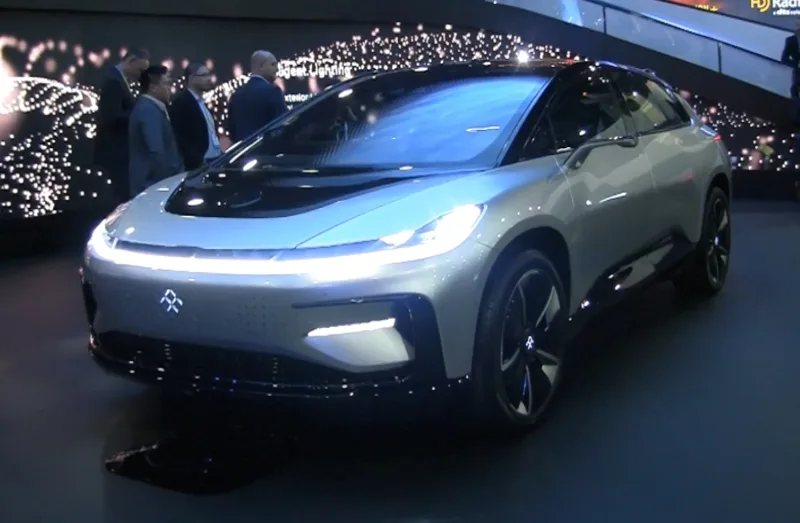
The second attempt reached the market faster. A July 2020 merger announcement valued Fisker Inc. at $2.9 billion, and the Ocean electric SUV, advertised with a range close to 300 miles, went on sale in 2023. It was the company's only production car. It suffered more than 100 loss-of-power incidents, three investigations by the National Highway Traffic Safety Administration and multiple recalls.
The collapse in 2024
In March 2024, having lost more than $463 million in 2023, Fisker said it lacked the funds to survive the year. It cut 15 per cent of its workforce and paused the Pear compact car. Talks with a major carmaker, suspected to be Nissan, over a $400 million injection in return for the Alaska pickup platform fell through on 25 March, and a $150 million lifeline through convertible bonds failed because Fisker could not meet a closing condition. The New York Stock Exchange delisted the shares on 22 April, and the Austrian subsidiary filed for bankruptcy protection on 8 May.
Fisker filed for Chapter 11 protection in Delaware on 17 June 2024, listing liabilities of $100 million to $500 million against assets of $500 million to $1 billion. A judge cleared the sale of the remaining Oceans to American Leasing for $46.25 million, about $14,000 each. In August the court postponed conversion to Chapter 7 liquidation while Fisker kept selling assets.
What former staff alleged
On 31 May 2024 TechCrunch published accounts from eight Fisker employees describing a company in disarray. They alleged that payments were lost track of, that customer service was run through a chatbot rather than a call centre, and that no parts stockpile or supplier quality team was set up. They also said that, to keep cars running, staff took parts from the production line of the supplier Magna Steyr in Austria and stripped down returned cars. They claimed buyers of the Ocean One edition were owed $7,500 each in benefits, $37.5 million across 5,000 units, and that none of it was paid. Fisker's vice-president of communications, Matthew DeBord, denied most of the claims.
Plans that never left the drawing board
Fisker's other projects went nowhere. The Pear, priced at $29,900, was planned for Foxconn's Ohio plant at Lordstown, at 250,000 a year, and was cancelled. A planned Indian plant for one million cars a year was never constructed. Fisker also dropped a solid-state battery programme in 2021, when Henrik Fisker said the technology would not work for the company.
What went wrong at Nikola?
Trevor Milton founded Nikola in 2014 and named it after Nikola Tesla. Its first concept, the Nikola One truck of 2016, drew a claimed $2.3 billion in pre-sales, yet no deliveries have been made. After its 2020 listing, shares more than doubled within days and, with the price above $65 in mid-2020, the company's market value exceeded Ford's. It had taken reservations for the Badger pickup before showing a prototype. On 8 September 2020 General Motors announced it would take an 11 per cent stake worth about $2 billion, and the shares jumped 50 per cent.
Two days later the short seller Hindenburg Research published a report calling Nikola an intricate fraud. It cited a promotional video in which a Nikola One truck appeared to be driving but was rolling downhill with no propulsion, a claim the Financial Times and another outlet later confirmed. Nikola called the claims false and misleading. Both the SEC and the Justice Department opened investigations within days, Milton resigned on 21 September, and BP backed away from a hydrogen-station partnership. In November GM dropped the equity stake and the Badger was cancelled.
The legal aftermath
In July 2021 a federal grand jury indicted Milton on three counts of criminal fraud and two of securities fraud. He pleaded not guilty and was freed on $100 million bail. In October 2022 he was found guilty on three of four counts of fraud, and he received a four-year prison sentence on 18 December 2023. President Donald Trump fully pardoned him on 27 March 2025.
The trucks
Nikola did build trucks. In September 2022 it recalled all 93 Tre battery-electric models over seat belt anchors. After a truck caught fire at its headquarters in June 2023 and a second battery pack malfunctioned in August, it recalled all 209 battery-electric semitrucks it had made and suspended sales. Two more fires followed in September. In the first six months of 2024 it sold 112 fuel cell trucks running on hydrogen. Then, on 19 February 2025, it filed for Chapter 11 with shares at 44 cents and debts of $1 billion to $10 billion against assets of $500 million to $1 billion.
Why did Canoo and Lordstown Motors collapse?
Both companies ran short of money before their vehicles reached any scale. Canoo filed for Chapter 7 liquidation on 17 January 2025 with less than $50,000 in assets and stopped operating at once. Lordstown stopped building its Endurance pickup in June 2023 and sold its assets in a bankruptcy sale for $10M.
Canoo began as Evelozcity in 2017, founded by Stefan Krause and Ulrich Kranz, and took its new name in March 2019. A partnership with Hyundai announced in February 2020 ended in March 2021. In April 2021 the SEC opened an investigation after executive departures, sudden changes of business model and shareholder lawsuits, and Tony Aquila replaced Kranz as chief executive. Its factory plans moved from Pryor to Bentonville to Oklahoma City. For 2023 it reported US$886,000 in net revenue after delivering 22 vehicles, while expenses paid to the chief executive's company for private aircraft and shared services came to nearly four times that amount.
The order book looked large: Walmart signed for 4,500 vans, with an option on more, terminable on 30 days notice, and Kingbee ordered 9,300. As of October 2024, however, fewer than 12 vehicles had been delivered. Three went to NASA to carry Artemis astronauts to the launch pad. In December 2024 Canoo furloughed 82 employees in Oklahoma and idled its factory.
Lordstown Motors
Steve Burns founded Lordstown in 2018 and bought a former General Motors plant in Ohio, with a $40 million loan from GM. In March 2021 Hindenburg Research accused it of exaggerating demand, saying thousands of claimed orders were non-binding. A board-commissioned investigation later found that pre-orders had been overstated in number and seriousness. Burns and the chief financial officer resigned in June 2021.
Foxconn bought the plant for $230 million in 2021 and became contract manufacturer for the Endurance, which launched in the third quarter of 2022 and was recalled in February 2023 over a propulsion fault. After a dispute with Foxconn, Lordstown sued it in June 2023 over a promised $170 million investment and filed for bankruptcy. It re-emerged in March 2024 as Nu Ride Inc., based in New York City.
What happens to owners when a car brand goes bankrupt?
It depends on who buys the assets and what they agree to take on. In these four cases owners saw four different outcomes, from a buyer that assumed the warranty to a company that simply stopped.
| Company | Filing | Vehicles | What happened next |
|---|---|---|---|
| Fisker | Chapter 11, 17 June 2024 | Ocean SUV | Remaining Oceans sold to American Leasing for $46.25 million; a further $2.5 million agreed for tech support so software could be updated |
| Nikola | Chapter 11, 19 February 2025 | Tre battery-electric and fuel cell trucks | Hyroad bought 113 fuel cell trucks with parts, software and IP; Lucid bought facilities but not the hydrogen business or customers |
| Canoo | Chapter 7, 17 January 2025 | Fewer than 12 delivered by October 2024 | Ceased operations immediately; a trustee was appointed to liquidate |
| Lordstown Motors | Chapter 11, 2023 | Endurance pickup | Assets sold to LAS Capital for $10M; the buyer assumed warranty, product liability and recall obligations |
Software, parts and owners' voices
Fisker's Ocean relies on cloud-based software for over-the-air updates. The Fisker Owners Association, a community hub set up to help Ocean owners keep their cars running, argued in court that the company should ensure its vehicles stay safe and operable. The judge let the association have a voice in the sale of the intellectual property, including the equipment that runs the software. Come October, American Leasing committed a further $2.5 million to tech support so that updates could keep flowing.
Nikola's customers were in a harder spot. As of July 2025 they were weighing contingency plans while a possible switch from Chapter 11 to a Chapter 7 liquidation hung over the case. Hyroad, which took over the fuel cell trucks, plans to set up maintenance and parts facilities and deploy the trucks mainly in California, where it is expanding hydrogen refuelling.
Where this goes next
Under the bankruptcy agreement reached in October 2024, Fisker's intellectual property passes to its creditors. Canoo's trustee is administering the liquidation, and in March 2025 chief executive Aquila was reported to have offered $4 million in cash for almost all of its assets. Lucid plans to offer jobs to more than 300 former Nikola employees across its Arizona sites, adding more than 884,000 square feet of space, subject to approval by the bankruptcy court in Delaware.
Hydrogen trucking has not disappeared with Nikola. Demand from customers for hydrogen trucks in heavy-duty roles that need long range and quick refuelling remains evident, and executives such as Brad Bayne of Duncan Trucking said they hoped a strategic buyer would continue Nikola's zero-emission mission.
What should a buyer take from this?
Any young car maker raises three practical questions: who is liable for the warranty if the company fails, who holds the software that keeps the car running, and who owns the parts supply.