From the Middle East's first Grand Prix in 2004 to a Jeddah street circuit raced after dark, and a 2026 in which war moved Bahrain's race to Malaysia.
Bahrain hosted the region's first Formula One race in 2004, Abu Dhabi staged a floodlit day-night Grand Prix from 2009, and Saudi Arabia added a night-time street race at Jeddah in 2021. All three hold long-term contracts, and all three have faced pressure over rights, safety or war.
In 2026 the Bahrain Grand Prix was cancelled because of the Iran war, reinstated in July, and then run in Malaysia, with the Bahraini government still footing the bill as the main financial promoter. It is the latest twist in a short, fast history. Bahrain staged the first Grand Prix in the Middle East in 2004, Abu Dhabi followed in 2009 with Formula One's first day-night race, and Saudi Arabia arrived in 2021 on a street circuit where the race is run after dark.
How did Bahrain win the first Middle East Grand Prix?
Work on the Bahrain International Circuit, at Sakhir, started in 2002, and Bahrain beat bids from Egypt, Lebanon and the United Arab Emirates to secure the rights. The inaugural race, on 4 April 2004, gave Formula One its first Grand Prix in the Middle East and collected the FIA's prize for Best Organised Grand Prix.
The calendar slot has moved around. The Bahrain Grand Prix has been the second, third or fourth round in various years. In 2006 it replaced the Australian race as season opener, because Australia was delayed to avoid a clash with the Commonwealth Games. It opened the season again in 2010, when the longer layout marked Formula One's diamond jubilee, and in 2021, after the Australian race was cancelled because of the pandemic. In 2025 Australia reclaimed the opening slot as part of the championship's regionalisation strategy, leaving Bahrain fourth on the calendar.
Formula One calls it the fastest street circuit in the sport.
What makes the Sakhir circuit different?
Vast run-off areas, which critics say fail to punish mistakes but which stop sand blowing onto the track, and a reputation as one of the safest circuits in Formula One. The venue has run three layouts: the original Grand Prix Circuit, the 6.299 km (3.914 mi) Endurance Circuit used in 2010, and an outer layout used in 2020.
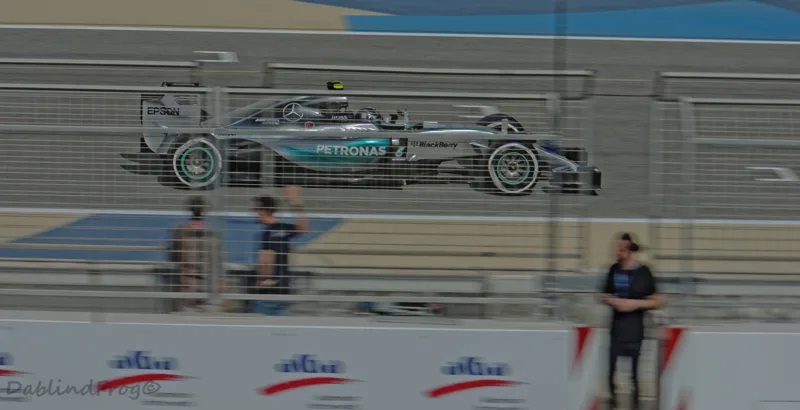
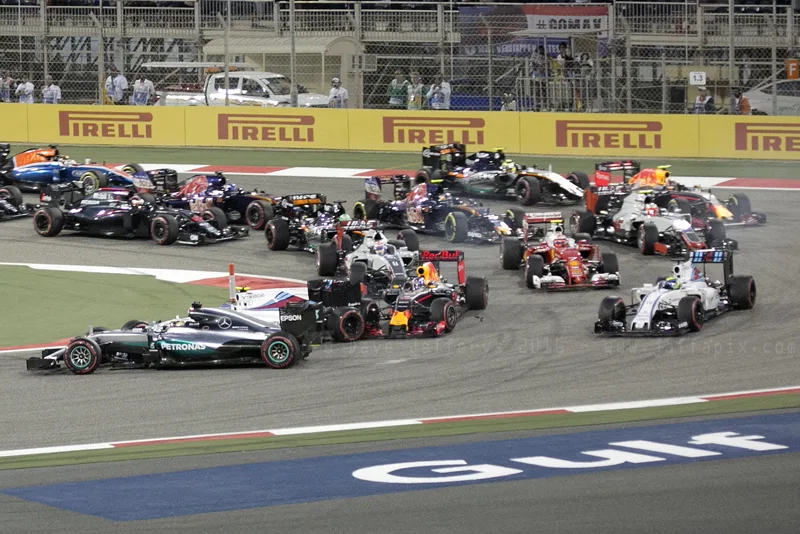
A plan to revert to the original layout was confirmed for the 2011 race, and it has served every year since the race came back in 2012. For the tenth anniversary in 2014 the race moved under floodlights, becoming Formula One's second night race after Singapore's debut in 2008. Lewis Hamilton won that first night edition, and the race has stayed a night event ever since. Alcohol is legal in Bahrain, yet the podium celebrations call for Waard, a non-alcoholic rosewater drink, in place of champagne.
How has the Bahrain Grand Prix survived cancellations and protest?
Barely, on more than one occasion. The 2011 race was cancelled on 21 February amid the Bahraini uprising, the 2012 race went ahead despite safety concerns, the 2020 race was postponed by the pandemic, and in 2026 the Iran war forced the event out of the country altogether.
The 2011 race, due on 13 March, never happened. On 3 June the FIA rescheduled it for 30 October, and Damon Hill, a former world champion, urged the sport not to put it back, warning of a lasting association with repressive methods of keeping order. Bernie Ecclestone told the BBC that a rescheduled date could not be fixed without the participants' agreement. A week after announcing the new date, Formula One cancelled the race for good. Drivers including Mark Webber had also voiced opposition.
Human rights activists again demanded cancellation in 2012, citing reports of abuses by the authorities, and team personnel raised safety concerns. The race went ahead on 22 April. A senior team member, speaking anonymously to The Guardian, said the teams wanted the governing body to cancel or postpone it. The group Anonymous threatened cyberattacks if the race went ahead and within hours the site f1-racers.net was knocked offline by a denial-of-service attack. Two deaths were reported around the race: a demonstrator killed the day before the race, and a photojournalist fatally shot while covering a protest against it.
The 2020 edition, due on 22 March, was first stripped of spectators and then, two weeks before the event, indefinitely postponed. The new date was 29 November, and the race formed half of a double-header at the circuit on consecutive weekends; the other half used the outer layout and was called the Sakhir Grand Prix. A contract extension through to 2036 followed in February 2022.
Criticism has not gone away. Human rights groups, including a coalition headed by the Bahrain Institute for Rights and Democracy, say the race has become a focal point for protest and for abuses by security forces, accuse Formula One of providing valuable public relations for Bahrain's government, and call the event an example of sportswashing. Hamilton, in 2020, urged Formula One to face its responsibilities on human rights in host countries. The Bahraini government denied the sportswashing allegations. On 27 October 2022 the institute and two Bahraini torture survivors filed a complaint through the UK National Contact Point, alleging that Formula One ignored human rights violations when it announced the extension to 2036 and breached the guidelines of the Organisation for Economic Co-operation and Development.
What happened to the Gulf races in 2026?
The 2026 Iran war, and the confrontation between Iran and the US, left Bahrain and Saudi Arabia unsafe for Grands Prix. On 14 March 2026 the Saudi race was cancelled to protect drivers and staff, and the Bahrain race was originally cancelled too, a month before it was due.
Because both events fall early in the season, replacements could not be scheduled at the time. By July, arrangements with Malaysia's youth and sports ministry put the Bahrain race at the Sepang International Circuit, former home of the Malaysian Grand Prix from 1999 to 2017, in a slot between the Azerbaijan and Singapore races. It ran as the Gulf Air Bahrain Grand Prix in Malaysia, since Bahrain's government is still the main financial backer. The Saudi race stayed cancelled, and both are slated to open the 2027 season.
How did Abu Dhabi get a Grand Prix?
Through a party. Formula One first came to the emirate for a free Formula One Festival on 3 February 2007, the largest gathering of current F1 cars and drivers outside a Grand Prix, where Abu Dhabi was revealed as the winner of the right to stage a race from 2009 until 2016. The first race ran on 1 November 2009 at the Yas Marina Circuit.
Etihad Airways negotiated a three-year sponsorship deal later in 2007. In June 2008 the FIA's provisional calendar listed the race as the 19th and final round, on 15 November; on 5 November 2008 it was moved two weeks forward to 1 November as the 17th and last, as the Canadian and French races dropped off the provisional schedule. The 2009 start time was set at 17:00 local time (13:00 UTC) under floodlights. Those lights were on from the start, so the race slid from daylight to darkness without a break, and Sebastian Vettel won it for Red Bull Racing. Later Abu Dhabi races have also been day-night events.
What is the Yas Marina Circuit like?
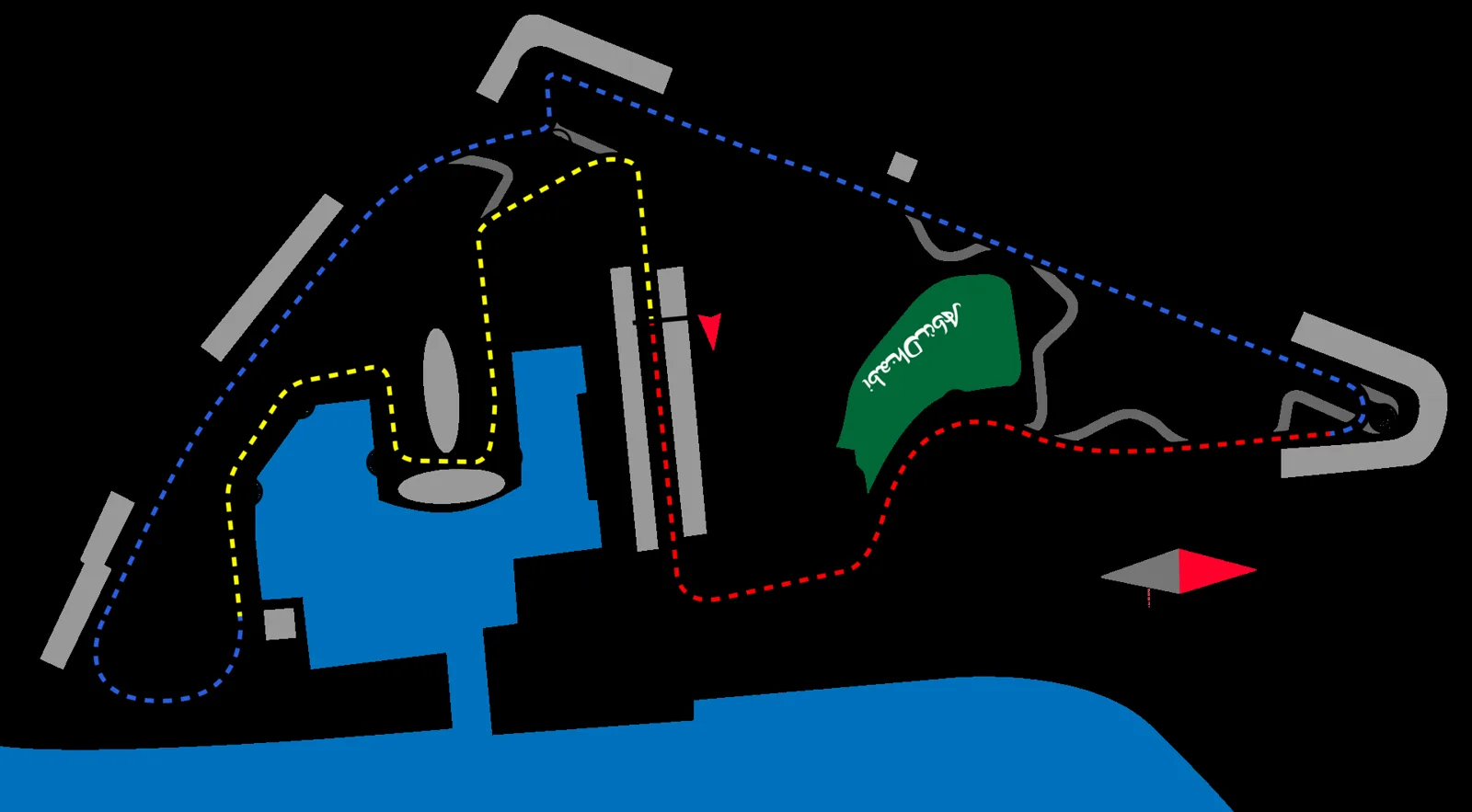
Hermann Tilke designed it, and it sits on Yas Island, a 2,550 hectare (25.5 km2) stretch of land off Abu Dhabi's eastern coast. The 2009 race was the first major event held there. A hotel, the W Abu Dhabi - Yas Island, spans the short straight between turns 13 and 14.
In June 2021 Saif Al Noaimi, the acting chief executive of Abu Dhabi Motorsports Management, said changes to the Grand Prix layout had been approved and would be ready for that year's race. A chicane and a hairpin early in the lap gave way to one broader hairpin, which became turn 5. A triple chicane and a tight left-hander through turns 11 to 14 were swapped for a single sweeping banked curve, now turn 9. The final corners were opened out as well, so cars can carry more speed through the last sector.
What has the Abu Dhabi finale decided?
Several championships. The title was settled in Abu Dhabi for the first time in 2010, when Vettel won and championship leader Fernando Alonso lost out. Hamilton took his second title there in 2014 under double points, Nico Rosberg his only one in 2016, and in 2025 Lando Norris's third place won him the crown, two points clear of Max Verstappen, who took the race.
The 2021 race remains the most argued over. Verstappen won his first world title by crossing the line first on the final lap, ahead of Hamilton, after race director Michael Masi used the wrong procedure to withdraw the safety car. The FIA opened an inquiry. It concluded that the safety car had not stayed out for the additional lap required, but that Mercedes had not appealed, so nothing existed that could alter the classification. Masi was replaced for 2022 by Niels Wittich and Eduardo Freitas. A 10-year deal signed on 9 December 2021 by Abu Dhabi Motorsports Management and the Formula One Group lets the venue hold the season's final race until 2030.
Smaller stories fill the record. In 2012 Vettel started from the pit lane after being excluded from qualifying for lacking the fuel to return to parc ferme, and finished third behind Alonso and race winner Kimi Raikkonen, in the Finn's first win since his return. In 2013, after Red Bull's fourth consecutive double championship, David Coulthard spun doughnuts on the helipad of Dubai's Burj Al Arab hotel, 210 m (690 ft) above ground. In 2023 Verstappen won the race, having led a thousand laps in a single season, a first, and completed every racing lap, which no other driver managed. The 2024 winner was Norris, for the first time, and McLaren took the constructors' title for the first time since 1998.
Pressure on the event has been lighter than in Bahrain, but not absent. Swedish pop star Zara Larsson said she would not perform at the December 2026 race after fans urged a boycott over the UAE's alleged role in the war in Sudan, though her name stayed on promotional listings.
How did Saudi Arabia come to host a Grand Prix?
In August 2019 plans were made public for a permanent motorsports complex at Qiddiya City near Riyadh, conceived by Test and Training International, a consultancy headed by former F1 driver Alexander Wurz. Saudi Arabia appeared on the first draft 2021 calendar in October 2020, and in November Jeddah was named host of the inaugural race, on a track along the Red Sea shore.
The Qiddiya plans were confirmed in January 2020, with Wurz as track designer and current and former Formula One drivers trying the layout in a simulator. The track met FIA and FIM Grade 1 requirements, though Formula One would not discuss whether a race might follow. When the draft 2021 calendar went to teams, it carried all 22 races of the original 2020 schedule plus Saudi Arabia, and in November 2020 Jeddah was named host working with the Saudi Automobile and Motorcycle Federation. The Saudi Arabian Grand Prix, first scheduled as the penultimate race of 2021, has been in an early-season slot since 2022 and is scheduled to run at Jeddah until 2027.
Further plans are only sketched. In October 2022 the country's sports minister, Abdulaziz bin Turki Al Saud, showed interest in Jeddah and Qiddiya both holding annual races, or in the Saudi event alternating between them, when Qiddiya is ready. Reports in January 2023 said organisers expected to stay in Jeddah until 2027 while Qiddiya was built, after which Jeddah might still stage a separate Saudi race.
What is the Jeddah Corniche Circuit like?
Formula One calls it the fastest street circuit in the sport. It has 27 corners, cars average around 250 km/h (160 mph), and it is currently the third longest track on the calendar behind Spa-Francorchamps and the Las Vegas Strip Circuit. Carsten Tilke, son of Hermann Tilke, designed it on the Jeddah Corniche beside the Red Sea.
The Saudi race and qualifying are held at night, when temperatures are substantially cooler, though the Formula 2 race takes place by day, as do two of F1's three practice sessions, in high track temperatures. It is the fifth title on the calendar to be run wholly at night, following Singapore, Bahrain, Sakhir and Qatar.
Questions about safety and rights have followed the race since it started. Amnesty International and Human Rights Watch criticised the decision to go to Saudi Arabia, with Human Rights Watch calling the race part of a strategy to distract from abuses. Formula One replied that it had made its position on human rights clear to host countries and wanted to be a positive force wherever it races. In February 2021, 45 human rights organisations called on Hamilton to boycott the race. Saudi Arabia denied that the event was being used for sportswashing and said the race is part of its effort to reach out to the wider world. Hamilton wore a rainbow-coloured helmet in 2021 in support of the LGBT community.
Security has been tested too. After a missile was intercepted during the 2021 Diriyah ePrix, doubts were raised about the event's viability, and Formula One said it would not race in areas of high security risk but had confidence in the Saudi authorities. During the first of two practice sessions in 2022, a Houthi missile attack caused an explosion at an Aramco oil depot about 16 km (10 miles) from the circuit. Drivers including Hamilton raised safety concerns, and after discussions lasting several hours it was agreed to hold the race. Critics also pointed to the mass execution of 81 people two weeks earlier.
Bahrain, Abu Dhabi and Saudi Arabia side by side
| Bahrain | Abu Dhabi | Saudi Arabia | |
|---|---|---|---|
| First race | 4 April 2004 | 1 November 2009 | 2021 |
| Circuit | Bahrain International Circuit, Sakhir | Yas Marina Circuit, Yas Island | Jeddah Corniche Circuit |
| Distinction | First Middle East Grand Prix | First day-night Formula One race | Fastest street circuit, 27 corners |
| Racing after dark | Night race since 2014 | Day-night since 2009 | Race and qualifying at night |
| Contract or plan | Through to 2036 | Final race rights until 2030 | Scheduled until 2027 |
Where this goes next
The contracts run on. Bahrain's extends through to 2036, Abu Dhabi holds the right to host the final race until 2030, and Jeddah is scheduled to run the Saudi Arabian Grand Prix until 2027, with Qiddiya in the wings. Bahrain and Saudi Arabia are both slated to open the 2027 season, after a 2026 in which Bahrain raced in Malaysia and Saudi Arabia did not race at all.