Three wheels back to the pits, a wet lap far quicker than the field, a feud with a teammate, and a qualifying crash at Zolder: why fans still call the Canadian the greatest.
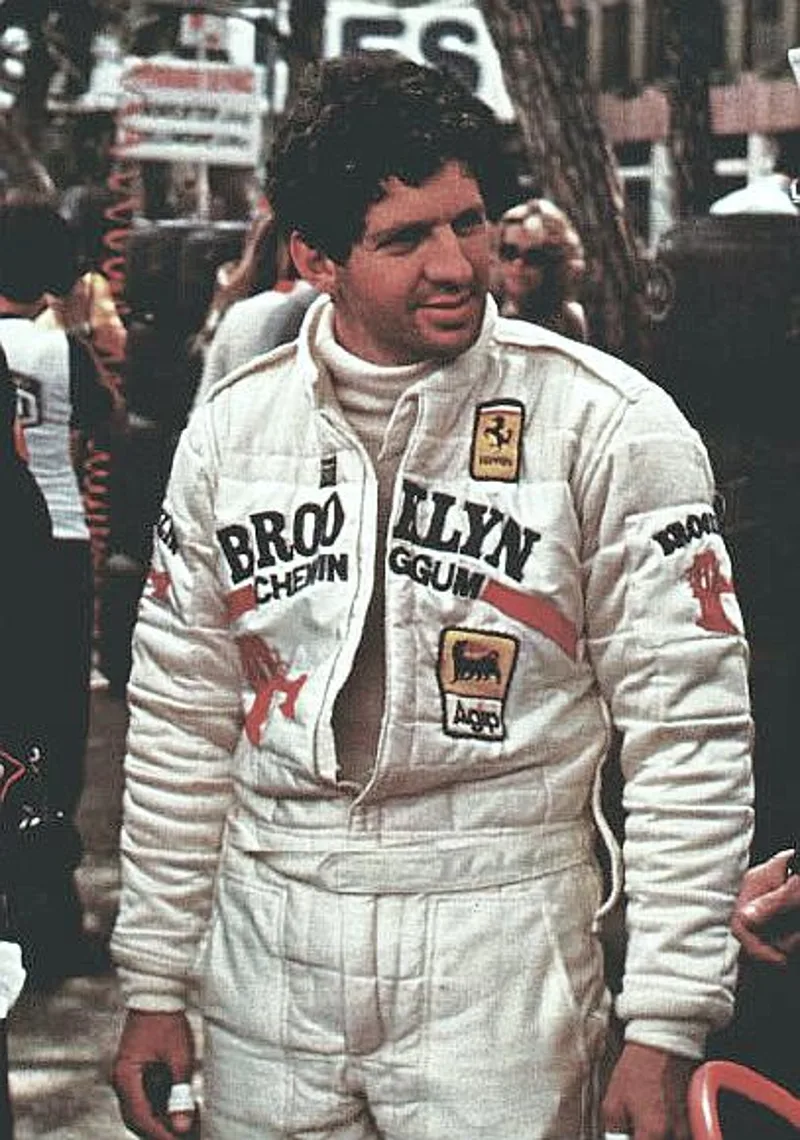
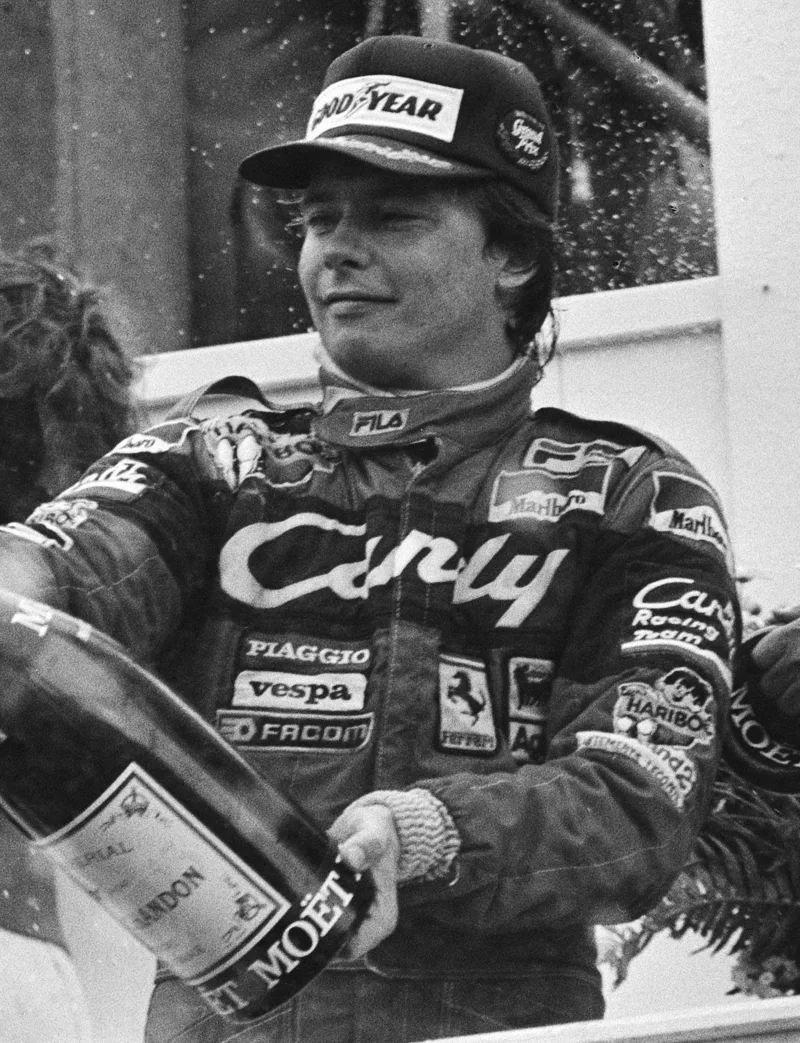
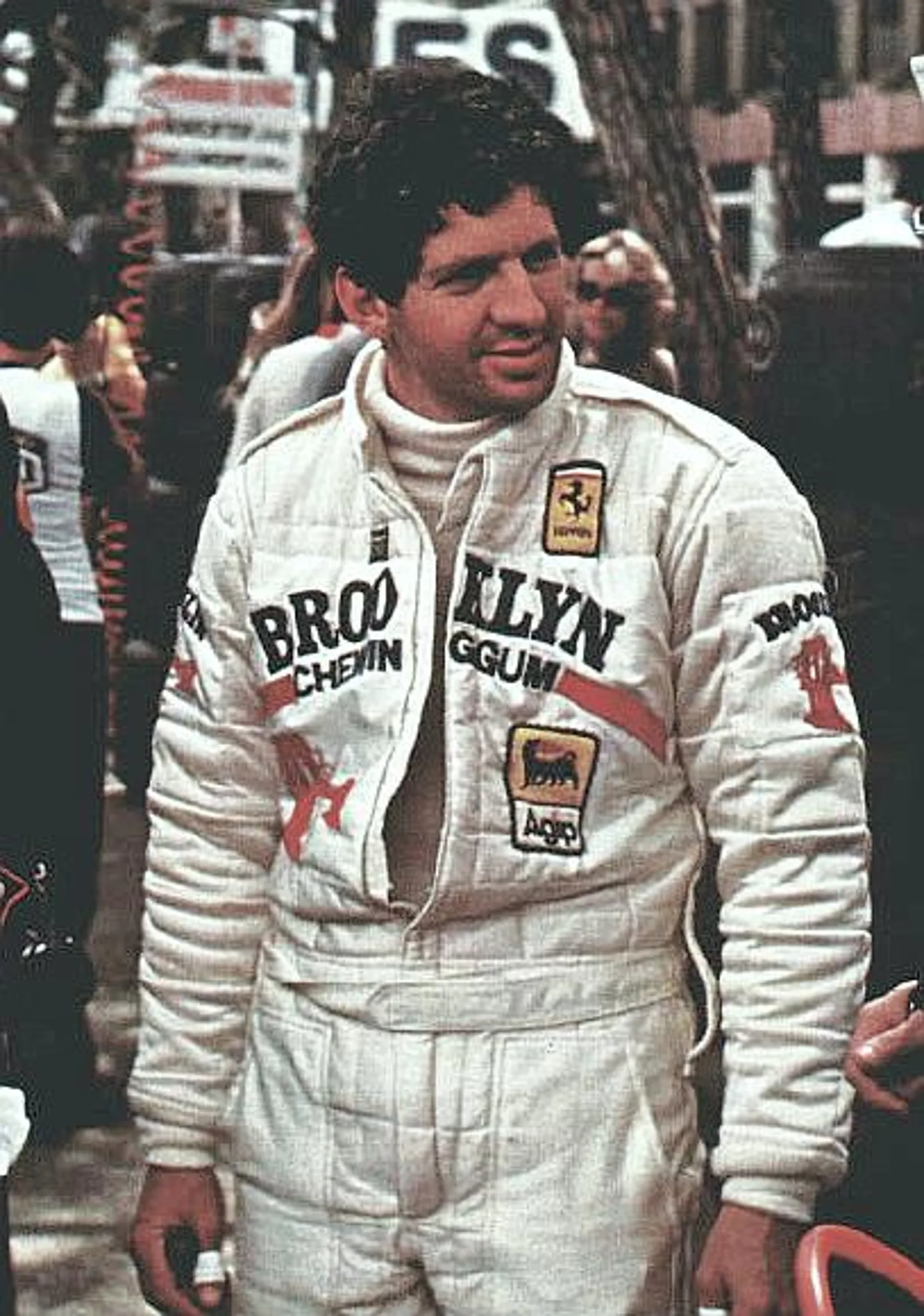
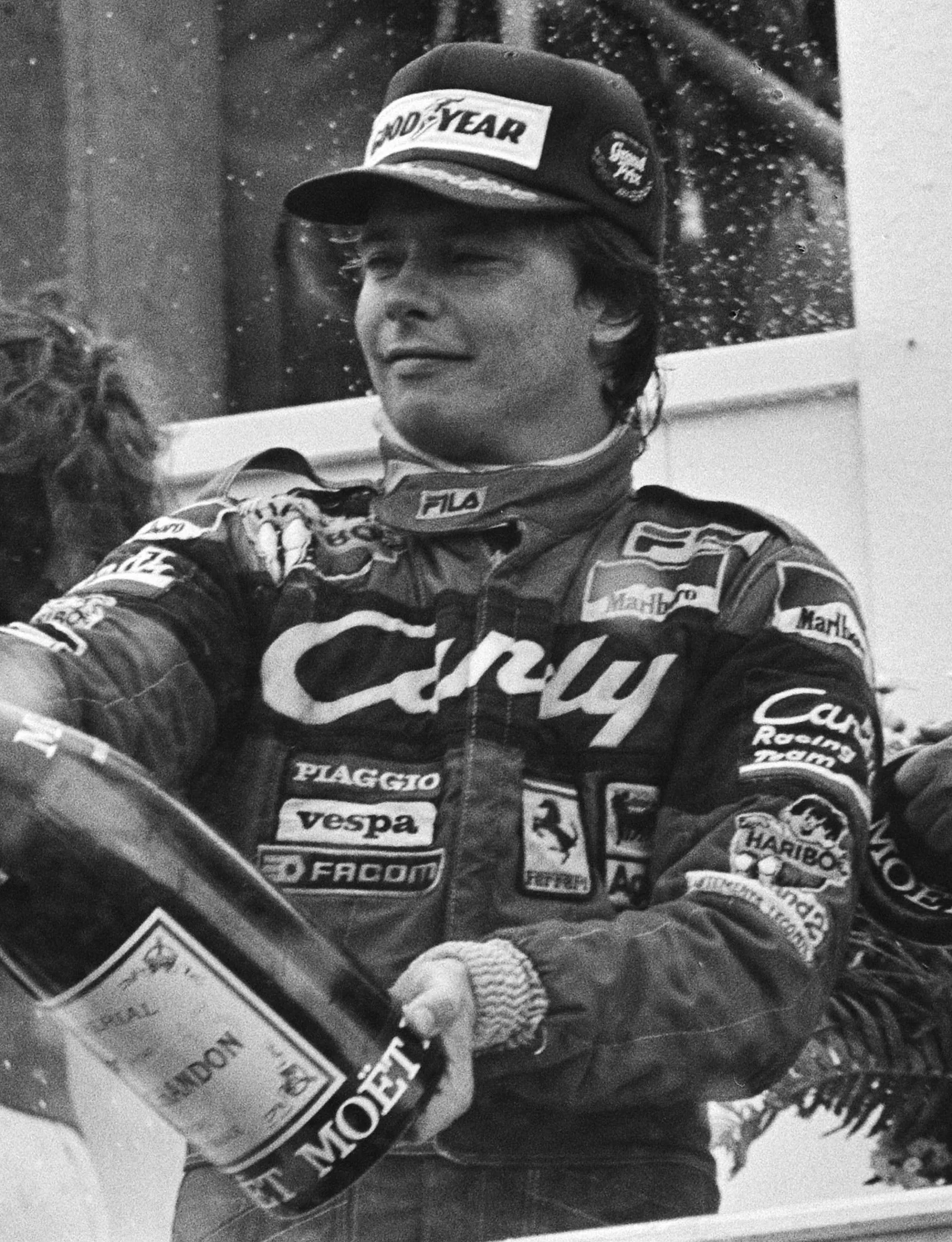
Gilles Villeneuve was a Canadian driver who raced for Ferrari from 1977 to 1982, won six Grands Prix and finished runner-up in 1979. Famed for his spectacular, committed style, he was killed during qualifying for the 1982 Belgian Grand Prix at Zolder after hitting Jochen Mass's car, two weeks after a rift with teammate Didier Pironi.
A slow puncture at the 1979 Dutch Grand Prix caused Gilles Villeneuve's left rear tyre to give way and pitched him off the track. He nursed the car back to the pits on three wheels, shedding the damaged one on the way. When he arrived, he told the team to fit a new wheel and carry on, and had to be talked out of it because the car was beyond repair.
That anecdote says most of what fans mean when they argue that Gilles Villeneuve was the greatest Ferrari driver.
Gilles Villeneuve: from snowmobiles to Formula Atlantic
Joseph Gilles Henri Villeneuve was born on 18 January 1950 in Saint-Jean-sur-Richelieu, Quebec, to a piano-tuner father, and grew up in Berthierville. He often said he was born in 1952. By the time he reached Formula One he was already 27, and he had taken two years off his age to avoid seeming too old to succeed at the top.
He began with local drag racing in a modified 1967 Ford Mustang that he also drove on the road. Boredom set in quickly, and he signed up for a racing licence course at the Jim Russell school, based at Circuit Mont-Tremblant. In Quebec's regional Formula Ford series he ran his own two-year-old car and won seven of the ten races he entered. Formula Atlantic followed, for four seasons. He won his first Atlantic race at Gimli in 1975, in heavy rain. In 1976 he teamed with Chris Harrison's Ecurie Canada and the factory March race engineer Ray Wardell, won all but one of the races, and took both the American and Canadian titles. The Canadian championship came again in 1977.
Money was tight. In his first years the bulk of his earnings came from snowmobile racing, at which he excelled, and after he took the 1974 World Championship Snowmobile Derby promoters paid him to turn up as well as to race. He credited that background for his car control: the machines slid constantly, spills onto the ice at 100 miles per hour happened three or four times each winter, and visibility was dreadful unless you led, so rain never worried him on a circuit.
Eleven seconds! - Jody Scheckter on his teammate's lap time in the wet at Watkins Glen.
How did Gilles Villeneuve reach Ferrari?
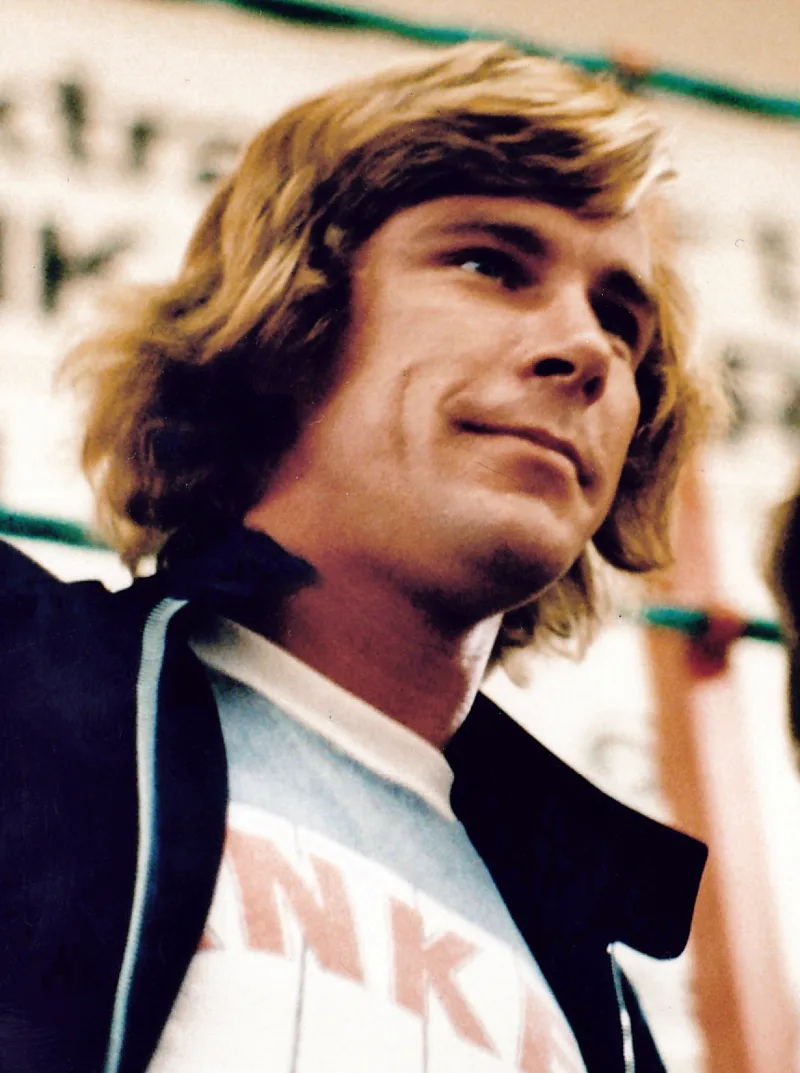
An unofficial Formula Atlantic race at Trois-Rivieres in 1976 gave him the chance to beat James Hunt and a handful of other grand prix names, and he took it. Hunt noticed, and his McLaren team proposed a deal of as many as five outings in a third car during 1977. His first start was the British Grand Prix. In an old M23 he qualified ninth, between the team's regular pairing of Hunt and Jochen Mass, whose cars were the newer M26s. He recorded the fifth-quickest lap of the race and came home 11th, held up for two laps by a temperature gauge that misbehaved.
McLaren's team manager Teddy Mayer still chose not to keep him, saying Villeneuve looked as if he might be a little expensive and that Patrick Tambay was showing similar promise. With no firm offer for 1978, he met Enzo Ferrari in Italy in August 1977. Ferrari saw in this small, nervous young Canadian the build of Tazio Nuvolari and decided to try him. The Fiorano test was full of mistakes and slow times, yet Ferrari was satisfied with his promise and signed him for the last two races of 1977 and the full 1978 season.
The opening came when Niki Lauda walked out of the team at the penultimate race, the Canadian Grand Prix at Mosport Park, having already won his second title. Villeneuve slid off on another car's oil in that race. At the season finale in Japan, on lap five, he tried to outbrake Ronnie Peterson's Tyrrell P34, and the two touched wheels. The Ferrari flew into the air and came down on spectators watching from a prohibited area, which killed one onlooker and one marshal and hurt seven more. An investigation apportioned no blame. Villeneuve was terribly sad about the deaths, but did not feel responsible.
The Gilles Villeneuve Ferrari seasons
| Season | What happened |
|---|---|
| 1977 | McLaren one-off in Britain; final two races of the year for Ferrari |
| 1978 | Many retirements; first win at the Canadian Grand Prix in Montreal |
| 1979 | Three wins; runner-up to Jody Scheckter by four points |
| 1980 | Winless, six points, in the 312T5 |
| 1981 | Two wins, at Monaco and Spain, in the turbocharged 126C |
| 1982 | Killed during qualifying at Zolder, round five |
The 1978 season was a procession of retirements, often after problems with Michelin's new radial tyres. He started on the front row at Long Beach and crashed out of the lead on lap 39. The Italian press called for Ferrari to replace him; Ferrari did not. His results improved late in the year. He finished second on the road at Monza, though a one-minute penalty for jumping the start took that away, and was second in the US Grand Prix until his engine gave up. Then, at the finale in Montreal, he took his first victory when Jean-Pierre Jarier's Lotus was stopped by engine trouble. No other Canadian has won the Canadian Grand Prix.
Villeneuve and Arnoux at the 1979 French Grand Prix
Jody Scheckter arrived in 1979 after Carlos Reutemann went to Lotus. Villeneuve won three races that year, and briefly led the championship after back-to-back wins at Long Beach and Kyalami. But the race people remember is the French Grand Prix, where he and Rene Arnoux fought through the final laps with their wheels banging.
Arnoux passed him for second with three laps to go. Villeneuve took the place back on the next lap. At the start of the last lap Arnoux tried again, and they went through the opening corners wheel to wheel, making contact repeatedly. Arnoux ended up ahead, Villeneuve tried to go around the outside one corner later, the cars bumped hard and he slid wide. Then he dived up the inside at a hairpin, passed Arnoux and held him off for the second half of the lap, securing second place. "I tell you, that was really fun!" he said afterwards, adding that he had been sure the cars would flip because interlocking wheels can easily make one climb over the other.
At the Italian Grand Prix he could possibly have won the championship by ignoring team orders and beating Scheckter. He chose to finish behind him, which ended his own challenge. Scheckter took the title by just four points.
There was one last demonstration. In the soaked Friday practice session before the final round, in the United States, Villeneuve posted a lap far quicker than the rest of the field. Scheckter, who was second quickest, said he had scared himself rigid trying to be fastest, and then saw his teammate's time. "Eleven seconds!" he recalled, still not understanding how it was possible.
What went wrong for Ferrari in 1980 and 1981?
1980 was a poor year for the team. British bookmakers had made Villeneuve favourite for the Drivers' Championship, but the 312T5, whose ground-effect aerodynamics were only partial, brought him just six points all season. Scheckter scored two and retired at the end of the year.
For 1981 Ferrari introduced its first turbocharged Formula One car, the 126C. It had tremendous power but poor handling, and alongside Villeneuve was a new teammate, Didier Pironi, who remembered being welcomed as a full equal. Villeneuve won twice. At the Spanish Grand Prix at Jarama he kept five faster cars at bay for much of the distance, relying on the Ferrari's top-end speed. After one hour and 46 minutes of racing, he led Jacques Laffite by only 0.22 seconds, with Elio de Angelis a little over a second behind that. Harvey Postlethwaite, who designed the follow-up 126C2, said the 126C had one quarter of the downforce of a Williams or Brabham and suffered from massive throttle lag, adding that Villeneuve was on a different plane to other drivers, and that winning at Monaco and Jarama was out of this world.
At the 1981 Canadian Grand Prix the front wing of his Ferrari was damaged, and for much of a downpour of a race it hung down in front of him, obscuring his view. He risked disqualification, but the wing finally came away and he took third place with the nose gone. For 1982 team owner Ron Dennis offered him a return to McLaren. He rejected it, uneasy about breaking his Ferrari contract and hopeful that the Italian team would become competitive.
What happened between Villeneuve and Pironi?
The 1982 San Marino Grand Prix split the Ferrari garage. Pironi is widely thought to have tricked Villeneuve into conceding victory, giving the impression that he would stay behind his teammate, then passing him into the Tosa hairpin although the team had signalled both cars to ease off. Villeneuve was livid, and swore he would not speak to Pironi again.
Others tell it differently. Pironi said the pair had agreed with Prost and Arnoux, in a meeting in his motorhome, to put on a show in the first half provided positions at half-distance matched the grid. He said his first pass came because Villeneuve had made a mistake and gone off, and the slow sign appeared a few laps later. Ferrari's Marco Piccinini called it a genuine misunderstanding. Ferrari's chief mechanic Paolo Scaramelli said the team had agreed before the race to hold positions if the two Renaults dropped out. John Hogan, a former Marlboro executive, disputed that Pironi had broken any earlier understanding, saying Villeneuve was stunned that somebody had out-driven him. Postlethwaite thought the press had inflated the drama.
How did Gilles Villeneuve die at Zolder?
Two weeks after San Marino, Villeneuve was killed in the final qualifying session for the Belgian Grand Prix at Zolder. Pironi had just set a time a tenth of a second quicker than his, for sixth. Writers say Villeneuve was trying to improve on his last lap, and some suggest he was specifically aiming to beat Pironi. His biographer Gerald Donaldson cites Ferrari's Mauro Forghieri as saying Villeneuve was heading for the pits with his final set of qualifiers on the car, in which case he would not have been setting a time at all.
Eight minutes before the session ended, Villeneuve crested the rise past the first chicane and came upon Jochen Mass's March, crawling by comparison through the left-hander at Butte, ahead of the Terlamenbocht corner. Mass spotted him approaching fast and steered right to give him the racing line. At that moment Villeneuve also moved right to pass. The Ferrari struck the March's tail at an estimated 200 to 225 km/h (120 to 140 mph) and was launched skyward. It flew more than 100 metres, then dived nose-first into the ground and came apart, tumbling along the trackside. Villeneuve, still in his seat but no longer wearing a helmet, was flung a further 50 metres into the safety fencing on the outer edge of Terlamenbocht.
Several drivers stopped. John Watson and Derek Warwick pulled him from the fencing. The first doctor arrived within 35 seconds and found that he was not breathing, although his pulse continued. He was intubated and ventilated, then moved to the circuit medical centre and flown by helicopter to the University St Raphael Hospital, where doctors found a fatal fracture of the neck and a cut spinal cord. Life support kept him going while his wife made her way to the hospital and doctors sought advice from specialists around the world. He died at 21:12 that evening.
Ferrari withdrew from the race and left the circuit. No one improved in the last eight minutes of qualifying, so the Renaults of Alain Prost and Arnoux filled the front row. Watson won the 70-lap race in a McLaren-Ford, ahead of Keke Rosberg's Williams-Ford, with Eddie Cheever third after Niki Lauda was disqualified because his car was underweight.
What became of Didier Pironi?
Zolder changed Pironi's world. Many in Formula One were hostile to him afterwards, his marriage broke down within weeks, and he saw the young Italian Riccardo Paletti die when Paletti ploughed into his stalled Ferrari on the Canadian Grand Prix grid. He still led the championship. Then, in very wet qualifying at Hockenheim, he smashed his Ferrari 126C2 into the back of Alain Prost's Renault, which was invisible in the spray, and fractured both legs so badly that he never raced in Formula One again. Keke Rosberg took the title by five points. In his career Pironi won three races and scored 13 podiums.
He died on 23 August 1987 in an offshore powerboat accident near the Isle of Wight, along with his two crew members. Pironi's girlfriend Catherine Goux gave birth to twins after his death and called them Didier and Gilles, in honour of Pironi and Villeneuve. Gilles Pironi became an engineer at Mercedes AMG Petronas in 2014, and collected the constructors' trophy on the 2020 British Grand Prix podium.
What is Gilles Villeneuve's legacy?
Across six seasons he collected 13 podiums, eight fastest laps, two pole positions and six wins. At his death he was widely popular in the paddock. The Montreal circuit that has hosted the Canadian Grand Prix since his first win was renamed the Circuit Gilles Villeneuve. His son Jacques, who won the Indianapolis 500 and the CART championship in 1995, became the first Canadian Formula One World Champion in 1997. Both men have places in Canada's Sports Hall of Fame and the Canadian Motorsport Hall of Fame.