A Turin stylist who drew nearly every Triumph of his era, the coachbuilder who bodied early Ferraris, and the trade that vanished when the chassis did.
A coachbuilder makes bodies for vehicles, traditionally on a chassis supplied by the car maker. Giovanni Michelotti (1921-1980) was a Turin stylist who designed for coachbuilders such as Vignale before opening his own studio in 1959. Alfredo Vignale founded Carrozzeria Vignale in 1948 and bodied Ferraris, Maseratis and Lancias.
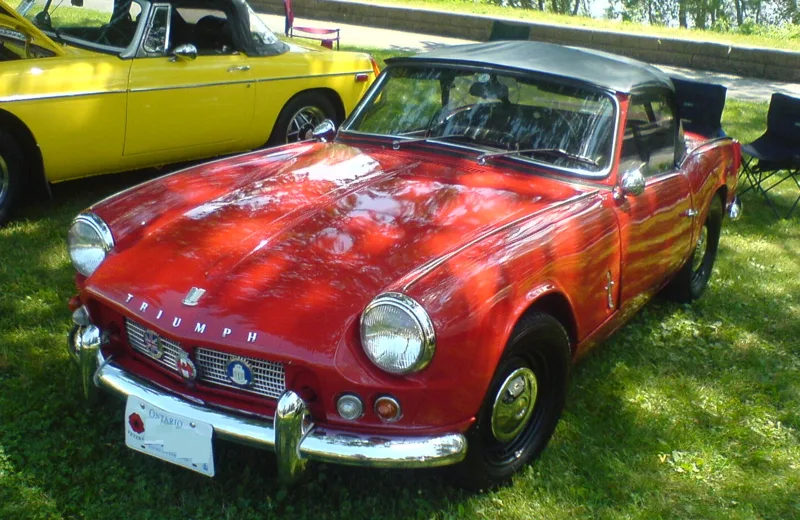
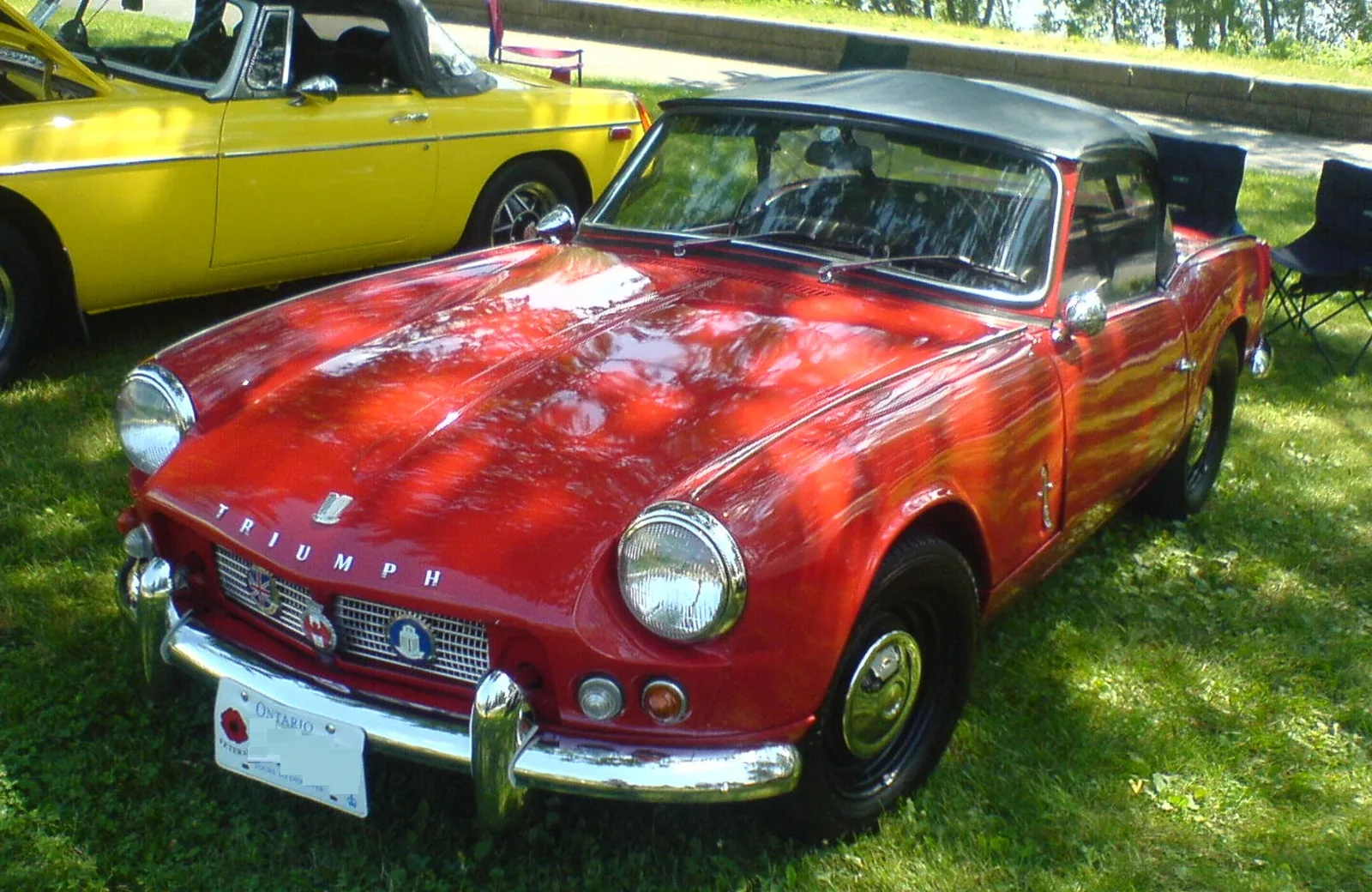
From the late 1950s, every new model made by the British firm Standard Triumph was drawn by one man in Turin. After 1960 the only Triumphs that were not Giovanni Michelotti's work were the TR6, the TR7 and the Honda-based Acclaim.
That fact says a lot about a profession that few drivers see. For luxury and sports cars, a coachbuilder, or a stylist working with one, often decided how a car looked while the manufacturer supplied the chassis. The trade bodied Ferraris, Maseratis and Lancias, while Michelotti also styled every new Triumph for the factory, and he and Alfredo Vignale were two of its best-known names.
Who was Giovanni Michelotti?
Giovanni Michelotti was born in Turin on 6 October 1921 and died on 23 January 1980. He ranks among the busiest sports-car stylists of the 20th century, with notable work for Ferrari, Lancia, Maserati and Triumph, and he also had a hand in lorries for Leyland Motors and in designs for British Leyland.
He started out working for coachbuilders, among them Bertone, Ghia, Ghia-Aigle, Allemano, Vignale, Stabilimenti Farina, Fissore, Viotti, Monterosa, Scioneri and OSI. In 1959 he opened his own design studio. He also worked with firms that built their own cars on Fiat or other mechanical parts, such as Siata, Moretti, Francis Lombardi and Nardi. From 1962 he ended his cooperation with Carrozzeria Vignale and began coachbuilding on his own.
Late in life, asked whether he had designed anything other than cars, he admitted that nearly everything he did involved cars. The exception was a coffee machine, drawn shortly after the war.
From the late 1950s one Turin designer was responsible for every new Standard Triumph, from the Herald to the Stag.
What is a coachbuilder?
A coachbuilder is a person or company that makes bodies for passenger-carrying vehicles. The trade began with horse-drawn vehicles and today covers custom cars, buses, coaches and railway carriages. The word coach traces back to Kocs, a Hungarian town. A body made this way is a coachbuilt body in British English and a custom body in American English, and it should not be confused with a custom car.
Where the trade came from
Names for the craft pile up over the centuries. A wainwright, or wagon-builder, did the rough work from about AD 1000. Cartwright appeared in 1587, coachmaker in 1599 and coachbuilder in 1794. Britain's trade body, the Worshipful Company of Coachmakers, was incorporated in 1630 (its full title adds Coach Harness Makers), and some British firms were older still: Barker was founded in 1710, and Brewster, the oldest in the United States, in 1810.
By the middle of the 19th century British coachbuilding was highly specialised. Body-makers built the body, carriage-makers the stronger timbers beneath it, and the coach-smith, who made the iron axles and springs, was among the best-paid workmen in London.
How it worked on cars
Some makers sold complete cars. Others, especially in the luxury and sports class, sold a chassis: frame, engine and gearbox, axles, wheels, brakes, suspension, steering, lights, wings, scuttle and dashboard. The buyer, or a dealer, then ordered a body from a coachbuilder. Bespoke bodies were made of hand-shaped sheet metal, often aluminium alloy, fixed to a light wooden frame. A maker could void the warranty if an unapproved body was fitted.
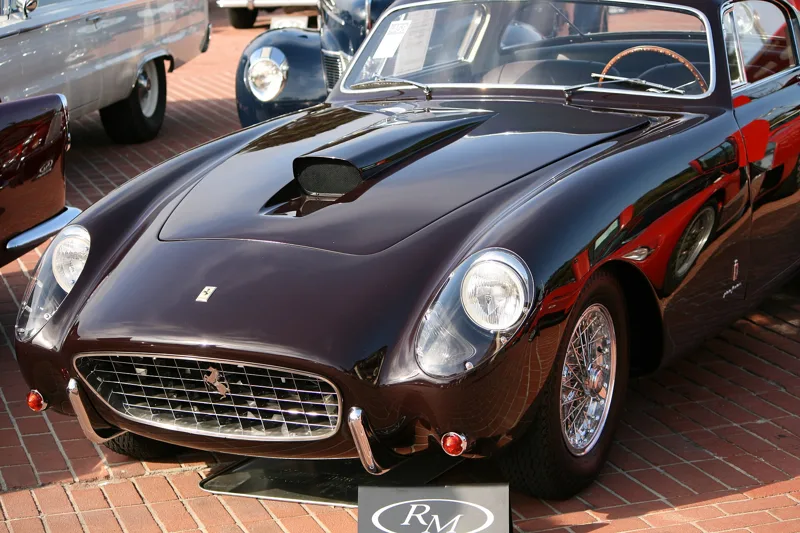
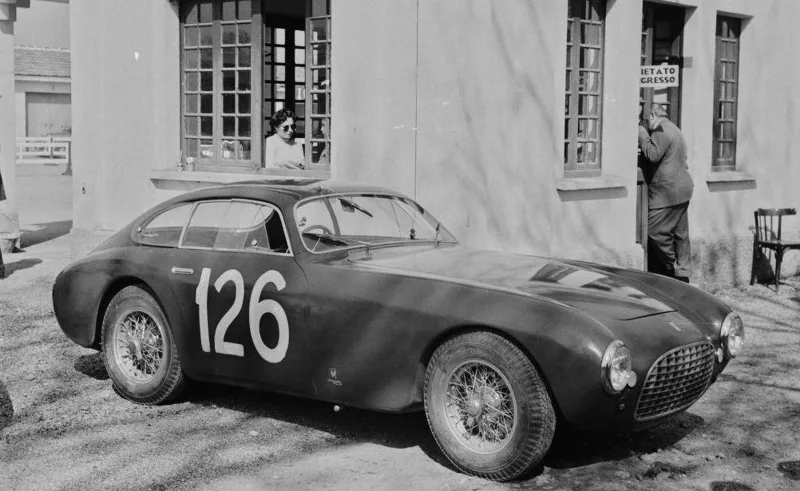
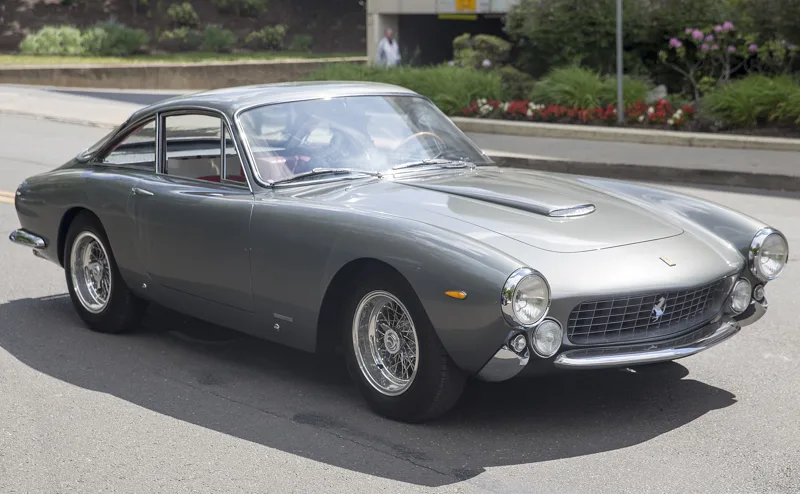
Before the Second World War all luxury cars were sold this way. When Duesenberg introduced the Model J it was offered as a chassis only, for $8,500, and so were the Bugatti Type 57, the Cadillac V-16 and every pre-war Rolls-Royce. Delahaye had no coachworks, so its chassis were bodied by independents such as Chapron, Labourdette, Franay, Saoutchik, Figoni et Falaschi and Pennock. Early Ferraris had every body built outside the factory, by firms such as Pininfarina and Scaglietti.
Why did the coachbuilders disappear?
Unibody construction, where body and chassis form one structure, made custom coachbuilding uneconomic. Rolls-Royce introduced its first unibody car, the Silver Shadow, in 1965. Mid-century makers wanted rigidity for better suspension, lower weight, better fuel economy and cheaper manufacture.
The cost of tooling explains why. One door die alone can cost as much as US$40,000, a sum that only makes sense for mass production, which is why cars such as the Chevrolet Corvette used fibreglass-reinforced resin instead.
Coachbuilders adapted. Some became design and styling houses working for car brands, such as Zagato, Frua, Bertone and Pininfarina. Some turned into general bodywork makers supplying series production, such as Karmann, Bertone, Vignale and Pininfarina. Others made bodies for trucks, vans, ambulances and public transport, as Pennock, Van Hool, Plaxton and Heuliez did, or became partners in developing roof structures or parts.
Alfredo Vignale and Carrozzeria Vignale
Carrozzeria Alfredo Vignale was established in 1948 at Via Cigliano in Turin by Alfredo Vignale, who lived from 1913 to 1969. The first body went onto a Fiat 500 Topolino, with a special Fiat 1100 after it. Italian firms made up most of the customers: Cisitalia, Alfa Romeo, Ferrari, Fiat, Maserati and Lancia. In 1952 Vignale worked with Briggs Cunningham on the Continental C-3.
Rodolfo Bonetto drew a few cars at Vignale in the early 1950s, then left for Boneschi, and later Vignale designs came from Virginio Vairo. The firm also built its own low-volume variants of mainstream cars, including the 850, Samantha, Eveline and the Gamine, which was based on the Fiat 500. In 1968 it designed the body of its last prototype, the Tatra 613.
De Tomaso, which already owned Ghia, took over Vignale in 1969. Shortly afterwards, on 16 November 1969, Alfredo Vignale died in a car crash. In 1973 both coachbuilders were sold to Ford, the studio ceased operation, and Ford took over the name.
What did Vignale and Michelotti build for Ferrari?
Vignale bodied a long run of the early cars, among them the 166 MM and 212 Export, the 225 S, the 250 MM and 250 Europa, the 340 America and 340 Mexico, and the 625 TF. Michelotti's portfolio lists many of these designs. Another Michelotti design, the Ferrari 375 MM coupe, was for Ghia.
Later, working for himself, he turned to one-offs. The 275 P2 Speciale of 1968 was a re-body of a 1963 250 P ordered by Robert Peak and Luigi "Coco" Chinetti Jr. Four road-going N.A.R.T. Spiders were built on the 365 GTB/4 for Luigi Chinetti, and a single competition version raced in the 1975 24 Hours of Le Mans. A 365 GTC/4 Beach Car for Felber came in 1976 and the 400i Meera S in 1983.
Maserati, Lancia and the rest
For Lancia, Michelotti drew the Aurelia coupes, the Appia and the Flavia Cabriolet. The Flavia was the last Michelotti design for Vignale. The Mizar concept of 1974, based on the Beta, had four gull-wing doors.
At Maserati the list includes the 3500 GT Spyder, bodied in prototype and series form by Vignale, and the Sebring of 1962. One-offs included a 5000 GT coupe commissioned by Briggs Cunningham. Other names in his portfolio read like a directory of the era: Alfa Romeo, Aston Martin, Alpine, Bugatti, Fiat, Hino, Matra, Prince and Reliant.
Michelotti at Triumph, BMW and British Leyland
Beginning in the late 1950s, Michelotti took charge of every new model from Britain's Standard Triumph, his first job being a restyle of the Standard Vanguard.
- The Herald, Spitfire and GT6
- The TR4 and the TR5 Ginevra
- The Triumph 2000, 1300 and Vitesse
- The Stag and Dolomite
He also drew prototypes that never reached production, such as the Triumph Fury.
His BMW work began with the BMW 700 of 1959 and went on to the New Class, of which the 2002 is the most notable. His sport saloon designs later became BMW's design language, carried forward by Ercole Spada into the 1980s.
When Triumph's parent Leyland Motors became part of British Leyland, he restyled the BMC 1100, the basis for the Austin Victoria built in Spain and the Austin Apache built in South Africa. His credits there also include Leyland's National bus and the P76 made in Australia. In the 1960s he created a glass-reinforced plastic cab for Scammell lorries, used on the Routeman, Handyman and Trunker, with the Townsman getting a Michelotti cab as well.
DAF, Volvo and the Siluro
From 1963 Michelotti worked with the Dutch firm DAF, redesigning the ageing Daffodil 31 into the Daffodil 32 and DAF 33. The DAF 44 of 1966 was an all-new car from his pen, and he helped shape its derivatives, the 46, 55 and 66, which ended up as the Volvo 66 of 1975. In 1968 he built a concept based on the DAF 55 called Siluro, Italian for torpedo. It stayed with him until his death and has since been restored for the DAF museum in Eindhoven.
Michelotti's own cars, from the Shellette to the PAC
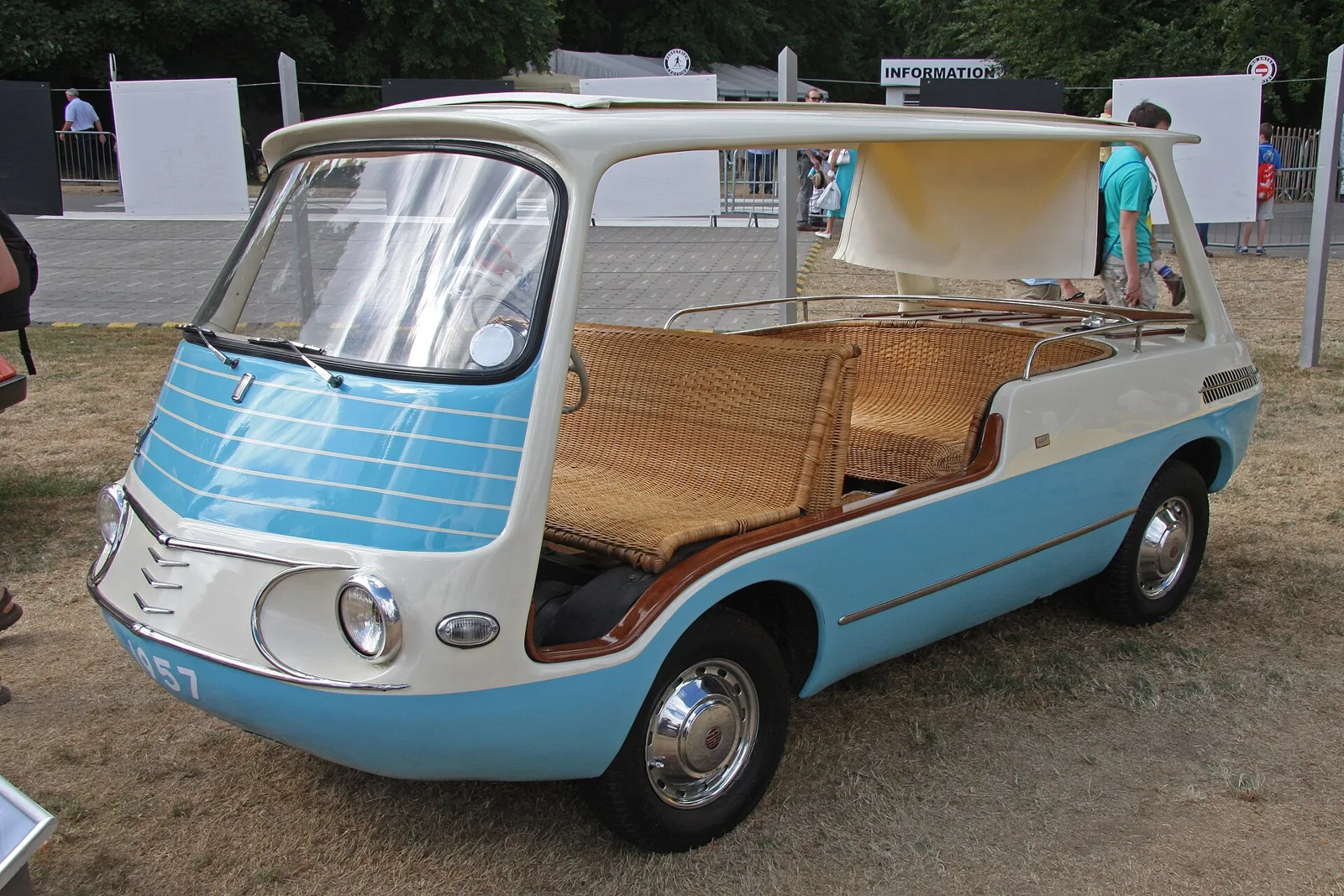
A few cars carried his own name. The Shellette, a beach car, had wicker seats and a wicker dashboard much like the Ghia Jolly versions of the Fiat 500 and 600, and was designed with yacht designer Philip Schell. It began on DAF underpinnings and moved to Fiat 850 mechanicals. At 47 hp (35 kW), with a heater and other comforts, it could cruise at 60 mph (97 km/h). About 80 were built, and around ten survive. Among the owners were the Dutch royals, who kept an early DAF-based one at their Porto Ercole summer property, and Jacqueline Onassis, who had a later one on the island of Skorpios.
Around 1980 came the Fiat 127-based Every, a light buggy, and he also sold an upmarket take on the Daihatsu Taft. In 1985 he showed the PAC, a one-off citycar prototype built on the Daihatsu Cuore. The Reliant Scimitar SS1 of 1984 was the final Michelotti design to enter production, appearing four years after he died.
| Maker | Michelotti cars named |
|---|---|
| Ferrari | 166 MM, 212 Export, 340 America, 275 P2 Speciale, 400i Meera S |
| Lancia | Aurelia, Appia, Flavia Cabriolet, Mizar concept |
| Maserati | 3500 GT Spyder, Sebring |
| Standard Triumph | Herald, Spitfire, GT6, TR4, 2000, Stag, Dolomite |
| BMW | 700, 2002, 02-Series 2000 Touring |
| DAF and Volvo | Daffodil 32, DAF 44, Volvo 66 |
| British Leyland | Austin Victoria, Leyland National, Leyland P76 |
Where the Vignale name goes next
The name did not die in 1973. At the 1993 Geneva Motor Show, Aston Martin, then owned by Ford, showed a concept called Lagonda Vignale. Ford used the name on the Focus Vignale concept at the 2004 Paris Motor Show, though the car that reached showrooms was called the Focus Coupe-Cabriolet.
Ford of Europe said in September 2013 that it would revive Vignale as an upscale sub-brand. The cars would look different from standard Fords, come with an improved dealership experience and offer extras such as free lifetime car washes. The first model was the 2015 Mondeo. On 1 March 2016 Ford showed a Kuga Vignale concept at the Geneva Motor Show and named the line-up of S-Max, Edge and Mondeo five-door models. Ford of Europe has since offered Vignale versions of the Mondeo, Edge, Fiesta, Focus and Kuga.