One man studied why engines knock and how to swirl air in a diesel; the other taught cylinder heads to breathe, from Le Mans Bentleys to the Mini.
Harry Ricardo (1885-1974) researched combustion, giving Britain a tank engine, the basis of octane ratings and the Comet diesel swirl chamber. Harry Weslake (1897-1978) specialised in cylinder heads and gas flow, designing the A-series head, Le Mans-winning heads and the Gurney-Weslake V12. Ricardo's firm survives as Ricardo PLC.
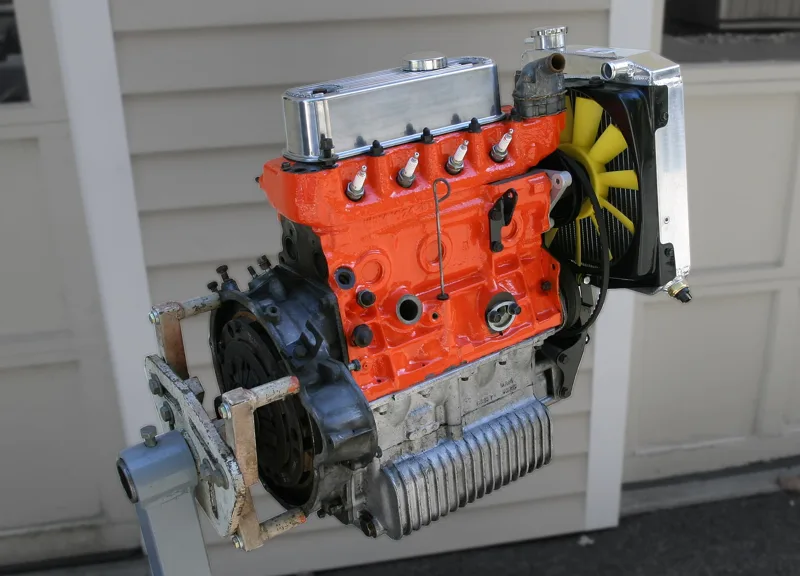
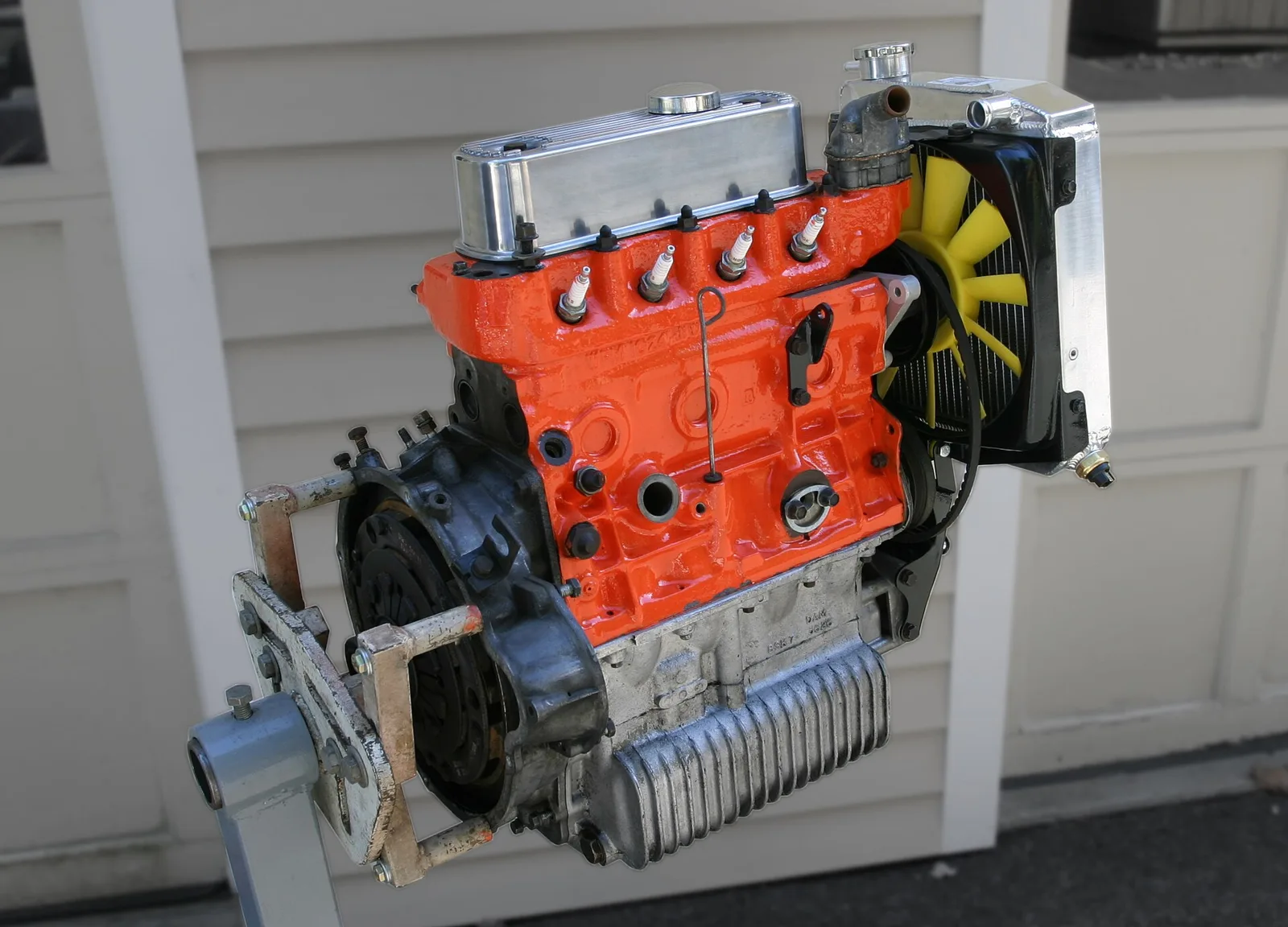
Every Morris Minor, Mini, BMC ADO16, Austin Allegro and Morris Marina that left the factory with an overhead-valve A-series engine had a cylinder head designed by Harry Weslake, and he collected a royalty on each engine built. It is a striking return for a man who started out modifying a Rudge Multi for hill climbs at the age of sixteen.
He had a counterpart in Harry Ricardo, the researcher who studied why engines knock, built the engine that powered the British heavy tank, and invented the swirl chamber that made high-speed diesels economically feasible. Between them, Ricardo and Weslake worked on the same problem from two ends: how fuel and air burn inside an engine, and how the cylinder head can help them do it.
Who was Harry Ricardo?
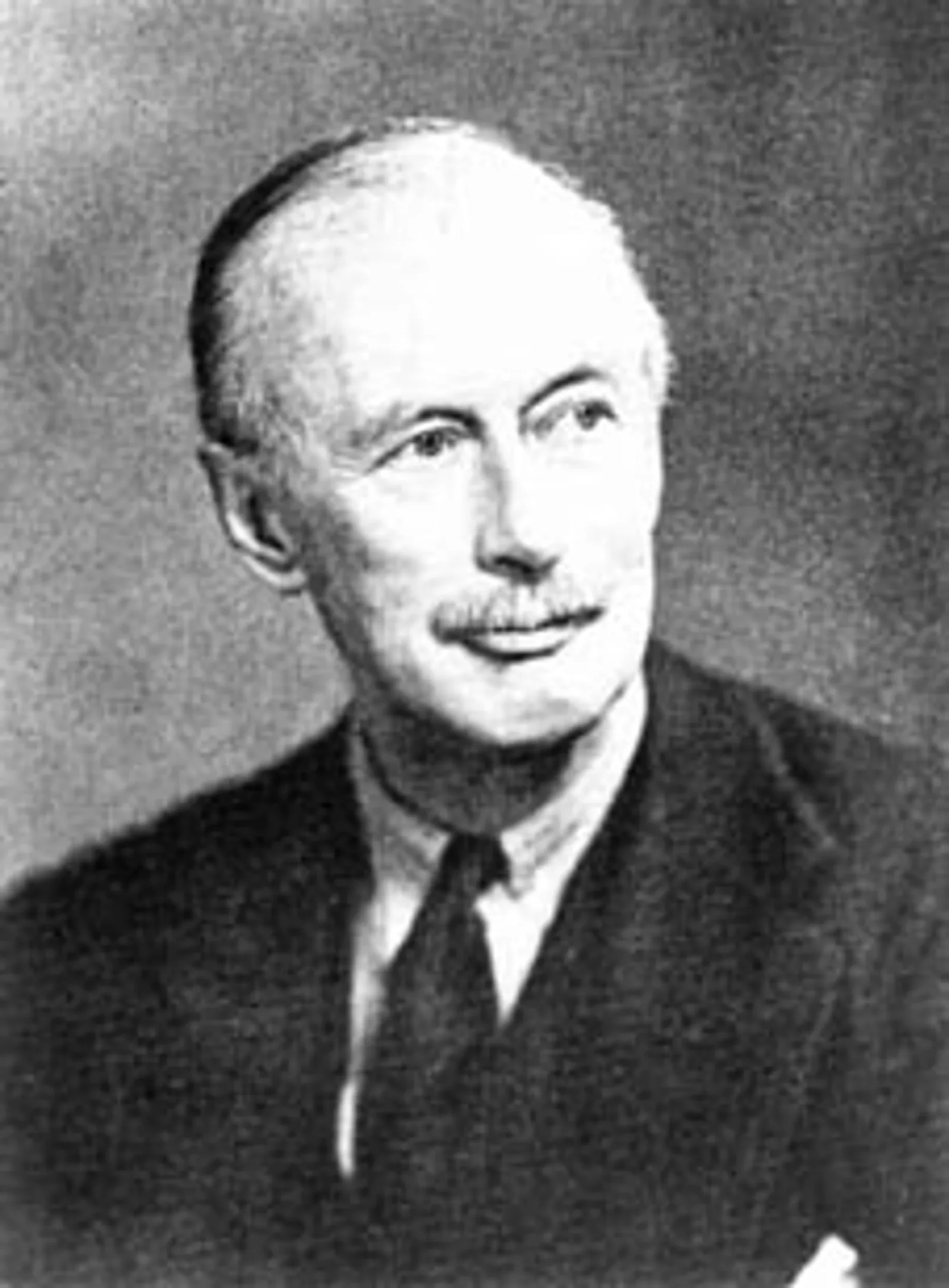
Sir Harry Ralph Ricardo was born at 13 Bedford Square, London, on 26 January 1885 and died on 18 May 1974. An English engineer, he was among the leading engine designers and researchers of the internal combustion engine's early decades. He was the eldest of three children and the only son of the architect Halsey Ricardo, and was educated at Rugby School before going to Trinity College, Cambridge, in October 1903 to study civil engineering.
Engines were a habit from childhood. From the age of ten he was handling tools and building engines, and saw one of the first cars in England when his grandfather bought one in 1898.
Every Mini and Morris Minor with the overhead-valve A-series engine carried Weslake's cylinder head, and he earned a royalty on each one.
How did a heavy motorcycle win a fuel economy contest?
In 1904, once his first year at Cambridge was over, Ricardo entered a University Automobile Club contest: design the machine that could go furthest on a single imperial quart (1.14 L) of petrol. His single-cylinder engine was the heaviest in the field, but his motorcycle design won by covering 40 miles (64 km).
The result brought him to the notice of Bertram Hopkinson, who held the chair of Mechanism and Applied Mechanics and who persuaded him to join his research on engine performance. Ricardo graduated in 1906 and stayed on for a year.
Before graduating he built a two-stroke motorcycle engine so he could examine how mixture strength changes combustion. The small firm Lloyd and Plaister built the smaller of two sizes and sold about 50 of them until the war halted production in 1914. In 1909 he designed a 3.3-litre two-stroke split-cycle engine for his cousin Ralph's small car company at Shoreham-by-Sea, for a car called the Dolphin. The cars were well made but cost more to build than they sold for, and the firm collapsed in 1911.
What engine powered the first British tanks?
In 1915 Ricardo set up Engine Patents Ltd, the company known today as Ricardo PLC. The Daimler sleeve-valve engine in the Mark I tank gave off so much smoke that it gave away the tank's position. Existing firms could build an engine but not design one, so Ricardo took the job on himself.
His answer was a new six-cylinder engine that smoked less and fitted into the same space as the old one, yet produced 150 hp (110 kW) against 105 hp (78 kW). Later modifications raised the output to 225 hp (168 kW) and 260 hp (190 kW). By April 1917 a hundred engines a week were being built. More than 8,000 went into service, powering every British heavy tank of the First World War from the Mark V on, and several hundred of the 150 hp units supplied power and light to workshops, hospitals and camps in France.
It counts as Britain's first internal combustion engine made in quantity. The 30,000 pounds in royalties let Ricardo buy land and move the company to the site it still occupies, in 1919.
Why do engines knock, and what are octane ratings?
In 1917 Hopkinson, now technical director at the Air Ministry, asked Ricardo to join a new engine research facility within the Department of Military Aeronautics, later the RAE. Hopkinson was killed flying in 1918, and Ricardo took over his position. The department then turned out experimental engines and research reports that drove the British industry, and the world's.
One of Ricardo's first big projects was irregular combustion, which goes by the names knocking and pinging. To study it he built a variable-compression test engine, and the work led to an octane rating system for fuels and to heavy investment in additives and refining. Higher-octane fuel cut consumption so sharply that it is credited with letting Alcock and Brown cross the Atlantic in modified Vickers Vimy bombers.
The Ricardo engine ideas: turbulence, swirl and the Comet
By 1919 Ricardo was studying combustion in both petrol and diesel engines. He realised that turbulence in the combustion chamber raised flame speed, and that offsetting the cylinder head could create it. A chamber made as compact as possible shortened the distance the flame had to travel and made detonation less likely.
For diesels he moved from the induction swirl chamber, which used inclined ports to start orderly air motion, to the compression swirl chamber. This forced the air into a small cylindrical volume, giving strong swirl, a moderate pressure rise and good economy.
That design was the Comet, patented in 1931. It was licensed to many companies for lorries, buses, tractors, cranes, cars and taxis. A Comet chamber was used in the first AEC diesel buses of London General Omnibus Co in 1931, and a later version appeared in the 1934 Citroen Rosalie, the first diesel passenger car built in volume anywhere. Britain was ahead in fast diesels for the road at that point, and lost the advantage after the heavy tax placed on diesel fuel in the 1938 budget.
Ricardo and the race track
Ricardo also designed the 1921 T.T. Vauxhall engine, which Cecil Clutton called a tour de force in Motor Sport. In the 1922 RAC T.T., O Payne's Ricardo Vauxhall came third, with Jean Chassagne's Sunbeam winning outright. Mays and Villiers later added a supercharger, and the engine was still winning fifteen years afterwards.
In 1922 and 1923 he published the two-volume The Internal Combustion Engine. In 1927 he wrote a research paper on the advantages of the sleeve valve, arguing that poppet-valve engines could not offer much beyond 1500 hp (1,100 kW), and sleeve-valve aero engines followed from Napier, Bristol and Rolls-Royce. He became a Fellow of the Royal Society in 1929.
During the Second World War he gave the Merlin engine in the Mosquito an oxygen enrichment system and helped with the combustion chambers and fuel control of Sir Frank Whittle's jet engine. He died on 18 May 1974, six weeks after a fall at the age of 89. A blue plaque went up on his birthplace on 16 June 2005, and the Institution of Mechanical Engineers gave him an Engineering Heritage Award on 1 July 2010.
Who was Harry Weslake?
Harry Weslake was born in Exeter in 1897, son of Henry John Weslake, a director of the gas engineers Willey and Co. At sixteen he modified a Rudge Multi for local hill climbs. He joined the Royal Flying Corps in the First World War, and in 1918 he and his father took out his first patent, for a device to improve carburettors.
Both parents died soon after the war, and Weslake left Willey's to set up a workshop with three others in Exeter. They sold his Wex carburettor, used in motorsport, and he became a regular at Brooklands. A talk with J E Greenwood, chief engineer of the Sunbeam competition team, led him to build a meter for measuring how gas flowed through the combustion chamber, and he became a consultant to Sunbeam.
His reputation grew until W. O. Bentley asked him to tune the cylinder heads of Bentley's racing engines, work that resulted in the first Le Mans win. After Wex Carburettors collapsed in 1926 he moved to Automotive Engineering, and in 1935 left to found Weslake and Taylor at the Alta racing car factory, consulting for Austin, MG, Citroen and Swallow Sidecars, later Jaguar. At Swallow he helped convert the side-valve Standard engine to overhead valves for the first SS sports car, and a two-and-a-half-litre version gave over 40 bhp per litre.
How did Weslake's cylinder heads shape road engines?
During the Second World War, Weslake worked on the Rolls-Royce Merlin and, alongside Claude Baily, Walter Hassan and William Heynes, on the Jaguar XK engine. He also consulted on the Jowett Javelin flat four and for Karrier and Scammell trucks.
In the 1940s he set up his research firm at Rye in East Sussex and went to work on Norton's Manx engine to improve gas flow. The best-known result was the cylinder head for the overhead-valve BMC A-series engine, which powered the Morris Minor, Mini, ADO16, Allegro and Marina.
His clients also included Facel Vega, for the four-cylinder engine of the Facellia, and Rover, which used a Weslake head on its 3-litre engine in the P4 110 and P5. For Chrysler he developed a wedge-head combustion chamber for the RB engine, first fitted as Stage II in 1963. In 1953 he received a patent for an arrangement of valves giving a weak and a rich mixture, allowing high compression ratios without pre-ignition. Honda's CVCC engine arrived in February 1971, five months after the patent lapsed, and the Weslake layout is seen as its forerunner.
Weslake in Formula One and sports cars
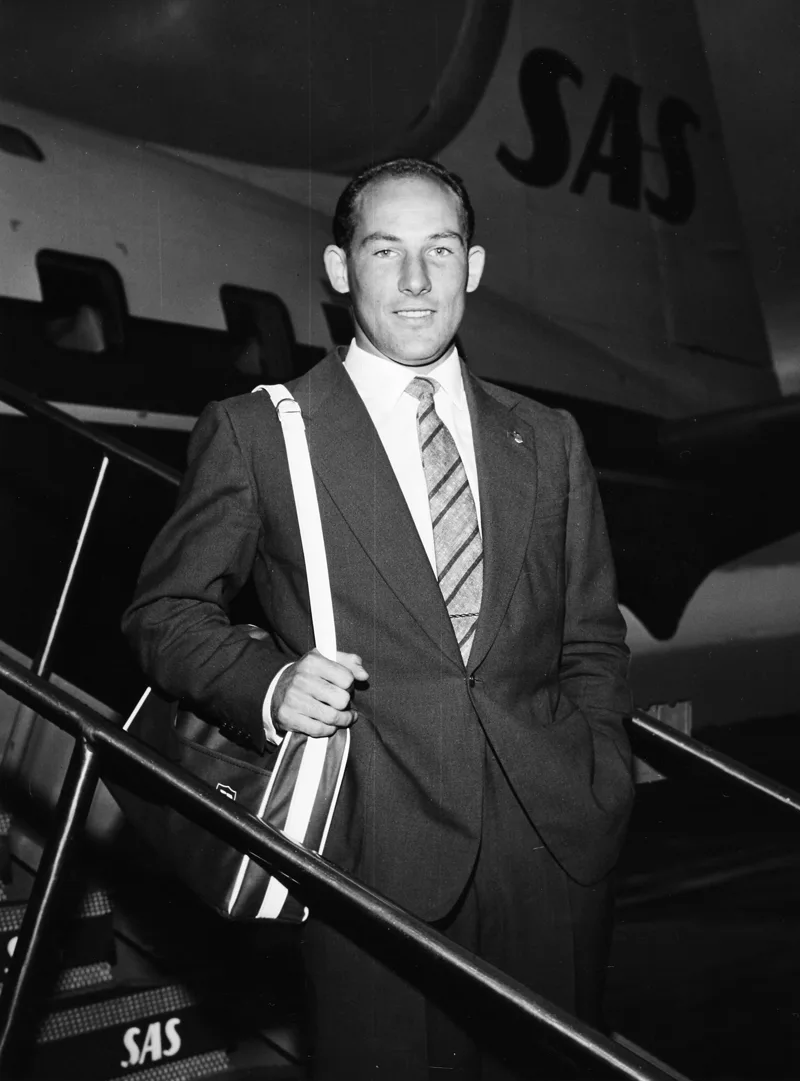
Weslake advised the Vanwall team from the start, starting with a redesigned head for the Ferrari engines it ran. In 1956 he worked alongside Frank Costin, Colin Chapman and Leo Kuzmicki on a new Vanwall that Stirling Moss drove to a non-championship win, which persuaded Moss to join in 1957. The team won the first constructors' championship in 1958. He also advised Coventry-Climax on port design for the FPF engine used by Cooper and Lotus.
The Gurney-Weslake V12
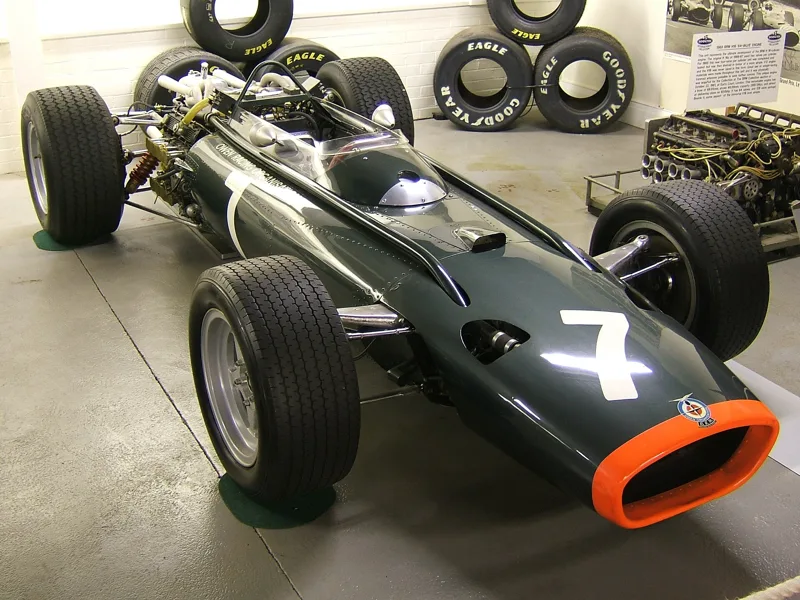
Weslake Engineering was commissioned in 1966 by Dan Gurney to build a 3.0-litre V12 designed by Aubrey Woods for his Eagle Mk1. The design had begun life for BRM but lost out to their H16. At Monza it showed a sign of things to come: four valves per cylinder at a narrow thirty-degree included angle, with one cover over both close-spaced camshafts on each bank, in a 60-degree vee with a bore of 72.8 mm and stroke of 60 mm. With it Gurney took the Brands Hatch Race of Champions in 1967, along with that year's Belgian Grand Prix.
| Occasion | Quoted power |
|---|---|
| Monza, 1966 | 364 bhp (271 kW) |
| Winter after Monza | 390 bhp (290 kW) |
| Brands Hatch, 1967: Gurney | 413 bhp (308 kW) |
| Brands Hatch, 1967: Ginther | 409 bhp (305 kW) |
| Monaco, 1967: Gurney | 411 bhp (306 kW) |
| Monaco, 1967: Ginther | 417 bhp (311 kW) |
| Best on test | 422 bhp (315 kW) |
Motoring News supplied those figures, and the engines peaked at around 10,000 rpm. Early in 1968 a figure of 442 bhp (330 kW) was mooted, though a test at the BRM factory after the money ran out recorded only 378 bhp, possibly from a tired engine. Weslake's eventual goal was 500 bhp (370 kW) at 12,000 rpm.
Le Mans and the Ford V12
Gurney-Weslake cylinder heads won back-to-back Le Mans races in 1968 and 1969, for the Gulf-Wyer Ford GT40 Mk.I.
In 1970 Weslake agreed to build a V12 for Ford and for JWA, which ran John Wyer's sports car team. He and his stepson Michael Daniels designed a 3-litre V12 in an aluminium-alloy block, built strong for 24-hour racing. First run on 20 December 1971, it matched a Cosworth DFV on the same rig to within one brake horsepower. The relationship soured after Weslake pushed to use it in Formula One and poor tests followed. With Ford's racing budget hit by the 1973 oil crisis, Weslake sued JWA to recover development costs, and JWA settled out of court. After an independent test at 461 bhp, the engine was sold on to Terry Hoyle for 10,000 pounds, to keep the firm afloat.
Capris, bikes and the end of the story
In the 1970s Weslake produced the Cologne-built RS2600 engine for Ford's Capri, with special aluminium heads for Ford's touring car challenge. The Weslake Capri finished 10th and 11th in the 1972 24 Hours of Le Mans, and won the driver's crown in the European Touring Car Championship in both 1971 and 1972.
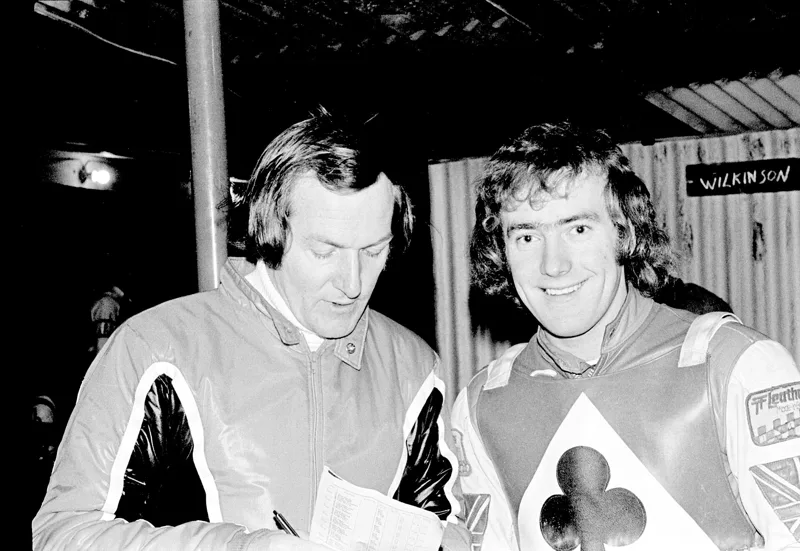
Motorcycle engines followed. In 1976 Peter Collins took the Speedway World Final on a bike with a Weslake engine, and Harry Weslake received the Segrave Medal in 1976 for the four-stroke speedway engine. His last project was an air-cooled vee-twin of just under a litre for Lord Hesketh's Hesketh V1000. He died at Wembley in 1978, where he was attending the World Speedway Championship.
Where the story goes after Ricardo and Weslake
Ricardo's 1909 split-cycle Dolphin engine is still the subject of work: in 2017 Ricardo PLC formed a consortium called Dolphin-N2 to develop the concept further, and in 2019 FPT Industrial bought it. FPT Industrial claims the recuperated split-cycle engine could cut fossil fuel use by up to 30 percent while reducing air pollutants to well below any planned legislation.
Weslake's name lives on too. The Goodwood Revival has named its Spridget racing trophy the Weslake Cup since 2017 to honour his work on the A-series engine, and Ric Wood Motorsport has owned Weslake Capri since 2012.