The 1922 sidecar origins, the XK engine and Le Mans wins, the Ford and Tata years, and the electric-only brand due in 2026.
Founded in 1922 as the Swallow Sidecar Company, the British marque became famous for the XK engine and its Le Mans wins. It is now preparing an electric-only relaunch after ending combustion production in 2025. Ownership changed hands several times, ending with the Indian group Tata.
Jaguar is a British sports car and luxury brand that began as a maker of motorcycle sidecars. Its cars won Le Mans five times in the 1950s, its XK engine powered a generation of models, and it now faces a full electric relaunch. The company's path has passed through several owners, from British Leyland to Ford and finally Tata Motors.
Where did Jaguar begin?
William Lyons and William Walmsley set up the Swallow Sidecar Company in 1922. The firm first built motorcycle sidecars and later moved into car bodies. In 1934 Lyons formed SS Cars after Walmsley decided to sell out, and the new company took over the Swallow business.
The Jaguar name first appeared in September 1935 on an SS saloon, and the company changed its name to Jaguar Cars Limited on 23 March 1945. Lyons argued that the new name was distinctive and could not be mistaken for a foreign one, which mattered to a firm that wanted to sell at home and abroad.
A sidecar maker that became a Le Mans champion, a Ford and Tata brand, and now an electric-only relaunch.
What were Jaguar's early sports cars?
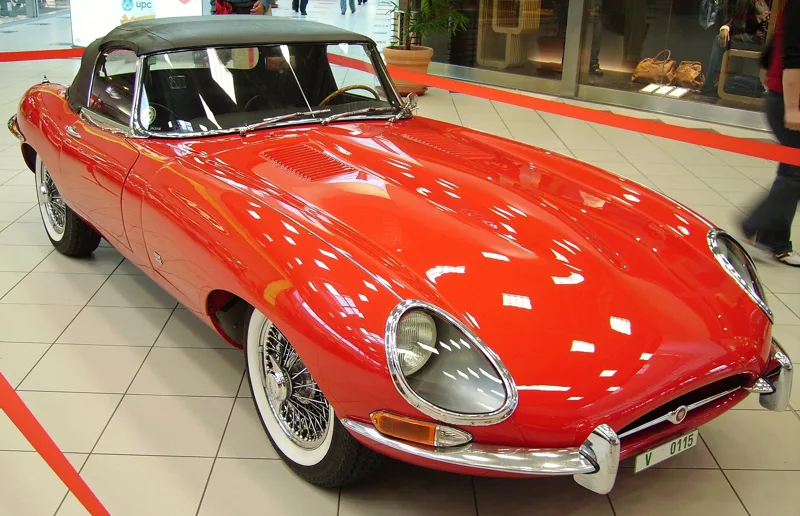
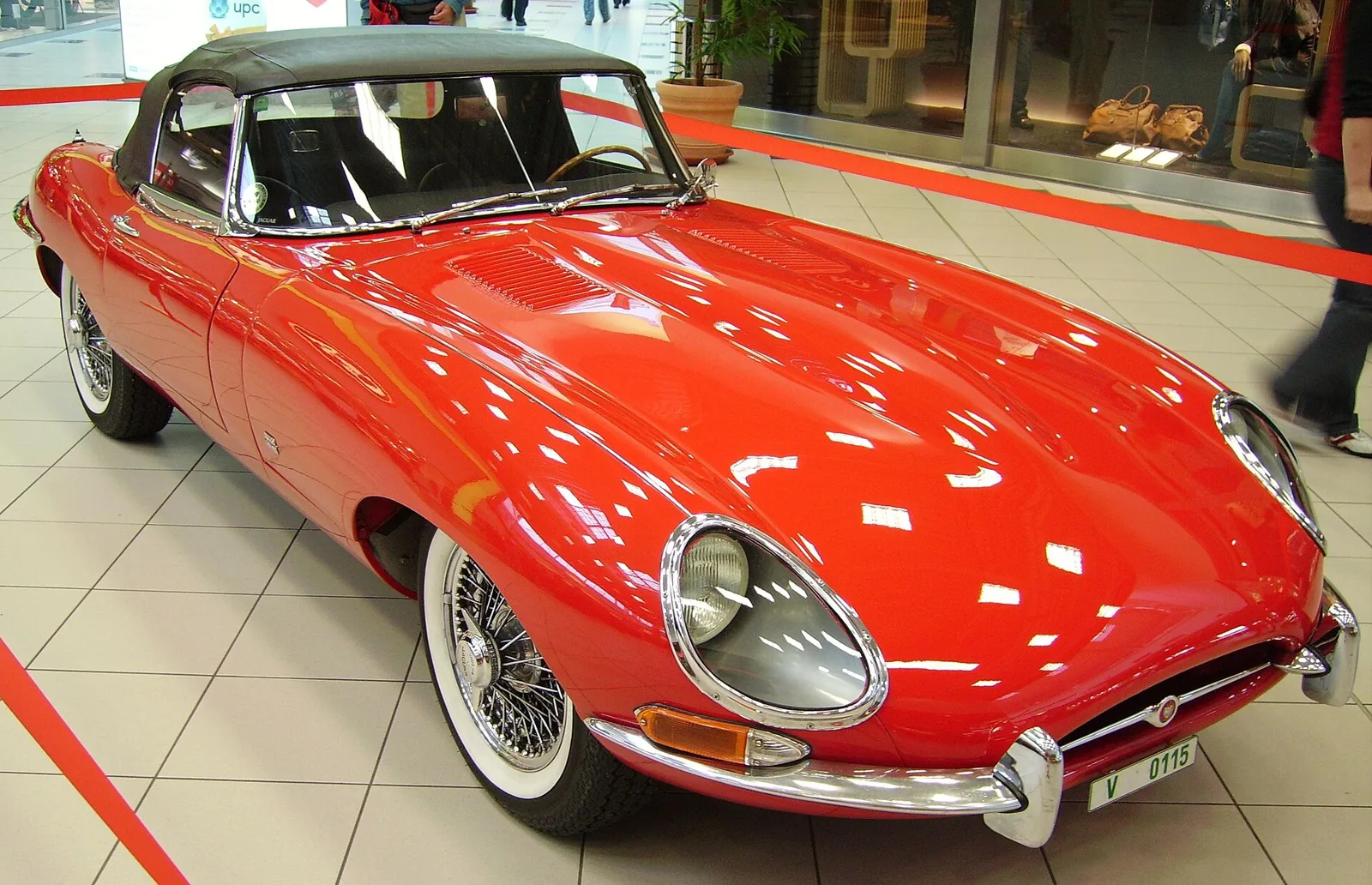
Jaguar built its reputation on a run of sports cars that started with the XK120 in 1948. The XK140 followed in 1954, the XK150 arrived in May 1957, and the E-Type was produced from 1961 to 1975. Each car embodied Lyons's aim of offering value for money.
Sales literature of the period leaned on the slogan Grace, Space, Pace, which summed up a range of saloons and sports cars that many buyers found hard to resist.
What was the XK engine?
The XK engine was a twin-cam straight six developed by William Heynes and Walter Hassan. It used a hemispherical cross-flow head, with valves inclined from the vertical, and it became the mainstay of the company's post-war range. Its long life made it one of the most durable engines of its era.
The unit was used in the XK120, the Mark VII, the Mark I and II saloons, the XK140 and XK150, and the E-Type. Properly maintained examples could reach around 200,000 miles, which made the engine remarkably durable for its time. Its robust design made the unit a favourite for later uses.
Its reach extended well beyond Jaguar. A version of the engine powered the British Army's Combat Vehicle Reconnaissance family, and it also went into a range of other armoured and utility vehicles.
How successful was Jaguar at Le Mans?
The C-Type claimed Le Mans in 1951 and again in 1953. The D-Type then took victories in 1955, 1956 and 1957, the last two in the hands of the Scottish team Ecurie Ecosse. The 1955 race is remembered for a serious accident that overshadowed the win.
The team manager of that period, Lofty England, later became chief executive of Jaguar in the early 1970s. The motorsport tradition continued with the XJR cars, which won at Le Mans in 1988 and 1990, and the XJR-14 took the 1991 World Sportscar Championship.
How did Ford change the company?
Ford made offers to Jaguar's shareholders in November 1989, and the firm left the London market on 28 February 1990. Under Ford's control the brand expanded its range, introducing the S-Type in 1999 and the X-Type in 2001. Those changes shaped the decade that followed.
Jaguar never made a profit under Ford, despite the new models. The X-Type shared its platform with the Ford Mondeo.
How did Jaguar pass to Tata Motors?
Ford decided to hand its British brands to Tata Motors, an Indian group. The sale was completed on 2 June 2008 for 1.7 billion pounds, and it brought both British brands under Indian ownership. The sale covered both brands, which created a shared holding company.
The new owners pursued a long-term plan for the brand. In 2020 Thierry Bollore, a former Renault chief executive, replaced Ralf Speth as head of Jaguar Land Rover, a change that signalled a new direction for the group.
Why did Jaguar stop building combustion cars?
The parent group later decided to move Jaguar further upmarket and shrink its volume, aiming to compete with Bentley and Porsche. In June 2024 production stopped on every model except the F-Pace, and the brand's combustion engine era came to an end.
The final F-Pace was built on 19 December 2025. Sales fell by 97.5 per cent in 2025 as the company sold through older stock, and the new electric lineup was planned to replace the old range.
What is the Type 01 and what is Type 00?
Type 00 was a concept car revealed at Miami Art Week on 4 December 2024. It was a non-production model. It showed the design direction for the company's future electric cars, and it drew both praise and derision from the public.
The Type 01 is the first production model in the new line. It is due to start production at Solihull in 2027, with a global reveal planned in New York in October 2026. It is the first model in the brand's electric-only line-up.
Why did the 2024 rebrand draw so much attention?
Jaguar unveiled a new logo and branding on 19 November 2024, introducing a new typeface, colour palette and device mark. The company described the direction as exuberant modernism, which proved to be a polarising choice. The debate showed how a brand refresh can split opinion.
Critics online accused the brand of drifting away from its traditional buyers, while others praised the marketing as a clever way to reach new audiences. Either way, the relaunch placed Jaguar at the centre of a wide public conversation.
What were Jaguar's best-known models?
The E-Pace compact SUV was produced until December 2024. The F-Pace, the brand's first SUV, was unveiled in September 2015, and the I-Pace was Jaguar's first electric car. Each model reflects a different stage of the brand's shift toward electrification.
The XF was introduced in 2008 and won the What Car? Car of the Year award. The XJ, a full-size saloon, ran for decades, and its 2003 generation introduced an aluminium monocoque. The XJ40 arrived in 1986 and was revamped in 1994 and 1997.
What was the XJ220?
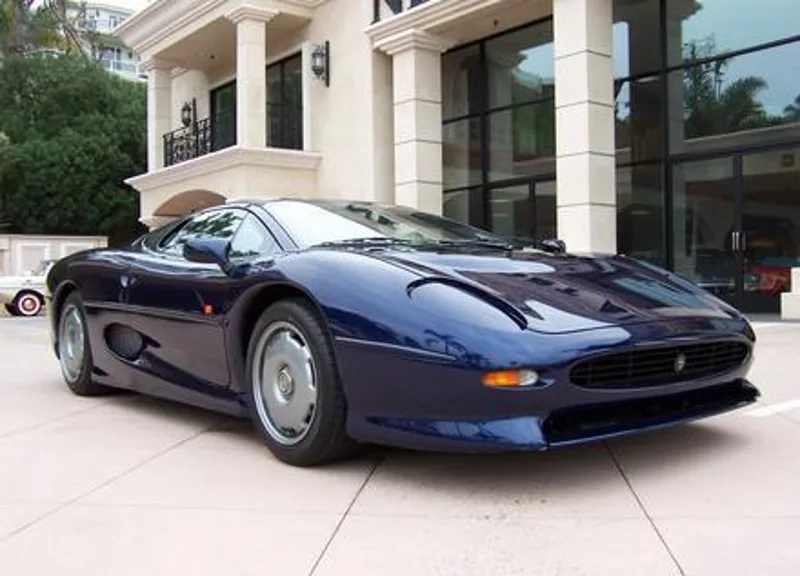
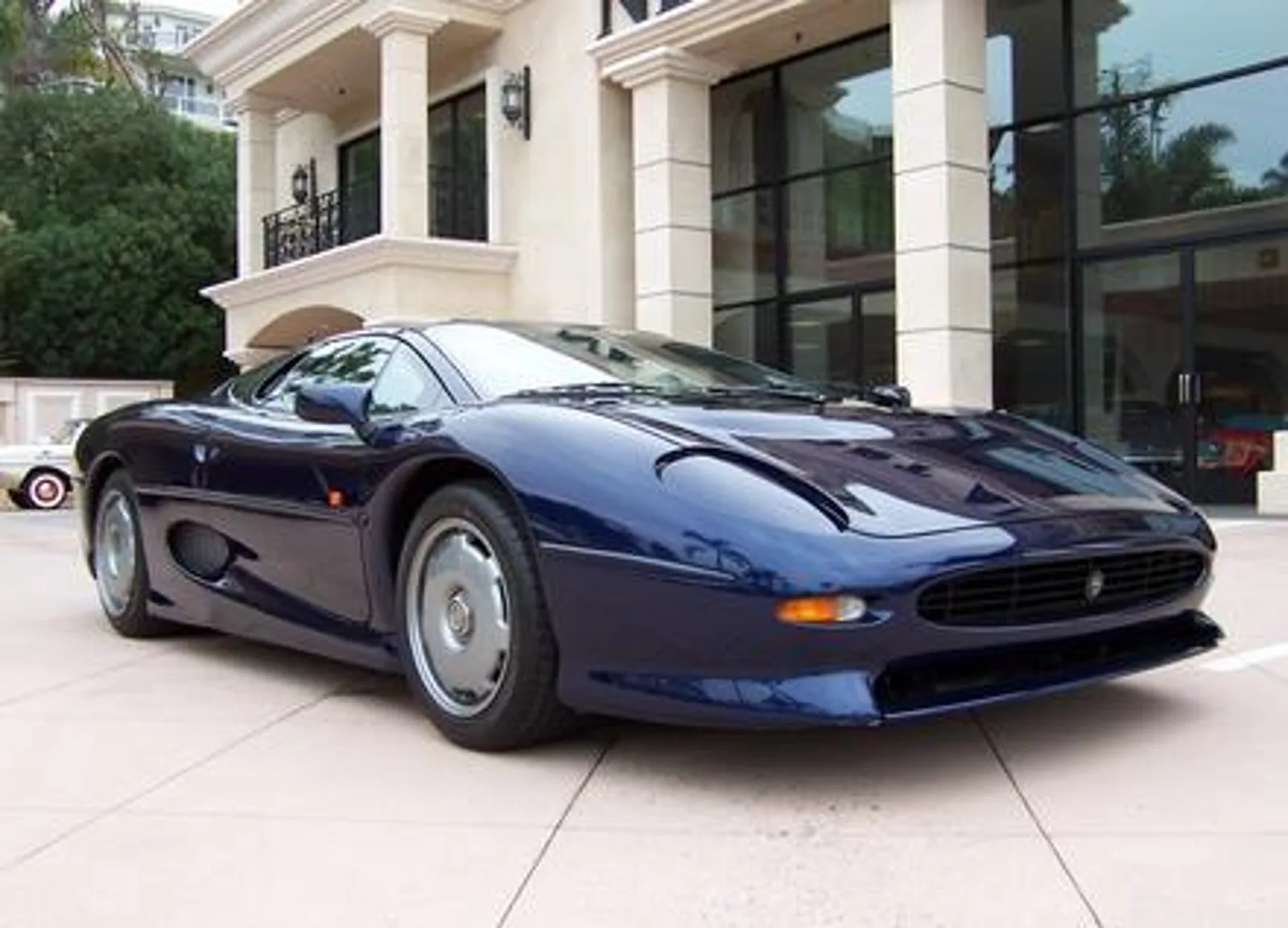
The XJ220 was a mid-engined, twin-turbo supercar powered by a V6 that made 404 kW (550 PS; 542 bhp). Martin Brundle's 349 km/h (217 mph) run at Nardo in Italy confirmed it as the quickest production car of its day.
Its mid-engined layout and twin turbochargers made it a notable engineering statement.
How did Jaguar fare in Formula One and Formula E?
Ford took over the Stewart Grand Prix team and renamed it Jaguar Racing for the 2000 season. The team scored only two podiums in five seasons, and it was sold to Red Bull at the end of 2004. Its Formula E commitment runs alongside its electric road car plans.
Jaguar returned to electric racing for the third season of Formula E and has committed to the series until 2030. It has recorded 24 wins as of August 2026, and its Vector Racing arm set an electric boat record of 88.61 mph on Coniston Water.
Jaguar models and engines at a glance
The table below lists the main figures for the models and engines covered in this article. Each row names one item, so the values should not be read as applying to every version.
| Item | Detail |
|---|---|
| XK engine | 3.5-litre twin-cam straight six |
| XJ220 engine | 404 kW (550 PS; 542 bhp) V6 |
| XJ220 speed | 217 mph (349 km/h) at Nardo |
| XJ Supersport | 0 to 60 mph in 4.7 seconds, 289 g/km CO2 |
| Le Mans wins, 1950s | 1951, 1953, 1955, 1956, 1957 |
| Ford purchase | November 1989 share offer, listing ended 28 February 1990 |
| Tata purchase | 1.7 billion pounds, completed 2 June 2008 |
| Final F-Pace | Built 19 December 2025 |
| Type 01 | Solihull production from 2027 |
How did the saloon range develop?
Jaguar's saloons grew out of its sports car success. A 2.4 model of 1955 was the first monocoque car from the company, and the Mark 2 followed in October 1959 with wider windows. The Mark VII, conceived especially for the American market, won the Monte Carlo Rally in 1956.
The Mark X of 1961 broke with the older design by using all-round independent suspension and unitary construction. The XJ6 that followed in 1968 rescued the company, which had struggled to sell the Mark X in quantity.
Did Jaguar build a Le Mans car that never raced?
Yes. The XJ13 was built in 1966 to race at Le Mans, but it never ran in competition. Jaguar also produced concept cars such as the Pirana, which Bertone designed, and several other concepts were cancelled after Ford's takeover. That kind of concept work was common across the brand's history.
The concept list shows how often Jaguar explored new directions. The E1A and E2A came from 1950s E-Type concepts, and the Type 00 of 2024 carried the story forward into the electric era.
Which engines did Jaguar design in-house?
Jaguar designed six generations of engines in-house, starting with the XK6 straight six and the 60-degree V12. Other historic units included the AJ6 inline six. Later families came from Ford designs that Jaguar modified. The list covers both historic and later engine families.
The AJ-V8, the AJD-V6 and the Ingenium inline-four have all been discontinued. The AJ-V8 was a 90-degree V8, and the Ingenium was the newest family on the list.
What were the R models?
Jaguar's R models began with the XJR of 1995, followed by the first XKR in 1997. The R, R-S and SVR badges sit above standard models in the range, and they mark out the sportiest cars in each line. Their badges signalled a sporting edge to buyers.
The XKR-R of 2001 was a high-performance version of the first XK coupe, showing how the brand kept performance variants alive across several generations of its sports cars.
What happened to the Leaping Jaguar mascot?
The Leaping Jaguar mascot traditionally sat on the radiator cap of many cars, and it became one of the brand's most recognisable symbols. It was dropped from the latest models, which marked the end of an era for many enthusiasts.
Frequently asked questions
When did Jaguar change its name to Jaguar Cars?
The brand's name changed from SS to Jaguar in 1945, when shareholders approved the new title on 23 March. Before that, the cars carried the SS Jaguar badge between 1935 and 1945.
Which Jaguar engine lasted the longest?
The XK engine is the most famous, having powered the XK120, the Mark VII and the E-Type among others. Its later uses included the XJ6 saloon.
Did Jaguar make cars for the prime minister?
From the late 1970s Jaguar supplied the prime minister's car, and the most recent XJ for that role was delivered in May 2010. The brand also held royal warrants from two monarchs, Elizabeth II and Charles III.
What is Jaguar's electric future?
Jaguar plans to relaunch as an electric-only marque in 2026, with the Type 01 starting production at Solihull in 2027. Its concept Type 00 previewed the design direction in December 2024.