From rally cars in 1994 to carbon wheels and EV battery boxes: what heat shields, heat wraps and ceramic coatings actually do.
Exhaust heat shields insulate parts and radiate heat away to protect bodywork and components, and can lower engine bay and intake air temperatures. Rigid, flexible and textile types exist, while plasma-sprayed ceramic coatings such as Zircotec's can cut surface temperatures by up to 25-33%.
In 1994 a ceramic coating developed for the nuclear industry was sprayed onto the exhausts of Subaru rally cars to lower temperatures in the cabin. That was the motorsport debut of the coatings made by Zircotec, and a reminder that the metal pipes under a car carry so much heat that the real engineering problem is where it goes next.
A heat shield or thermal coating decides whether that heat reaches the cabin, the bodywork, the engine mounts or the air the engine breathes. Rigid shields, flexible shields and textile wraps each handle that job differently, and plasma-sprayed ceramic coatings add a further layer of protection to the parts themselves.
What is a heat shield?
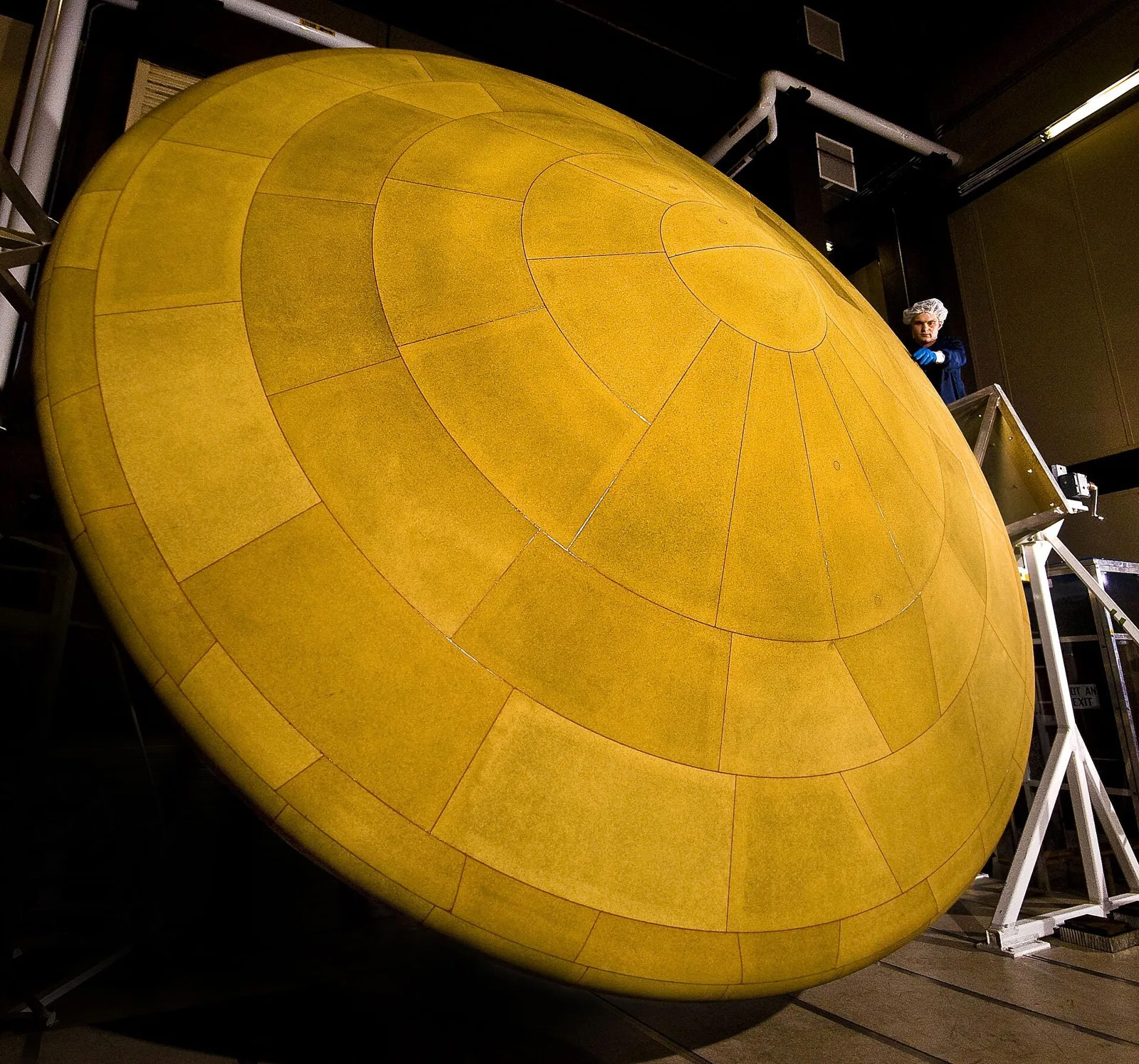
A heat shield is a component that stops an object or a person from being burnt or overheated by dissipating, reflecting or absorbing heat. The term is used most often for exhaust heat management and for systems that dissipate friction heat, and heat shields appear most commonly in the automotive and aerospace industries.
The heat is not removed: it is insulated, reflected or sent outward.
How does a heat shield work?
Picture an oven glove that also sheds heat: thick enough to stop the heat reaching your hand, yet able to give heat off to the air around it. A shield does two things at once: it can insulate, keeping the hot surface away from whatever lies behind, and it can radiate, sending heat outward as thermal radiation rather than letting it soak in. Those two mechanisms are called thermal insulation and radiative cooling.
For the job to work, a shield needs three attributes: low thermal conductivity, meaning high thermal resistance; high emissivity, so it gives heat off readily; and good thermal stability, the ability to survive the temperature without breaking down. Porous ceramics with high emissivity coatings are often chosen, because ceramics are stable, porous materials insulate well, and the coatings radiate heat efficiently.
Why does a car need an exhaust heat shield?
Internal combustion engines give off large amounts of heat, so most carry heat shields that protect components and bodywork from damage. A good shield can also improve performance. It cuts the temperature in the engine bay, which lowers the temperature of the air entering the engine.
Prices vary a lot, yet fitting is rarely hard: stainless steel clips, heat-resistant tape or purpose-made metal ties usually hold them on. They are often added by amateurs and professionals alike while optimising an engine during tuning.
Shields also manage the engine mounts. At speed, ram air cools the engine compartment, but when the car is moving slowly or climbing a gradient, the engine's heat has to be kept from reaching surrounding parts such as the mounts. With proper thermal analysis and shielding, the mount vents can be optimised for the best performance.
Rigid, flexible and textile heat shields
| Type | Typical material | How it is used |
|---|---|---|
| Rigid | Solid steel until recently, now often aluminium; high-end versions use aluminium, gold or composite | Most carry a ceramic coating as a thermal barrier |
| Flexible | Thin aluminium or gold sheeting, sold flat or in a roll | Bent by hand by the installer; high-performance versions add ceramic insulation by plasma spraying |
| Textile (heat wrap) | Wrapped fabric | Traps heat inside the exhaust pipe; most common on motorcycle exhausts |
Exhaust heat wrap vs shield
A rigid shield sits near the hot part and deflects heat. Solid steel was the usual material until recently; aluminium is now common, and some high-end rigid shields use gold or composite, mostly with a ceramic coating to improve insulation.
Flexible shields start as thin aluminium or gold sheet, which the installer bends by hand to follow the shape of the car. At the top end, makers apply ceramic insulation by plasma spraying or use exotic composite materials to improve insulation and save weight, and such products are commonplace in top-level motorsport such as Formula 1.
The exhaust heat wrap takes a different route. Rather than blocking heat that has already escaped, the textile wrap traps it inside the pipe so the immense heat from the exhaust components does not radiate into the engine bay. Wraps of this kind are most common on motorcycle exhaust pipes.
What is Zircotec?
Zircotec makes high-temperature coatings and heat barriers at its base in Abingdon, near Oxford. Its plasma-sprayed ceramics resist heat and abrasion, mostly on automotive exhaust systems. Coloured thermal barrier coatings and ZircoFlex, a bendable ceramic heat shield, are among its best-known products.
The company grew out of the UK Atomic Energy Authority's research site near Harwell, Oxfordshire, where the coatings and heat barrier processes were first worked out for the nuclear industry. In 1994 the coatings made their motorsport debut on Subaru rally cars, and after that success they went on Formula One cars and trucks.
A venture capital fund bought the business in 2003, and its focus moved from nuclear towards general industry and automotive work. It developed Thermohold coatings for high-performance and classic cars, the main one a white, two-layer, plasma-sprayed ceramic named Performance White. Terry Graham took over as managing director in July 2007, and Koenigsegg announced that its CCX supercar would use the coatings. That October the firm joined the attempt on the world land speed record for steam cars, protecting delicate components; the record was set a year later.
In June 2008 the firm developed a plasma-sprayed ceramic coating for composite materials, aimed mainly at motorsport and high-performance cars. In September 2008 it launched Performance Colours, based on Performance White with an additional coloured finish and initially in thirteen colours. Directors completed a management buyout in early 2009, and in 2010 headquarters moved to Abingdon for more production capacity.
How do thermal coatings keep temperatures down?
Think of spray-painting with molten ceramic. In plasma spraying, a powdered ceramic is melted in a very hot flame and fired at the part at high speed, where it builds into a thin, solid layer. The layer slows the passage of heat out of parts like exhausts and manifolds.
Typically a metal bond coat sits underneath and the ceramic on top, together roughly 300-350 microns thick. According to Zircotec, surface temperatures fall by as much as 25-33%, depending on the formulation.
- Primary Range is the cost-effective option, with moderate thermal protection.
- Performance White is a higher-grade ceramic for more demanding environments.
- Performance Colours uses the Performance White ceramic with a coloured finish, which looks better and cleans more easily.
The coatings are used in motorsport, automotive and industrial settings, both to protect heat-sensitive parts and to make it possible to use lightweight materials close to hot zones.
What is ZircoFlex?
ZircoFlex is Zircotec's flexible ceramic heat shield. It bonds a ceramic insulating layer to a metal foil backing, so it can be bent, wrapped or shaped to fit tight or complicated spaces without losing thermal performance. It comes in single-, double- and triple-layer formats, and is typically used in underbody panels, transmission tunnels and engine compartments, where compact, lightweight protection is needed.
ZircoFlex first appeared in 2011, billed as the first flexible ceramic heat shield on commercial sale, and has since turned up in motorsport, automotive engineering, aerospace and offshore work. At a remote Caspian Sea oil platform, for instance, it was fitted to air-conditioning systems to guard against radiant heat from a flare stack. A newer product, ZircoFlex SHIELD, is a multi-layered, metal-encapsulated system for higher thermal loads, suited to continuous operating temperatures up to 1000 degrees Celsius. It was announced in March 2021.
Coatings for composites, carbon wheels and supercars
Zircotec's plasma-sprayed coatings let fibre-reinforced polymers stand up to high temperatures. ThermoHold, a coating that debuted in Formula One, later shielded the composite diffusers and intake ducts of the Aston Martin One-77, cutting surface temperatures by more than 125 degrees Celsius so that lightweight materials could sit near the exhaust.
The company also supplies ceramic thermal barrier coatings for carbon fibre (CFRP) wheels, mostly in motorsport and high-end road cars. The thin coating helps keep heat from the brakes away from the heat-sensitive rim, which is what makes carbon wheels usable.
Its customer list for original equipment includes the Aston Martin Valkyrie and One-77, Lamborghini Murcielago, Koenigsegg CCX, Pagani Zonda and a New Holland low carbon gas tractor. In racing it works with Formula One, British Touring Car Championship and NASCAR teams, and since 2018 it has had a technical partnership with Power Maxed Racing.
Thermal coatings for EVs and hydrogen engines
Zircotec also develops ceramic coatings for electric vehicles, aimed at thermal management, electrical insulation and protection in high-voltage environments. The aim is to lower the chance of thermal runaway, keep temperatures in range and let lightweight materials be used in battery enclosures and cooling systems.
- ElectroHold Dielectric offers dielectric strength of up to 42 kV/mm while still allowing thermal conductivity, for battery housings, busbars and power electronics.
- ElectroHold Flameproof withstands up to 1,400 degrees Celsius briefly, with longer-term protection at lower temperatures, to slow the spread of heat if a battery fails.
- ElectroHold EMC Shield is meant to reduce electromagnetic interference with sensitive electronics.
They suit aluminium, steel and composite parts. The work comes out of CeraBEV (Ceramics for Battery Electric Vehicles), a UK government-supported project that Zircotec led with Cranfield University. It started in 2024 as a 1 million pound collaboration funded by the Advanced Propulsion Centre. Its target was one ceramic layer that insulates electrically and resists flame, so that aluminium and polymer composites could replace heavier materials in battery enclosures and cooling plates. The project ended in September 2025, with tests and simulations alongside Cranfield and MIRA Ltd reported to show significant gains over existing solutions.
Zircotec also supplied ceramic coatings to APC-18, called Project Brunel, which brought together Cummins, Johnson Matthey and PHINIA to build a 6.7-litre hydrogen engine for commercial vehicles. Its research includes coatings that reduce hydrogen embrittlement, while the Abingdon laboratory carries out high-temperature trials, thermal imaging, microstructure studies and mechanical and dielectric tests.
What it means for someone buying or driving a car
Most petrol and diesel engines already carry heat shields, and the quality of the shielding shows up in two ways: in the temperature of the bodywork and components around the engine, and in the temperature of the air going into it. Because shields are cheap and easy to fit, they are a common step during tuning.
Choosing between types comes down to the job. A rigid aluminium shield suits fixed locations, a flexible shield suits tight, complicated shapes, and a textile wrap holds heat in the pipe. Ceramic coatings add protection to the part itself, and Zircotec reports cuts of as much as 25-33% in surface temperature. For high-performance and supercar buyers, the same coatings have appeared on cars such as the Koenigsegg CCX and Aston Martin One-77.
Where this goes next
Zircotec's expansion plans point towards new power systems. After the 2019 move into 20,000 square feet in Abingdon, it bought a further 10,000 square foot building in June 2022 to be dedicated to technology for low and zero carbon vehicles. The CeraBEV work on battery enclosures finished in September 2025, and the company's research now centres on heat management for hydrogen engines, fuel cells and electric vehicles.