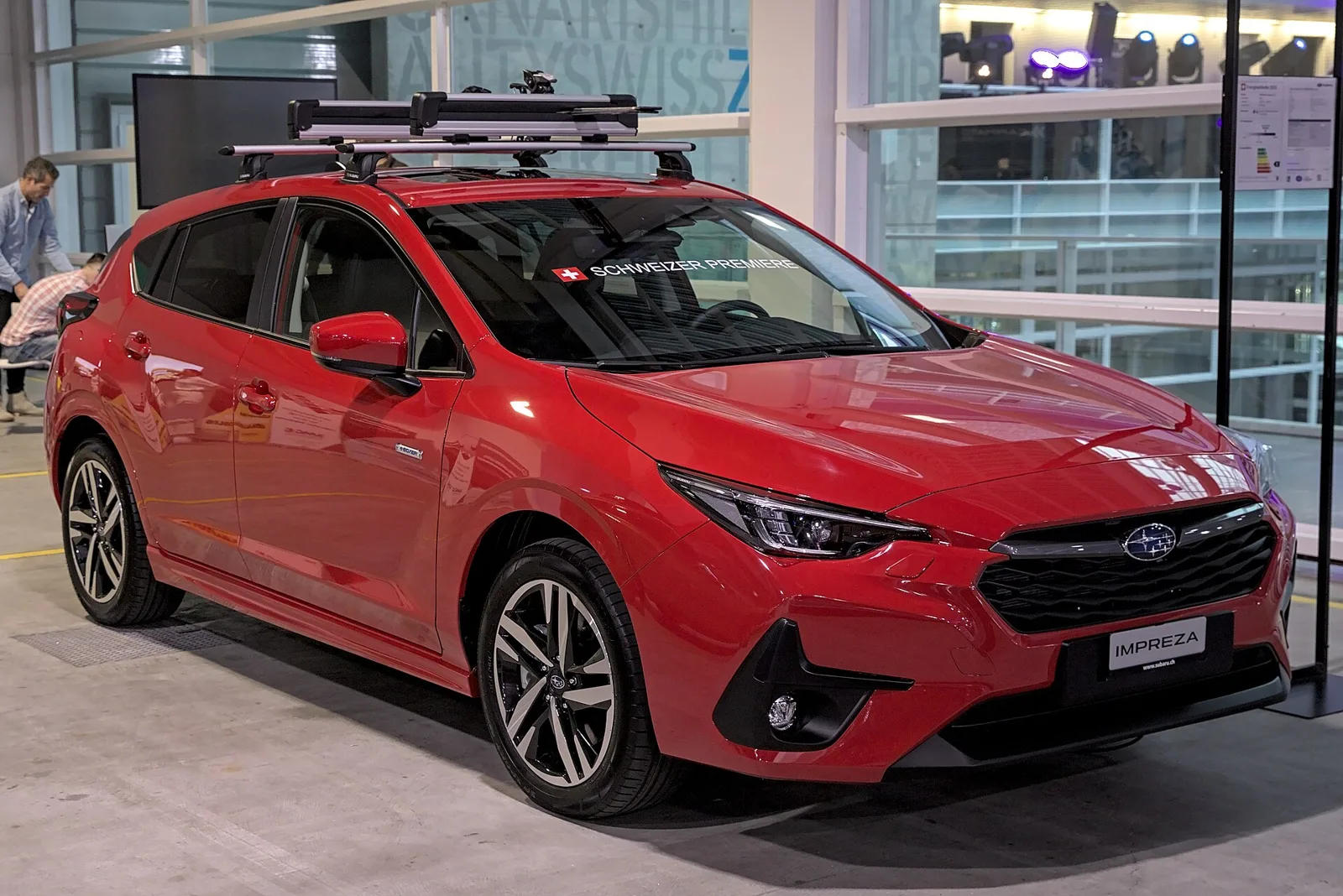
From a 1915 aircraft laboratory to Toyota's largest partner, the Pleiades badge has stood for boxer engines, all-wheel drive and rally wins.
Subaru is the automobile division of Subaru Corporation, formerly Fuji Heavy Industries, and is based in Ebisu, Tokyo. The brand is known for its boxer engines and Symmetrical All Wheel Drive, introduced in 1972. Toyota now holds a large stake in the parent company, and the EyeSight driver-assistance system launched in 2008.
Subaru is the automobile manufacturing division of Subaru Corporation, which was formerly known as Fuji Heavy Industries. The brand is built around the boxer engine and all-wheel drive, and it has a long rallying record that began in the 1980s. Its name comes from the Japanese word for the Pleiades star cluster.
What does the Subaru name and logo mean?
Subaru is the Japanese name for the Pleiades star cluster, also known as the Seven Sisters. Tradition says one of the sisters is invisible, which is why the Subaru logo shows only six stars. The logo also alludes to the companies that merged to create Fuji Heavy Industries.
The name was not the first choice for the new car. Kenji Kita, the chief executive of Fuji Heavy Industries at the time, wanted the company to build cars, and when proposals for naming the P-1 project failed to impress him, he gave it a Japanese name he had been cherishing.
The name has stayed with the brand through every change of ownership. It links the car business back to a company that had worked in aviation and industry long before the first Subaru was built.
A 1915 aircraft laboratory, one invisible star and a boxer engine that became the brand's signature.
Where did Subaru's parent company come from?
The predecessor of Fuji Heavy Industries was an aircraft research body set up in 1915. In 1932 it was reorganised as Nakajima Aircraft Company, which became a major manufacturer of aircraft for Japan during the Second World War.
Between 1953 and 1955 five corporations and a newly formed corporation decided to merge into Fuji Heavy Industries. The merger brought together a scooter maker, a coachbuilder, an engine manufacturer, a chassis builder and a trading company, and it gave the new group the skills to build cars.
Those origins explain why the company's car engineering has a strong industrial flavour. The businesses that joined the group had worked on scooters, bodies, engines and chassis, and the merger pulled those skills into a single car programme.
When did Subaru build its first car?
The first Subaru car was the Subaru 1500, but only twenty were manufactured because of several supply issues. The company then went on to design and build dozens of vehicles, including the air-cooled 360 of 1958, the Sambar and the 1000.
The 1000 was a landmark because it introduced the Subaru boxer engine in 1965. That layout would become the defining feature of the brand, and it is still used in most of its combustion vehicles.
Why is the Subaru boxer engine important?
Subaru's combustion cars above 1,500 cc mostly use a boxer engine. The layout places horizontally opposed cylinders low in the car, and it became the brand's signature with enthusiasts and buyers.
The Symmetrical All Wheel Drive system was introduced in 1972. Together with the boxer engine it helped define the brand, and both became the norm for mid-size and smaller cars in most markets by 1996.
The boxer and all-wheel drive combination gave Subaru a niche that few rivals could match. Its marketing has long targeted buyers who want that engine and drivetrain, along with rough-road capability and affordable sports car designs.
How did Nissan shape Subaru's early growth?
Nissan acquired a 20.7% stake in Fuji Heavy Industries in 1968, during a period of government-ordered merging in the Japanese auto industry. The alliance gave Subaru access to a larger partner, and the two companies shared parts and engineering expertise for years afterwards.
During the Nissan period Subaru introduced the R-2 in 1969, followed by the Rex and the Leone in 1971. Those cars marked the company's push into a wider range of family and small vehicles.
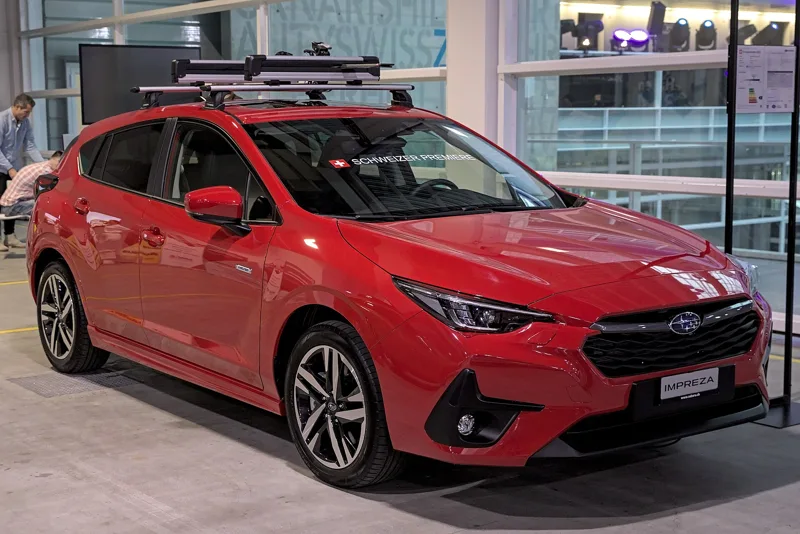
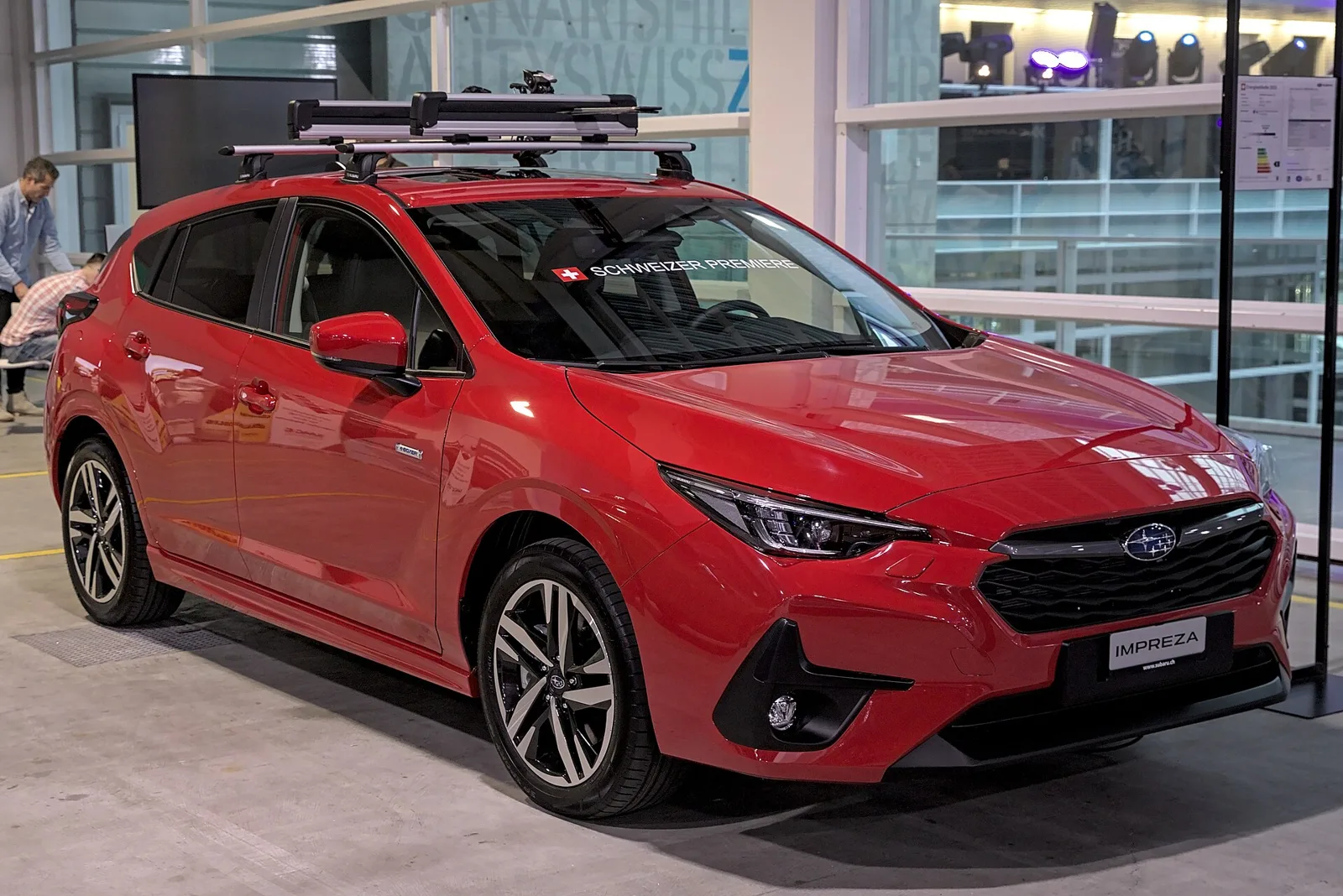
The Legacy arrived in 1989, the Impreza in 1993 and the Forester in 1997. Each of these models carried the company into a new decade, and the Impreza's WRX subtype later became a rally icon.
What role did General Motors play in Subaru's history?
Nissan's stake was sold to General Motors in 1999, after Nissan's alliance with Renault. During that period Subaru introduced the Baja in 2003 and the Tribeca in 2005, and the In America the Impreza also appeared as the Saab 9-2X.
GM liquidated its holdings in Fuji Heavy Industries in 2005. Toyota then bought a little over 40% of GM's former stock, which amounted to 8.7% of Fuji Heavy Industries, and the GM years came to an end.
How did Toyota become Subaru's biggest partner?
Toyota increased its share of Fuji Heavy Industries to 16.5% in July 2008. The two companies then jointly developed the BRZ, which was first sold in January 2012, and the car is a boxer-engined rear-wheel-drive sports car built with Toyota.
Around the same time Subaru stopped developing its own kei cars and began selling rebadged products from Toyota's Daihatsu subsidiary. The last kei vehicle Subaru built, the Sambar, ended in March 2012, after 54 years in that class.
The partnership has kept growing. The Solterra arrived in 2022 as a rebadged Toyota bZ4X, a sign of how far the partnership now reaches into electric cars.
How did Subaru build its American business?
Subaru of America began in 1968 in Bala Cynwyd, Pennsylvania, founded by two men, Malcolm Bricklin and Harvey Lamm. Fuji Heavy Industries acquired full ownership of the American arm in 1990, and the US business then grew into a national network of offices and parts centres.
The company's major overseas manufacturing facility is Subaru of Indiana Automotive in Lafayette. Because of continued sales growth in North America, capacity at the Lafayette plant was set to expand to 390,000 vehicles annually, and the group planned total production capacity of 1,026,000 vehicles per year by the end of 2016.
Where are Subaru cars built today?
Subaru is unusual among Japanese carmakers because almost 75% of the cars it sold internationally were made in Japan as of early 2016. Its headquarters are in Ebisu, Tokyo, and its main Japanese plants are in Gunma Prefecture.
Outside Japan, the Bangkok plant opened on 23 April 2019 in a joint venture with Tan Chong International, which holds a 74.9 percent stake. The plant has a maximum capacity of 100,000 vehicles per year and was formerly a Mitsubishi Fuso factory.
How has Subaru grown in Asia?
Subaru cars have been exported to China since 2004, and a 2011 plan for a 50-50 joint venture with Chery was rejected by Chinese authorities. In South Korea, Subaru began sales in April 2010 with the Legacy, Outback and Forester as its initial range.
In the Philippines the brand re-entered the market in 2006 and now has seventeen dealerships. The SUV line-up has been popular there in recent years, with the Forester and the XV among the most sought-after models.
Which Subaru road cars were most influential?
The Impreza arrived in 1993 with a WRX subtype, and the Legacy in 1989 had already shown what the brand could do with a larger family car. The Forester in 1997 and the BRZ in 2012 widened the appeal of the range in different directions.
The Baja of 2003 and the Tribeca of 2005 were attempts to win buyers in the SUV and crossover segments. Both were part of the General Motors period, and they show how the brand was testing new body styles in the early 2000s.
How did Subaru's rally programme develop?
Subaru Rally Team Japan, led by Noriyuki Koseki, ran cars in the World Rally Championship from 1980 to 1989. Mike Kirkland took 6th overall and the A Group win at the 1986 Safari Rally, showing how competitive turbocharged all-wheel drive cars had become.
The Legacy RS ran in the championship for 1990 to 1992, and Subaru took part in its first complete WRC season with the same model in 1993. The Impreza later took over the rally programme, and modified versions of the WRX STi competed successfully.
Colin McRae won the drivers' title in 1995, Richard Burns in 2001 and Petter Solberg in 2003. Subaru won the manufacturers' title in each season from 1995 to 1997, with cars prepared by Prodrive.
Subaru Rally Team USA later won the driver's title six times in the American rally series. Subaru announced its exit from the WRC on 16 December 2008, citing the economic downturn and a belief that its sporting and marketing objectives had been achieved.
Did Subaru compete in Formula One?
Subaru was briefly involved in Formula One when it bought a controlling interest in the Coloni team for the 1990 season. The Coloni 3B carried a Subaru badge on a 12-cylinder unit that was already an existing design, and the cars struggled with weight and power.
The partnership broke down before the season finished. The episode is a footnote in the brand's racing history, although the company's rally and touring car successes were far more prominent.
What is EyeSight and how well has it worked?
Subaru introduced its EyeSight collision avoidance system in 2008. Unlike most such systems, which use radar, EyeSight launched with dual charge-coupled device cameras at the top of the windshield, and it judged distance from the parallax between the two video signals.
Studies of early generations in real traffic suggest that EyeSight cut rear-end crashes involving injuries by 85 percent, and pedestrian injuries by 35 percent. By 2022 Subaru had sold 5 million cars with the system, and EyeSight models made up 91% of sales.
What electric and diesel cars has Subaru made?
The Subaru EE was a horizontally opposed, water-cooled, common rail turbodiesel with a variable geometry turbocharger. It was rated at 110 kW (150 PS; 148 hp) from a 2.0 liter displacement, and it was the first of its type fitted to a passenger car.
The Subaru Stella Plug-in launched in June 2006 as a kei car with a lithium-ion battery pack. It had a 56 mile (90 km) range and a 47-kilowatt motor, and the company set a goal of selling 170 vehicles by March 2010.
The Solterra is Subaru's first all-electric car, and it debuted at the Los Angeles Auto Show on 17 November 2021. Its arrival completed a path that began with the Stella, and it moved the brand into the mainstream electric SUV market.
What is the Subaru Global Platform?
Subaru debuted the Subaru Global Platform with the 2017 model year Impreza. The company spent over a billion dollars on research and development for the new chassis, which uses high-strength steel for stiffer bodies and better impact absorption.
The platform is designed to be modular, so Subaru can reduce development costs by streamlining production across its network of facilities. It can accommodate gasoline, hybrid and fully electric powertrains, which gives the company room to adapt as the market changes.
How did Subaru fare in Britain and Australia?
In 1974 Robert Edmiston, a finance director at Jensen Motors, used a 6,000 pound redundancy payout to set up International Motors when Jensen went bankrupt. The company acquired the UK franchise for Subaru and Isuzu, and it is still the parent for Subaru in the UK.
Subaru's Australian story starts in the mid-1950s with imports of the 360. Official operations began in 1973, and the brand now has multiple showrooms across the country.
What are the key Subaru models and figures?
The table lists selected Subaru models with the year, a defining figure and the role each car played in the range. Where a model had several versions, the figure shown is the one that best describes it.
| Model | Year | Defining figure | Role |
|---|---|---|---|
| Subaru 1500 | First car | Only twenty built | The first Subaru car |
| Subaru 1000 | 1965 | Introduced the boxer engine | Defining engine landmark |
| Legacy | 1989 | Larger family car | Mid-size all-wheel drive model |
| Impreza | 1993 | WRX subtype | Rally and performance icon |
| Forester | 1997 | Compact SUV | Core family model |
| Baja | 2003 | General Motors period | Pickup-style model |
| BRZ | 2012 | Rear-wheel drive boxer | Built with Toyota |
| Stella Plug-in | 2006 | 56 mile (90 km) range | Early electric kei car |
| Solterra | 2021 | Debuted 17 November 2021 | First all-electric Subaru |
Frequently asked questions
How fast was the Subaru Justy?
The Justy set a world record as the fastest small car without a turbo. It averaged 123.224 mph in 1989, which was a remarkable figure for a small car of its size.
What does the Subaru boxer engine do?
The boxer layout appears in most combustion vehicles above 1,500 cc. It was introduced in 1965 in the Subaru 1000 and is one of the marque's defining engineering traits.
Who was Subaru's rally driver with a 2003 title?
Petter Solberg won the World Rally Championship drivers' title in 2003 with Subaru. The brand's manufacturers' title came in three consecutive seasons from 1995 to 1997.
What is the Wish Upon the Pleiades series?
It was an animation series developed jointly with Gainax and released on YouTube on 1 February 2011. The four-part mini series had a magical girl plot, with Subaru as a leading protagonist.
_Auto_Zuerich_2023_1X7A1263.jpg)